
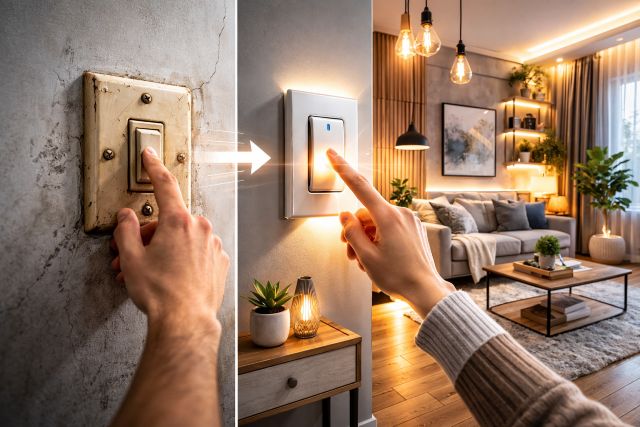

If your home still has yellowed toggle plates, stiff flicking action, or a switch that feels warm to the touch, you’re living with a tiny detail that quietly drags down the entire room. Upgrading a light switch is one of the fastest, most affordable ways to make a space feel cleaner, brighter, and more “finished” — without repainting, buying new furniture, or committing to a full renovation. It’s a small hardware change that affects what you touch every single day, which is why the payoff feels surprisingly big.
And beyond looks, a modern switch upgrade can improve usability, reduce wasted lighting, and even address safety red flags — especially in older homes where wear, loose connections, or outdated devices can become real issues.
The underrated power of a light switch: why this “tiny” upgrade feels huge
A light switch sits at the intersection of design and daily habit. You interact with it constantly, often subconsciously. When it looks dated or works poorly, it sends a subtle signal that the home is older or less maintained — even if everything else is updated.
When you replace an old switch with a crisp, modern style (like a decorator paddle), a dimmer, or a smart switch, three things change immediately:
You modernize the wall visually. Clean lines, bright whites, and low-profile plates make trim and paint look sharper. Even the lighting can seem “better” because the wall details aren’t fighting the room.
You upgrade the experience. A smooth paddle, a gentle dimmer slide, or motion activation makes the room feel more premium, like a boutique hotel rather than a builder-basic space.
You add control where it matters. Dimming, scheduling, occupancy sensing, and scene settings let you tailor mood and function instead of living with one harsh brightness level.
This is the same reason swapping cabinet pulls can refresh a kitchen: touchpoints shape perception.
A quick safety reality check (and why old switches deserve attention)
Style is the fun part, but safety is the serious reason to stop ignoring aging electrical devices.
U.S. fire data consistently shows electrical malfunction remains a significant home risk. In 2023 alone, the U.S. Fire Administration estimated 23,700 residential building electrical malfunction fires, with 305 deaths, 800 injuries, and about $1.5B in losses.
NFPA research also notes that electrical distribution and lighting equipment accounts for a large share of home fires involving electrical failure or malfunction (nearly half in one recent multi-year slice), and those incidents represent a disproportionate share of deaths and property damage.
A light switch is part of that “distribution and lighting equipment” category — so a switch that’s failing, loose, arcing, or overheating isn’t just annoying. It can be a warning sign.
Signs your light switch should be replaced ASAP
If any of these sound familiar, prioritize the replacement (or call an electrician):
The switch feels warm or hot.
You hear crackling/buzzing or see tiny sparks.
Lights flicker when you touch the switch (not just when appliances start).
The switch is loose, wobbly, or the plate doesn’t sit flush.
You smell burning plastic or see discoloration around the device.
If you’re not comfortable working with electrical wiring, hire a licensed electrician. The visual upgrade is not worth taking risks.
Light switch upgrades that make a room look instantly newer
1) Swap toggle for decorator paddle (modern, clean, high-end)
The fastest “before/after” is replacing old toggles with decorator (paddle) switches and fresh screwless wall plates. The effect is subtle but powerful: it reduces visual clutter and makes walls look newer.
This is a go-to move for entryways, hallways, and living rooms—areas where people notice details.
2) Add a dimmer for mood, comfort, and flexibility
Dimmers do more than “set a vibe.” They can soften harsh overhead lighting at night, reduce glare, and make a space feel calmer. The U.S. Department of Energy also notes dimmers reduce wattage/output when lights are used at a reduced level, and they can extend bulb life for certain lamp types.
Important: match your dimmer to your bulbs (especially LEDs). Many LEDs are dimmable, but they must be compatible with the dimmer you choose.
3) Install a motion/occupancy sensor switch (best for “forgotten” lights)
Bathrooms, laundry rooms, garages, and kids’ rooms are prime spots for occupancy or vacancy sensors. They reduce the everyday friction of “Did someone leave the lights on again?”
Research and field reviews commonly show meaningful lighting energy reductions from controls like occupancy sensing, depending on the space and behavior patterns. For example, a U.S. EIA synthesis of building-controls literature references substantial lighting energy savings from lighting controls and occupancy-related strategies in commercial settings.
(At home, results vary — but the convenience benefit is immediate.)
4) Upgrade to a smart light switch (scenes, schedules, voice, automation)
A smart light switch can make your home feel more cohesive: “Good Night” can turn off downstairs lights; “Movie Mode” can dim the living room; scheduled lights can make the house feel occupied.
ENERGY STAR notes that smart lighting products that earn the label use less energy when on and in standby than standard options.
If you’re already using Alexa/Google Home/Apple Home, this upgrade often feels like the moment your home becomes truly “smart,” not just gadgety.
Room-by-room: where a light switch replacement makes the biggest difference
Entryway and hallway: first impressions and daily convenience
These spaces set the tone for your home. A modern paddle switch and a clean wall plate instantly reads “updated.” If you want a dramatic quality-of-life boost, consider a motion sensor switch — especially for hallways at night.
Kitchen: layers of light without a renovation
Most kitchens have multiple light sources (overhead, sink, under-cabinet). Replacing a standard switch with a dimmer or multi-location smart control can make the kitchen feel more custom — like you planned lighting “scenes,” even if you didn’t change a single fixture.
Bathroom: the “hotel effect” on a budget
A dimmer for vanity lights can soften nighttime brightness, while a humidity-sensing fan switch or occupancy switch reduces the mental load. This is where small controls create an “upgraded” feel fast.
Bedroom: comfort and calm
Dimmers are the hero here. If you like reading in bed, a smart switch paired with warm bulbs and a bedtime routine can feel like a luxury upgrade.
Garage, laundry, closet: pure practicality
Occupancy or vacancy sensors shine in these utilitarian spaces—hands full, quick visits, and frequent “oops, left it on” moments.
Cost vs. impact: what to expect
A basic switch replacement is typically inexpensive, while smart switches cost more but add automation. Labor varies depending on your area and whether your wiring is straightforward.
What matters is ROI in daily experience: the more often you use the switch (entry, kitchen, bedroom), the more the upgrade feels worth it. Many homeowners spend money on decor they rarely touch, but a light switch is a daily interaction point — so the perceived value is often higher than the price suggests.
If your home is older, you may also discover wiring quirks (like missing neutrals in some switch boxes). In that case, certain smart switch models may require specific wiring or professional installation.
Choosing the right light switch: compatibility mistakes to avoid
LED dimming compatibility
A common frustration is flicker, buzzing, or limited dim range after installing a dimmer. That’s usually a compatibility mismatch between the dimmer and LED driver. Start by ensuring your bulbs are labeled dimmable and choose a dimmer designed for LEDs.
3-way and multi-way circuits
If your light is controlled from two locations (like hallway or stairs), you need the correct 3-way setup (and sometimes a companion device for smart systems). This is a common “DIY surprise,” so double-check before buying.
Safety and code considerations
If you see damaged insulation, aluminum wiring, crowded boxes, or signs of overheating, stop and call a professional. Given the scale of residential electrical malfunction fires, treating warning signs seriously is the right move.
A quick scenario: the “15-minute” upgrade that changes a living room
Imagine a living room with fresh paint and a nice rug, but the switch plate is beige, slightly warped, and the toggle is loose. You replace it with a decorator paddle, a screwless wall plate, and an LED-compatible dimmer.
That single wall now matches the room’s style. At night, you dim overheads to a warm glow instead of blasting full brightness. Guests feel the difference without knowing why. You didn’t remodel — you just improved the control surface for the light.
That’s the hidden power of switches: they influence atmosphere more than their size suggests.
Featured snippet: what is a light switch upgrade?
A light switch upgrade is replacing an existing wall switch (and often its wall plate) with a newer style or function — such as a decorator paddle, dimmer, occupancy sensor, or smart switch — to improve appearance, usability, and control of lighting.
FAQ: replacing old switches
Does replacing a light switch increase home value?
It can, indirectly. Updated switches and plates make the home look better maintained and more modern, which improves buyer perception — especially when paired with consistent finishes throughout the home.
Is it worth upgrading to a smart light switch instead of smart bulbs?
If you want whole-room control that works even when someone turns the lights off at the wall, a smart switch is often the better foundation. Smart bulbs are great for color and specialty effects, but switches generally provide a cleaner “everyone can use it” experience.
Can a new light switch help save energy?
Yes — especially with dimmers and occupancy-based controls. Dimming reduces light output and wattage use when you don’t need full brightness, and occupancy controls help reduce “left on” waste.
When should I call an electrician?
Call a pro if you see flickering tied to switch movement, warmth, buzzing, burning smells, aluminum wiring, or if you’re not confident working in an electrical box. Electrical malfunction fires remain a real risk category, so caution is justified.
Conclusion: a light switch is small, but the transformation is real
Replacing an outdated light switch is one of the rare home upgrades that hits style, comfort, and function all at once. You get cleaner-looking walls, better control over brightness and mood, and — if you’re replacing worn or questionable devices — extra peace of mind. With residential electrical malfunction fires still numbering in the tens of thousands annually in the U.S., it’s smart to treat aging or misbehaving switches as more than a cosmetic issue.
If you want the biggest impact fast, start with the most-used switches (entry, kitchen, living room), choose LED-compatible controls, and aim for consistent finishes across a floor. It’s a small project that can make your whole home feel freshly updated — every time your hand hits the wall.












Leave a comment