
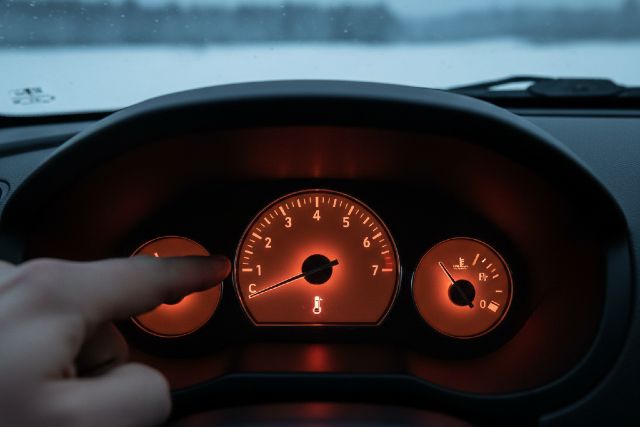

If your temperature gauge is reading low, it’s usually telling you one of two things: the engine is genuinely running cooler than designed, or the dashboard reading is wrong because a sensor, wiring, or the gauge itself is misreporting. Either way, it’s worth paying attention, because engines are engineered to operate in a fairly specific temperature range for efficiency, cabin heat, and emissions control.
Most drivers notice this problem when the needle stays close to “C,” never reaches the usual midpoint, or drops lower during highway driving. You might also notice weaker heater output, lower fuel economy, or a check-engine light. The good news is that the most common causes are fixable, and many can be narrowed down with a few simple checks.
What “Normal” Engine Temperature Looks Like
While every vehicle is a bit different, many gasoline engines are designed to stabilize roughly around the thermostat’s regulating temperature, commonly in the neighborhood of about 195°F to 220°F (90°C to 104°C) once fully warmed up.
That matters because when an engine stays too cool, the control system may keep the mixture richer for longer, and the catalytic converter may take longer to reach peak effectiveness. Cold operation is widely linked to higher fuel use and higher emissions during warm-up compared with fully warm running.
Definition: Temperature Gauge Reading Low
A “temperature gauge reading low” condition means the dash gauge stays below its normal warmed-up position after typical driving time, or it fluctuates downward (often at speed) instead of settling into a stable, normal range.
Temperature Gauge Reading Low: The Most Common Causes
Thermostat stuck open (most common real cause)
A thermostat is designed to stay closed when the engine is cold so the coolant doesn’t circulate through the radiator too soon. If it sticks open, coolant flows all the time, heat is constantly shed through the radiator, and the engine can struggle to reach proper operating temperature, especially in cool weather or at highway speeds.
A very common companion sign is weak cabin heat because the heater core never gets as hot as it should. Many cars may also set a “coolant temperature below regulating temperature” type fault code, often referenced in diagnostics as P0128 on many models (code naming varies by manufacturer).
Engine coolant temperature sensor (ECT) reading incorrectly
The coolant temperature sensor tells the ECU what the engine temperature is, and in many designs it also influences what the gauge shows. If it reads colder than reality, the gauge may stay low and the ECU may behave like the engine is still warming up, which can affect fueling, idle behavior, fan control, and emissions strategy.
Because sensor issues can mimic thermostat symptoms, the fastest way to separate them is comparing the dash gauge to live coolant temperature data from an OBD2 scan tool.
Wiring or connector problems, or an instrument cluster issue
Sometimes the sensor is fine but the signal is not. Corrosion in the connector, damaged wiring, or a failing instrument cluster can create an inaccurate low reading.
A clue here is inconsistency. If the gauge jumps, dips suddenly, or changes when you hit bumps, that’s often electrical rather than an actual temperature change.
Cooling fan running too much
If the radiator fan is commanded on when it shouldn’t be, it can over-cool the radiator and keep the system colder than expected. This is more noticeable at idle or in mild weather, and it can also be a downstream effect of a bad sensor signal.
Air pockets after coolant work
If the cooling system has recently been drained and refilled, trapped air can sometimes cause odd readings and inconsistent heat. This can show up as a heater that alternates between warm and cool, or a gauge that doesn’t behave like it did before service.
Symptoms That Often Show Up With a Low Reading
A low reading on the temperature gauge becomes much more meaningful when it comes with other symptoms.
Weak or lukewarm cabin heat is one of the strongest “thermostat stuck open” signals, especially if it never gets properly hot on the highway.
Fuel economy often drops when the engine runs cold longer than it should. Research into cold operation and cold-start effects consistently shows increased fuel consumption and higher emissions before the powertrain and catalyst warm up.
A check-engine light may appear. Many vehicles monitor how quickly coolant temperature rises and whether it reaches the expected regulating range. When that expectation isn’t met, a fault is stored and the MIL may illuminate.
Gauge behavior that improves in stop-and-go traffic but drops on the highway is classic for over-cooling. Airflow through the radiator at speed removes heat so efficiently that an always-open thermostat can’t maintain the setpoint.
Quick Solutions and Checks You Can Do
Start by observing warm-up time and heater output. On a typical day, most cars should move off the cold mark within a few minutes of driving, and cabin heat should become noticeably warm as the engine approaches operating temperature. If you can drive 15 to 20 minutes and it still feels like the engine never “gets there,” a thermostat stuck open becomes very likely.
Next, check the coolant level only when the engine is completely cold. Low coolant more often leads to overheating, but low levels or air pockets can create strange sensor behavior and poor heater performance.
Pay attention to whether the gauge drops mostly at speed. A gauge that climbs a little in city driving but drops on the highway strongly suggests over-cooling rather than a gauge-only problem.
If the only symptom is a low gauge but the heater is strong and stable, that’s when you start suspecting the gauge circuit, sensor bias, or cluster rather than the engine actually running cold.
The Fastest Diagnostic Shortcut: Compare Gauge vs Live Data
If you have access to any OBD2 scanner that can show live data, read the coolant temperature value and compare it to what the dash gauge suggests.
If live coolant temperature shows normal warmed values but the dash still reads low, you’re chasing a dash/gauge/cluster/wiring issue more than a thermostat.
If live coolant temperature stays unusually low while driving, especially on the highway, the thermostat is the prime suspect.
This single comparison often prevents replacing parts blindly.
Repair Options and What They Usually Fix
A thermostat replacement is the most common fix when the engine truly runs too cool. After replacement, you typically see normal warm-up time, stable gauge behavior, and noticeably better cabin heat.
A coolant temperature sensor replacement can fix a falsely low reading and also restore correct ECU decisions. This is most appropriate when live data is erratic, implausible, or doesn’t match the engine’s real behavior.
Electrical repairs apply when the sensor reading is sensible in live data but the dash gauge is wrong. That can include cleaning connectors, repairing wiring, or repairing/replacing the cluster depending on the design.
If the cooling fan is running constantly, diagnosing relay control, fan module behavior, and temperature inputs can resolve the over-cooling.
Why You Shouldn’t Ignore It
Even if the car seems “fine,” chronic cold operation can cost you over time. Engines tend to consume more fuel while warming up and may produce higher emissions until everything reaches optimal operating temperature. Studies of cold-start and cold-operation behavior highlight how strongly temperature affects both fuel economy and emissions output in that phase.
In colder climates, pre-heating strategies like block heaters are commonly cited for reducing warm-up losses and improving comfort, underscoring the real efficiency penalty of cold running.
When to Get a Mechanic Involved
If your gauge fluctuates unpredictably, if you have repeated warning lights, if coolant level keeps dropping, or if you’ve already replaced a thermostat or sensor and the issue remains, a professional cooling-system diagnostic is worth it. A shop can pressure-test for leaks, verify thermostat operation, and confirm sensor signal integrity.
FAQ
Why is my temperature gauge staying low?
The most common reason is a thermostat stuck open, which over-cools the engine by allowing continuous coolant flow through the radiator. Sensor or wiring issues can also cause a falsely low reading.
Can I drive with the temperature gauge reading low?
You can usually drive short-term, but it’s not ideal. Running cold can reduce fuel economy and increase emissions during extended warm-up and cold operation.
Why does my temperature gauge drop on the highway?
Higher airflow across the radiator removes heat more efficiently. If the thermostat is stuck open, the cooling system can’t regulate temperature properly at speed, so the gauge drops.
What if my heater is hot but the gauge reads low?
That often points to a gauge, wiring, or sensor reporting problem rather than an engine that’s truly cold. Confirm by comparing live coolant temperature data to the dash reading.
Conclusion
When your temperature gauge reads low, the most likely causes are a thermostat stuck open, a coolant temperature sensor issue, or an electrical/gauge problem. The quickest path to clarity is matching real coolant temperature from live OBD2 data to what the gauge shows. Fixing the root cause restores proper operating temperature, improves cabin heat, and helps avoid the fuel and emissions penalties linked to cold operation.














Leave a comment