
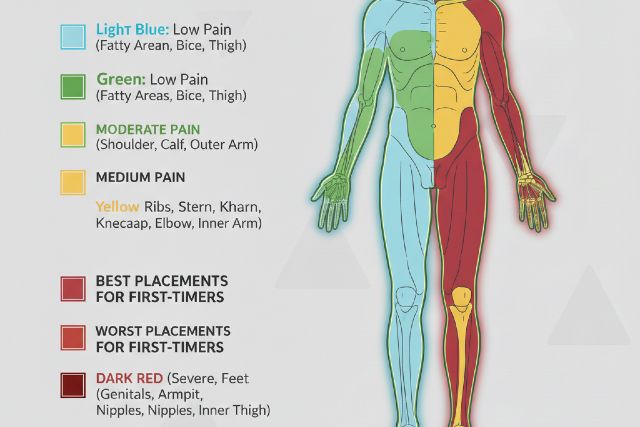

If you’re planning your first tattoo, you’ve probably searched for a tattoo pain chart hoping for a simple “this hurts” versus “this doesn’t” answer. The good news is that pain patterns are fairly predictable across most bodies. Areas with thin skin, lots of nerve endings, and bone close to the surface tend to hurt more, while areas with more muscle or fat padding usually feel more manageable. In this guide, you’ll learn how to use a tattoo pain chart realistically, which placements are typically easiest for first-timers, which ones are commonly the toughest, and how to reduce discomfort without compromising safety or results.
What a Tattoo Pain Chart Really Tells You
A tattoo pain chart is a practical guide to likely discomfort by placement. It reflects common anatomical realities more than personal toughness. Pain usually increases where the skin is thinner, where nerves are concentrated, and where the needle works close to bone. Healthline summarizes this principle clearly: less fat and thinner skin combined with dense nerves typically lead to greater pain during tattooing.
At the same time, the chart can’t account for everything. Your sleep quality, hydration, anxiety level, and even whether you’ve eaten can change how intense tattooing feels. Session length matters, too. A low-pain spot can start feeling intense after several hours simply because the skin becomes irritated from repeated passes.
Why Some Tattoo Placements Hurt More Than Others
Tattoo pain is strongly influenced by what’s under the skin. When there’s more padding, the needle’s sensation is often described as a persistent scratch or vibration. When there’s minimal padding, the sensation can become sharper, hotter, or more “electric,” especially as the tattoo progresses.
Thin skin makes the needle feel closer and more direct. High-nerve areas amplify sensation quickly. Bone proximity adds a distinct vibration and impact that many people find draining. Areas that flex or stretch, like the inner elbow or behind the knee, can feel intense during the session and may be more uncomfortable during healing because the skin keeps moving.
Tattoo Pain Chart Overview: Lowest to Highest Pain Zones
Most tattoo pain charts place outer, fleshy regions at the low end and bony, nerve-dense regions at the high end. This pattern is consistent across major tattoo and health references that discuss placement pain.
Low pain areas are commonly the outer upper arm, outer forearm, upper outer thigh, and parts of the calf. Moderate pain areas often include the shoulder, upper back, hip, and some sections of the lower leg away from the shin. High pain areas frequently include ribs, sternum, spine, hands and fingers, feet and ankles, armpit, inner arm, and the inner elbow area.
Best Tattoo Placements for First-Timers
Outer Upper Arm (Deltoid)
If you want a classic “first tattoo” location, the outer upper arm is a top contender. The tissue is usually padded enough to keep pain in a manageable range, and artists can position you comfortably. Healing is also straightforward because you can keep the area clean and protected without constant rubbing.
This is also a strong choice if you’re unsure how your body reacts, because you can start with a smaller design and expand into a sleeve later without the first tattoo feeling like a disconnected decision.
Outer Forearm
Outer forearm tattoos often feel moderate and predictable. Many first-timers describe the sensation as scratchy rather than sharp. It’s also easy to show off or cover up, depending on your workplace and personal preferences.
Pain can increase as you move toward the wrist, where the skin becomes thinner and the anatomy more bony. If you’re sensitive, placing the design slightly higher can make the experience noticeably easier.
Upper Outer Thigh
For many people, the upper outer thigh is one of the most comfortable places to get tattooed. The extra padding can reduce the sting, especially during shading. It’s also an area that tends to age well because it’s not constantly exposed to sun and friction compared to hands or feet.
If you wear tight jeans or do a lot of running, plan your aftercare carefully to minimize rubbing during the first week.
Calf (Outer)
The outer calf often sits in the “easier than you expected” category. It’s usually less brutal than shin, ankle, or foot placements, and the skin is workable for both fine-line and bolder styles. Longer sessions can still wear you down, but it’s commonly manageable for first-timers.
Worst Tattoo Placements for First-Timers
Ribs and Ribcage
Rib tattoos are frequently rated among the most painful. The skin is thin, the bone is close, and the area moves constantly with breathing. Even people with high pain tolerance often describe ribs as intense, especially if the design involves heavy shading or multiple passes.
If you love a rib design but want a smoother first experience, consider placing the first version on the outer upper arm or thigh, then returning to ribs later once you know your tolerance.
Feet and Ankles
Feet and ankles combine thin skin, bone proximity, and dense nerves. Pain can spike quickly, even for small tattoos, and swelling during healing can be more noticeable if you’re standing or walking a lot. These placements are also more exposed to friction from socks and shoes, which can complicate healing.
Armpit
The armpit is widely considered one of the most painful placements. The tissue is sensitive, nerve-rich, and challenging to sit through. Many guides list it near the top of the pain scale and strongly recommend skipping it as a first tattoo.
Hands and Fingers
Hands and fingers can hurt, but pain isn’t the only issue. These areas often fade faster because of frequent washing, friction, and skin turnover. Some artists are cautious about hand and finger tattoos for first-timers because they may require more touch-ups and can age differently than forearm or upper arm work.
Sternum and Center Chest
The sternum is a high-intensity placement for many people. The needle is working close to bone, and the area can feel sharp and draining, especially in longer sessions with shading.
Pain Isn’t the Only Factor: Healing and Lifestyle Matter
A tattoo pain chart helps you anticipate the session, but your day-to-day life affects healing just as much.
If you work a physical job, high-friction placements such as hands, inner elbow, or feet may be annoying to heal. If you sit at a desk, waistline, ribs, or areas that rub against chair arms can become uncomfortable. If you train hard at the gym, avoid placements that stretch constantly, such as inner elbow or behind the knee, unless you can modify workouts during the first couple of weeks.
From a medical perspective, tattoos are essentially controlled skin trauma. Cleveland Clinic emphasizes that careful aftercare reduces the risk of complications like infection, rash, scarring, and tattoo distortion.
What Tattoo Pain Feels Like: Realistic First-Timer Expectations
Many people are surprised that tattooing isn’t one single feeling. Outlines often feel sharper and more scratch-like, while shading can feel hotter or more raw because the needle revisits the same area repeatedly.
A small fine-line tattoo on the outer upper arm often feels persistently scratchy, and most people can chat through it. A rib tattoo with shading tends to feel intense and breath-sensitive, and it can become mentally tiring over time. An ankle tattoo may start off sharp and stay sharp, but it can still be doable if the session is short.
If you’re nervous, your best advantage is choosing a placement with a predictable, moderate sensation and keeping the first session relatively short.
How to Reduce Tattoo Pain Safely
The biggest “pain reducers” are not hacks. They’re basics that prevent your nervous system from being on high alert.
Arrive well-rested and fed, because low sleep and low blood sugar make sensations feel louder. Avoid alcohol beforehand, since it can increase bleeding and complicate the session. Hydrate normally and avoid excessive caffeine if it makes you anxious.
During the tattoo, focus on steady breathing and relaxing the muscles near the tattoo site. Tensing increases discomfort and can make the session feel longer than it is. Ask for short breaks before you hit your limit rather than waiting until you’re overwhelmed.
If you’re considering numbing cream, discuss it with your artist in advance. Some artists prefer not to use it because it can slightly affect skin texture and how ink settles, depending on the product and timing. Follow professional advice and use reputable products if you go that route.
Tattoo Style and Session Length Change Pain More Than People Expect
Placement is huge, but style and time matter.
A small, minimal linework tattoo can be a completely different experience than a large, saturated piece in the same location. Dense shading and color packing often involve repeated passes and can become more intense as the skin gets irritated. Even “easy” areas can feel tough in hour three or four.
If your goal is the smoothest first tattoo, consider a design that can be completed in one shorter session and avoid extremely sensitive placements.
Pain vs. Warning Signs: What’s Normal and What Isn’t
Some soreness, warmth, and mild swelling are common after a tattoo, especially in the first day or two. A review of tattoo-related complications notes that mild discomfort is expected, but infections and inflammatory reactions can occur in a smaller subset of cases.
If you notice worsening redness that spreads, increasing heat, pus, fever, or red streaking, treat it as a medical concern rather than “normal healing.” When in doubt, get clinical guidance.
FAQ: Tattoo Pain Chart Questions People Ask Most
What is a tattoo pain chart?
A tattoo pain chart is a guide that estimates how painful tattooing may be on different body parts based on factors like skin thickness, fat or muscle padding, nerve density, and proximity to bone.
What is the least painful place to get a first tattoo?
Many first-timers find the outer upper arm, outer forearm, upper outer thigh, and outer calf among the most manageable placements because they’re typically fleshier and less nerve-dense than bony zones.
What is the most painful place to get a tattoo?
Ribs, armpit, feet and ankles, sternum, hands and fingers, inner arm, and inner elbow are frequently rated among the most painful because they combine sensitive tissue, thin skin, and bone proximity.
Do tattoos hurt more if you’re anxious?
They can. Anxiety increases tension and can heighten pain perception, which is why breathing, breaks, and choosing a lower-pain placement can significantly improve the first experience.
Is tattoo removal more painful than getting a tattoo?
Many people report removal can feel more intense than getting tattooed and often requires multiple sessions.
Conclusion
A tattoo pain chart is most useful when you treat it as a realistic guide, not a guarantee. For first-timers, choosing a placement like the outer upper arm, outer forearm, upper outer thigh, or outer calf often leads to a smoother session and easier healing. High-pain placements like ribs, feet, hands, armpit, sternum, and inner elbow can absolutely be worth it, but they’re usually better as a second or third tattoo once you understand your tolerance. If you use the tattoo pain chart to pick a sensible starting spot, prepare well, and follow dermatologist-backed aftercare, you’ll improve both comfort and the final result.















Leave a comment