
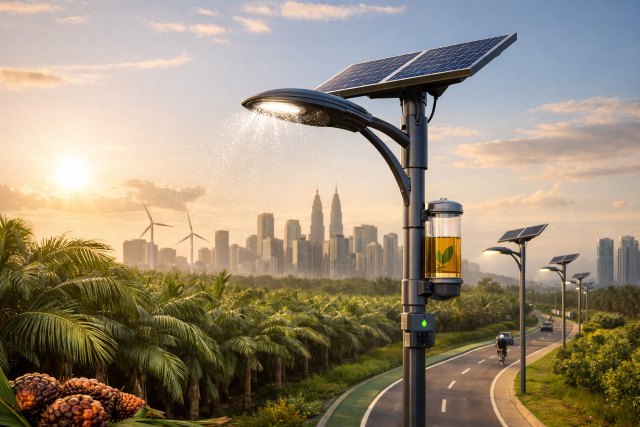

Cities around the world are searching for smarter and more sustainable infrastructure solutions. One innovative concept gaining attention is the Self Cleaning Street Light palm oil Project, a system designed to provide efficient lighting while reducing maintenance costs and environmental impact.
Urban lighting plays a critical role in public safety, energy efficiency, and city aesthetics. However, traditional street lights require frequent cleaning, maintenance, and electricity consumption. Dust, pollution, and weather conditions often reduce lighting efficiency by up to 20–40%, according to urban infrastructure research.
The Self Cleaning Street Light palm oil Project aims to address these challenges by combining renewable energy sources, innovative cleaning mechanisms, and sustainable materials such as palm oil byproducts. This approach supports modern smart city initiatives while reducing long-term operational costs.
In this guide, we explore how the project works, its environmental benefits, real-world applications, and why it may become a major part of future urban infrastructure.
What Is the Self Cleaning Street Light palm oil Project?
The Self Cleaning Street Light palm oil Project is a sustainable lighting initiative that integrates automated cleaning systems with eco-friendly materials derived from palm oil processing.
The project typically combines three major technologies:
• Solar-powered LED street lighting
• Automated self-cleaning mechanisms
• Palm oil–based bio materials or biofuels
These components work together to create a street lighting system that requires minimal maintenance while maximizing lighting performance.
The concept aligns with smart city development strategies, where technology improves infrastructure efficiency while minimizing environmental impact.
According to the International Energy Agency (IEA), public lighting accounts for nearly 40% of municipal electricity consumption. Smart lighting technologies can significantly reduce this demand.
Why Modern Cities Need Self-Cleaning Street Lighting
Urban environments are constantly exposed to dust, pollution, bird droppings, and environmental debris. Over time, these elements accumulate on street light panels and lenses.
When light fixtures become dirty, illumination decreases and energy efficiency drops.
Several challenges arise with traditional lighting systems:
• Frequent manual cleaning is required
• Maintenance costs increase
• Energy efficiency decreases
• Public safety can be compromised due to reduced brightness
The Self Cleaning Street Light palm oil Project solves these issues by incorporating automated cleaning systems that maintain optimal lighting performance.
Cities adopting smart infrastructure solutions can reduce operational costs while improving urban sustainability.
How the Self Cleaning Technology Works
The self-cleaning component of the project is designed to maintain solar panels and lighting surfaces without human intervention.
These systems often use multiple technologies such as:
1. Automated Brush or Wiper Systems
Small robotic brushes or wipers clean the solar panels at scheduled intervals. This ensures dust and debris do not accumulate.
Maintaining clean solar panels can increase energy production by 15–25% according to renewable energy studies.
2. Hydrophobic Coatings
Special coatings repel water, dust, and pollutants. Rainwater can naturally wash away dirt from the light surfaces.
This technology is commonly used in self-cleaning glass architecture.
3. Vibration Cleaning Mechanisms
Some designs use micro-vibration technology to shake off dust particles.
This method requires minimal energy and works effectively in dry environments.
Together, these technologies significantly reduce the need for manual maintenance.
Role of Palm Oil in the Self Cleaning Street Light palm oil Project
Palm oil is widely known for its role in food and industrial production, but its byproducts are increasingly used in renewable energy solutions.
In the Self Cleaning Street Light palm oil Project, palm oil contributes in several ways.
Biofuel Production
Palm oil residues can be processed into biodiesel, which can power hybrid lighting systems where solar energy alone is insufficient.
Biodiesel from palm oil produces fewer greenhouse gas emissions compared to fossil fuels.
According to the World Bank, biofuels can reduce carbon emissions by 50–80% depending on feedstock.
Biodegradable Materials
Palm oil derivatives can be used to manufacture eco-friendly coatings, lubricants, and plastics used in lighting systems.
This reduces dependence on petroleum-based materials.
Sustainable Waste Utilization
Palm oil mills generate large quantities of waste such as palm kernel shells and empty fruit bunches.
These materials can be converted into energy or construction materials for lighting infrastructure.
This supports the circular economy model in urban development.
Environmental Benefits of the Project
The Self Cleaning Street Light palm oil Project contributes to several environmental improvements.
First, it reduces energy consumption by integrating solar-powered LED lighting, which is significantly more efficient than traditional street lights.
LED lights use up to 75% less energy than incandescent bulbs according to the U.S. Department of Energy.
Second, the self-cleaning technology ensures solar panels maintain peak efficiency without requiring chemical cleaning agents.
Third, the use of palm oil byproducts supports waste recycling and renewable fuel production.
Overall, these benefits help cities reduce their carbon footprint and operational costs.
Cost Savings for Municipalities
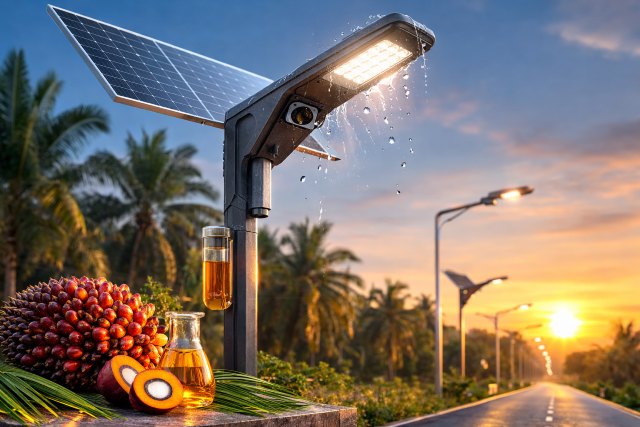
One of the biggest advantages of implementing the Self Cleaning Street Light palm oil Project is the reduction in maintenance expenses.
Traditional street lights require regular inspection, cleaning, and bulb replacement.
Smart street lighting systems offer several financial benefits:
• Lower energy bills
• Reduced cleaning and maintenance costs
• Longer LED lifespan (up to 50,000 hours)
• Lower labor expenses
Although the initial installation cost may be higher, cities typically recover their investment within 5–7 years.
This long-term cost efficiency makes the project attractive for urban planners.
Smart City Integration
The Self Cleaning Street Light palm oil Project can also integrate with IoT (Internet of Things) technologies.
Smart street lights can include sensors that monitor:
• Air quality
• Traffic flow
• Noise levels
• Weather conditions
These sensors transmit data to city management systems, helping municipalities improve urban planning and environmental monitoring.
Smart lighting infrastructure also enables adaptive lighting, where brightness adjusts automatically based on pedestrian or vehicle movement.
This further reduces energy consumption.
Real-World Examples and Case Studies
Several cities and research institutions are experimenting with smart and self-cleaning lighting systems.
Singapore Smart Lighting Initiative
Singapore has implemented smart lighting systems integrated with sensors and automated management tools.
The government aims to reduce energy use and support smart city development.
Dubai Smart City Projects
Dubai has introduced solar-powered street lights in several areas as part of its sustainability initiatives.
These systems use advanced energy management technologies to reduce electricity consumption.
Research Projects in Malaysia and Indonesia
Because these countries are major palm oil producers, universities and research organizations are exploring how palm oil waste can support renewable energy projects.
These initiatives align with the Self Cleaning Street Light palm oil Project concept.
Common Questions About the Project
What is a Self Cleaning Street Light palm oil Project?
A Self Cleaning Street Light palm oil Project is a smart lighting system that combines solar-powered LED lights, automated cleaning technology, and palm oil-based renewable resources to create sustainable urban lighting.
Why is self-cleaning technology important?
Dust and pollution can reduce solar panel efficiency. Self-cleaning systems ensure maximum energy generation without manual maintenance.
Is palm oil sustainable for energy projects?
Palm oil biofuel can be sustainable when produced responsibly and combined with waste recycling systems.
Organizations like the Roundtable on Sustainable Palm Oil (RSPO) promote responsible production practices.
Are self-cleaning street lights expensive?
The initial installation cost may be higher, but long-term savings in maintenance and energy consumption make them cost-effective.
Future of Sustainable Urban Lighting
Urban populations are expected to reach 68% of the global population by 2050, according to the United Nations.
This rapid growth will require cities to adopt smarter infrastructure solutions.
Projects like the Self Cleaning Street Light palm oil Project represent the future of sustainable urban development.
Innovations in renewable energy, automation, and smart technology will transform how cities manage lighting systems.
Emerging technologies such as AI-powered energy management, advanced solar materials, and biodegradable components will further enhance these systems.
Implementation Tips for Cities and Developers
Cities planning to adopt the Self Cleaning Street Light palm oil Project should focus on several key strategies.
First, conduct feasibility studies to evaluate solar potential and infrastructure requirements.
Second, collaborate with renewable energy experts and technology providers.
Third, ensure palm oil resources used in the project meet sustainable certification standards.
Finally, integrate the lighting system with broader smart city initiatives for maximum benefits.
Conclusion
The Self Cleaning Street Light palm oil Project offers a promising solution for sustainable urban lighting. By combining solar-powered LEDs, automated cleaning systems, and palm oil–based renewable materials, cities can significantly reduce energy consumption and maintenance costs.
As urban populations continue to grow, infrastructure innovation will become increasingly important. The Self Cleaning Street Light palm oil Project demonstrates how technology and renewable resources can work together to build smarter, cleaner, and more efficient cities.
Municipalities that invest in these advanced lighting systems today will not only improve public safety and energy efficiency but also contribute to a greener and more sustainable future.














Leave a comment