
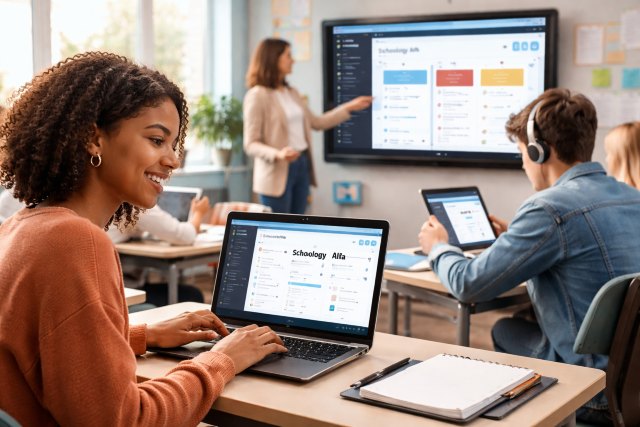

Digital learning isn’t a “nice-to-have” anymore — it’s the backbone of how modern schools organize teaching, communication, and student progress. Schoology Alfa has become a search term for people looking for a specific Schoology-based learning environment connected to Alfa Fundación and its academic ecosystem, where students and educators use a dedicated Schoology portal to manage courses, assignments, grades, and messaging in one place.
You’ll learn what Schoology Alfa is, how it fits into a modern digital education system, what makes it valuable for students, teachers, and families, and how to use it effectively — whether you’re searching “alfa schoology,” trying to access schoology.alfa, or exploring schoology alfa fundacion for the first time.
What Is Schoology Alfa?
Schoology Alfa typically refers to a customized or organization-specific Schoology instance used by Alfa Fundación (often accessed through a dedicated portal like alfafundacion.schoology.com). In practical terms, it’s Schoology — an LMS (Learning Management System) — configured to match a particular institution’s workflows, courses, and user roles (students, teachers, parents, and administrators).
Why Schoology Alfa Matters in Modern Education
Education systems are under pressure to do more with less — more personalization, clearer accountability, better student support, and stronger home-school communication. A well-implemented LMS helps schools operate like a connected system instead of disconnected classrooms.
The OECD describes learning management systems as key building blocks in a broader digital education ecosystem, supporting organization and information flows at both institutional and system levels.
Meanwhile, evidence reviews (like UNICEF’s) show digital learning tools can improve learning outcomes in some contexts, but results vary — meaning implementation quality matters as much as the platform itself.
So the real story isn’t “platform vs. no platform.” It’s: how do you build a reliable digital learning routine that teachers can sustain and students can actually follow? That’s where Schoology Alfa becomes valuable.
Schoology Alfa and Alfa Fundación: The “Why” Behind the Platform
To understand why a dedicated portal like Schoology Alfa exists, it helps to understand Alfa Fundación’s mission.
Alfa Fundación describes its educational project as an initiative to promote social mobility by identifying and educating students with high intellectual potential from communities in the Monterrey metropolitan area.
In programs like this, consistency, structure, and support systems matter. A centralized LMS helps:
Teachers keep instruction organized across multiple courses and schedules.
Students manage deadlines, feedback, and learning resources in one place.
Families track progress and stay informed.
Administrators monitor participation and performance patterns over time.
That’s the real promise behind alfa fundacion schoology as a concept: not just “online classrooms,” but a coordinated learning system.
Core Capabilities You Should Expect from Schoology Alfa
Schoology (as a product) is positioned as a K–12 learning management system designed to connect teachers, students, and families with tools for personalized teaching and learning.
While each institution’s setup differs, most Schoology-based environments (including Schoology Alfa) typically support these high-impact workflows:
Centralized Course Hubs for Every Subject
A course hub is where everything lives: lesson materials, instructions, files, links, and discussion prompts. This reduces the classic problems students face in hybrid learning — missing resources, unclear expectations, or “I didn’t know it was due.”
Assignment Submission and Feedback Loops
A strong LMS turns assignments into an ongoing feedback loop instead of a one-time upload. Teachers can annotate, comment, grade, and return work in a structured way, and students can resubmit or reflect.
Grade Visibility and Progress Tracking
When grades are consistently updated, students gain control over their progress and families stay informed without having to chase updates. This transparency is one of the simplest ways to reduce misunderstanding and improve accountability.
Communication That Doesn’t Depend on One Channel
School communication breaks down when it depends on one method: a paper note, a WhatsApp group, or an email chain nobody reads. LMS messaging, announcements, and notifications create a reliable baseline channel for school-related updates.
Mobile-Friendly Access for Real Life
A modern LMS has to work on phones, not just laptops. Schoology is widely used in K–12 contexts and is designed for access across devices, which matters for students who don’t always have a desktop environment at home.
How Schoology Alfa Supports Blended and Hybrid Learning
Blended learning isn’t just “some online tasks.” The best blended models make online tools serve three goals:
Clarity: Students always know what to do next.
Continuity: Learning continues outside the classroom without confusion.
Coaching: Teachers get visibility into progress, not just final results.
UNESCO’s work on blended learning highlights both benefits and practical challenges, including how students need self-regulation to succeed in blended models.
That’s where Schoology Alfa can help: the platform structure (deadlines, calendars, reminders, organized resources) supports student self-management — but only if teachers set up courses intentionally and students are taught how to use the tools.
Real-World Scenario: What Good Use Looks Like in Schoology Alfa
Imagine a math teacher in a blended program:
In class: the teacher introduces a concept and works through examples.
After class: students complete a short practice assignment in Schoology Alfa, with immediate teacher visibility on who submitted, who struggled, and which questions caused problems.
Next class: the teacher groups students based on what they need — mini review for some, extension work for others.
That’s not “more tech.” That’s better instructional decision-making supported by an LMS.
Actionable Tips to Get More Value from Schoology Alfa
This is where most LMS rollouts succeed or fail: daily habits.
For Students
Treat Schoology Alfa like your academic home base. Check it at set times daily — morning and evening works well. Use notifications, but don’t rely on them as your only system.
If your course pages feel overwhelming, focus on three anchors:
What’s due next?
What feedback did I receive?
What resource do I need today?
For Teachers
A clean course structure beats fancy features.
Aim for predictable weekly patterns:
Same naming convention for assignments.
Same day each week for posting weekly plans.
One “Start Here” folder or page for new learners.
This reduces cognitive load for students, which is especially important in blended learning environments.
For Parents and Families
Use the platform to replace guesswork with visibility. Instead of asking “Do you have homework?” you can ask:
“I saw your deadline for X. What’s your plan to finish it?”
That small shift turns monitoring into coaching.
Schoology Alfa and Data: Useful Insights Without Over-Surveillance
Learning platforms generate participation signals — logins, submissions, completion status, and grade patterns. Used ethically, these help schools provide support earlier.
The OECD notes that LMS can collect and organize key student information and learning signals as part of a school’s digital ecosystem.
The goal shouldn’t be “watch students more.” The goal should be:
Identify who needs help sooner.
Reduce silent failure.
Support teachers with simple, actionable insights.
Security, Privacy, and Responsible Use
Any LMS involves student data. Schools and families should expect clear answers to questions like:
What data is collected and why?
Who can access it (teacher, admin, parent)?
How long is it retained?
What are the rules for third-party integrations?
A healthy approach is transparency + minimalism: collect what supports learning, protect it, and avoid expanding data use beyond educational purpose.
The Bigger Trend: Why LMS Platforms Keep Growing
If you’re wondering whether LMS platforms are “just a pandemic thing,” market data suggests otherwise.
In K–12, large-scale tracking has shown thousands of LMS implementations across the US and Canada, reflecting how embedded LMS platforms have become in school operations.
In higher education, market share tracking shows ongoing shifts among major LMS providers rather than a retreat from LMS usage — suggesting the category is mature and still evolving.
In short: the LMS is now part of how education systems function, even as specific platforms change.
FAQs
What is “alfa schoology”?
“Alfa schoology” usually refers to the Schoology platform environment used by Alfa Fundación — often accessed through a dedicated portal where students and teachers manage learning activities.
What is schoology.alfa?
People commonly type “schoology.alfa” while searching for the dedicated Alfa Fundación Schoology login portal (for example, an institution-specific Schoology subdomain).
Is Schoology Alfa different from regular Schoology?
Functionally, it’s Schoology — but configured for a specific organization’s courses, roles, and processes. The “Alfa” part indicates it’s tied to Alfa Fundación’s environment rather than a generic Schoology login.
Who uses Schoology Alfa Fundacion?
Typically students, teachers, and families connected to Alfa Fundación’s academic programs use it to access coursework, submissions, grading, and communication.
What should I do if I can’t log in?
Start with the exact login portal your institution provides and confirm you’re using the correct email/username and password. If access is managed by the institution, you’ll usually need your program admin or school IT contact to reset credentials.
Conclusion: Why Schoology Alfa Is a Practical “Future of Learning” Tool
The future of education isn’t just digital — it’s organized, connected, and supportive. Schoology Alfa represents that shift: a centralized learning environment where coursework, feedback, communication, and progress tracking work together instead of living in separate tools and scattered messages.
When institutions like Alfa Fundación use a dedicated LMS environment, the goal isn’t technology for its own sake. It’s building a reliable learning system that supports students, empowers teachers, and keeps families informed — especially in blended learning models where structure and consistency make the difference.
If you’re navigating alfa schoology, searching schoology.alfa, or trying to understand schoology alfa fundacion, the key takeaway is simple: Schoology Alfa works best when it’s used daily with clear routines, clean course design, and a shared expectation that the platform is the single source of truth for learning.















Leave a comment