
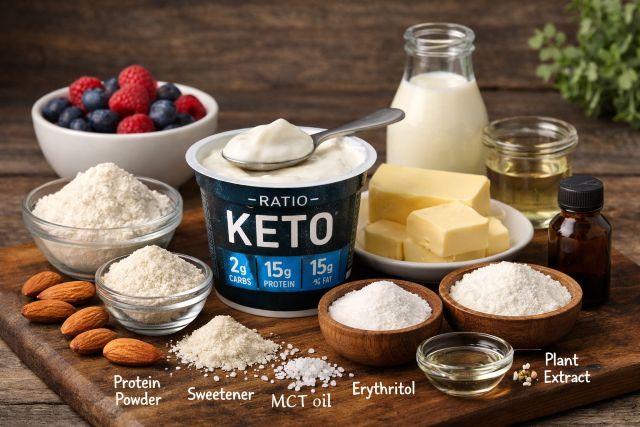

If you’re doing keto, low-carb, or simply watching sugar, ratio yogurt is probably on your short list. It’s marketed as “Keto* Friendly” in some varieties, it tastes like dessert, and the macros often look impressively low in carbs. But labels can be confusing, and “keto friendly” isn’t a regulated standard. The only reliable way to decide is to look at the nutrition facts, understand the ingredients, and compare the serving to your personal carb target.
This article gives you a full ingredient breakdown of ratio yogurt, explains what each ingredient does in the formula, and helps you decide whether it fits strict keto, moderate keto, or a more flexible low-carb approach. You’ll also get practical guidance on net carbs, sweeteners, and portion sizing so you can keep ketosis (or your goals) on track.
Is ratio yogurt keto friendly?
For many people, yes, ratio yogurt can be keto friendly, especially the products specifically labeled “Keto* Friendly,” such as the :ratio Trio line. On the official :ratio product page for the Trio Vanilla dairy snack tub, the brand highlights macros that are generally compatible with keto-style eating, showing low carbs and sugar with higher fat and protein. You can verify the current nutrition and ingredient details directly on :ratio’s product listing.
The bigger truth is that keto friendliness depends on your daily carb cap and what else you eat that day. Cleveland Clinic explains that ketosis typically requires reducing carbohydrates enough that the body shifts away from glucose as its primary fuel source, and many people try to stay under about 50 grams of carbs per day, sometimes lower depending on the individual.
What “keto friendly” means for yogurt in real life
When a yogurt calls itself “keto friendly,” it usually means the product has been formulated to keep sugars and total carbohydrates low compared with typical flavored yogurts. Many mainstream flavored yogurts rely on added sugar, sweetened fruit, or both. Keto-aligned yogurts usually take a different route by emphasizing fat, protein, and non-sugar sweetness so you get a dessert-like taste without the same sugar hit.
Harvard’s Nutrition Source notes that ketogenic diets generally reduce carbs dramatically, often to under 50 grams per day, and sometimes closer to 20 grams depending on the plan and the person. That’s why yogurt can be tricky. Even “healthy” yogurt can contain enough sugar to blow a strict keto day, especially if it’s sweetened.
So for keto, yogurt success comes down to a few practical checks. You want low total carbs per serving, low sugar per serving, and ingredient choices that you personally tolerate well. You also want a portion that matches the label, because “a few spoonfuls” can quickly become the entire tub.
Ratio yogurt ingredient list, explained in plain English
To keep this grounded in an actual label, it helps to look at a specific “Keto* Friendly” product. On the official :ratio product page for Trio Vanilla (tub), the ingredients include pasteurized ultra-filtered nonfat milk, pasteurized milk, milk fat, high oleic sunflower and/or avocado oil, natural flavor, salt, sucralose, and cultures.
Those ingredients may look different from traditional yogurt, especially the added oils. That doesn’t automatically make it “bad” or “good.” It just means it’s engineered to hit a texture and macro profile that fits a low-carb audience.
Ultra-filtered nonfat milk and milk
Ultra-filtered milk is commonly used in higher-protein dairy products. Filtration can concentrate protein and reduce some lactose, which is the sugar naturally found in milk. The result is a thicker, protein-forward base that can help lower the carb-to-protein ratio compared with conventional sweetened yogurt.
From a keto perspective, this is often a win. Less lactose generally means fewer carbs, and more protein helps with satiety. The main caution is personal: protein needs differ. Some keto eaters keep protein moderate, while others prefer higher protein for training or appetite control.
Milk fat
Milk fat is one of the biggest reasons ratio products can feel creamy and rich. Fat also makes yogurt more satisfying, which can be useful on keto because it reduces the urge to snack on high-carb foods later.
From a keto-macro standpoint, milk fat usually supports ketosis more easily than sugar does. The only common downside is calorie density. If you’re using keto for weight loss, fat is helpful for satiety but can also push calories up quickly if you eat multiple servings without realizing it.
High oleic sunflower oil and/or avocado oil
This is the ingredient that surprises people. Oils can change mouthfeel and help maintain a thick, creamy texture without relying on sugar or high-carb thickeners. In other words, it’s a formulation choice designed to deliver “dessert texture” with low sugar.
On keto, oil isn’t a carb concern, but it is a preference concern. Some people want dairy fat only. Others don’t mind added oils. If you’re sensitive about ultra-processed ingredients, this may influence your decision even if the macros fit.
Natural flavor
“Natural flavor” is a broad labeling category and can cover many flavor compounds derived from natural sources. It’s extremely common in flavored dairy.
For keto, natural flavor is typically not a carb driver at the amounts used. The more important point is transparency. If you prefer minimal ingredients, natural flavors may feel too vague. If you prioritize taste and macros, it may not matter.
Salt
Salt is usually present in small amounts to balance sweetness and improve overall flavor. Many keto eaters are mindful of electrolytes, so salt is not typically a concern unless you’re on a medically restricted sodium plan.
Sucralose
Sucralose is a high-intensity sweetener used to keep sugar low while maintaining a sweet taste. On keto, sucralose generally helps products stay low in carbs because it provides sweetness without sugar.
The practical issue is tolerance. Some people do well with sucralose and notice no cravings or digestive changes. Others find that sweeteners, even non-sugar ones, can trigger appetite or cravings. If you’re unsure, the best test is personal. Try it consistently for a week and observe how your hunger, cravings, and digestion respond.
Live cultures
Yogurt cultures such as L. bulgaricus and S. thermophilus are standard for yogurt fermentation. Cultured dairy is often easier to digest for some people and can be a convenient way to include fermented foods.
From a keto standpoint, cultures are usually neutral or positive. The key is still carbs and sugar, because many yogurts with cultures still include a lot of sweetener or fruit.
Ratio yogurt macros: what you’re typically getting
On the :ratio product page for Trio Vanilla (tub), the brand highlights macros that include low carbs and sugar along with meaningful protein and fat. This macro pattern is exactly why ratio yogurt is popular in keto circles. It can feel like a dessert while staying closer to keto-friendly numbers than conventional flavored yogurts.
Still, don’t rely on vibes. Always check the exact flavor and container size you’re buying, because cups, tubs, and product lines can differ. Even within a brand, “keto friendly” items may vary slightly by flavor due to ingredients and flavoring.
Net carbs and keto yogurt: what matters most
A lot of keto marketing leans on the concept of net carbs. UCLA Health explains the common approach: net carbs are often described as total carbohydrates minus fiber and certain sugar alcohols. That math can be helpful in some cases, but it’s not a universally standardized labeling method, and it can sometimes lead to overeating “keto” products because the numbers feel smaller.
For yogurt specifically, the simplest approach is usually the best. Start with total carbs and sugar, then consider whether any fiber or sugar alcohols are playing a big role. Many of the :ratio Trio items are already low enough in total carbs that you’re not leaning heavily on complicated net-carb assumptions.
If you want more context on how brands talk about net carbs in keto products, General Mills has discussed the :ratio line and how net-carb style thinking appears in keto-friendly snack marketing.
How ratio yogurt compares to typical flavored yogurt
Traditional flavored yogurt often contains a surprising amount of sugar because the product is designed to taste like a sweet snack. Keto-oriented yogurt flips that script. It tends to use higher protein dairy bases, additional fats for creaminess, and non-sugar sweeteners for flavor.
This matters because the biggest keto barrier with yogurt is almost always sugar. Many “fruit” yogurts taste healthy but can deliver dessert-level carbs. If ketosis is your goal, sugar grams are usually the fastest way to identify whether a yogurt fits.
Who should be cautious with ratio yogurt on keto
Some people will love ratio yogurt on keto, while others may need to be more careful.
If you’re doing strict keto with a very low carb ceiling, even a low-carb yogurt can matter, especially if you’re eating other “small carb” foods throughout the day. Harvard’s overview of ketogenic diets highlights how low daily carbs often are on keto, which is why small servings add up quickly.
If you’re sensitive to sweeteners, sucralose could be the make-or-break ingredient. This is less about carbs and more about cravings, digestion, and appetite response.
How to choose the best ratio yogurt for keto
The most reliable way to pick the right ratio yogurt is to treat every flavor like its own product. Start by checking total carbs per serving, then confirm sugar per serving, then scan the ingredients for anything you personally avoid.
If you’re aiming for consistent ketosis, match the yogurt to your daily carb budget. Cleveland Clinic’s ketosis overview is a helpful reminder that many people keep daily carbs low enough to sustain ketosis, often under about 50 grams, and sometimes lower depending on the person.
If you’re doing keto for weight management, the texture and satiety of a higher-fat yogurt can be useful, but it still helps to keep portions deliberate. A product that fits macros can still stall progress if it becomes a frequent “extra” on top of meals rather than part of a planned snack.
Real-world keto scenarios: does ratio yogurt fit?
If you track keto strictly and log everything, ratio can work best as a planned macro item. You include it on purpose because you already know its carb impact and you build your day around it. In this scenario, it’s less of an impulse snack and more of a controlled treat that helps you stay consistent.
If you’re doing a moderate or flexible keto approach, ratio yogurt can become a convenient “dessert replacement.” This is where it shines for many people. The taste and texture help curb cravings, and the carb count is typically lower than traditional dessert options.
If you’re using keto for blood sugar support, lower sugar foods can be helpful, but medical context matters. Keto can affect medication needs and glucose management, so it’s wise to get clinician guidance if you’re using keto therapeutically.
Frequently asked questions about ratio yogurt and keto
Is ratio yogurt actually keto friendly?
For many people, yes. Ratio yogurt can be keto friendly, especially the items marketed as “Keto* Friendly,” because they are formulated to be lower in carbs and sugar than typical flavored yogurts. The best way to confirm is to check the nutrition and ingredient details for the exact flavor on the brand’s product page or on the package itself.
How many carbs can you eat on keto?
Many keto approaches reduce carbs dramatically, often below 50 grams per day, and sometimes closer to 20 grams depending on the person and the plan. Harvard’s Nutrition Source provides a useful overview of how low-carb ketogenic diets typically are.
What are net carbs, and should you use them?
Net carbs are commonly described as total carbs minus fiber and certain sugar alcohols, but it’s not a universally standardized method across all products. UCLA Health explains how the concept is often used and why it can be confusing. If you’re strict keto, total carbs and portion size are usually the safest anchors, with net carbs as a secondary check.
Does ratio yogurt contain sugar?
Some varieties contain small amounts of sugar, but the “Keto* Friendly” options are typically low in sugar compared with conventional flavored yogurts. Always verify the specific flavor’s label or the official product listing.
What sweetener does ratio yogurt use?
At least some :ratio Trio “Keto* Friendly” products list sucralose as the sweetener in the ingredients. You can confirm this on the official ingredient list for the flavor you’re buying.
Conclusion: is ratio yogurt keto friendly for you?
If you want a convenient, sweet, creamy snack that doesn’t come with the sugar load of typical flavored yogurts, ratio yogurt can be a solid keto-friendly option, especially the varieties labeled “Keto* Friendly.” The ingredient list for products like Trio Vanilla shows a formulation designed to keep carbs and sugar low while delivering fat and protein for satiety, using ultra-filtered dairy, milk fat, added oils for texture, and sucralose for sweetness.
The best way to decide is to check the exact flavor’s total carbs and sugar, then confirm the ingredients match your preferences and tolerances. Keto success is often about consistency, and choosing foods that feel satisfying without derailing your carb target makes consistency easier. If your daily carb range is in the common keto window discussed by Harvard and Cleveland Clinic, ratio yogurt can fit comfortably for many people when portion sizes match the label and the rest of the day stays low carb.















Leave a comment