
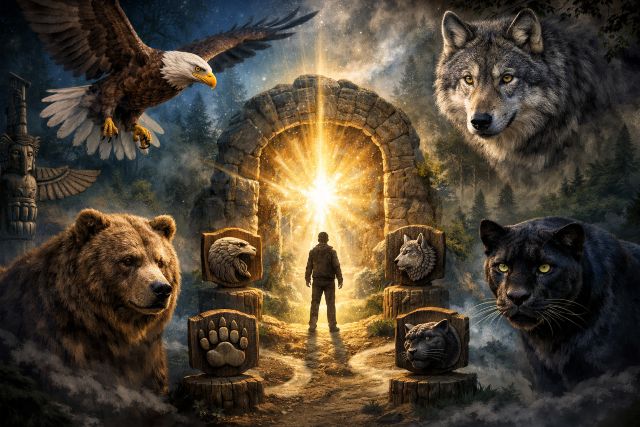

If you’ve been searching for a quiz totem animal that feels fun and meaningful, you’re in the right place. Totem animals, sometimes described as animal guides or animal archetypes, show up across many traditions as symbols of identity, values, and one’s relationship with the natural world. In modern life, a quick quiz can’t “assign” a sacred tradition, but it can help you reflect on patterns, name your strengths, and choose an animal symbol that motivates you.
This article includes a quick quiz totem animal test, explains what your result can mean, and shows you how to use it in real life without turning it into pseudoscience. It also keeps cultural respect in mind. Britannica describes totemism as belief in kinship or a mystical relationship with a spirit-being, often an animal or plant, used as an emblem or symbol. OpenStax also describes totemism as a metaphorical relationship linking humans and the natural world, often expressed through story, art, and ritual.
What is a totem animal?
A totem animal is an animal symbol that represents qualities you identify with, or qualities you’re being invited to develop. In many traditional contexts, totems can be deeply tied to community, lineage, place, and responsibilities. That’s why it’s important to keep a quiz framed as personal reflection rather than a claim to a culture.
In today’s self-development language, people often use “totem animal” to describe a personal metaphor. Think of it like a mirror for your habits and values, not a badge that proves anything. When used thoughtfully, it can help you make better decisions, communicate needs, and stay connected to the parts of yourself you want to strengthen.
A brief note on respect and cultural sensitivity
You’ll often see the phrase “spirit animal” online, but casual use can be offensive or appropriative when it borrows from Indigenous traditions without context or respect. Some guidance from Indigenous writers and educators emphasizes that treating sacred concepts like a trendy label can be harmful.
A safer, more respectful approach is to treat your result as an “animal archetype” or “animal symbolism,” and avoid presenting it as a sacred identity. If you want to go deeper, learn about the cultural context directly from authoritative sources and community voices.
Quiz totem animal quick test
This quiz totem animal is designed to reveal an animal archetype based on how you respond to stress, connection, challenge, and change. Choose the answer that feels most like your default, not the version of you on your best day.
To interpret the result, notice which letter you chose most often. Then go to the matching result section. If you have a tie, read both results and choose the one that feels more accurate right now.
Question 1
When you enter a new group, you usually choose A if you observe quietly until you understand the vibe. You choose B if you introduce yourself quickly and start conversations. You choose C if you find one person and connect deeply. You choose D if you scan for roles and how you can help or lead.
Question 2
Your ideal weekend looks like A if you prefer solitude, nature, reading, and recharging. It looks like B if you prefer social plans, movement, and spontaneity. It looks like C if you want a cozy reset with a few close people. It looks like D if you love projects, goals, training, and progress.
Question 3
Under pressure, you tend to choose A if you withdraw to think clearly. You choose B if you act fast and adapt as you go. You choose C if you look for support and reassurance. You choose D if you take control and create a plan.
Question 4
People often come to you for A if it’s insight and calm perspective. They come to you for B if it’s energy and motivation. They come to you for C if it’s empathy and listening. They come to you for D if it’s direction and results.
Question 5
Your biggest growth edge is A if it’s sharing your inner world more openly. It’s B if it’s slowing down and finishing what you start. It’s C if it’s setting boundaries without guilt. It’s D if it’s trusting others instead of carrying everything alone.
Question 6
In conflict, you prefer A if you step back and revisit later. You prefer B if you clear the air immediately. You prefer C if you repair the relationship gently. You prefer D if you solve it efficiently and move forward.
Question 7
If your life had a theme right now, you choose A for clarity and intuition. You choose B for adventure and expression. You choose C for healing and connection. You choose D for building and mastery.
Question 8
You feel most confident when you choose A because you understand what’s going on beneath the surface. You choose B because you take action and see what happens. You choose C because you know you’re valued by your people. You choose D because you hit a milestone you worked for.
Your results
Mostly A: Owl totem animal meaning
If you got mostly A’s, your quiz totem animal result points to the Owl archetype. Owl energy is about perception, patience, and seeing what others miss. You’re likely sensitive to subtext, timing, and patterns, which is why you often prefer to watch before committing.
In everyday life, Owl shows up as strong judgment and a calm ability to separate noise from signal. In a stressful project, you might be the person who quietly identifies the real bottleneck and proposes a simple fix that changes everything.
To use this archetype well, give yourself permission to pause before deciding. A helpful practice is a two-step decision check. First, write the facts as clearly as possible. Then write what your intuition says separately. When both point in the same direction, your confidence tends to feel grounded rather than anxious.
Mostly B: Dolphin totem animal meaning
If you got mostly B’s, your quiz totem animal result aligns with the Dolphin archetype. Dolphins are often used to represent communication, play, fast learning, and social intelligence. You may be the person who energizes groups and makes connection feel easy, even in unfamiliar settings.
Dolphin energy is also deeper than it looks. You can be lighthearted while still feeling a lot, and you may process emotions through conversation, movement, or creativity. In a tense environment, you might be the one who shifts the mood with humor or a curious question that helps everyone breathe again.
To make this archetype practical, protect your follow-through. People with strong Dolphin energy often benefit from one consistent anchor habit that gives structure to spontaneity. A simple weekly planning ritual, done the same day each week, can keep your creativity from scattering.
Mostly C: Deer totem animal meaning
If you got mostly C’s, your quiz totem animal result suggests the Deer archetype. Deer energy is empathy, gentleness, alertness, and a strong preference for emotional safety. You often notice when something feels off long before anyone says it out loud.
This archetype is not about fragility. It’s about sensitivity paired with awareness. In real life, Deer types are often the people others trust with vulnerable truths, because you listen without turning it into a performance or judgment.
To use Deer energy in a healthy way, practice boundaries as a form of care. A grounding mantra is, “I can care without carrying.” When you separate compassion from responsibility, you stay generous without burning out. That shift can turn people-pleasing into genuine connection.
Mostly D: Wolf totem animal meaning
If you got mostly D’s, your quiz totem animal result points to the Wolf archetype. Wolf energy is loyalty, strategy, and protective leadership. Wolves are often framed as both independent and community-minded, which fits people who naturally organize, guide, and stabilize situations.
In everyday life, Wolf shows up when pressure hits. You might be the one who coordinates next steps, assigns roles, and keeps the mission moving. People often trust you because you’re decisive and dependable, and you don’t quit easily.
To keep Wolf energy balanced, build a “trusted pack” and actually use it. A practical experiment is to delegate one meaningful responsibility this week and allow someone else to do it their way. It can feel uncomfortable at first, but it often strengthens relationships and reduces the load you carry alone.
How accurate is a quiz totem animal?
A quiz is best seen as a mirror, not a measurement. People love identity frameworks because they turn vague feelings into language, and language makes change easier. Cleveland Clinic notes that personality quizzes generally aren’t clinical assessments, but they can still help people reflect on traits and patterns.
It’s also smart to remember why quizzes can feel eerily accurate. Psychology describes the Barnum or Forer effect, where people accept broad descriptions as uniquely personal, especially when the statements are positive or emotionally resonant. Academic discussions of this effect show how easily “general” interpretations can feel specific.
If you treat your result as a starting hypothesis, you get the benefit without the trap. If the result resonates, explore what behavior it describes. If it doesn’t, adjust it. You’re allowed to choose the symbolism that genuinely supports growth.
What your totem animal can mean in daily life
A useful interpretation does three things at once. It names a pattern you recognize in yourself. It highlights a strength you can lean on when you’re regulated. It also points toward balance, so the strength doesn’t become a blind spot.
Owl can become isolation if you never share what you see. Dolphin can become scattered if you never slow down. Deer can become self-erasing if you avoid boundaries. Wolf can become controlling if you don’t trust others. The goal is not to “be” the animal. The goal is to use the animal as a guidepost for healthier choices.
How to use your quiz totem animal result in real life
One of the simplest ways is to use your animal as a decision cue. When you feel stuck, ask what your archetype would do in the healthiest version of the moment. Healthy Wolf leads collaboratively rather than dominating. Healthy Deer speaks needs clearly instead of hoping others guess. Healthy Owl shares insights instead of staying silent. Healthy Dolphin brings joy without losing direction.
Another way is to design habits that match your nature. Owl types often thrive with quiet focus blocks and time away from constant notifications. Dolphin types often do better when learning is social, playful, and varied. Deer types often flourish with restorative routines and relationships that feel safe. Wolf types often succeed with training plans, milestones, and measurable progress, as long as rest is part of the plan.
You can also use your result as a communication shortcut that reduces blame. Saying “My Owl side needs time to think” is often received better than “Stop pressuring me.” Saying “My Deer side needs reassurance” lands more gently than “You don’t care.” It turns conflict into clarity.
Common questions people ask after taking a quiz totem animal
People often wonder whether they can have more than one animal. In reflective symbolism, yes. You might have one core archetype and a secondary one that appears in specific contexts, like how you show up at work versus how you show up in relationships.
People also ask whether a totem animal changes over time. It can. If you’re using this as self-reflection, different seasons of life bring out different traits. Someone building a career might feel more Wolf. Someone recovering from burnout might feel more Deer. Someone seeking direction might feel more Owl.
People sometimes ask if it’s okay to call it a spirit animal. The safest answer is to be careful and respectful. Many note that casual use can be culturally appropriative or offensive when it borrows Indigenous concepts without context. If you want a clean alternative, “animal archetype” or “totem symbolism” usually communicates the intention without stepping on sacred language.
Conclusion
A quiz totem animal works best when it leads to real actions: clearer decisions, better boundaries, healthier communication, and habits that fit who you are. Let your animal result be a symbol you practice, not just a label you share. When you approach totem animals with respect and keep the quiz framed as reflection, you get meaning without overclaiming.

















Leave a comment