
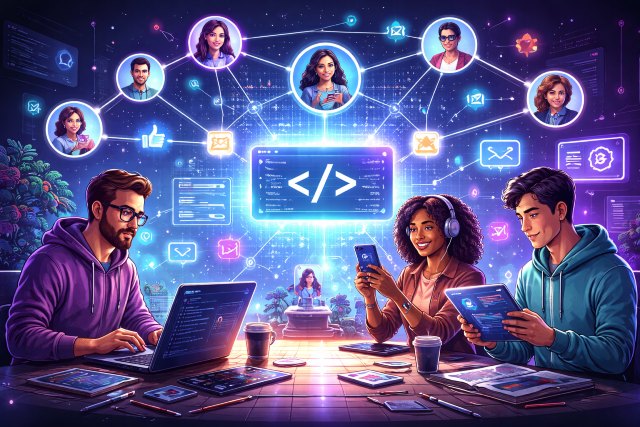

The internet is full of social networks, yet very few are designed specifically for programmers. ProgramGeeks Social is emerging as a next-generation platform built exclusively for developers, software engineers, and tech enthusiasts who want more meaningful connections than traditional social media offers.
Unlike mainstream platforms where technical discussions often get lost in general content, ProgramGeeks Social focuses on collaboration, knowledge sharing, and professional growth within the developer ecosystem. It aims to combine the best elements of coding communities, learning platforms, and social networking into one centralized space.
As the global developer community continues to grow — currently estimated at over 28 million developers worldwide according to Evans Data Corporation — platforms like ProgramGeeks Social could redefine how programmers interact, learn, and build careers online.
What Is ProgramGeeks Social?
ProgramGeeks Social is a developer-focused social networking platform designed to connect programmers through knowledge sharing, collaboration, and career opportunities.
While traditional networks like Facebook or Twitter prioritize general engagement, ProgramGeeks Social focuses on technical discussions, coding projects, mentorship, and professional development.
The platform aims to bring together several essential elements of the developer ecosystem:
Social networking
Coding collaboration
Learning resources
Career networking
Open-source contribution
In essence, ProgramGeeks Social acts as a central hub for developers, similar to how LinkedIn serves professionals but with features tailored specifically to programmers.
Platforms that cater to niche communities often outperform general networks. According to Harvard Business Review, niche platforms encourage deeper engagement because users share similar goals and interests.
Why Developers Need a Dedicated Social Network
Developers already use platforms like GitHub, Stack Overflow, LinkedIn, and Reddit. However, these platforms serve different purposes and often lack seamless integration between social interaction and technical collaboration.
A specialized network like ProgramGeeks Social addresses several key problems.
Fragmented Developer Communities
Developers currently jump between multiple platforms:
GitHub for code repositories
Stack Overflow for technical questions
LinkedIn for professional networking
Discord or Slack for community discussions
ProgramGeeks Social aims to combine these experiences into one ecosystem, reducing fragmentation and improving collaboration.
Lack of Contextual Networking
On traditional social media, programming discussions can be difficult to follow. Developers prefer environments where conversations stay focused on technical topics.
ProgramGeeks Social encourages contextual discussions around programming languages, frameworks, and projects, making networking far more relevant.
Discoverability of Talent and Projects
Hiring developers often requires searching across multiple platforms. A specialized network can make it easier to:
Showcase projects
Display coding expertise
Connect with recruiters
Find collaborators
This improves both career opportunities and open-source participation.
Key Features of ProgramGeeks Social
For a platform to succeed in the developer ecosystem, it must offer meaningful tools beyond simple social interactions. ProgramGeeks Social introduces several features designed specifically for programmers.
Developer Profiles with Technical Portfolios
Instead of generic profiles, users can showcase:
Programming languages
Git repositories
Open-source contributions
Technical blogs
Completed projects
This creates a living portfolio that demonstrates real coding ability.
According to GitHub Octoverse reports, developers who showcase projects publicly receive significantly more collaboration opportunities.
Collaborative Coding Communities
ProgramGeeks Social supports topic-based communities centered around technologies such as:
JavaScript
Python
AI & Machine Learning
Web development
Mobile development
DevOps
These communities allow developers to ask questions, share insights, and collaborate on projects.
Unlike traditional forums, conversations remain organized around specific technical interests.
Project-Based Networking
One of the most innovative aspects of ProgramGeeks Social is project-centered networking.
Instead of connecting purely through profiles, developers can connect through:
Shared repositories
Hackathons
Startup ideas
Open-source initiatives
This approach mirrors how real-world software teams operate.
Learning and Knowledge Sharing
Continuous learning is essential for developers. According to Stack Overflow’s Developer Survey, over 70% of developers learn new technologies online.
ProgramGeeks Social integrates learning resources directly into the platform, including:
Programming tutorials
Code walkthroughs
Technical discussions
Developer blogs
Community-curated resources
This transforms the platform into both a learning hub and networking space.
How ProgramGeeks Social Supports Developer Careers
Professional growth is one of the biggest motivations for joining developer communities.
ProgramGeeks Social helps developers grow their careers in several ways.
Technical Reputation System
Users can build credibility by:
Answering questions
Sharing technical insights
Contributing to discussions
Publishing tutorials
This reputation-based model is similar to Stack Overflow but combined with social networking.
A strong reputation can lead to recognition within the developer community and potential job opportunities.
Direct Access to Recruiters
Recruiters searching for developers often struggle to evaluate real technical skills.
ProgramGeeks Social simplifies this process by allowing recruiters to view:
Code contributions
Project collaborations
Technical discussions
Peer endorsements
This creates a more accurate representation of developer abilities.
Networking with Like-Minded Developers
Developer communities thrive when people share knowledge freely.
ProgramGeeks Social encourages connections based on:
Shared programming languages
Technology stacks
Industry interests
Project collaborations
This creates stronger professional relationships than typical social networking.
ProgramGeeks Social vs Existing Developer Platforms
To understand its impact, it helps to compare ProgramGeeks Social with existing platforms.
GitHub
GitHub focuses primarily on code hosting and version control. While it includes social elements like stars and followers, it lacks robust community discussions.
ProgramGeeks Social expands on this by integrating discussion, networking, and learning.
Stack Overflow
Stack Overflow is excellent for solving programming problems, but it is not designed for networking or collaboration.
ProgramGeeks Social combines Q&A with social interaction and project collaboration.
LinkedIn focuses on professional networking but lacks developer-specific tools.
ProgramGeeks Social offers technical portfolios and coding discussions, making it more relevant for programmers.
Real-World Use Cases for ProgramGeeks Social
A developer-focused network can provide practical benefits in everyday scenarios.
Example: Building an Open-Source Project
Imagine a developer launching an open-source project.
On ProgramGeeks Social they could:
Share the project idea
Recruit contributors
Discuss architecture decisions
Document progress
Showcase the final product
This allows projects to grow organically through the community.
Example: Learning a New Programming Language
A beginner learning Python might:
Join a Python community
Follow experienced developers
Participate in coding challenges
Share progress and ask questions
This creates a supportive learning environment.
Example: Startup Collaboration
Developers often search for technical co-founders or collaborators.
ProgramGeeks Social allows users to discover others with complementary skills and build teams around innovative ideas.
The Future of Developer Communities
The developer ecosystem is evolving rapidly with emerging technologies such as:
Artificial Intelligence
Web3
Cloud computing
Edge computing
DevOps automation
As the industry grows, developers need more specialized communities to stay connected and informed.
Platforms like ProgramGeeks Social could play a critical role in shaping the next generation of developer collaboration.
By combining learning, networking, coding, and career development, such platforms create an environment where developers can thrive.
Frequently Asked Questions About ProgramGeeks Social
What is ProgramGeeks Social?
ProgramGeeks Social is a developer-focused social networking platform that connects programmers for collaboration, learning, and career opportunities.
Who should use ProgramGeeks Social?
The platform is ideal for:
Software developers
Programmers
Computer science students
Tech entrepreneurs
Open-source contributors
How is ProgramGeeks Social different from GitHub?
GitHub focuses primarily on code repositories and version control, while ProgramGeeks Social combines social networking, learning, and collaboration with developer portfolios.
Is ProgramGeeks Social useful for beginners?
Yes. Beginners can join communities, learn from experienced developers, and build projects that showcase their skills.
Conclusion
As the developer community continues to expand globally, the need for specialized networking platforms becomes increasingly important. ProgramGeeks Social represents a promising step toward a more focused, collaborative, and developer-friendly online ecosystem.
By combining elements of social networking, technical learning, project collaboration, and career development, ProgramGeeks Social has the potential to transform how programmers connect and grow in the digital age.
For developers looking to share knowledge, build meaningful connections, and advance their careers, ProgramGeeks Social could become one of the most valuable platforms in the modern tech landscape.
In the future, platforms like ProgramGeeks Social may redefine the way developers interact online — making collaboration faster, learning easier, and innovation more accessible across the global programming community.











Leave a comment