
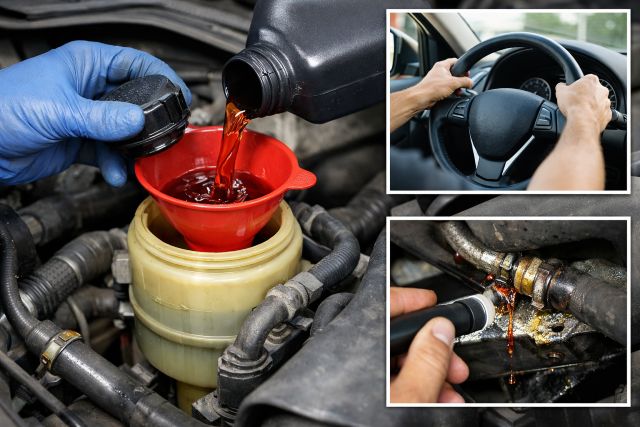

If your steering wheel suddenly feels heavier than usual, you hear a whining sound when you turn, or you notice a slick red/amber spot under the front of your car, the power steering reservoir is one of the smartest places to start. It’s the system’s fluid “holding tank,” and when it’s low, aerated, restricted, or cracked, the rest of the steering system often complains loudly and quickly. A lot of drivers assume “pump is dying” the moment they hear a whine, but in real life, the reservoir and the low-pressure return side are frequent culprits — especially when air gets pulled into the fluid (aeration) or when a built-in filter screen becomes restricted.
This guide walks you through fast, practical fixes for whining, stiff steering, and leaks, with an emphasis on what you can confirm at the reservoir before you spend money on a pump or steering rack. You’ll also see the “why” behind each fix, so you’re not just treating symptoms — you’re preventing a repeat.
What a power steering reservoir does and why it triggers whining and stiffness
The power steering reservoir stores the hydraulic fluid the pump needs to generate steering assist. Fluid leaves the reservoir, gets pressurized by the pump, helps move the steering gear (rack-and-pinion or steering box), then returns to the reservoir through the return line. That sounds simple, but it creates a key reality: if the reservoir runs low or can’t supply smooth, bubble-free fluid, the pump can cavitate or aerate, and that’s when you get the classic whine and inconsistent assist.
Aeration is a big deal because hydraulic systems assume the fluid is mostly non-compressible. When air mixes in, pressure delivery becomes uneven and noisy. Engineers who write about pump whine often describe aeration as the pump drawing air from a low reservoir level or a small vacuum leak on the low-pressure side, and the fluid can look frothy or milky when that happens.
The reservoir can also be a restriction point. Many vehicles use a reservoir with an internal filter element or screen. If that filter clogs, it can starve the pump of flow. CRP Automotive specifically warns that internal reservoir filters on certain vehicles can clog and “starve the pump,” potentially leading to pump failure and loss of steering assist.
How to diagnose power steering reservoir problems in minutes
Start by locating the reservoir. Some are translucent with molded “MIN/MAX” marks. Others use a cap with a dipstick. With the engine off and the car on level ground, check the fluid level and compare it to the marks or dipstick range. If it’s below the minimum line, you’ve already found a likely cause of whining and heavy steering.
Next, look closely at the fluid itself. Healthy power steering fluid varies by manufacturer, so don’t rely on color alone, but you should be suspicious of fluid that’s very dark, smells burnt, or looks foamy. Foamy or frothy fluid strongly suggests air intrusion, which usually ties back to a low level, a loose return connection, a cracked hose, or a seal issue letting air in on the low-pressure side.
Finally, inspect the reservoir body and the area around the return hose connection. Many “mystery” leaks are actually slow seepage at a clamp, a hardened hose end, or a reservoir seam that only weeps under heat.
Power steering reservoir whining: quick fixes that often work fast
Power steering reservoir low fluid and aeration: why topping up helps, and when it’s not enough
If the reservoir is low, topping up with the correct fluid is the fastest way to reduce whining. A low reservoir can allow the pump to draw air, and aeration is one of the most common sources of a whine that rises and falls with engine speed and steering input.
The important detail is that topping up is only a real fix if you also address why it was low. If you add fluid and the level drops again, you haven’t “solved whining,” you’ve confirmed a leak or consumption path. A very common real-world pattern looks like this: you hear whining mostly when parking, you check the reservoir and it’s a little low, you top it up and the noise improves, then two weeks later it’s back. That cycle usually means a slow leak at the return hose, a reservoir crack, or a seep at the pump or rack that’s not obvious until you clean and re-check.
Bleeding after topping up: removing trapped air without harming components
If the fluid looks foamy or you recently opened the system for a hose or reservoir replacement, bleeding matters. Bleeding is simply the process of purging air so the pump moves consistent, bubble-free fluid again. One widely published vacuum bleed procedure instructs cycling the steering wheel lock-to-lock a few times while explicitly warning not to hold the wheel at full lock, then re-checking for leaks and remaining air in the reservoir.
This “don’t hold at full lock” warning isn’t just a formality. Full-lock conditions drive pressure high, and some repair guidance notes that keeping the wheel at full lock for more than a brief moment can stress hoses, pump vanes, and seals.
If you want a simple, reservoir-focused way to think about bleeding, aim for a stable reservoir level, minimal bubbles, and quieter pump operation after a few slow steering cycles. If bubbles keep returning, treat that as evidence of an air-entry point rather than “needing more time.”
Whining with a full reservoir: the hidden restriction problem
One of the most frustrating situations is when the reservoir is full but the whine persists. In those cases, a restriction is a strong suspect—especially an internal filter screen that’s clogged. Pro-level advice on noisy steering routinely calls out checking the reservoir screen because a clogged filter can starve the pump and create whine or moan noises even when the level looks fine.
CRP Automotive goes further and emphasizes that many BMW, Porsche, and MINI reservoirs include internal filters that can clog and starve the pump, potentially leading to severe pump damage and further contamination in the system.
You’ll also see this concept in reservoir cutaways that show the filter screen integrated into the reservoir design, reinforcing why “reservoir replacement” is sometimes the correct repair rather than endlessly chasing the noise.
Power steering reservoir and stiff steering: what to check before blaming the rack
Stiff steering, especially at low speed, often comes down to insufficient hydraulic assist. The reservoir influences this in three common ways: low fluid, aeration, and restricted supply.
When fluid is low, the pump cannot maintain stable pressure. When fluid is aerated, pressure delivery becomes inconsistent and assist can feel “notchy” or intermittent. When supply is restricted by a clogged reservoir filter, the pump may not be receiving adequate flow, which can show up as heavy steering even though the fluid level appears correct.
There’s also a practical diagnostic clue: if steering is worst right after startup or during slow parking maneuvers, and you hear whining at the same time, reservoir-side issues become even more likely. If steering is heavy with no noise and the fluid looks clean and stable, then you broaden the diagnosis to belt tension (if belt-driven), pump output tests, or rack issues. But it’s still worth ruling out the reservoir restriction problem first because it’s cheaper and easier to confirm.
Power steering reservoir leaks: where they start and how to pinpoint them
Leaks can come from many points in the system, but reservoir-related leaks are common enough that they should be checked early. The reservoir itself can crack, seams can seep, and the return hose connection can slowly sweat fluid. Over time, even a small leak can drop the fluid level enough to introduce air, which then creates whining and stiffness.
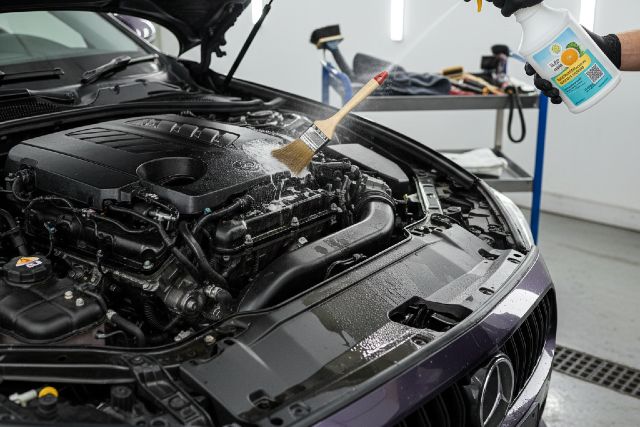
A quick, reliable approach is to clean the outside of the reservoir and nearby hoses, drive briefly, and then re-check with a strong light. Fresh wetness tells you more than old grime. If the leak is hard to find, many shops use dye-based detection, but even without dye, a cleaned surface makes the source far clearer.
If you notice the reservoir was overfilled, correct the level as well. Overfilling can push fluid out of the cap vent or seals and create a “leak look-alike” that stops once the level is correct and the system stabilizes.
When the leak is severe and the level drops rapidly, treat it as urgent. Loss of assist can happen quickly once fluid is low enough for the pump to ingest air.
Fluid choice and contamination: protecting the reservoir, pump, and seals
Fluid isn’t interchangeable across all cars. Some vehicles specify a dedicated power steering fluid, some specify ATF, and some European applications use special hydraulic fluids. Using the wrong fluid can worsen seal compatibility and change how the system behaves when hot.
Contamination is the next big factor. Dirty fluid can accelerate wear and contribute to clogging in reservoir screens and small passages. That’s why many professional discussions about steering noise pair “check level” with “check fluid condition” and “check reservoir screen” as a chain of cause-and-effect.
If you replace a pump or rack, it’s smart to think of the reservoir as part of the contamination story. If the reservoir’s filter is loaded with debris, installing a new pump without addressing that restriction is one way to end up with a comeback noise problem.
You’ll also see industry materials promoting filtration as a way to reduce debris-related failures; one bulletin discussing serviceable in-line filters frames debris as a major contributor to steering system failures and emphasizes the value of keeping filter screens clean.
What “quick fix” actually means here, and when to stop DIY
A true quick fix is one that removes symptoms and removes the cause. For reservoir-related steering problems, that typically means restoring the correct fluid level, eliminating air entry, and removing restrictions. If you top up and bleed properly but you still get foamy fluid in the reservoir, don’t keep cycling the wheel endlessly; persistent foam points to an air leak on the low-pressure side or a component issue that needs inspection.
If the reservoir is full, the fluid is stable, and there’s still a steady whine and heavy steering, it’s time to suspect restrictions or failing components. Reservoir replacement is a reasonable step on vehicles known for clogged internal filters, and it’s often paired with a fluid exchange so you’re not feeding fresh parts with dirty fluid.
FAQ answers for featured snippets
What does a power steering reservoir do?
A power steering reservoir stores hydraulic fluid and supplies it to the steering pump. If it’s low, aerated, or restricted, you can get whining noises, foamy fluid, and reduced steering assist.
Can a low power steering reservoir cause whining?
Yes. Low fluid can let the pump draw air, creating aeration and a high-pitched whine that changes with steering load and engine speed.
Why is my power steering fluid foamy in the reservoir?
Foam usually means air is entering the system, often through a low fluid level or a small leak on the low-pressure return side. Bleeding may remove trapped air, but persistent foam means you should find the air-entry point.
Why does my power steering whine even when the reservoir is full?
A common reason is restriction, such as a clogged reservoir filter screen that starves the pump, which can cause whining and reduced assist even with a correct fluid level.
Should I hold the steering wheel at full lock while bleeding?
No. Published bleed procedures warn not to hold the wheel at full lock, and repair guidance notes full-lock conditions can stress hoses, seals, and pumps.
Conclusion: why the power steering reservoir is your best first stop
The power steering reservoir is a small component that creates big symptoms. Whining is often the pump reacting to aeration from low fluid or air leaks, and stiff steering can come from low level, bubbles, or restricted supply through a clogged reservoir filter. Leaks around the reservoir or return connection can quietly trigger both problems by slowly dropping the level until air gets pulled in. When you approach diagnosis from the reservoir outward—level, condition, air, restriction, then leaks—you avoid guessing, you avoid unnecessary parts, and you protect the pump from running starved or aerated. If your vehicle uses a reservoir with an internal filter, don’t overlook it; reputable parts and service sources warn that a clogged internal filter can starve the pump and cascade into larger failures.













Leave a comment