
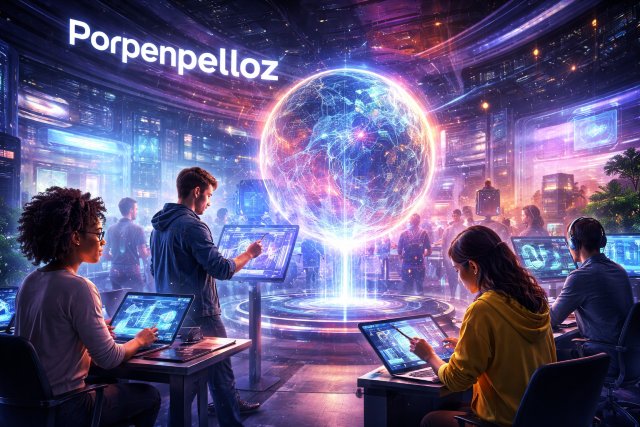

In a world where innovation evolves faster than ever, Porpenpelloz is emerging as a concept that bridges creativity and technology in transformative ways. As industries adopt artificial intelligence, automation, and digital tools, Porpenpelloz represents a new mindset — one that blends human imagination with advanced technological capabilities.
From digital art and product design to marketing and software development, Porpenpelloz signals a future where creativity is amplified by intelligent systems. Businesses, creators, and technologists are beginning to recognize its potential to reshape how ideas are generated, developed, and brought to life.
Understanding Porpenpelloz is not just about following a trend; it’s about preparing for a new era where innovation thrives at the intersection of creativity and technology.
What Is Porpenpelloz?
Porpenpelloz can be described as a framework or philosophy that integrates technological advancement with creative thinking. It focuses on using emerging technologies — such as artificial intelligence, machine learning, and immersive digital environments — to enhance human creativity rather than replace it.
At its core, Porpenpelloz emphasizes three key principles:
-
Human creativity remains the foundation of innovation.
-
Technology acts as an amplifier of ideas.
-
Collaboration between humans and machines produces better outcomes.
According to research from McKinsey, organizations that successfully integrate technology with creative workflows are significantly more likely to outperform competitors in innovation-driven markets.
Porpenpelloz reflects this shift, encouraging creators and businesses to embrace digital tools as partners in the creative process.
The Origins and Evolution of Porpenpelloz
The concept of Porpenpelloz emerged from the growing intersection of technology and creative industries. Over the past decade, advances in artificial intelligence, cloud computing, and digital collaboration platforms have transformed how people work and innovate.
Historically, creativity was often seen as purely human-driven. However, the rise of tools such as generative AI, digital design platforms, and virtual collaboration systems has blurred the lines between creativity and technology.
For example, designers now use AI-assisted tools to generate design concepts in seconds, while musicians collaborate with algorithmic systems to explore new sounds and compositions.
The World Economic Forum highlights that digital technologies are enabling entirely new forms of creativity and innovation.
Porpenpelloz represents this evolution by positioning technology as a creative collaborator rather than a replacement for human imagination.
Why Porpenpelloz Matters in the Digital Age
The digital economy demands faster innovation, more engaging experiences, and continuous adaptation. Porpenpelloz helps meet these demands by empowering individuals and organizations to merge creative thinking with technological capabilities.
There are several reasons why Porpenpelloz is becoming increasingly important.
First, the pace of technological change requires new approaches to problem-solving. Traditional workflows often cannot keep up with the speed of digital transformation.
Second, consumer expectations are evolving rapidly. People expect personalized experiences, immersive digital environments, and innovative products.
Third, the competitive landscape has shifted. Companies that combine creativity with advanced technology gain a significant advantage in product development, marketing, and customer engagement.
By adopting the principles of Porpenpelloz, businesses can unlock new opportunities for innovation and growth.
How Porpenpelloz Is Transforming Creative Industries
Creative industries are among the first to embrace the Porpenpelloz approach. Technology is enabling artists, designers, filmmakers, and writers to expand their creative possibilities in unprecedented ways.
Digital Art and Design
In the world of digital art, Porpenpelloz encourages artists to use AI-powered tools to explore new styles and techniques. Generative art platforms allow creators to experiment with complex visual patterns and compositions that would be difficult to achieve manually.
These tools do not replace the artist’s vision. Instead, they serve as creative partners that expand the range of possibilities.
Content Creation and Media
Content creators are also benefiting from Porpenpelloz-inspired workflows. Video editors, writers, and marketers now use advanced software to streamline production processes and generate innovative ideas.
For example, AI-driven tools can analyze audience preferences and recommend content strategies that improve engagement and reach.
According to Statista, the global creator economy is expected to surpass hundreds of billions of dollars in value over the coming years.
Porpenpelloz helps creators remain competitive in this rapidly growing ecosystem.
Product and Experience Design
Companies are using Porpenpelloz principles to design products that combine aesthetics with advanced functionality.
Modern design teams use digital simulations, machine learning insights, and collaborative platforms to develop products that meet evolving customer needs.
This approach enables faster innovation cycles and more user-centered design.
The Role of Artificial Intelligence in Porpenpelloz
Artificial intelligence plays a central role in the Porpenpelloz ecosystem. Rather than replacing human creativity, AI enhances it by handling repetitive tasks, generating ideas, and providing data-driven insights.
AI tools can analyze massive datasets to identify patterns and opportunities that humans might overlook. Creators can then use this information to guide their decisions and develop more effective solutions.
For instance, marketing teams can use AI-powered analytics to understand audience behavior and craft campaigns that resonate more deeply with consumers.
Similarly, designers can use generative algorithms to explore thousands of design variations before selecting the most promising options.
Research from MIT Technology Review suggests that AI-human collaboration often produces better results than either working alone.
Porpenpelloz embodies this collaborative model by placing humans and machines in a complementary partnership.
Practical Applications of Porpenpelloz
Porpenpelloz is not limited to creative industries. Its principles can be applied across a wide range of sectors.
In education, digital tools enable interactive learning experiences that encourage creativity and critical thinking.
In healthcare, technology-assisted design and research are accelerating the development of medical innovations.
In business, organizations use creative technology solutions to improve customer experiences and streamline operations.
For example, companies implementing AI-driven innovation strategies often report higher productivity and improved decision-making.
These practical applications demonstrate that Porpenpelloz is more than an abstract concept — it is a practical framework for modern innovation.
Real-World Example: Technology-Driven Creativity
One of the most powerful examples of Porpenpelloz in action is the use of generative AI in product design.
Some companies now use machine learning algorithms to generate thousands of design possibilities based on performance goals and material constraints.
Engineers then refine these options, selecting designs that combine efficiency, sustainability, and aesthetic appeal.
This process dramatically reduces development time while expanding creative possibilities.
Companies such as Autodesk and other technology leaders have already demonstrated the effectiveness of this approach.
Challenges and Ethical Considerations
Despite its potential, Porpenpelloz also raises important questions about ethics, creativity, and technological responsibility.
One major concern involves intellectual property. When AI systems generate creative outputs, determining ownership can become complex.
Another issue relates to authenticity. Some critics worry that technology-driven creativity may reduce the value of purely human artistic expression.
However, many experts argue that technology should be viewed as a tool rather than a competitor.
The key challenge lies in establishing clear guidelines for ethical and responsible use of creative technologies.
Organizations must ensure transparency, fairness, and respect for intellectual property when implementing Porpenpelloz-inspired strategies.
How Businesses Can Embrace Porpenpelloz
Organizations that want to adopt the Porpenpelloz approach can start by building a culture that values both creativity and technological innovation.
Encouraging collaboration between creative professionals and technical experts is an important first step.
Companies should also invest in modern digital tools that enable experimentation and rapid prototyping.
Training programs can help employees develop skills in both creative thinking and emerging technologies.
Finally, businesses should remain open to experimentation. Innovation often requires testing new ideas, learning from failures, and continuously refining strategies.
The Future of Porpenpelloz
As technology continues to evolve, the influence of Porpenpelloz is likely to grow.
Emerging technologies such as virtual reality, augmented reality, and advanced AI systems will further expand the possibilities for creative collaboration.
These technologies will enable creators to build immersive experiences, interactive products, and entirely new forms of digital expression.
Experts believe that the future workforce will increasingly rely on hybrid skills that combine creativity with technological literacy.
Porpenpelloz represents the foundation of this new innovation landscape.
Frequently Asked Questions About Porpenpelloz
What does Porpenpelloz mean?
Porpenpelloz refers to a modern approach that combines creativity and technology to drive innovation. It emphasizes collaboration between human imagination and advanced digital tools.
How is Porpenpelloz used in creative industries?
Creative industries use Porpenpelloz principles to enhance design, content creation, and product development through technologies like AI, generative design, and digital collaboration platforms.
Why is Porpenpelloz important for businesses?
Porpenpelloz helps businesses innovate faster, improve customer experiences, and remain competitive in the digital economy by combining creative thinking with technological capabilities.
Can technology replace human creativity?
Most experts agree that technology enhances rather than replaces human creativity. Porpenpelloz focuses on collaboration between humans and machines to produce better outcomes.
Conclusion: Porpenpelloz and the Next Era of Innovation
The rise of Porpenpelloz signals a powerful shift in how creativity and technology interact. Rather than existing as separate domains, they are becoming deeply interconnected.
By embracing Porpenpelloz, individuals and organizations can unlock new opportunities for innovation, collaboration, and growth. The combination of human imagination and advanced technology has the potential to redefine industries and reshape the future of creativity.
As the digital landscape continues to evolve, Porpenpelloz will likely become a guiding principle for those who seek to push the boundaries of what is possible.














Leave a comment