Home Blog Page 8

Mink Coat Trends: What’s In, What’s Out, and What’s Worth Buying

0

The mink coat is back in the style conversation, but it’s not returning in the same “red carpet only” way it once did. Today’s mink coat trend is being shaped by three forces at once: a runway-level revival of fur aesthetics, the explosive growth of resale and vintage shopping, and stricter norms in some fashion institutions about promoting animal fur. That mix explains why you’ll see a mink coat styled with denim and sneakers on social media, while major industry bodies like the CFDA are simultaneously stepping back from promoting animal fur in official New York Fashion Week contexts.

This article breaks down what’s in, what’s out, and what’s genuinely worth buying — so you can make a smart choice whether you’re eyeing vintage, authenticated resale, or an alternative that delivers the same winter-luxe vibe.

Why mink coat trends are changing so fast

Fur aesthetics have been visibly resurging in fashion coverage tied to the Autumn/Winter 2025 season, with publications noting both real and faux fur on runways and renewed debate around ethics and sustainability. That doesn’t automatically mean “everyone is buying new fur.” In practice, the cultural look is often decoupled from new production because secondhand shopping has become mainstream — especially among younger shoppers — and luxury resale is projected to grow far faster than the broader apparel market.

At the same time, some fashion institutions are drawing clearer lines. The Council of Fashion Designers of America (CFDA) announced on December 3, 2025 that it will no longer promote animal fur at any Official NYFW Schedule events across its Fashion Calendar, social channels, and website. This matters because it changes the “permission structure” of what gets elevated in certain official fashion spaces—even while street style and resale markets may move in a different direction.

The result is a split reality: the mink coat look is trending, but the “best buy” for most people is increasingly about vintage quality, everyday styling, and long-term wear rather than runway drama.

What’s in for mink coat style right now

Vintage mink coats that look intentional, not “costume”

The most current mink coat moments are typically vintage: silhouettes with presence, collars that frame the face, and a slightly oversized fit that reads fashion-forward instead of formal. This aligns neatly with the larger shift toward secondhand. ThredUp’s resale reporting (based on market estimates and consumer surveys) and mainstream coverage of resale both point to strong growth and accelerating cultural acceptance of pre-owned fashion.

What makes vintage mink especially “in” is the story it tells. It reads like personal style, not like a brand campaign. It also taps into the idea that the most sustainable coat is the one already in existence — an argument you’ll often see in discussions about vintage fur versus new fur.

If you’re building a wardrobe instead of buying a one-time statement, a vintage mink coat that works with your everyday basics is the trend that’s most likely to hold.

Wearable lengths that work with real life

The era of “full-length or nothing” has cooled. The mink coat styles that feel most modern tend to land between hip and knee, because they move better and style more easily with contemporary outfits. A mid-length coat also fits the way most people actually live: commuting, getting in and out of cars, and layering without feeling swallowed by fabric.

This is one of those trends that isn’t just aesthetic—it’s functional. The more wearable the coat, the more likely it becomes a repeat-wear piece rather than a closet trophy.

Texture-forward mink: sheared, let-out, and softer finishes

A high-shine, ultra-uniform fur surface can still look glamorous, but the direction right now leans into texture. Sheared finishes that look velvety, or constructions that create a sleeker drape, tend to photograph better and feel less formal in daylight. They also pair more naturally with modern materials like denim, leather, and knitwear.

This matters because “what’s in” is increasingly decided by versatility. The mink coat that can go from brunch to dinner without looking like it belongs to another decade is the one that feels current.

Quiet-luxury colors that don’t fight your wardrobe

Even while maximalist styling comes and goes, color remains surprisingly classic for mink coats that feel modern. Deep brown, black, charcoal, and natural tones tend to stay in rotation because they work with nearly everything and look expensive without needing to shout.

Dyed colors can be stunning, but trend-wise they’re higher risk. If you’re trying to buy once and love it for years, neutrals make the mink coat feel less tied to a specific “moment.”

What’s out, or at least aging fast

Ultra-formal “perfect gloss” styling as the default

A pristine, glossy, full-length mink coat isn’t “forbidden,” but it is harder to wear in a way that looks current outside of an editorial context. It can read costume-like if the styling around it is also formal. The faster-growing style direction is to treat the coat as outerwear and contrast it against casual pieces.

If you love the dramatic look, the fix isn’t to abandon it—it’s to modernize the styling, so the coat doesn’t feel like it’s wearing you.

Over-trimmed designs and loud statement details

Coats with heavy trims, busy edges, or excessive embellishment tend to feel dated faster. Trend cycles now reward cleaner silhouettes because they travel better across different aesthetics, from minimalist to maximalist. Also, from a practical standpoint, trim-heavy coats show wear sooner at cuffs and edges, which can shorten the “good-looking” lifespan of the piece.

Buying new mink without thinking about future friction

This isn’t a moral lecture; it’s a consumer reality. When institutions shift, platforms shift. When platforms shift, resale liquidity changes. The CFDA’s December 2025 announcement that it will no longer promote animal fur in Official NYFW schedule contexts is a clear example of norms moving in certain high-visibility channels.

Separately, policy environments can add complexity. The European Commission’s invasive alien species framework restricts listed species via measures tied to keeping, breeding, transport, and sale, and animal-welfare reporting around the American mink notes it being added to the EU list with the change taking effect in August 2027. If you’re buying new mink with the expectation of easy future resale or cross-border flexibility, you should be aware that rules and norms may add friction depending on where you live and how markets evolve.

What’s worth buying: how to choose a mink coat that makes sense

The best “value” purchase is often a vintage mink coat in excellent condition

If you want the warm, luxe look of a mink coat while minimizing trend risk, vintage tends to be the sweet spot. It connects to the secondhand wave that’s growing quickly, and it often delivers premium materials at a fraction of what new luxury outerwear can cost. Coverage of resale points to strong growth rates for secondhand relative to the broader fashion market, which helps explain why vintage coats are being rediscovered and re-styled rather than replaced.

The key is condition. A mink coat can look incredible in photos and still be a bad buy if it has dryness, hidden shedding, or compromised lining seams. If you’re shopping in person, gently run your hand along the fur; excessive shedding or a brittle feel can be a red flag. If you’re shopping online, prioritize sellers who show clear close-ups of cuffs, collar, hem, and lining.

The most wearable silhouette usually wins over the most dramatic one

If you’re trying to buy a mink coat you’ll actually wear, look for a shape that plays well with modern outfits. Mid-length, slightly relaxed coats tend to be the easiest. They work over a hoodie, over a sweater, or over a dress without forcing your whole outfit into “eveningwear mode.”

In trend terms, the most “in” mink coat is the one you can repeat-wear without feeling like you’re reenacting a different era.

If resale matters to you, buy classic and document everything

Resale value is about trust and wearability. A classic color, a practical length, and a clean interior tend to make resale easier because more buyers can imagine the coat in their own wardrobe. Keeping proof of authentication or appraisal, saving your purchase record, and photographing the coat’s condition when you buy it can also help later, because resale markets reward transparency. The broader resale boom and the professionalization of secondhand shopping are exactly why documentation matters more now than it used to.

If you want the fur look without mink, alternatives are evolving

It’s also fair to say that some people want the aesthetic, not the animal product. Fashion coverage has highlighted innovation efforts that aim to mimic fur without animal pelts and, in some cases, without relying entirely on fossil-fuel-based synthetics—though scaling and cost remain challenges.

If your site sells faux, plant-based, or wool-hair alternatives, this is where you can educate shoppers honestly: what it feels like, how it wears, how it performs in cold weather, and how to care for it. “Worth buying” here depends on the buyer’s priorities, but the trend direction is clear: shoppers increasingly want transparency and a product they can feel good wearing.

How to style a mink coat so it looks current

Make the rest of the outfit simple and modern

The fastest way to modernize a mink coat is contrast. Pair it with clean, everyday pieces so the coat becomes a statement layer rather than the entire personality of the outfit. When the base outfit is minimal, the mink coat looks intentional and fashion-forward.

A helpful mental model is: if the coat is rich and textured, everything else should be clean and calm.

Keep proportions balanced

A mink coat with volume up top looks best when the lower half is more streamlined. A shorter coat can handle wider-leg trousers or a longer skirt, because the proportions still feel deliberate. This isn’t about strict rules; it’s about making sure your silhouette looks like a choice.

If you’re trying to update an inherited mink coat, a tailor can sometimes modernize the shape subtly by refining sleeves, adjusting closures, or cleaning up the line of the shoulder—without destroying what makes the coat special.

Choose shoes that reset the vibe

Footwear does more trend work than people realize. A classic boot or a minimalist sneaker can instantly pull a mink coat into “today.” A very formal heel can push it back toward “special occasion,” which is fine if that’s your goal, but less versatile.

If you’re building a one-coat winter statement, versatility is what makes it worth buying.

Mink coat care that protects your investment

Even the most beautiful mink coat won’t stay beautiful without proper care. Heat and moisture are the two biggest enemies. If your coat gets wet, the safest approach is to shake out excess water gently, hang it on a wide, supportive hanger, and let it dry naturally in a cool space. Avoid blasting it with heat, because drying out the fur can lead to brittleness over time.

Storage matters too. Mink needs airflow, so avoid sealing it in plastic. If you live somewhere hot or humid, professional storage can be worth considering, especially for vintage pieces, because climate stress is what quietly ruins many coats between seasons.

FAQ: quick answers people search before buying a mink coat

Are mink coats in style in 2026?

Yes, the mink coat look is trending again, especially in vintage and resale styling. Coverage of recent runway seasons shows fur aesthetics returning, while resale growth explains why many shoppers are sourcing these looks secondhand rather than buying new.

Is a mink coat worth buying today?

A mink coat can be worth buying if you choose a wearable silhouette and verify condition, especially when shopping vintage or authenticated resale. The broader secondhand boom suggests more shoppers are comfortable investing in pre-owned outerwear when it offers quality and longevity.

What mink coat style is the most versatile?

Mid-length coats in classic colors tend to be the most versatile because they pair easily with modern basics and don’t feel locked to a formal look. This is the kind of coat that supports repeat wear, which is what makes it a smarter wardrobe investment.

Is real fur being phased out in fashion?

In some official fashion contexts, yes. The CFDA announced in December 2025 it will no longer promote animal fur at Official NYFW Schedule events, which signals changing norms in major industry channels.

Conclusion: the mink coat that’s worth buying is the one you’ll wear

The most important mink coat trend is not a color or a collar shape. It’s the shift toward wearability, resale-minded shopping, and styling that fits modern life. A mink coat is “in” when it’s treated like real outerwear: layered over simple basics, worn often, and chosen for quality and condition. At the same time, industry signals like the CFDA’s December 3, 2025 decision to stop promoting animal fur in Official NYFW schedule contexts show that norms are evolving, which is worth factoring into any new-fur purchase decision.

If you want the smartest buy, focus on a wearable vintage mink coat in excellent condition, in a classic color, with care habits that protect longevity. That’s what stays stylish after the trend cycle moves on — and that’s what makes it genuinely worth buying.


Geography Lesson 5: One-Shot Revision for Students

0

If you’ve got a test coming up and need a fast, high-impact refresher, this geography lesson 5 one-shot revision guide is built for you. Instead of rereading chapters, you’ll use active recall and timed exam practice to lock in the key concepts quickly. The goal is simple: learn the content in a way that matches how your brain will be asked to use it in an exam, which is retrieving, explaining, and applying knowledge under pressure.

This guide is designed to work even when different schools label “Lesson 5” differently. Some classes focus on map skills, others on weather and climate, landforms, resources, or population and settlement. The revision method stays the same, and you just plug in your chapter headings and examples.

What one-shot revision means and why it works

One-shot revision is a single focused study block, usually between one and two hours, designed to give you the biggest grade improvement in the shortest time. It works best when you don’t start by “studying.” You start by testing your memory, because real exams reward what you can pull out of your head quickly, not what looks familiar on a page.

When you force yourself to recall information without looking, you create a clear map of what you know and what you don’t. That gap is valuable, because it tells you exactly where to spend your time. This is how top students revise: they spend less time feeling busy and more time fixing weaknesses.

What Geography Lesson 5 usually covers in most curricula

In many middle school and secondary school sequences, Lesson 5 often lands on a core unit that includes skills and definitions that reappear in tests. Sometimes it’s a practical skills lesson, and sometimes it’s the first “big concept” lesson of a unit. If your Lesson 5 is different, that’s okay, because you can still use this structure.

If your chapter is about map skills, you’ll usually see ideas like scale, direction, symbols, grid references, contours, and latitude and longitude. If it’s weather and climate, expect factors affecting climate, types of rainfall, reading climate graphs, and extreme weather impacts. If it’s landforms, you may be revising rivers, coasts, glaciers, erosion, transportation, and deposition. If it’s resources or environment, the focus is often water, minerals, conservation, sustainability, and human impact. If it’s population and settlement, you’ll likely cover density, migration, urbanization, and push-pull factors.

The fastest way to confirm your exact topic is to open your notebook and look at the Lesson 5 heading, then skim the subheadings. Those subheadings become your revision checklist.

Geography Lesson 5 one-shot revision plan for a single sitting

You’re going to move through five stages. Each stage has one job, and you’ll feel the session building momentum instead of dragging.

Stage 1: Blank-page recall for the first five minutes

Start with a clean page. Put your pen down and write everything you remember about the Lesson 5 topic without looking at your book. Don’t worry about handwriting or neatness. Your only goal is to pull ideas from memory, even if they’re incomplete.

As you write, try to include key terms, a simple explanation of at least one process, and one real place-based example if your chapter needs it. If there is a diagram in the chapter, attempt it now from memory, even if it’s rough. This matters because it exposes what you can reproduce under exam conditions.

After five minutes, open your notes and check what you missed. The missing parts are your high-priority targets, because they represent easy marks you’re currently leaving behind.

Stage 2: Build a “Lesson 5 Core Sheet” that fits on one page

Now you will create a one-page summary, but it has to be exam-ready, not textbook-like. Write short definitions that sound like something you could put into an answer. Include a couple of cause-and-effect explanations, because geography often awards marks for sequence and reasoning. Add at least one diagram you can redraw, with labels written clearly.

If your syllabus requires examples, include one or two mini case snapshots. A strong snapshot includes the place name, what happened or what is happening, and why it matters. Keep it brief so you can remember it.

This core sheet becomes your personal revision weapon. You’ll use it again for quick tests later.

Stage 3: Retrieval drills that feel like the exam

This is where your score improves quickly, because you’re training exactly what the exam asks you to do. Put your notes away and start testing yourself.

First, cover your core sheet and recite or write the definitions without peeking. Next, explain one process out loud as if you’re teaching it to a younger student, because teaching forces you to connect steps logically. Then answer one or two exam-style questions under time pressure. If you don’t have past papers, use end-of-chapter questions, or turn the subheadings into questions and answer them as paragraphs.

When you mark your work, don’t just check if you were “kind of right.” Look for missing keywords, weak explanations, and vague examples. Geography marking often rewards precision.

Stage 4: Targeted micro-notes to fix only what was wrong

This stage is where most students waste time, so keep it strict. You are not rewriting the chapter. You are only writing what you missed.

For every mistake, write a corrected version in one or two sentences. Then add a “trigger question” underneath that would force you to recall it again later. For example, if you mixed up relief rainfall and convectional rainfall, your trigger question might ask you to explain the difference in a single paragraph and include a labelled sketch.

These micro-notes are powerful because they are built from your real errors, not from what you already know.

Stage 5: A two-minute exit check that locks the learning

Before you stop, close everything and answer three quick prompts in full sentences. Write what you believe are the three most testable ideas from Lesson 5, name one diagram you must be able to reproduce, and state one real example you can confidently use. If you hesitate, that’s your clue that you need one more short retrieval drill on that part.

Geography lesson 5 revision strategies that boost marks fast

The biggest mark jumps usually come from changing how you revise, not from adding more hours. Geography rewards understanding and application, so your revision method must train both.

Active recall should be your default. That means you read a small section, close it, and recall what you just learned. Even a short recall session forces your brain to build retrieval pathways. This is exactly what you need when you face an exam question that doesn’t match your notes word-for-word.

Spacing also helps, even if you don’t have weeks. If you do your one-shot session today and then do a ten-minute self-test tomorrow, your brain has to retrieve the information again after a gap. That extra retrieval is a strong reinforcement, and it often feels harder, which is normal, and actually a sign the learning is becoming more durable.

Interleaving is another strategy that quietly improves accuracy. Geography has many concepts that sound similar, like weathering and erosion, transportation and deposition, or different types of rainfall. Mixing these concepts in practice forces your brain to spot differences, which reduces exam confusion.

How to write exam-ready answers for Lesson 5

Many students know the content but lose marks because their answers are too short, too vague, or not structured. A simple approach is to write in a clear chain of reasoning.

Start with a direct definition or point. Then add an explanation using cause and effect. Then support it with an example or a named place if relevant. Finally, add a short concluding statement that links back to the question.

If the question asks for a process, your answer should sound like a sequence. Use logical connectors such as “because,” “therefore,” and “as a result,” to show you understand the steps. If the question asks for evaluation, include both benefits and drawbacks, or short-term and long-term impacts.

Real-world examples you can adapt to almost any Lesson 5 topic

Geography markers love answers that feel grounded. Even when you don’t have a strict case study, you can still use place-based examples. The trick is to use a flexible template in sentence form, so you can adapt quickly.

Choose a place you know, even your own area, and connect it to a clear process. For weather and climate, you can describe a flood event, a drought period, or a heatwave and explain impacts and responses. For landforms, you can reference a nearby river bend, coastline, or hill slope and describe the processes shaping it. For population or settlement, you can use your city’s growth patterns, migration trends, or housing expansion as an example of urbanization pressures.

When you mention a place, keep it precise. Name the location, state what happened, explain why it happened using geography concepts, and mention one response or solution if your syllabus expects it.

Common Geography Lesson 5 mistakes and how to fix them

One common mistake is memorizing definitions but not being able to explain a process. If you can define “meander” but can’t explain how one forms, you’ll lose marks on questions that require sequence and reasoning. Fix this by practicing process explanations out loud and writing them as short paragraphs.

Another big mistake is avoiding diagrams. Geography frequently tests diagrams because they show understanding fast. If Lesson 5 includes a climate graph, a contour map, a river landform diagram, or a rainfall sketch, treat it as a must-learn. Redraw it from memory twice, once slowly and once timed.

A third mistake is using vague examples. Phrases like “in some countries” or “in many places” rarely earn the best marks. Add at least one named place and one specific impact, even if it’s short.

FAQs for students revising Geography Lesson 5

What is Geography Lesson 5 about?

Geography Lesson 5 depends on your curriculum, but it commonly covers a major skill or concept such as map skills, climate, landforms, resources, or population. The fastest way to confirm is to check the Lesson 5 chapter title and subheadings in your notes, then revise those subheadings using active recall and timed practice.

How do I revise Geography Lesson 5 in one day?

Revise in one focused session by starting with blank-page recall, creating a one-page core sheet, and then testing yourself with exam-style questions. After marking, write micro-notes only for mistakes. If you can spare ten minutes the next day, do a quick self-test to strengthen recall even more.

What’s the fastest way to learn definitions for Geography Lesson 5?

The fastest method is to read a definition once, close your notes, and say or write it from memory. Then check and correct. Repeat later with the same definitions. This turns passive reading into active recall, which is much closer to exam conditions.

How can I improve map skills quickly if Lesson 5 is map-based?

Map skills improve fastest through practice with real map extracts. Work on scale, direction, symbols, grid references, and contours by answering short questions under time pressure. Then redo the same skills on a new extract. This builds speed and accuracy, which is exactly what map questions demand.

Why do I forget Geography Lesson 5 after studying?

Most students forget because their revision was passive, such as rereading or highlighting. Passive study creates familiarity, but not strong retrieval. If you test yourself, correct errors, and revisit the material after a gap, your memory becomes more durable and usable in exams.

Conclusion

A high-scoring geography lesson 5 revision session isn’t about hours of rereading. It’s about recalling from memory, fixing what you missed, and practicing exam-style answers in a focused way. Use the one-shot plan to create a clear core sheet, train yourself with quick retrieval drills, and strengthen weak spots with micro-notes based on real mistakes. If you follow that structure, you’ll walk into your test able to explain, apply, and write confidently, not just recognize the content.

If you share your exact Lesson 5 chapter heading and the subheadings, I can rewrite this into a version that matches your syllabus word-for-word while keeping it fully SEO-optimized for “geography lesson 5.”

90 Days Questions to Transform Your Productivity and Discipline

0

If you’ve ever started a new routine with energy and then watched it fade by week two, you’re not broken. You’re human. The missing piece usually isn’t information, it’s follow-through. That’s why days questions can be surprisingly powerful: the right question doesn’t hype you up, it makes you choose, and choices create consistent actions.

A 90-day window is long enough for real change to show up in your calendar, your output, and your self-trust. It also aligns with what habit research actually suggests. In a widely cited habit-formation study, the average time to reach a plateau of automaticity was about 66 days, and it varied by person and behavior. That means your “I should have this figured out by day 21” expectation is often the real problem.

This guide gives you a complete 90-day question system to transform productivity and discipline, with a simple way to use it daily so you don’t depend on mood. You’ll also see the research behind why it works, plus examples that make it feel realistic rather than motivational.

What “days questions” really are and why they work

Days questions are daily prompts that force clarity about what matters, what’s in the way, and what you’ll do next. They work because they shift you from vague intention to concrete action. Instead of “I’ll try to be disciplined,” you ask, “What is the smallest next step I will do today, even if I’m not motivated?”

There’s a strong research base for this style of self-regulation. One of the most effective tools is “if–then planning,” also called implementation intentions. The core idea is simple: you pre-decide what you’ll do in a specific situation, such as “If I feel the urge to scroll, then I will stand up and refill water first.” Meta-analytic work has found implementation intentions reliably improve goal achievement, often with meaningful effect sizes.

In other words, good questions don’t just help you reflect. They help you plan responses to real-life friction before friction shows up.

The 90-day structure that builds discipline without burnout

Think of these 90 days as three phases that stack on each other.

Days 1–30: Awareness and honesty

This phase is about seeing your patterns without judgment. You identify what you avoid, when your energy drops, and which “busy” activities don’t produce real results. You build the foundation: clarity.

Days 31–60: Systems and strength

Now you design a repeatable system that survives chaos. You reduce distractions, simplify planning, and create reliable start rituals. This is where you stop relying on motivation and start relying on structure.

Days 61–90: Identity and durability

In the last phase, discipline becomes less about force and more about identity. You practice recovery after bad days, protect your boundaries, and lock in what works so it lasts beyond the 90-day mark.

This sequencing matters because discipline is easier when you stop treating every day like a fresh willpower test. You build decision rules that run even when your brain is tired.

How to use this system daily in 10 minutes

Open a note (or a journal) and answer one question in 3–5 sentences. Then write one action you’ll do immediately after closing the note. If you want an easy rhythm, do one question in the morning and one in the evening, but you can also keep it to one per day and still get results.

If your biggest issue is starting, pair the question with a timed focus sprint. Break-structured work methods like Pomodoro are popular, and research continues to evaluate how different break strategies affect fatigue, motivation, and task completion. You don’t need a perfect method; you need a repeatable one.

Days Questions: the full 90-day set (use one per day)

Use these in order, or repeat the ones that hit your real problems the hardest. The point is not to answer perfectly. The point is to answer honestly and then act.

Days questions for clarity and baseline (Days 1–30)

Day 1 asks: What does “productive” actually mean for me this week?
Day 2 asks: What am I avoiding, and what is it costing me?
Day 3 asks: What are my top three outcomes for the next 30 days?
Day 4 asks: What distractions steal the most time from me?
Day 5 asks: When do I feel most focused, and why?
Day 6 asks: What do I do that looks like work but isn’t?
Day 7 asks: What’s one commitment I keep breaking, and what triggers it?
Day 8 asks: What would make today a win, even if nothing else happens?
Day 9 asks: What’s my biggest friction point when starting tasks?
Day 10 asks: What is one habit I’m ready to stop negotiating with?

Day 11 asks: What time of day is my brain sharpest?
Day 12 asks: What drains my energy faster than I admit?
Day 13 asks: What’s one environmental change that would make focus easier?
Day 14 asks: What’s my most common excuse, and what’s behind it?
Day 15 asks: What do I do right before I procrastinate?
Day 16 asks: What is one thing I can remove to reduce distraction today?
Day 17 asks: What is my minimum viable effort on a bad day?
Day 18 asks: What sleep or food choice affects my discipline most?
Day 19 asks: Where do I lose time in tiny gaps, like checking or switching?
Day 20 asks: What would I do if I couldn’t rely on motivation?

Day 21 asks: What are the two or three tasks that truly move my goals forward?
Day 22 asks: What will I say no to today to protect focus?
Day 23 asks: What’s the first step so small I can’t refuse it?
Day 24 asks: If today goes off track, what is my recovery plan?
Day 25 asks: What is one if–then plan I can set for my biggest distraction? This is implementation intention thinking in action.
Day 26 asks: What is my single most important time block today?
Day 27 asks: What do I keep overcomplicating?
Day 28 asks: What can I automate, template, or systemize?
Day 29 asks: What does “done” look like for my most important task?
Day 30 asks: What pattern did I discover about myself this month?

Days questions for productivity systems (Days 31–60)

Day 31 asks: What would happen if I worked on one priority for 60 minutes uninterrupted?
Day 32 asks: What’s my biggest source of task-switching today?
Day 33 asks: What is a realistic schedule I can actually keep?
Day 34 asks: Which tasks deserve my best hours, and which don’t?
Day 35 asks: What tool or notification is quietly breaking my attention?
Day 36 asks: What boundary do I need to set to protect deep work?
Day 37 asks: What is my start ritual that takes two minutes or less?
Day 38 asks: How can I make the right action easier than the wrong one?
Day 39 asks: What’s one commitment I can pre-decide with an if–then plan?
Day 40 asks: What did I do this week that I should repeat next week?

Day 41 asks: When pressure hits, what habit collapses first?
Day 42 asks: What do I do when I feel behind, and does it help?
Day 43 asks: What is the smallest non-negotiable that keeps my identity strong?
Day 44 asks: How do I talk to myself when I slip, and is it useful?
Day 45 asks: What would consistency look like at 70% effort?
Day 46 asks: What distraction can I add friction to today?
Day 47 asks: What triggers impulsive choices in my day?
Day 48 asks: What is the most effective break for me: walk, water, stretch, silence? Research on break-taking strategies continues to examine outcomes like fatigue and task completion.
Day 49 asks: What’s one win I keep dismissing that I should credit?
Day 50 asks: What would I do differently if I trusted my system?

Day 51 asks: What should I track weekly to improve without obsessing?
Day 52 asks: What is my lead measure (effort) versus lag measure (result)?
Day 53 asks: What is one habit that improves everything else?
Day 54 asks: Where am I trying to be perfect instead of consistent?
Day 55 asks: What would good enough look like today?
Day 56 asks: What is my biggest time leak, and what rule will stop it?
Day 57 asks: What does my calendar reveal about my real priorities?
Day 58 asks: What is one thing I can batch to reduce mental load?
Day 59 asks: What will I do when I don’t feel like doing anything?
Day 60 asks: What system is working best for me, and why?

Days questions for identity and long-term discipline (Days 61–90)

Day 61 asks: What kind of person am I becoming through my daily choices?
Day 62 asks: What promise can I keep today to build self-trust?
Day 63 asks: What does discipline look like when nobody is watching?
Day 64 asks: What do I want to be known for, to myself?
Day 65 asks: What’s one hard thing I can do today to strengthen identity?
Day 66 asks: What habit now feels more automatic than day 1? Remember that habit automaticity often takes longer than people expect, with averages around 66 days in classic findings.
Day 67 asks: What do I do that future-me will thank me for?
Day 68 asks: What do I do that future-me will resent?
Day 69 asks: What boundary protects my peace and performance?
Day 70 asks: What old story about myself needs to be retired?

Day 71 asks: What usually knocks me off track, and what’s my prevention plan?
Day 72 asks: What is my 24-hour reset protocol after a bad day?
Day 73 asks: What does burnout feel like early, and what are my warning signs?
Day 74 asks: What is one stressor I can reduce or reframe this week?
Day 75 asks: When I’m tired, what is my minimum standard?
Day 76 asks: What’s one supportive habit that makes discipline easier?
Day 77 asks: How can I make tomorrow simpler for myself?
Day 78 asks: What does rest mean for me, not avoidance?
Day 79 asks: What lesson are my recent failures trying to teach me?
Day 80 asks: What would I do if I assumed setbacks are part of the process?

Day 81 asks: What are the top three habits that changed my productivity most?
Day 82 asks: What is the next level-up: skill, system, or environment?
Day 83 asks: What should I stop doing to protect what I built?
Day 84 asks: What will I do weekly to maintain momentum?
Day 85 asks: What do I need to simplify so I don’t relapse into chaos?
Day 86 asks: What is the easiest way to restart when life gets messy?
Day 87 asks: What if–then plans should I keep permanently?
Day 88 asks: What would I tell someone building discipline from scratch?
Day 89 asks: What proof do I now have that I can follow through?
Day 90 asks: What is my next 90-day commitment, and what is my first step?

A realistic example: turning one question into discipline

Imagine you’re a freelancer with a big client deadline, or a student with exams coming. You keep “planning to start,” then you don’t. On Day 23, the question is: “What’s the first step so small I can’t refuse it?”

You answer: “Open the document and write one sentence.” That’s it.

Here’s the surprising part. Even if you stop after one sentence, you win because you proved you can start. Starting is the gateway behavior that makes everything else easier. When you repeat that daily, your identity shifts from “I procrastinate” to “I begin, even when I don’t feel like it.”

Common user questions and quick answers

People often ask whether daily prompts are “just journaling.” They aren’t, unless you keep them vague. A days-questions practice is decision-making plus action.

People also ask how long it takes to feel disciplined. Discipline often feels better once actions become easier to initiate, and habit research suggests automaticity can take weeks to months, not days.

Another common question is whether timed focus sessions help. They can, especially when paired with a question that clarifies the one priority you’re protecting. Research continues to map how structured break techniques, including Pomodoro-style intervals, influence outcomes like fatigue and task completion in specific contexts.

Conclusion: make the next 90 days inevitable

If you want a real transformation, stop demanding constant motivation and start building consistent decisions. Days questions give you a simple daily structure to notice what’s happening, choose what matters, and take a concrete step.

Over 90 days, you don’t just get more done. You build self-trust. You build systems that survive bad moods. You build the identity of someone who follows through, because you practiced follow-through one day at a time.

Lab Coat Material Matters: The Best Fabrics for Comfort and Safety

0

A lab coat is more than a uniform. It’s a piece of personal protective equipment that helps reduce exposure when spills, splashes, or contamination happen. And the fabric you choose changes everything: how comfortable you feel during a long shift, how quickly liquids soak through, whether the coat melts near heat, and how well it survives repeated laundering. That’s why major lab safety guidance stresses selecting a task-appropriate lab coat based on a risk assessment, not just preference or price.

If you’ve ever wondered why one lab coat feels breathable while another feels stiff and hot, or why some coats seem to “drink up” splashes, you’re really asking a materials question. The best fabric is the one that matches your hazards and work patterns, while staying wearable enough that you actually keep it on.

Why lab coat fabric is a safety choice, not a style choice

OSHA’s PPE requirements are clear that protective equipment must be provided, used, and maintained in a sanitary and reliable condition wherever workplace hazards make it necessary. In labs, those hazards can include chemical exposure, biological agents, and physical risks like heat or flames. NIH’s lab coat guidance and related safety communications reinforce that the “right” lab coat is the one selected for the task based on risk assessment.

Fabric determines four practical outcomes that show up in real work:

First, comfort and heat control. A coat that traps heat is the coat people “forget” to wear.

Second, barrier behavior. Some materials absorb splashes fast; others repel and bead.

Third, thermal performance. Some fibers melt and stick when exposed to heat, which can worsen injuries.

Fourth, durability and care compatibility. Your coat is only protective if it stays intact, clean, and functional after repeated washes.

That’s why “best fabric” depends on your dominant hazard, your laundering process, and the environment you work in.

Lab coat fabric basics: what “good material” really means

When manufacturers describe lab coat material, they usually talk about fiber content: cotton, polyester, blends, or specialty fibers. But performance is also influenced by weave, weight, and finishes.

A tighter weave can slow liquid penetration compared with a looser one. A heavier fabric can be more durable but may trap heat. A fluid-repellent finish can make splashes bead up, but repeated laundering may reduce that effect over time, which matters if you rely on repellency for routine splash work.

The most useful mental model is simple: fiber controls how the coat behaves under heat and how it feels; weave controls how easily liquids and particles pass through; finishes control how the surface reacts to splashes and contamination.

The most common lab coat materials and what they’re best for

100% cotton lab coats: breathable comfort with better heat behavior

Cotton lab coats are popular because they feel breathable and comfortable, especially in warm labs or long shifts. Cotton generally won’t melt like many synthetics, which is a meaningful advantage in environments where heat sources exist. That doesn’t automatically make cotton the safest choice for every lab, but it is a strong point when your work includes open flames or hot equipment.

The trade-off is that cotton absorbs liquids readily. If you work with frequent aqueous splashes or chemicals that can soak through, cotton can hold that liquid against the skin longer than a repellent-treated fabric would. NIH’s lab coat selection guidance emphasizes matching coat type to hazards, which is exactly where cotton’s comfort has to be weighed against splash behavior.

A realistic scenario helps here. Imagine you’re in a teaching lab doing low-risk procedures most of the day, but you occasionally handle corrosive cleaning solutions. A cotton coat may feel great for the lecture and bench time, but if you’re the one rinsing and wiping down at the end, you may prefer a coat with better splash resistance for that task. The “best” choice may even be having two coat types depending on work zones and procedures.

Poly-cotton blends: the durable workhorse for routine lab environments

Poly-cotton blends are common because they tend to resist wrinkles, hold shape, and survive repeated laundering well. In high-throughput environments such as clinical labs, durability matters because lab coats get washed often and replaced on schedules. Blends can also feel lighter than heavy cotton, depending on fabric weight and weave.

The key caution is heat. Polyester is a thermoplastic fiber, meaning it can melt at high temperatures. If your lab work includes open flames, spark risk, or higher heat exposure, a polyester-heavy coat may be a poor match. This is exactly why guidance documents and PPE toolkits stress selection based on hazards and risk assessment rather than convenience.

Blends make sense when your work is routine and your primary goals are cleanliness, durability, and all-day wear, without meaningful flame risk. They’re often a “default” choice in settings where coats are professionally laundered and replaced regularly.

100% polyester lab coats: easy care, but not for heat-prone tasks

All-polyester coats can look crisp and can dry quickly. They may be used in low-hazard areas, visitor situations, or roles where the coat is worn briefly and laundering convenience is the priority.

Still, it’s worth repeating the heat concern. If there’s a realistic chance of exposure to flames or high heat sources, polyester’s melting behavior can be a safety drawback. Even if your lab rarely uses flames, think about the exceptions, not just the routine.

Flame-resistant lab coats: when you need more than “doesn’t melt”

If your work includes meaningful flame risk, “natural fiber” is not the same as “flame resistant.” Flame-resistant lab coats use FR-treated fabrics or inherently FR fibers designed to resist ignition and self-extinguish. They’re chosen when the hazard profile justifies that extra layer of protection.

The most practical way to decide is to look at your lab’s hazard assessment and ask one question: if a flash event occurred, would melting, ignition, or sustained burning meaningfully change injury outcomes? If yes, a certified FR option should be part of the conversation. Risk-assessment-driven selection is emphasized in NIH guidance for lab coat choice and in broader PPE training resources.

Fluid-resistant and barrier-focused fabrics: better for frequent splashes and contamination control

In clinical and public health labs, splash and contamination control often move to the top of the list. CDC’s PPE Toolkit for laboratories is built around CDC recommendations and OSHA PPE standards and is intended to guide PPE choices and training. In those settings, a lab coat may overlap conceptually with protective apparel used in healthcare, where liquid barrier performance is often classified using recognized standards.

For example, ANSI/AAMI PB70 establishes a classification system for protective apparel in healthcare based on liquid barrier performance, and CDC’s PPE-Info standards page summarizes that purpose. FDA also lists ANSI/AAMI PB70:2022 in its recognized consensus standards database, describing its scope around barrier performance and classification for protective apparel.

That doesn’t mean every lab coat needs AAMI-level classification. It means if your lab coat is marketed as “fluid resistant” or “barrier,” you should look for what performance claims it can actually support, and how those claims hold up after repeated laundering.

How to choose the best lab coat material by hazard type

A good decision starts with your dominant hazard, then checks secondary hazards and comfort constraints.

If chemical splash is your main risk, prioritize fabrics and finishes that resist wetting and slow penetration. Tight weaves and repellency finishes can help, but you should also think about garment design and coverage. Some institutions publish detailed lab coat selection and care guidance that emphasizes choosing the right protection level for the specific work.

If heat or flame exposure is plausible, prioritize flame-resistant options and avoid polyester-heavy fabrics for those tasks. Cotton may feel safer than polyester around heat, but FR garments are a different category designed specifically for that hazard.

If biological exposure and contamination control are the main drivers, prioritize coats that support safe donning and doffing, maintain coverage at the wrists, and fit properly so sleeves don’t ride up. CDC’s lab PPE resources include training and job aids that reinforce correct use of lab PPE, including lab coats, in routine lab procedures.

If static control or low-lint requirements exist, fabric selection becomes as much about finishes and construction as fiber content. In those cases, “lab coat material” is shorthand for a broader spec that includes static dissipation and lint behavior.

Comfort factors that make people actually wear the lab coat

The most protective lab coat is useless if people remove it because it’s uncomfortable. Comfort is a safety issue because it influences compliance.

Breathability is the big one. Cotton tends to feel airy, while some barrier-focused fabrics can trap heat. If you’re in a warm environment, you may need to balance barrier performance with ventilation features and fabric weight. Fit and mobility matter too. A coat that binds at the shoulders makes reaching awkward, and that leads to rolled sleeves or partially open closures, both of which reduce protection.

Skin feel is another practical detail. Rough fabrics and stiff seams can lead to irritation during long shifts, which again increases the chance that people wear the coat incorrectly.

Design details that matter as much as fabric

Even with the perfect material, design choices determine exposure pathways.

Sleeve coverage is a frequent weak point. If cuffs don’t stay near the wrist, gloves can gap during movement. Some guidance documents specifically call out cuffed sleeves as a contamination-control benefit in biological or microbiology contexts, because they help prevent cuffs from contacting samples and surfaces.

Closures matter because they influence how quickly you can remove the coat in an emergency and how completely the front is covered during routine work. Length matters because it controls coverage area, especially when seated or leaning forward over a bench.

In practice, the best approach is to view “fabric + design + correct use” as one system. CDC’s PPE training resources reflect that mindset by combining selection guidance with donning and doffing education.

Lab coat care: the factor that quietly changes protection

A lab coat’s performance changes over its life. Repellent finishes can diminish. Fabric can thin at elbows and cuffs. Chemical staining can indicate contamination embedded into fibers.

OSHA’s PPE requirements include maintaining PPE in a sanitary and reliable condition. That’s the principle behind many lab policies that prefer controlled, professional laundering rather than home washing, especially when contamination is possible. If your coat can carry chemical residues or biological agents, washing it at home can create unnecessary exposure risks outside the lab.

If you want a simple replacement rule, think function-first. If the fabric is thinning, closures fail, stains persist after proper laundering, or liquids start soaking in quickly when they used to bead, the coat is no longer performing as intended.

FAQs about lab coat fabrics

What is the best fabric for a lab coat?

The best fabric for a lab coat depends on your hazards. Cotton is breathable and generally better around heat, blends are durable for routine work without flame risk, and FR or barrier-oriented materials are best when flame exposure or frequent splashes are part of the job. Risk assessment is the recommended starting point for selecting a task-appropriate lab coat.

Is 100% cotton safer than polyester in a lab?

Cotton is often safer around heat because it is less likely to melt, while polyester can melt at higher temperatures. But cotton can absorb and hold splashes, which can prolong skin contact in some chemical spill situations. “Safer” depends on whether heat exposure or splash exposure is the bigger risk in your work.

Do “fluid-resistant” lab coats actually work?

They can, but it depends on the fabric, the finish, and whether the coat’s performance is supported by standardized testing. Barrier classification systems like ANSI/AAMI PB70 exist for protective apparel in healthcare settings, and FDA recognizes the PB70 standard in its database. For lab coats marketed with barrier claims, it’s smart to ask what tests support those claims and how laundering affects them.

How often should a lab coat be washed?

Wash frequency depends on your lab’s contamination risks and policies, but PPE principles require that protective clothing be maintained in a sanitary and reliable condition. If a lab coat is visibly soiled or exposed to hazardous material, it should be cleaned promptly using approved methods.

Conclusion: pick a lab coat fabric that matches your hazards and your workday

Lab coat material matters because it changes both comfort and protection. Cotton lab coats often feel best and behave better around heat, but they can absorb splashes. Poly-cotton blends last longer and launder well, but they may be a poor fit for flame-risk tasks. FR and barrier-focused fabrics are worth it when your hazards justify them, especially in settings with credible flame exposure or routine splash and contamination risks.

The simplest way to make the right choice is also the most defensible: start with a risk assessment, select a lab coat fabric and design that fits the hazards, and maintain it so it stays sanitary and reliable over its lifespan. That approach aligns with OSHA’s PPE expectations and with major lab safety guidance on choosing task-appropriate lab coats.

How Accurate Are Urine Test Strips? Truth, Limits, and Common Mistakes

0

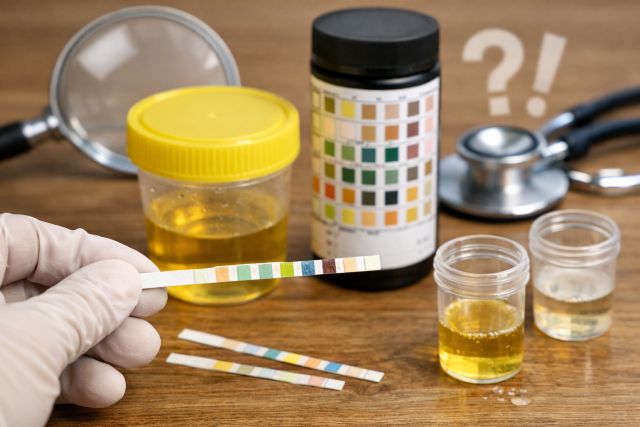
At-home urine testing can feel almost magical. You dip, wait a few seconds, and compare colors that seem to translate your body into clear answers. But urine test strips are not mind readers, and they’re not miniature lab machines either. They are fast screening tools that can be genuinely useful, yet their accuracy depends on what you’re checking, how you collect the sample, how carefully you time the reading, and even what supplements you took that day.

If you’ve ever wondered why a strip said “UTI” when you felt fine, or why it was negative when you were sure something was off, you’re not alone. In this guide, you’ll learn what urine strips do well, where they commonly mislead, and how to avoid the mistakes that cause the majority of false positives and false negatives.

What urine test strips measure, and what “accuracy” really means

Most multi-parameter urine dipsticks contain several small reagent pads. Each pad changes color when it reacts with a specific substance or property in urine. Depending on the brand, you may see pads for leukocyte esterase, nitrite, blood, protein, glucose, ketones, pH, specific gravity, bilirubin, and urobilinogen. A 2022 review from the American Academy of Family Physicians (AAFP) summarizes common dipstick parameters and how they are used in office-based urinalysis.

When we talk about accuracy, it helps to separate three ideas that often get blended together. First is analytical performance, meaning the chemistry of the pad reacts as designed. Second is clinical performance, meaning the result actually predicts a real condition in the body. Third is usability accuracy, meaning you collected the sample correctly and read the strip at the correct time under decent lighting.

Urine dipsticks can be analytically reliable and still clinically confusing, because many pads are indirect signals. A pad can flag “blood,” for example, because it reacts with hemoglobin’s peroxidase activity. That reaction can happen when red blood cells are present, but it can also happen when hemoglobin or myoglobin are present without intact red blood cells. That’s why experts describe dipstick hematuria as a nondiagnostic screening test that must be confirmed with microscopy.

The most important mindset shift is this. Urine test strips are best at screening and pattern-spotting, not at giving final diagnoses.

How accurate are urine test strips for UTIs?

This is the most common reason people buy urine strips, so it’s worth getting very practical here. Most UTI-focused dipsticks rely primarily on two pads: leukocyte esterase and nitrite. Leukocyte esterase suggests white blood cells are present, which can happen in infection but also in other inflammatory conditions. Nitrite suggests some bacteria have converted nitrate to nitrite, which is a helpful clue, but not all bacteria do this.

The AAFP’s urinalysis review notes that uncomplicated UTIs with positive leukocyte esterase and nitrite tests can often be treated without culture in the appropriate clinical context, which reflects how dipsticks are used as a decision-support tool rather than a perfect standalone test.

The issue is that real-life UTI situations are messy. People test at different times of day. Some don’t hold urine in the bladder long enough for nitrite to build up. Some infections are caused by organisms that don’t produce nitrite. Some samples are contaminated. In older adults, interpretation gets even trickier because bacteriuria without symptoms is more common, so a positive dipstick can mean far less than people assume.

A useful way to think about it is this. If you have classic UTI symptoms such as burning with urination and urgency, a positive dipstick supports your suspicion. If you have no symptoms and you’re just checking “to be safe,” a weakly positive result is much more likely to be contamination, harmless bacteriuria, or irritation that has nothing to do with a true symptomatic infection.

Why UTI strips give false negatives

False negatives are more common than people expect, especially when timing and biology work against the test. Nitrite may be negative early in infection or if you urinate frequently because urine doesn’t sit in the bladder long enough for conversion to happen. Nitrite can also be negative if the organism doesn’t produce it.

On top of that, certain substances can interfere with pad reactions. Vitamin C is one of the best-known examples. A large clinical study published on Europe PMC reported that vitamin C was found in urine in a notable portion of subjects and that vitamin C interference led to false-negative dipstick results for glucose, hemoglobin, and leukocyte esterase in some cases when compared against sediment and blood glucose data.

If your symptoms are strong but the strip is negative, that mismatch matters. It’s a sign to stop treating the dipstick as the “judge” and treat it as one imperfect clue.

Why UTI strips give false positives

False positives often come from collection issues. Skin flora or vaginal discharge can introduce cells and bacteria that do not reflect what’s happening in the bladder. That’s why proper collection technique matters if you’re trying to use the dipstick for anything beyond curiosity.

False positives can also happen when inflammation exists without a bacterial UTI. Irritation, kidney stones, some sexually transmitted infections, and other conditions can cause white blood cells or symptoms that mimic UTI, which means leukocyte esterase is not a guarantee of infection.

“Blood” on a dipstick: accurate chemistry, easy to misunderstand

Seeing “blood” on a dipstick is one of the most alarming results for many people, and it’s also one of the most misunderstood. The Cleveland Clinic Journal of Medicine explains that the dipstick test for hematuria is nondiagnostic and that factors such as hemoglobinuria, myoglobinuria, concentrated urine, menstrual blood in the sample, and vigorous exercise can cause false positives. It also emphasizes that hematuria cannot be diagnosed by dipstick alone.

Cleveland Clinic’s patient-facing hematuria page echoes this in plain language, noting that dipstick hematuria has a relatively high false-positive rate and needs confirmation with microscopic urinalysis.

A realistic scenario makes this clearer. If you do a hard leg workout, then test later that day and see a positive “blood” pad, you might be seeing a benign false positive from exercise-related effects or concentrated urine. If you retest after resting and hydrating and it’s still positive, that repetition is a stronger signal that you should confirm with proper lab testing.

Protein on a strip: useful for screening, not the whole kidney story

Protein dipsticks can be valuable as a simple screen, but interpretation is sensitive to circumstances. Concentrated urine can make protein look higher. Temporary proteinuria can happen with fever, intense exercise, or stress. A single positive reading does not equal “kidney disease,” but repeated positives should be taken seriously and typically warrant confirmation with quantitative tests such as an albumin-to-creatinine ratio, depending on clinical context.

AAFP’s office-based urinalysis review discusses how urinalysis can reveal kidney and urinary tract disease signals, but it also reinforces the broader theme that urine testing works best when results are interpreted in context and confirmed appropriately.

Glucose and ketones: decent signals, still not a diagnosis by themselves

Glucose and ketone pads are commonly used by people monitoring diabetes risk or metabolic changes. They can be helpful, but there are caveats. Not everyone spills glucose into urine at the same blood sugar level. Hydration can dilute results. Dietary patterns can affect ketones. And again, vitamin C interference can cause false negatives for some pads, which matters if someone is using strips to decide whether everything is “fine.”

A 2015 paper in Annals of Clinical & Laboratory Science also evaluates vitamin C’s influence on dipstick test results, supporting the reality that supplements can meaningfully change what your strip shows.

The single biggest reason urine test strips seem “inaccurate”: timing and technique

Even if the strip chemistry is solid, user technique can sink accuracy fast. The good news is that most of the big errors are preventable.

The “old urine” problem

Urine is biologically active. Bacteria can multiply after the sample is collected, pH can shift, and cells can break down. A paper on the preanalytical requirements of urinalysis explains why collection, transport, and timely analysis matter and why standardized handling improves reliability.

A separate urinalysis guidance document notes that if a freshly voided specimen cannot be tested within about two hours, refrigeration is needed because storage at room temperature contributes to bacterial overgrowth and chemical changes that can alter dipstick and microscopic results.

If you’re doing home testing, the simplest rule is to test promptly. If you can’t, treat the result with caution.

The clean-catch issue

Many “mystery positives” come from contamination, especially for leukocytes and bacteria-associated markers. Midstream clean-catch collection reduces contamination from skin and external genitalia, which matters if you’re using the results to make decisions rather than just satisfy curiosity.

The timing window issue

Most dipsticks have different recommended read times per pad. Reading too early can miss a reaction. Reading too late can show “pad creep” where colors darken and look falsely positive. Even medical references emphasize reading dipsticks at the recommended time and tapping off excess urine.

Image suggestion with alt text: A dipstick beside a smartphone timer, with the alt text “timing read windows to improve urine test strips accuracy.”

The lighting issue

Color matching is subjective. Warm bathroom lighting can distort yellow and green shades, and borderline results invite wishful interpretation. Neutral daylight or bright white lighting makes a bigger difference than most people expect.

The storage issue

Humidity and heat degrade reagents. If you leave the bottle open or store strips in a steamy bathroom, accuracy drops over time. Expiration dates matter here because the chemistry literally changes.

Actionable tips to make urine test strips as accurate as possible

Start by treating collection as part of the test, not a casual step. Use a clean, dry container. Collect midstream urine when possible. Test soon after collection rather than letting the sample sit. If you need to delay, refrigerate the sample and bring it back to room temperature before dipping, while keeping in mind that best practice is still timely analysis.

Then treat timing like a recipe. Dip briefly according to your brand’s instructions, remove excess urine, and use a timer. Read each pad at its correct window rather than guessing.

Finally, interpret with context. Think about hydration, heavy exercise, menstruation, and supplements, especially vitamin C. If a result surprises you, repeat the test the next day using careful technique before you draw conclusions.

When a urine strip result should prompt confirmation

A repeat finding is more meaningful than a one-off. This is especially true for a positive blood pad. Clinical guidance and expert reviews emphasize that dipstick hematuria should be confirmed with microscopy, because dipstick alone cannot establish true hematuria.

It’s also wise to confirm when symptoms and strip results disagree. Strong UTI symptoms with a negative dipstick can still warrant medical evaluation, especially if there is fever, flank pain, pregnancy, immunosuppression, or symptoms that persist.

FAQ: quick answers for featured snippets

Are urine test strips accurate for UTIs?

They are helpful screening tools using leukocyte esterase and nitrite, but false negatives and false positives happen. They work best when interpreted alongside symptoms, and confirmation with urinalysis or culture may be needed when the situation is unclear or symptoms persist.

Can a urine dipstick show blood when there isn’t real hematuria?

Yes. Dipsticks can react to hemoglobin or myoglobin and can be falsely positive with concentrated urine, menstrual contamination, and vigorous exercise. Confirmation requires microscopic urinalysis.

What causes false negatives on urine test strips?

The most common causes are reading at the wrong time, diluted urine, early infection, and chemical interference. Vitamin C in urine is a well-documented cause of false-negative results for some dipstick parameters, including hemoglobin and leukocyte esterase in certain settings.

How fast should you test urine after collecting it?

Fresh testing is best. If you cannot test within roughly two hours, guidance documents recommend refrigeration because room-temperature storage can lead to bacterial overgrowth and chemical changes that affect results.

Conclusion: the honest truth about urine test strips

Urine test strips are accurate enough to be useful, but not reliable enough to be your final answer in high-stakes situations. They shine as quick screening tools, especially when you follow clean-catch collection, test fresh urine, time your readings carefully, and interpret results in context. Their biggest limits come from indirect chemistry, biological variation, and very common user errors. If you remember one rule, make it this: trust patterns more than single readings, and confirm repeat positives or symptom-result mismatches with proper medical testing.

Radiator Fan Turns On Late: Why Your Engine Overheats at Idle

0

If your radiator fan turns on late, you’ll often notice a very specific pattern: the temperature gauge creeps up while you’re sitting at a stoplight, stuck in traffic, or idling with the A/C on—then it suddenly drops once the fan finally kicks in or you start driving again. That “overheats at idle but cools while moving” behavior is a classic sign that your cooling system is struggling when it has the least natural airflow.

At speed, air is forced through the radiator by forward motion (sometimes called “ram air”). At idle, that airflow disappears, so your engine depends heavily on the radiator fan, coolant circulation, and accurate temperature control. When the fan’s activation is delayed — even by a small margin — heat can spike quickly, especially in hot weather or with the A/C running.

What “Radiator Fan Turns On Late” Actually Means

A “late” fan isn’t always a faulty fan. Many modern vehicles are calibrated to let coolant temperature rise into a normal operating range before switching the fan on, and the fan can also be controlled differently depending on A/C demand and emissions strategy. It’s common for fan operation to begin around the low-200°F range on many vehicles, though the exact point varies by design and conditions.

So the practical definition of “late” is not “the fan waited longer than I expected.” It’s “the fan waited long enough that the engine temperature couldn’t stay stable at idle.”

If your temperature rises gradually to normal and then stays steady, the fan cycling on and off can be perfectly normal. If the gauge climbs beyond normal, approaches the red zone, or triggers warnings before the fan engages, then the activation is effectively “late” for your current cooling system health and environment.

Why Engines Overheat at Idle More Than at Speed

Idle is the worst-case scenario for radiator heat rejection. With little to no vehicle motion, there’s no strong airflow through the radiator unless the fan is pulling it. Under-hood temperatures also build as heat accumulates around the engine bay, which makes the cooling system work harder.

That’s why fan issues, airflow restrictions, and weak coolant circulation reveal themselves most clearly in stop-and-go driving. Many automotive diagnostic resources point to the cooling fan and its control circuit as a top suspect when overheating happens mainly at idle.

Radiator Fan Turns On Late: The Most Common Causes

Weak fan motor or worn fan assembly

A fan can technically “work” and still be ineffective. A tired motor, worn brushes, dragging bearings, or damaged blades can reduce airflow so much that the system can’t catch up until the temperature has already climbed too high. At highway speeds, you may not notice because forward motion forces air through the radiator. At idle, the weakness is exposed immediately.

A common real-world clue is when the fan comes on, but the temperature continues climbing at a stoplight. Another clue is a fan that sounds quieter than it used to, starts slowly, or runs inconsistently. Repair guides emphasize that a non-working or underperforming fan can lead to rapid overheating because passive airflow at idle is not enough.

Failing relay, fuse, wiring, resistor, or fan control module

Electrical issues often create the “late” symptom because the fan doesn’t engage when commanded, or it engages only after multiple attempts. Relays can degrade internally and become intermittent. On systems with multi-speed fans, a failed resistor or module can remove low-speed operation, leaving only high-speed. That makes it feel like the fan “turns on late,” because the remaining high-speed stage tends to kick in at a higher threshold.

Electrical causes such as relays, fuses, wiring faults, and modules are frequently cited as common reasons the fan doesn’t operate when it should.

Coolant temperature sensor problems

Modern vehicles rely on the coolant temperature sensor (often called the ECT sensor) to decide when to activate the fan. If the sensor reads cooler than reality, the ECU delays fan operation. This can be especially confusing because some vehicles use different signals for the dash gauge and for ECU control, so the gauge can look hot while the ECU still believes things are normal.

If you can view live data with an OBD2 tool, comparing the displayed coolant temperature to what you’d expect from the gauge and symptoms can quickly reveal a sensor that is lying or unstable.

Low coolant, air pockets, or improper bleeding

Low coolant reduces the system’s ability to move heat away from the engine. Air pockets can also distort temperature readings and reduce heat transfer, sometimes causing odd swings where the fan response doesn’t seem to match what you’re seeing on the gauge. This situation often appears after a coolant flush, hose replacement, radiator work, or any repair that introduced air into the system.

Many resources discussing idle-only overheating list low coolant and trapped air as common underlying causes.

Sticking thermostat or delayed opening

A thermostat that opens late or doesn’t open fully can cause the engine to run hotter than normal at idle. If hot coolant isn’t flowing properly to the radiator, the radiator cannot shed heat effectively, and the fan may not have enough “cooling leverage” even when it turns on. In some vehicles, sensor placement can also influence whether the ECU “sees” the heat early enough to command the fan.

Restricted airflow through the radiator and condenser

Even a perfectly timed fan can’t cool what it can’t breathe through. Dirt, bugs, leaves, bent fins, debris between the condenser and radiator, or partially blocked ducting can reduce the volume of air passing through. With the A/C on, the condenser adds heat to the air stream before it reaches the radiator, which can intensify idle overheating.

Weak radiator cap or loss of system pressure

Cooling systems depend on pressure to raise the coolant’s boiling point. If the radiator cap is weak and pressure drops, coolant can boil earlier, creating steam pockets that reduce cooling efficiency. One widely cited rule-of-thumb is that pressure raises boiling point by about 3°F per psi, meaning a typical 15 psi cap can significantly increase the temperature at which coolant boils.

When boiling begins, temperature can climb quickly at idle even if the fan eventually kicks on, because vapor doesn’t carry heat like liquid coolant does.

Quick, Safe Checks You Can Do Without Special Tools

A practical first check is to see whether the fan runs when you turn the A/C on. Many vehicles command the fan on (or sooner) with A/C to keep condenser pressures stable. If your A/C is on and the fan never runs, it strongly suggests an electrical control issue, a failed fan motor, or wiring/connector problems.

Another useful observation is whether your vehicle seems to have two stages of fan speed. If the fan never runs gently or at a lower speed but suddenly roars loudly only when the gauge is already high, that can indicate low-speed failure, which often presents as “late” fan operation.

You can also judge airflow strength carefully. With the hood open and keeping hands, tools, and clothing away from moving parts, you should feel a strong pull of air when the fan is running. If airflow is weak, the motor or blades may be the real problem even though the fan “turns on.”

Finally, do a visual inspection of the radiator and condenser faces. A flashlight often reveals packed debris or bent fins that can choke airflow enough to cause idle overheating.

A Smarter Diagnosis Using an OBD2 Reader

If you have even a basic scan tool that shows live data, you can solve the mystery faster by observing coolant temperature and fan command behavior. If the ECU is commanding the fan on but the fan isn’t running, the problem is almost always electrical or mechanical in the fan assembly or its circuit. If the ECU is not commanding the fan until very high temperatures, then the issue may be with sensor readings, wiring integrity to the sensor, or system conditions causing misleading data.

Why “Late Fan Activation” Can Still Be Normal, and When It’s Not

Because vehicles vary, a fan that starts later than you expect can still be normal if the temperature stays stable and doesn’t trend upward at idle. Many systems are designed to cycle fans based on temperature thresholds that can sit in the low-200°F range.

It’s not normal if the temperature repeatedly climbs toward the red zone at idle, if warnings appear, if you smell coolant or see steam, or if the cabin heater suddenly blows cold while the gauge reads hot, which can suggest low coolant or air pockets.

A helpful rule is that normal fan cycling restores stability quickly, while a real problem keeps trending hotter even after the fan engages.

What to Fix First, Without Guessing

Start by confirming coolant level when the engine is cold and checking for evidence of leaks. If coolant is low, topping off is only a temporary step; the real fix is finding the leak or the reason coolant disappeared.

Next, address airflow. Cleaning debris and ensuring the radiator and condenser fins aren’t blocked can dramatically improve idle cooling without replacing parts.

After that, focus on the common fan-control failure points. Relays, fuses, and connectors are frequent culprits, and intermittent behavior often shows up as delayed fan engagement. If the fan runs but airflow is weak, the fan motor or assembly may be failing.

Finally, if fan behavior still doesn’t match coolant temperature, move toward confirming sensor accuracy and thermostat operation, ideally using scan tool data to avoid replacing parts blindly.

FAQ: Featured Snippet-Friendly Answers

Why does my engine overheat at idle but not while driving?

At idle there’s very little natural airflow through the radiator, so the cooling system depends heavily on the radiator fan and efficient coolant circulation. If the fan is weak, delayed, or airflow is restricted, heat builds while stopped, but driving forces air through the radiator and helps cooling recover.

What temperature should the radiator fan turn on?

There isn’t one universal temperature because it depends on vehicle calibration, fan strategy, and A/C load. Many vehicles engage the fan around the low-200°F range, but the correct benchmark is whether your car stays stable at idle and doesn’t trend toward overheating.

Can a bad coolant temperature sensor make the fan turn on late?

Yes. If the ECU receives a cooler-than-real temperature signal, it may delay fan activation. A scan tool that displays live coolant temperature is one of the fastest ways to spot a sensor that reads implausibly low or behaves erratically.

Can low coolant cause the radiator fan to turn on late?

Yes. Low coolant and trapped air reduce heat transfer and can cause misleading temperature behavior that makes fan activation seem delayed or ineffective. This is a commonly cited cause of overheating that’s worse at idle, especially after cooling-system service.

Is it safe to keep driving if it overheats only at idle?

It’s risky because repeated overheating can damage head gaskets, warp components, and degrade coolant. If the gauge approaches the red zone or warnings appear, it’s safer to stop, cool down, and diagnose the cause instead of pushing the engine.

Conclusion

When your radiator fan turns on late, the engine often overheats at idle because idle is the moment your cooling system has the least help from natural airflow. The fix usually comes down to restoring early, strong airflow and accurate control: correct coolant level and bleeding, clean radiator/condenser airflow paths, and reliable fan activation through healthy relays, wiring, and a strong fan motor. If you can view OBD2 live data, you can quickly separate “ECU isn’t commanding the fan” from “fan is commanded but not performing,” which prevents unnecessary parts replacement.

If you share your car’s year, make, model, and whether the fan runs when the A/C is switched on, I can narrow this down to the most likely cause and the best next check.

Power Steering Reservoir: Quick Fixes for Whining, Stiff Steering, and Leaks

0

If your steering wheel suddenly feels heavier than usual, you hear a whining sound when you turn, or you notice a slick red/amber spot under the front of your car, the power steering reservoir is one of the smartest places to start. It’s the system’s fluid “holding tank,” and when it’s low, aerated, restricted, or cracked, the rest of the steering system often complains loudly and quickly. A lot of drivers assume “pump is dying” the moment they hear a whine, but in real life, the reservoir and the low-pressure return side are frequent culprits — especially when air gets pulled into the fluid (aeration) or when a built-in filter screen becomes restricted.

This guide walks you through fast, practical fixes for whining, stiff steering, and leaks, with an emphasis on what you can confirm at the reservoir before you spend money on a pump or steering rack. You’ll also see the “why” behind each fix, so you’re not just treating symptoms — you’re preventing a repeat.

What a power steering reservoir does and why it triggers whining and stiffness

The power steering reservoir stores the hydraulic fluid the pump needs to generate steering assist. Fluid leaves the reservoir, gets pressurized by the pump, helps move the steering gear (rack-and-pinion or steering box), then returns to the reservoir through the return line. That sounds simple, but it creates a key reality: if the reservoir runs low or can’t supply smooth, bubble-free fluid, the pump can cavitate or aerate, and that’s when you get the classic whine and inconsistent assist.

Aeration is a big deal because hydraulic systems assume the fluid is mostly non-compressible. When air mixes in, pressure delivery becomes uneven and noisy. Engineers who write about pump whine often describe aeration as the pump drawing air from a low reservoir level or a small vacuum leak on the low-pressure side, and the fluid can look frothy or milky when that happens.

The reservoir can also be a restriction point. Many vehicles use a reservoir with an internal filter element or screen. If that filter clogs, it can starve the pump of flow. CRP Automotive specifically warns that internal reservoir filters on certain vehicles can clog and “starve the pump,” potentially leading to pump failure and loss of steering assist.

How to diagnose power steering reservoir problems in minutes

Start by locating the reservoir. Some are translucent with molded “MIN/MAX” marks. Others use a cap with a dipstick. With the engine off and the car on level ground, check the fluid level and compare it to the marks or dipstick range. If it’s below the minimum line, you’ve already found a likely cause of whining and heavy steering.

Next, look closely at the fluid itself. Healthy power steering fluid varies by manufacturer, so don’t rely on color alone, but you should be suspicious of fluid that’s very dark, smells burnt, or looks foamy. Foamy or frothy fluid strongly suggests air intrusion, which usually ties back to a low level, a loose return connection, a cracked hose, or a seal issue letting air in on the low-pressure side.

Finally, inspect the reservoir body and the area around the return hose connection. Many “mystery” leaks are actually slow seepage at a clamp, a hardened hose end, or a reservoir seam that only weeps under heat.

Power steering reservoir whining: quick fixes that often work fast

Power steering reservoir low fluid and aeration: why topping up helps, and when it’s not enough

If the reservoir is low, topping up with the correct fluid is the fastest way to reduce whining. A low reservoir can allow the pump to draw air, and aeration is one of the most common sources of a whine that rises and falls with engine speed and steering input.

The important detail is that topping up is only a real fix if you also address why it was low. If you add fluid and the level drops again, you haven’t “solved whining,” you’ve confirmed a leak or consumption path. A very common real-world pattern looks like this: you hear whining mostly when parking, you check the reservoir and it’s a little low, you top it up and the noise improves, then two weeks later it’s back. That cycle usually means a slow leak at the return hose, a reservoir crack, or a seep at the pump or rack that’s not obvious until you clean and re-check.

Bleeding after topping up: removing trapped air without harming components

If the fluid looks foamy or you recently opened the system for a hose or reservoir replacement, bleeding matters. Bleeding is simply the process of purging air so the pump moves consistent, bubble-free fluid again. One widely published vacuum bleed procedure instructs cycling the steering wheel lock-to-lock a few times while explicitly warning not to hold the wheel at full lock, then re-checking for leaks and remaining air in the reservoir.

This “don’t hold at full lock” warning isn’t just a formality. Full-lock conditions drive pressure high, and some repair guidance notes that keeping the wheel at full lock for more than a brief moment can stress hoses, pump vanes, and seals.

If you want a simple, reservoir-focused way to think about bleeding, aim for a stable reservoir level, minimal bubbles, and quieter pump operation after a few slow steering cycles. If bubbles keep returning, treat that as evidence of an air-entry point rather than “needing more time.”

Whining with a full reservoir: the hidden restriction problem

One of the most frustrating situations is when the reservoir is full but the whine persists. In those cases, a restriction is a strong suspect—especially an internal filter screen that’s clogged. Pro-level advice on noisy steering routinely calls out checking the reservoir screen because a clogged filter can starve the pump and create whine or moan noises even when the level looks fine.

CRP Automotive goes further and emphasizes that many BMW, Porsche, and MINI reservoirs include internal filters that can clog and starve the pump, potentially leading to severe pump damage and further contamination in the system.

You’ll also see this concept in reservoir cutaways that show the filter screen integrated into the reservoir design, reinforcing why “reservoir replacement” is sometimes the correct repair rather than endlessly chasing the noise.

Power steering reservoir and stiff steering: what to check before blaming the rack

Stiff steering, especially at low speed, often comes down to insufficient hydraulic assist. The reservoir influences this in three common ways: low fluid, aeration, and restricted supply.

When fluid is low, the pump cannot maintain stable pressure. When fluid is aerated, pressure delivery becomes inconsistent and assist can feel “notchy” or intermittent. When supply is restricted by a clogged reservoir filter, the pump may not be receiving adequate flow, which can show up as heavy steering even though the fluid level appears correct.

There’s also a practical diagnostic clue: if steering is worst right after startup or during slow parking maneuvers, and you hear whining at the same time, reservoir-side issues become even more likely. If steering is heavy with no noise and the fluid looks clean and stable, then you broaden the diagnosis to belt tension (if belt-driven), pump output tests, or rack issues. But it’s still worth ruling out the reservoir restriction problem first because it’s cheaper and easier to confirm.

Power steering reservoir leaks: where they start and how to pinpoint them

Leaks can come from many points in the system, but reservoir-related leaks are common enough that they should be checked early. The reservoir itself can crack, seams can seep, and the return hose connection can slowly sweat fluid. Over time, even a small leak can drop the fluid level enough to introduce air, which then creates whining and stiffness.

A quick, reliable approach is to clean the outside of the reservoir and nearby hoses, drive briefly, and then re-check with a strong light. Fresh wetness tells you more than old grime. If the leak is hard to find, many shops use dye-based detection, but even without dye, a cleaned surface makes the source far clearer.

If you notice the reservoir was overfilled, correct the level as well. Overfilling can push fluid out of the cap vent or seals and create a “leak look-alike” that stops once the level is correct and the system stabilizes.

When the leak is severe and the level drops rapidly, treat it as urgent. Loss of assist can happen quickly once fluid is low enough for the pump to ingest air.

Fluid choice and contamination: protecting the reservoir, pump, and seals

Fluid isn’t interchangeable across all cars. Some vehicles specify a dedicated power steering fluid, some specify ATF, and some European applications use special hydraulic fluids. Using the wrong fluid can worsen seal compatibility and change how the system behaves when hot.

Contamination is the next big factor. Dirty fluid can accelerate wear and contribute to clogging in reservoir screens and small passages. That’s why many professional discussions about steering noise pair “check level” with “check fluid condition” and “check reservoir screen” as a chain of cause-and-effect.

If you replace a pump or rack, it’s smart to think of the reservoir as part of the contamination story. If the reservoir’s filter is loaded with debris, installing a new pump without addressing that restriction is one way to end up with a comeback noise problem.

You’ll also see industry materials promoting filtration as a way to reduce debris-related failures; one bulletin discussing serviceable in-line filters frames debris as a major contributor to steering system failures and emphasizes the value of keeping filter screens clean.

What “quick fix” actually means here, and when to stop DIY

A true quick fix is one that removes symptoms and removes the cause. For reservoir-related steering problems, that typically means restoring the correct fluid level, eliminating air entry, and removing restrictions. If you top up and bleed properly but you still get foamy fluid in the reservoir, don’t keep cycling the wheel endlessly; persistent foam points to an air leak on the low-pressure side or a component issue that needs inspection.

If the reservoir is full, the fluid is stable, and there’s still a steady whine and heavy steering, it’s time to suspect restrictions or failing components. Reservoir replacement is a reasonable step on vehicles known for clogged internal filters, and it’s often paired with a fluid exchange so you’re not feeding fresh parts with dirty fluid.

FAQ answers for featured snippets

What does a power steering reservoir do?

A power steering reservoir stores hydraulic fluid and supplies it to the steering pump. If it’s low, aerated, or restricted, you can get whining noises, foamy fluid, and reduced steering assist.

Can a low power steering reservoir cause whining?

Yes. Low fluid can let the pump draw air, creating aeration and a high-pitched whine that changes with steering load and engine speed.

Why is my power steering fluid foamy in the reservoir?

Foam usually means air is entering the system, often through a low fluid level or a small leak on the low-pressure return side. Bleeding may remove trapped air, but persistent foam means you should find the air-entry point.

Why does my power steering whine even when the reservoir is full?

A common reason is restriction, such as a clogged reservoir filter screen that starves the pump, which can cause whining and reduced assist even with a correct fluid level.

Should I hold the steering wheel at full lock while bleeding?

No. Published bleed procedures warn not to hold the wheel at full lock, and repair guidance notes full-lock conditions can stress hoses, seals, and pumps.

Conclusion: why the power steering reservoir is your best first stop

The power steering reservoir is a small component that creates big symptoms. Whining is often the pump reacting to aeration from low fluid or air leaks, and stiff steering can come from low level, bubbles, or restricted supply through a clogged reservoir filter. Leaks around the reservoir or return connection can quietly trigger both problems by slowly dropping the level until air gets pulled in. When you approach diagnosis from the reservoir outward—level, condition, air, restriction, then leaks—you avoid guessing, you avoid unnecessary parts, and you protect the pump from running starved or aerated. If your vehicle uses a reservoir with an internal filter, don’t overlook it; reputable parts and service sources warn that a clogged internal filter can starve the pump and cascade into larger failures.

Affordable Sliding Door Kit Upgrades That Instantly Modernize Any Room

0

A sliding door kit is one of the quickest ways to make a room feel intentionally designed without taking on a full remodel. In many homes, the door is a surprisingly “loud” design element: it’s large, used every day, and often sits in a prime sightline. When the hardware looks clunky or the movement feels rough, the whole space can read older than it really is.

The good news is that modernizing doesn’t require fancy carpentry or a designer budget. With the right sliding door kit upgrades, you can get smoother motion, quieter operation, and a clean, contemporary look in a single weekend. The key is knowing which parts matter most and which “cheap fixes” actually make the door feel worse over time.

What a sliding door kit is and what an “upgrade” really means

A sliding door kit is the hardware system that allows a door panel to glide horizontally. Most kits include the track, rollers or hangers, stops, a floor guide, and the fasteners needed to mount everything. Some kits come with a door slab, but many expect you to supply the door separately.

When people talk about upgrading a sliding door kit, they’re usually trying to improve two things at once: how it looks and how it feels. The look is obvious from across the room, because the track and hardware are right at eye level. The feel is just as important, because you notice it every time you open or close the door. A modern door is quiet, stable, and smooth, not rattly or stiff.

If your current setup feels noisy, wobbly, or visually themed in a way you’ve outgrown, upgrading the kit hardware often delivers a bigger impact than replacing the door slab itself.

Why a sliding door kit upgrade modernizes a room so quickly

Modern rooms tend to share a few characteristics: clean lines, fewer visual interruptions, calmer sound, and purposeful details. Doors influence all four.

A swinging door requires “swing space,” which can create awkward furniture layouts and cluttered traffic patterns. A sliding door eliminates that, which instantly makes a room feel more flexible and “planned.” Designers also talk about the broader move toward spaces that can be opened or closed depending on the moment, rather than permanently open layouts, which makes sliding doors especially practical for offices, dens, and hybrid rooms.

Then there’s the sensory factor. A soft, controlled glide reads as high quality the same way a well-made drawer does. If you want a room to feel modern without changing its architecture, this is one of the most direct ways to get there.

Sliding door kit upgrades that deliver the biggest modern payoff

Upgrade 1: Choose a slimmer, cleaner track profile

If your current track is bulky, highly decorative, or overly “industrial,” switching to a slimmer track design can instantly update the whole wall. Modern hardware tends to look simpler and more intentional. Straight lines, minimal ornamentation, and a consistent finish do most of the work.

A sleek track matters because it sits above the opening like a visible “header.” When it’s clean and proportional, it blends into the architecture. When it’s oversized, it becomes the feature, even if you didn’t mean for it to.

Upgrade 2: Add soft-close so the door feels premium

Soft-close is one of the most noticeable upgrades you can make because it changes the daily experience immediately. Instead of the door bumping the stop or slamming when someone moves too quickly, soft-close dampers guide it into position.

This isn’t just about comfort. It reduces wear on the track stops, protects trim and wall surfaces, and lowers noise — especially useful in smaller homes, apartments, and open-plan spaces. If you work from home, you’ll appreciate how much “modern” is really code for “quiet and controlled.”

Upgrade 3: Replace noisy rollers with smoother, quieter rollers

If a sliding door rattles or grinds, it will never feel modern, no matter how stylish the hardware finish is. Roller quality is the heart of the system. Upgrading to better rollers can make a basic kit feel dramatically more expensive.

Look for roller designs that emphasize durability and smooth operation, such as ball-bearing mechanisms. While specific requirements vary across product categories, industry standards and testing frameworks for door hardware often focus on durability and performance over cycles, which is exactly what you want in a frequently used door.

This is also the upgrade that tends to “fix” doors that feel misaligned. Better rollers track more consistently and reduce lateral wobble.

Upgrade 4: Match the finish to the room, not the trend

A sliding door kit looks modern when it looks intentional. One of the easiest ways to accidentally make a door look dated is mixing metals randomly. You don’t need everything to match, but you do want it to feel deliberate.

If your space leans warm, brushed brass or bronze can feel current. If your space leans crisp and monochrome, matte black or brushed nickel often looks sharper. The trick is repeating the finish elsewhere in the room so the door hardware feels like part of the design language rather than a standalone statement.

Upgrade 5: Swap bulky pulls for low-profile or flush handles

Handles can quietly sabotage a modern look. Many doors that could look contemporary end up reading farmhouse simply because the pulls are oversized, rustic, or overly ornate.

Modern interiors typically favor flush pulls, minimal bar pulls, or subtle finger pulls depending on the door style. The best choice is the one that stays comfortable in the hand while staying visually quiet.

Upgrade 6: Install a better floor guide for stability

A floor guide is a small part with a big effect. If the bottom guide is flimsy or poorly positioned, the door can sway, scrape, or feel unstable. That instability is one of the fastest ways to make the whole project feel “DIY,” even if the track looks great.

A better guide improves alignment and reduces wobble, which makes the door feel more like a built-in architectural element. It also protects the door edge and helps maintain smooth travel over time.

Upgrade 7: Use proper backing so the install looks clean and stays safe

A track must be anchored securely. If the mounting points don’t line up with studs, a properly installed backer board that spans studs is often the right solution. This is where many sliding door installs fail over time: the door seems fine at first, then loosens, sags, or shifts after repeated use.

A modern-looking install is also a correct install. When the track is level, the spacing is consistent, and the mounting surface is solid, the door glides better and the hardware sits flatter, which reads cleaner visually.

Cost reality: what “affordable” usually looks like

Hardware pricing varies widely, but credible cost guides put basic track-and-hardware kits in a broad budget-to-midrange spectrum. Fixr, for example, cites a hardware kit cost range of roughly $42 to $447 depending on quality and length, with custom hardware costing much more.

If you’re also hiring installation help, your all-in cost changes significantly. HomeAdvisor reports an average installed cost and a typical homeowner spending range for barn-style sliding door installs, influenced by labor, door type, and site conditions.

The practical takeaway is that you can modernize the feel and appearance without buying the most expensive system, as long as you prioritize the parts that control motion and stability. A modest kit with upgraded rollers or soft-close can look and feel better than a pricey kit installed with weak backing and a wobbly guide.

Picking the right door slab for a modern result

Even though this guide focuses on the sliding door kit, the door slab still matters. A very light, hollow door can look fine but feel cheap because it transmits sound and tends to vibrate more. If your goal is a calmer, more modern home, choosing a heavier, better-built slab can improve the “quiet” factor noticeably.

If budget is tight, upgrading the kit first is still a smart move. Many homeowners do it in phases: hardware and motion upgrades now, door slab upgrade later if sound or sturdiness becomes the bigger issue.

Where a sliding door kit works best, and where it can disappoint

Sliding doors are excellent in places where saving swing space immediately improves how the room functions. Closets, pantries, laundry rooms, and home offices are common wins because you gain usable floor area and a cleaner traffic path.

Bathrooms and primary bedrooms require more thought. Sliding doors often provide less privacy than a hinged door because they don’t seal the same way, and sound can pass through more easily. This is a frequent critique in both designer commentary and homeowner regret discussions, especially around barn-door-style applications in bathrooms.

If you still want the sliding look in a privacy-sensitive space, you can often get a better outcome with systems designed for tighter closures, or by choosing a door style and installation approach that reduces gaps.

Interior versus exterior: don’t assume the same performance

Most sliding door kit upgrades discussed here apply to interior doors. Exterior sliding doors are a different category because air leakage and weather sealing matter much more.

The U.S. Department of Energy notes that it’s impossible to stop all air leakage around weatherstripping on sliding glass doors and still keep them operable, and that swinging doors generally offer a tighter seal than sliding types. If you’re shopping for exterior doors, you’ll also want standardized performance information. ENERGY STAR explains that NFRC labels provide energy performance ratings and are present on certified products.

That doesn’t mean exterior sliders are “bad.” It means you should shop them differently, using ratings and real performance data rather than assuming the door type alone guarantees efficiency.

Common questions people ask before buying a sliding door kit

What size sliding door kit do I need?

Most kits are sized based on the door opening and the door slab width. You’ll want enough track length for the door to slide fully clear of the opening, plus adequate wall space beside the opening. The safest approach is to follow the manufacturer’s sizing guidance for your kit and measure your available wall run before you buy.

Can I install a sliding door kit over existing trim?

Often yes, but trim thickness changes the spacing required so the door doesn’t rub. Many installs require spacers or standoffs to clear casing. If the trim is thick or the wall isn’t perfectly flat, proper backing can also help create a cleaner mounting plane and a more modern finished look.

Are pricier kits actually worth it?

They can be, particularly if you care about noise, smoothness over time, and durability under heavier doors. A door that feels refined is usually the result of better rollers, stronger mounting, and controlled stopping or soft-close hardware, not just a higher price tag.

Are barn-style sliding doors still in style?

They can be, especially when the design is simplified and used in the right location. Designers often say barn doors aren’t going away, but they can date a space when they’re overly rustic or used where privacy is critical.

Real-world scenario: a fast modern upgrade for a home office

Picture a small home office where a hinged door swings into the room and constantly collides with a chair. Replacing it with a sliding setup solves the layout problem instantly. The modernization happens when you pick a minimal track profile, upgrade to smoother rollers, and add soft-close so the door closes quietly during calls.

The result is more usable space, calmer acoustics, and a door that feels like part of the architecture. It’s the kind of change that makes a room feel “new” even if nothing else changes.

Conclusion: modernize any room with the right sliding door kit upgrades

A sliding door kit upgrade is one of the fastest ways to modernize a room because it changes function, appearance, and daily feel all at once. If you want the biggest impact for the least money, prioritize smoother motion and stability first. Quiet rollers, a solid floor guide, and soft-close create the “premium” experience that reads modern instantly. Then refine the visuals with a slim track profile and minimalist pulls that match the rest of the room.

Dial Test Indicator: Best Uses, Setup Tricks, and Accuracy Hacks

0

A dial test indicator is one of those tools that looks simple until you need readings you can repeat with confidence. Whether you’re tramming a mill head, dialing in a part in a 4-jaw, or checking runout on a shaft, the dial test indicator excels at showing tiny variations from a reference. The catch is that small setup mistakes, especially contact angle and mounting rigidity, can create misleading readings that waste time and ruin accuracy.

This article explains what a dial test indicator does best, how to set it up so it reads truthfully, and the accuracy hacks machinists and inspectors use to keep results consistent. You’ll also get clear answers to common questions, practical scenarios, and credible references so you can measure faster and with fewer surprises.

What Is a Dial Test Indicator?

A dial test indicator is a precision comparator that measures very small deviations from a reference using a pivoting lever stylus and a dial face. Because the contact point moves through an arc rather than straight in and out, the geometry of how you touch the work matters more than most people expect. In most real tasks, you’re not using a dial test indicator to measure an absolute size. You’re using it to find variation, such as runout, alignment error, surface change, or drift across a face.

This is why dial test indicators show up everywhere in setup work. They reveal what’s changing as you rotate a part, sweep a surface, or traverse along a jaw. That makes them ideal for machine alignment and inspection tasks where “difference from reference” matters more than “exact dimension.”

Dial Test Indicator vs Dial Indicator: Why the Difference Matters

A plunger-style dial indicator moves linearly along its axis. It’s often easier to interpret because you can align the plunger directly with the motion you care about. A dial test indicator uses a lever, which improves access and sensitivity for sweeping, but it also introduces more geometry sensitivity. If you set a DTI at a poor angle, you can create cosine error that makes the reading smaller than the actual deviation. Mitutoyo’s guidance on the cosine effect for indicators explains how misalignment between measurement direction and actual motion leads to inaccurate results.

In practice, choose a dial test indicator when you need side contact, sweeping motion, and access around features. Choose a plunger indicator when you can measure in-line, especially if your setup makes it hard to control angles.

Best Uses for a Dial Test Indicator

Tramming a Milling Machine Head

Tramming is a classic dial test indicator task. You mount the indicator in the spindle and sweep a circle on the table or a reference surface to see if the head is tilted. The DTI excels here because you can sweep smoothly and see tiny differences across the arc. The accuracy comes from keeping stylus contact consistent and preventing the stylus angle from changing too much as you sweep.

If your readings are inconsistent or seem to change depending on where you start, it’s usually not the machine. It’s the indicator angle, preload, or mounting rigidity.

Aligning a Vise or Fixture

When you sweep along a vise’s fixed jaw, you’re looking for deviation along X travel. A dial test indicator makes this fast because you can traverse and watch the dial drift. The key is to move smoothly and keep the stylus contact angle steady so you don’t introduce geometry-based error.

Indicating a Part in a 4-Jaw Chuck

Dialing in a part in a 4-jaw is where DTIs feel like magic. You rotate the chuck and watch deviation at a reference point. The lever stylus makes it easier to touch awkward shapes and delicate surfaces. To get predictable results, always rotate and approach your “read point” in a consistent way, because direction changes can reveal play in the system.

Checking Runout on Shafts, Bores, and Toolholders

A dial test indicator is widely used to check runout because it’s sensitive to small changes. Whether it’s a shaft, a bore, a collet, a toolholder, or a spindle test bar, the DTI provides fast feedback. If runout numbers don’t repeat between setups, the most common causes are dirt on mating surfaces, seating issues, or a mounting arm that moves when you touch the part.

Checking Surface Variation, Flatness Drift, and High Spots

DTIs excel at “find the high spot” work. Sweep across a surface and the dial reveals variation quickly. This is also where cleanliness matters most, because a tiny chip or burr can be larger than the deviation you’re hunting.

Dial Test Indicator Setup Tricks That Improve Accuracy

Control Contact Angle to Reduce Cosine Error

Cosine error is one of the biggest reasons people distrust dial test indicator readings. If the indicator isn’t measuring in the direction you think it is, the reading becomes a scaled version of reality. Mitutoyo explains that misalignment between the measuring direction and the intended movement causes inaccurate readings, and that proper setup can reduce that effect.

A practical way to think about it is this. The more you measure at an angle, the more you risk reading less than the true deviation. Your goal is not a perfect theoretical alignment in every setup. Your goal is a consistent, reasonable stylus angle that stays stable throughout the sweep or rotation.

If you notice the reading changes when you re-angle the indicator without changing the part, that’s a strong sign your geometry is dominating the result.

Use Light, Consistent Preload

A dial test indicator needs some preload so the stylus maintains contact. Too little preload causes skipping and unstable readings. Too much preload creates friction and can flex thin parts or introduce a “sticky” feel. The most important habit is consistency. Use similar preload each time and always approach your measurement from the same direction.

Shorten the Stylus Whenever Possible

Long stylus extensions increase leverage. That makes the contact more sensitive to vibration, surface texture, and flex in your mounting arm. If you can reach the surface with a shorter stylus, you’ll usually gain stability and repeatability.

Lock Down the Entire Mounting Stack

A dial test indicator is only as stable as the base, arms, clamps, and joints holding it. A magnetic base that feels “solid” by hand can still move under light force at the contact point. After setting contact, gently tap the arm or apply a tiny pressure near the indicator and watch the dial. If the needle jumps and doesn’t return exactly, you have flex or slip in the stack.

This is often the hidden reason readings drift when you tighten vise bolts, adjust jaws, or bump the work.

Match the Motion to the Indicator’s Measuring Direction

With a DTI, the stylus pivots. That pivot geometry means the measuring direction is not always intuitive. If you sweep in a way that changes how the stylus loads, the reading can vary from setup to setup even if the part is the same. Keeping your sweep path and stylus orientation consistent is one of the fastest “accuracy upgrades” you can make.

Accuracy Hacks That Actually Work in the Shop

Focus on Repeatability, Not Just Resolution

Resolution tells you how fine the graduations are. Repeatability tells you whether your setup and technique produce the same result over repeated trials. Many dial test indicators are available in fine resolutions such as 0.0005 inch or 0.01 mm, but real-world performance depends heavily on setup quality. Industry references commonly note that test indicators have short measuring ranges and are used for small deviations rather than long travel.

If your DTI has a fine scale but your readings don’t repeat, the problem is rarely the dial face. It’s usually contact angle, mount rigidity, preload, cleanliness, or approach direction.

Do a Simple Return-to-Zero Sanity Check

You can catch many issues with a basic repeatability check. Mitutoyo describes repeatability checks using a stand and a gauge block, repeating displacements and comparing indication differences.

A simplified shop approach is to mount the indicator rigidly, touch a clean reference such as a gauge block, deflect the stylus to a consistent point, and return several times while approaching from the same direction. If the needle returns to different zeros, investigate your setup first before blaming the tool.

Always Approach the Reading From the Same Direction

Direction changes can reveal backlash or play in your mounting system and can also change how the stylus loads. When indicating runout or alignment, rotate and approach your reference point consistently. If you overshoot, back away and approach again the same way rather than “creeping back” from the other direction.

Clean Contact Surfaces Like a Metrologist

A tiny chip, oil film, or burr can easily exceed the deviation you’re trying to measure. This matters most when checking runout or aligning fixtures to tight tolerances. If your numbers are inconsistent, cleaning is one of the quickest fixes.

Respect Temperature and Handling

If you’re checking precision parts, temperature matters. Hand heat can warm small parts, and freshly machined parts may still be moving as they cool. Even if you’re only indicating variation, heat can shift thin components and fixtures. Let parts stabilize, avoid squeezing gauge references, and measure with consistent handling.

Common Mistakes That Make Dial Test Indicator Readings Unreliable

One common mistake is treating the dial test indicator as an absolute measurement device rather than a comparator. DTIs are best when you’re comparing variation around a reference. Another mistake is letting the stylus angle change during a sweep, which can introduce geometry-based differences that look like part error. Loose mounting joints and over-preload also cause drift and non-repeatable results.

If you suspect the indicator is at fault, verify repeatability against a known reference. If repeatability improves when you stiffen the mount or adjust the stylus angle, your setup was the issue.

Real-World Scenarios Where Technique Beats Gear

Tramming a Mill Head Without Chasing Ghost Readings

A clean tramming process starts with a rigid mount and a consistent stylus angle across the sweep. Sweep the same circle, read the difference, adjust, then re-sweep using the same preload and motion. If your readings change dramatically between sweeps without adjustment, look for mount slip or stylus angle shift rather than machine error.

Dialing in a 4-Jaw With Fewer Iterations

Choose a reference point, rotate smoothly, and always approach the measurement from the same direction. Make small opposing jaw adjustments and recheck. If the part seems to “move” when you tighten jaws, you’re learning something important about clamping distortion, not just concentricity.

Checking Spindle or Toolholder Runout With Confidence

Clean the taper, clean the toolholder, clean the test bar. Mount the indicator rigidly. Rotate by hand and watch for peak-to-peak variation. If runout changes each time you reseat the toolholder, it often indicates seating contamination or taper condition rather than the spindle being inherently bad.

FAQ: Dial Test Indicator Questions

What is a dial test indicator used for?

A dial test indicator is used to measure small deviations from a reference, most commonly runout, alignment, tramming, vise/fixture alignment, and surface variation checks.

How accurate is a dial test indicator?

Accuracy depends on the indicator’s build, resolution, and especially setup geometry. Cosine error and mounting rigidity can dominate results. Mitutoyo’s notes on the cosine effect explain why misalignment can make readings inaccurate and why controlling the setup angle matters.

Why does my dial test indicator not return to zero?

Common causes include a loose mounting stack, inconsistent approach direction, dirt on the contact point, too much preload, or internal sticking. A repeatability check using a stable reference such as a gauge block helps isolate whether the issue is setup or the indicator.

Can I use a dial test indicator for tramming?

Yes. It’s one of the most common uses because the lever stylus is convenient for sweeping surfaces. The key is consistent stylus angle and rigid mounting so cosine error and flex don’t corrupt the readings.

Conclusion

A dial test indicator is one of the fastest ways to see tiny deviations that matter in machining and inspection, but it rewards disciplined setup. When you control stylus angle to reduce cosine error, use consistent preload, keep the stylus short, and lock down the mounting stack, your readings become repeatable and trustworthy. Add simple verification habits like return-to-zero checks on a known reference, and your dial test indicator stops being a “touchy tool” and becomes a reliable extension of your process.

Ball Joints Explained: Symptoms, Costs, and When to Replace Them

0

Ball joints are small parts with a big job. They sit at a critical connection point in your front suspension, helping your wheels move up and down over bumps while still turning smoothly when you steer. When ball joints wear out, the changes can feel subtle at first, but the consequences can get expensive fast through tire wear and alignment issues, and they can become a safety problem if wear becomes severe.

Drivers often notice the warning signs before a shop ever confirms the diagnosis. The challenge is that many front-end problems feel similar, so it’s easy to keep driving and hope it goes away. This article explains what ball joints do, the most common symptoms, how much replacement typically costs, and how to decide when to replace them based on real inspection logic rather than guesswork.

What Are Ball Joints and What Do They Do?

A ball joint is a pivoting joint that connects the control arm to the steering knuckle. If you picture a hip joint, you’re close. It allows movement in multiple directions, which your suspension needs because the wheel must travel vertically with the road while also rotating left and right as you steer.

Most vehicles use ball joints in the front suspension. Some have both upper and lower ball joints, while others rely on a single primary joint depending on suspension design. Another important detail is whether the ball joint is replaceable by itself or integrated into the control arm. That difference matters because it can dramatically change labor time and the final bill.

MOOG’s inspection guidance emphasizes that ball joint looseness can affect steering and suspension behavior and contributes to alignment and tire-wear complaints, which is often how the problem first shows up for everyday drivers.

Ball Joint Symptoms You’ll Feel While Driving

Ball joint wear rarely announces itself with one perfect, obvious symptom. It’s usually a pattern of changes that build over time, and the pattern is what makes the diagnosis more convincing.

Clunking or knocking from the front end

A dull clunk over bumps, potholes, or driveway transitions is one of the classic signs drivers report. The sound often appears when the suspension loads and unloads, such as when you roll over a speed bump or turn into a parking lot at an angle. As wear increases, the clunk tends to happen more frequently and with less provocation.

This symptom isn’t exclusive to ball joints, but when clunking is paired with steering looseness or abnormal tire wear, it becomes much more suspicious.

Loose, wandering, or vague steering

Worn ball joints can create play in the suspension’s pivot points. Behind the wheel, that can feel like the car doesn’t want to track straight, especially at highway speed. You might find yourself making small steering corrections more often than you used to. Some drivers describe it as “floaty,” while others say it feels like the front end is slightly delayed in responding.

If your vehicle used to feel planted and now feels less precise, worn ball joints are one possible reason, particularly if the change came gradually.

Uneven tire wear that keeps coming back

This is where ball joints can quietly cost you money. When a ball joint becomes loose, wheel alignment angles can shift under load, so the tire may scrub and wear unevenly even if the alignment looks acceptable during a quick check. MOOG’s materials directly connect looseness in ball joints with alignment and tire-wear issues, which aligns with what many shops see in real-world tire complaints.

If you’ve replaced tires sooner than expected and the wear looks uneven or “feathered,” it’s worth having the suspension inspected, not just aligned again.

Squeaking, creaking, or groaning over slow suspension movement

Some worn ball joints develop noise that sounds more like a creak than a clunk. It often shows up at low speeds, during turning, or while the suspension articulates into driveways. Noise alone isn’t proof, but it can point toward a joint whose lubrication has failed or whose protective boot has been compromised.

Visible torn boot or grease leakage

If the dust boot is torn, road grit and water can get inside. That contamination speeds up wear dramatically. A torn boot doesn’t automatically mean the joint is already unsafe, but it does mean the joint’s remaining life may shrink quickly, especially in wet or salty conditions.

Why Worn Ball Joints Can Become a Safety Issue

In early stages, worn ball joints usually cause inconvenience and expense. They can worsen handling feel, accelerate tire wear, and make alignment harder to maintain. But if wear becomes severe, the stakes get higher.

NHTSA recall documents describe scenarios where ball joint separation from the knuckle can lead to a wheel moving outboard and a loss of vehicle control. In one recall report, the defect description explicitly notes that a ball joint separating from the knuckle can cause the wheel to fall outward, creating crash risk.

This doesn’t mean every noisy front end is about to fail immediately. It does mean that once a shop confirms measurable looseness beyond specification, ball joints move from “annoying” to “address soon” in a very practical way.

How Long Do Ball Joints Last?

Ball joint lifespan varies because it depends less on a single mileage number and more on how the vehicle is used and where it’s driven. Rough roads, potholes, curb strikes, heavy loads, and larger wheels can all increase stress. Trucks and SUVs often wear front suspension parts faster simply because of weight and typical usage.

A more useful approach than chasing a mileage target is treating ball joints as inspection items. When symptoms appear, or when tires show unusual wear, a proper inspection is the reliable way to decide what to do next.

MOOG’s technical tip highlights that inspection method matters, particularly because some ball joints are load-carrying while others are follower designs. The correct test approach depends on which type you have.

How Mechanics Confirm a Bad Ball Joint

A good diagnosis is not guesswork based on noise alone. It’s an inspection that looks for play and boot condition in a way that matches your suspension design.

MOOG’s inspection document explains that load-carrying and follower ball joints must be checked differently, and it describes using lifting methods and leverage to evaluate looseness.

If you’re comparing repair quotes, one of the most useful questions you can ask is whether the shop confirmed looseness beyond specification, and how they tested it. A clear answer usually separates a measured diagnosis from a “parts cannon” approach.

Ball Joint Replacement Cost: What You Should Expect

Ball joint replacement cost depends on your vehicle, your region, and whether the joint is replaceable by itself or integrated into the control arm.

RepairPal estimates the average cost for a suspension ball joint replacement between $305 and $471, including parts and labor, and it breaks out labor and parts ranges as part of that estimate.

AutoNation Mobile Service gives a wider range and notes that ball joint replacement costs often fall between $180 and $550, reflecting how some vehicles are straightforward while others require more time or more expensive parts.

If you’re trying to sanity-check a quote, a number outside these ranges isn’t automatically wrong. Luxury vehicles, heavy-duty trucks, and designs that require more disassembly can push costs higher. Rust can also increase labor significantly because press-fit parts and fasteners may take longer to separate safely.

When to Replace Ball Joints

The smartest replacement timing is based on condition, not just age.

If a ball joint has measurable play beyond spec, replacement is typically the responsible call because looseness can worsen quickly and can affect steering precision and tire wear. If the boot is torn and the joint is already noisy or loose, replacement is usually the better value than trying to stretch it, since contamination accelerates wear.

If symptoms exist but looseness is not confirmed, it’s reasonable to push for a precise diagnosis. Many issues that feel like ball joints can also come from tie rods, control arm bushings, sway links, wheel bearings, or even tire problems. The goal is not to avoid replacing ball joints when they’re worn, but to avoid replacing them when they’re not the real problem.

One more practical point is repeat costs. If you replace one side and the other side is near the end of its life, you might pay labor and alignment costs twice. On the other hand, if the opposite side is still tight and healthy, replacing only the worn side can be perfectly reasonable. The “right” answer is whichever one matches what inspection shows.

Do You Need an Alignment After Ball Joint Replacement?

Often, yes. Even when ball joints aren’t the primary adjustment point for alignment on a specific model, suspension disassembly can shift geometry. Also, if the worn joint contributed to uneven tire wear, an alignment helps protect your tires and restores predictable handling.

If a shop replaces ball joints and does not at least discuss alignment, it’s worth asking whether your vehicle design and the work performed make alignment advisable.

Real-World Scenarios That Make the Diagnosis Clear

A common scenario is the “mystery tire wear” problem. A driver replaces tires sooner than expected, gets an alignment, and still sees the inside edges wearing quickly. Inspection finally reveals ball joint looseness that allows the wheel to change angle under load. After replacing the ball joints and aligning the vehicle, tire wear returns to normal. MOOG’s guidance linking looseness with alignment and tire wear is consistent with this kind of outcome.

Another scenario is the slow progression of noise. A light clunk appears over bumps, then steering starts to feel less connected, then braking over rough pavement feels less stable. The vehicle still “drives,” but the margin of safety and comfort shrinks as play increases. That’s the kind of progression where timely replacement pays off.

FAQ About Ball Joints

What are ball joints on a car?

Ball joints are pivoting joints in the suspension that connect the control arm to the steering knuckle, allowing the wheel to move vertically with the suspension while also turning for steering.

What are the most common symptoms of worn ball joints?

The most common symptoms include clunking over bumps, loose or wandering steering, and recurring uneven tire wear. Some vehicles also develop squeaks or creaks, especially if the protective boot is damaged.

Is it safe to drive with worn ball joints?

Mild wear may not be an emergency, but excessive looseness is a safety concern because severe wear can lead to separation. NHTSA recall documents describe ball joint separation scenarios that can lead to wheel movement and loss of control, increasing crash risk.

How much does it cost to replace ball joints?

Cost varies by vehicle and design. RepairPal estimates an average suspension ball joint replacement between $305 and $471, while AutoNation Mobile Service cites a wider range that often falls between $180 and $550 depending on the vehicle and parts.

Do I need an alignment after replacing ball joints?

Often yes, especially if suspension components were removed or if tire wear suggests alignment instability. An alignment helps restore handling and protect your tires after the repair.

Conclusion: Don’t Ignore Ball Joints When the Signs Add Up

Ball joints are easy to overlook because they’re out of sight, but they directly influence steering feel, alignment stability, and tire life. If you notice clunking, wandering steering, or repeated uneven tire wear, a proper inspection is the fastest way to avoid wasting money on tires and alignments that won’t hold.

Once wear is confirmed, replacing ball joints is usually the safest and most cost-effective move. It restores a tight suspension pivot, improves predictable handling, and reduces the chance of the severe failure scenarios described in NHTSA safety documents.