Home Blog Page 4

How Long Does an Axle Shaft Last? Lifespan, Wear, and Prevention

0

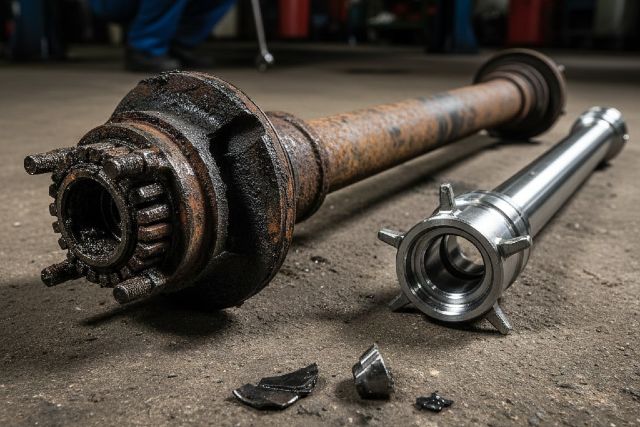
If you’re wondering how long an axle shaft lasts, you’re really asking two questions at once: how long the metal shaft itself can survive, and how long the joints and protective parts around it can keep doing their job. In most modern cars, the axle shaft is part of a CV axle assembly (constant-velocity joints plus shaft), and the “lifespan” usually depends less on the steel and more on whether the grease stays clean and sealed inside the CV boots.

The good news is that many factory axle shafts can run for years without attention. The bad news is that a small rubber boot tear can turn a long-life component into an expensive replacement surprisingly fast, because grease escapes and grit gets in. That seal-and-grease story is the key to understanding wear, symptoms, and prevention.

An axle shaft transfers torque from the transmission/differential to the wheel. On many front-wheel-drive and all-wheel-drive vehicles, the axle shaft includes inner and outer CV joints so the wheel can steer and move with suspension travel while still receiving power.

That’s why axle problems often show up as clicking during turns or vibration under acceleration: the joints are doing complex work under load. The steel shaft can be extremely durable, but the joints are precision parts that rely on lubrication and protection from contamination.

How long does an axle shaft last in miles and years?

Under normal driving, many vehicles see axle shaft/CV axle service life around the 100,000-mile neighborhood, with a wide real-world range. Some sources commonly cite practical ranges from roughly 50,000 miles on the low end to 150,000+ miles on the high end, depending on boot condition, environment, and driving style.

In ideal conditions, an OEM CV axle can last well past 150,000 miles and sometimes for the “service life” of the vehicle, especially if the boots remain intact and grease stays sealed.

If you want a simple expectation that’s usually safe for planning, think of it this way: the axle shaft can be a long-life component, but the axle assembly becomes a wear item the moment a boot starts leaking or a joint begins running dry and dirty.

The biggest factors that shorten axle shaft lifespan

CV boot damage and grease loss (the #1 accelerator)

CV boots exist to keep grease in and keep dirt and water out. SKF describes this contamination-control role directly: boots retain grease and protect CV joints from dirt and water ingress that can cause damage or erosion over time.

Once a boot splits, grease can leak out and contaminants can enter, which accelerates joint wear. Haynes explains this cause-and-effect plainly and recommends checking boot health before the joint is ruined.

Cars.com makes the same point from a consumer-maintenance angle: grease escape plus contamination can cause CV joint failure, and periodic inspections (often easiest during oil-change lift time) help prevent it.

Age-related wear plus high operating stress

Even without a torn boot, the axle assembly is constantly under high stress. A GKN workshop document notes that CV joints transfer torque and face extremely high stresses during operation, with age-related wear being common, and defective boots and inferior grease also being leading contributors.

Driving conditions and habits

City driving with frequent tight turns, hard acceleration, potholes, rough roads, and lifted/modified suspension geometry can increase joint angles and loading. Those conditions don’t automatically “kill” an axle, but they can reduce the margin for error once a boot starts failing.

Installation and parts quality (especially with replacements)

One underappreciated reason some people replace axles more than once is that not all replacement assemblies are equal, and improper handling during installation can damage boots or joints. GKN specifically flags improper handling during installation/removal as a contributor to failures.

What wear looks like: common axle shaft and CV joint symptoms

When people say “bad axle shaft,” they often mean the CV joint is worn, not that the steel shaft snapped. Here are the most common real-world signals.

Clicking or popping while turning is the classic outer CV joint symptom. It’s often most noticeable during low-speed, tight turns (parking lots are the giveaway).

Grease splatter near the wheel well or on suspension components is a strong sign the boot has torn or a clamp has loosened. Cars.com notes that grease on the outside of the boot or nearby surfaces commonly accompanies boot issues.

Vibration at highway speeds or shudder under acceleration can point to inner joint wear, axle imbalance, or related drivetrain issues. This symptom overlaps with wheel balance and tire problems, so it’s a “diagnose carefully” clue rather than a slam dunk.

A clunk when shifting from reverse to drive or when accelerating can also appear if there’s excessive play in the joint or in other driveline components.

Is it safe to drive with a worn axle shaft or CV joint?

A minor seep or early boot crack might not feel dangerous today, but the direction of travel is usually bad: less grease, more contamination, more wear. Cars.com warns that boot failure can lead to CV joint failure, and the practical risk is losing smooth power delivery and getting stranded if the joint fails badly.

If you hear persistent clicking on turns or feel strong vibration under load, treat it as a near-term safety and reliability issue rather than a “someday” repair, because the joint is telling you it’s already wearing.

Axle shaft wear prevention: what actually works

Inspect boots regularly (and do it at the right times)

The highest-ROI prevention step is simply spotting boot damage early. Cars.com specifically recommends periodic drive-axle boot inspection, often during routine service when the car is lifted.

If you only remember one schedule, align it with oil-change intervals or tire rotations. You’re not trying to become a full-time inspector; you’re just trying to catch a small crack before it becomes a dirt-and-grease disaster.

Fix a torn boot early, before noise begins

Haynes explains the key threshold: when a boot splits, grease leaks out and dirt gets in, causing the joint to wear. In practical terms, once clicking starts, the joint is often already damaged enough that a boot-only fix may not restore long-term reliability.

So the “prevention” move is speed. If you catch a tear early, you may be able to repair the boot and preserve the joint.

Avoid the habits that spike joint load

This isn’t about babying your car; it’s about avoiding the worst stress combinations. Hard acceleration while the wheel is cranked to full lock, frequent curb strikes, and blasting through potholes increase joint strain. If you drive on rough roads often, inspections matter even more.

Use quality parts and good installation practices

If replacement is needed, quality matters. GKN highlights that inferior grease and improper handling during installation/removal can contribute to damage. That’s a reminder to pick reputable parts and ensure boots aren’t twisted, nicked, or clamped poorly.

A realistic scenario: how a “small boot tear” becomes a full axle replacement

Imagine you’re doing an oil change and notice grease on the inside of the wheel. The car still drives fine, and you don’t hear clicking yet. If you replace the boot quickly, you may save the joint.

Now imagine you ignore it for a few months through rain, dust, and heat cycles. The boot leaks more, dirt enters, and the joint begins clicking on turns. At that stage, a boot replacement may stop further contamination, but it can’t undo the wear that already happened inside the joint. This is exactly why so many mechanics treat early detection as the difference between a smaller repair and a full axle shaft replacement.

When should you replace an axle shaft?

Replace the axle shaft (or full CV axle assembly) when you have confirmed joint wear, persistent clicking, significant vibration under load traced to the axle, or physical damage like a torn boot with contamination and noise.

Some manufacturers and service networks publish technical service bulletins related to axle or boot issues, and NHTSA hosts recall and TSB documentation that can be useful if you suspect a known defect pattern for your vehicle.

If you want a step that can save you money, check whether your vehicle has an applicable TSB or recall before paying out of pocket.

Frequently asked questions about axle shaft lifespan

How long does an axle shaft last if the boot never tears?

It can last a very long time, often well beyond 100,000 miles and sometimes past 150,000 miles, because the joint stays lubricated and uncontaminated. The main enemy is grease loss and dirt/water ingress, which boots are designed to prevent.

What’s the earliest warning sign of axle shaft trouble?

Grease around the boot area or inside the wheel well is one of the earliest visible signs, because it suggests the boot seal is compromised. Clicking on turns is a later, more definitive symptom that often indicates internal joint wear has started.

Can a CV boot be replaced without replacing the whole axle shaft?

Sometimes, yes, especially if you catch the tear early before clicking or vibration begins. If noise is present, many shops recommend replacing the whole axle assembly because internal wear may already be significant.

Do aftermarket axles last as long as OEM?

It depends heavily on parts quality and installation. Some aftermarket axles perform well, but improper installation handling and differences in grease/boot quality can affect lifespan, which is why reputable brands and correct fitment matter.

Conclusion: the real answer to “how long does an axle shaft last?”

A well-built axle shaft can last a long time, often around 100,000 miles or more, and sometimes well beyond 150,000 miles under good conditions. The deciding factor is rarely the steel shaft itself. It’s the protection system around it: intact CV boots, clean grease, and low contamination. When the boot fails, the clock speeds up fast because grease escapes and grit gets in, driving wear and eventual joint failure.

Sterile Water for Wound Care: The Right Way to Use It Safely

0

Choosing the correct solution for cleaning a wound can directly impact healing speed and infection risk. Sterile water is often recommended for wound care, but many people are unsure when to use it, how to use it properly, and whether it is better than saline or tap water. Understanding the correct application of sterile water can make a significant difference in safe and effective wound management.

In this comprehensive guide, we explore how sterile water for wound care works, when it should be used, common mistakes to avoid, and best practices supported by research and medical guidance.

What Is Sterile Water and Why It Matters in Wound Care

Sterile water is water that has been purified and treated to eliminate all microorganisms, including bacteria, viruses, and fungi. In wound care, it is commonly labeled as sterile water for irrigation and is intended specifically for cleaning wounds, flushing debris, and moistening dressings.

The importance of sterility becomes clear when wounds expose deeper tissue layers. Any bacteria introduced during cleaning can delay healing or lead to infection. According to the U.S. Food and Drug Administration, sterile water for irrigation is designed to reduce microbial contamination when cleansing wounds or surgical sites. This distinction matters because sterile water is not the same as distilled or filtered water, which may still contain microorganisms.

Medical labeling also clarifies that sterile water for irrigation is not meant for injection or internal consumption. Its role is external wound cleansing, and using it correctly ensures safety and effectiveness.

Sterile Water for Wound Care vs Saline vs Tap Water

One of the most common questions people ask is whether sterile water is better than saline or tap water for wound cleaning. The answer depends on the situation, the wound type, and the environment.

Sterile saline contains sodium chloride and closely matches the body’s natural fluid balance. This makes it gentle on exposed tissue and comfortable during irrigation. Because of this, saline is widely used in hospitals and clinics for routine wound care.

Tap water, when clean and potable, has been shown in multiple studies to be acceptable for cleaning minor wounds. A Cochrane systematic review found no strong evidence that tap water increases infection rates compared to sterile saline in uncomplicated wounds. However, the review also emphasized that water quality is critical and results vary depending on local water safety.

Sterile water becomes especially valuable when water safety cannot be guaranteed. The Centers for Disease Control and Prevention advises using sterile or boiled water for wound care during boil-water advisories or infrastructure failures. In these cases, sterile water reduces the risk of introducing harmful pathogens into open tissue.

When Sterile Water Is the Right Choice for Wound Care

Sterile water for wound care is particularly appropriate when treating wounds in high-risk environments or for individuals with increased susceptibility to infection. This includes people with weakened immune systems, chronic illnesses such as diabetes, or extensive skin injuries.

Sterile water is also recommended when caring for burns, deep abrasions, surgical wounds, or large open areas where bacterial exposure could significantly delay healing. In disaster situations, travel, or outdoor settings where tap water quality is uncertain, sterile water offers a controlled and reliable option.

Healthcare providers often recommend sterile water when moistening wound dressings or cleansing wounds before re-bandaging, especially if the wound is slow to heal or has shown signs of irritation.

Situations Where Sterile Water May Not Be Ideal

Despite its benefits, sterile water is not always the best option. Because it lacks electrolytes, sterile water can cause mild discomfort or stinging when applied to exposed tissue. Normal saline is often better tolerated for sensitive wounds.

Sterile water also does not replace antiseptics or prescribed medications. Its purpose is mechanical cleansing, not killing bacteria through chemical action. Overuse of antiseptics can damage healthy tissue, and sterile water should not be mixed with medications unless directed by a healthcare professional.

For deep puncture wounds, animal or human bites, or wounds with heavy contamination that cannot be cleaned easily, sterile water alone is insufficient. These injuries require professional medical evaluation.

How to Use Sterile Water for Wound Care Safely

Proper technique is just as important as the solution itself. Always begin by washing your hands thoroughly before touching the wound. This simple step dramatically reduces infection risk.

Once bleeding is controlled, open the sterile water container immediately before use. The water should be used fresh, as opened containers can become contaminated over time. Gently irrigate the wound using enough pressure to remove visible dirt without forcing debris deeper into the tissue.

After irrigation, allow the wound to drain naturally. Do not scrub aggressively, as this can damage new tissue and slow healing. Pat the surrounding skin dry with a clean cloth while keeping the wound itself slightly moist if recommended.

If you are applying a dressing, follow manufacturer or clinician instructions regarding whether sterile water should be used to moisten gauze. Once opened, any remaining sterile water should be discarded unless the label specifically states otherwise.

Common Mistakes People Make With Sterile Water

One frequent mistake is reusing opened sterile water containers over several days. Once exposed to air, sterility can no longer be guaranteed. Another issue is assuming sterile water can be used interchangeably with injectable fluids, which is unsafe and incorrect.

Some people also believe sterile water prevents infection on its own. In reality, proper wound cleaning, protection, and monitoring are what prevent infection, not the water alone. Signs such as increasing redness, warmth, swelling, pus, or fever require medical attention regardless of how carefully sterile water was used.

What the Research Says About Wound Cleansing

Research consistently shows that effective wound irrigation is about removing contaminants rather than sterilizing the wound. A randomized controlled trial published in BMJ Open found no significant difference in infection rates between wounds cleaned with tap water and those cleaned with sterile saline, highlighting that technique and cleanliness matter more than the solution in many cases.

However, public health agencies stress that in compromised environments, sterile water remains the safest option. This is particularly relevant in hospitals, long-term care settings, and emergency response scenarios.

FAQs About Sterile Water for Wound Care

Sterile water is safe for cleaning wounds when used as directed for irrigation and external cleansing.

Sterile water should be used immediately after opening and should not be stored for later wound care unless the manufacturer specifically allows it.

Sterile water does not replace saline but can be used when saline is unavailable or when water safety is a concern.

For minor cuts, clean tap water may be sufficient if it is potable and reliable, but sterile water offers an added margin of safety.

Conclusion: Using Sterile Water the Right Way

Sterile water for wound care is a valuable tool when used correctly. It provides a safe, bacteria-free option for cleaning wounds, especially in high-risk situations or when water quality is uncertain. While it is not always superior to saline, it plays an important role in modern wound care when technique, hygiene, and clinical judgment are applied together.

By understanding when and how to use sterile water properly, you can reduce infection risk, support faster healing, and make informed decisions about wound care at home or in clinical settings.

For more guidance, explore our related articles on wound dressing selection and signs of wound infection, or consult trusted sources like the CDC and FDA for up-to-date medical recommendations.

Bad Fuel Pump Symptoms: How to Tell If Your Pump Is Failing Fast

0

Bad fuel pump symptoms often start small, then escalate fast. You might notice a slightly longer crank in the morning, a brief stumble when you accelerate, or a vague loss of power that comes and goes. Because the fuel pump sits quietly in the background doing one important job—delivering fuel at the right pressure and volume—when it weakens, the engine’s behavior can change in ways that feel inconsistent. The truth is, the pattern is usually very consistent once you know what to look for.

If you’re here because your car is hesitating, stalling, or struggling to start, you’re not alone. Fuel delivery problems are common, and they can mimic other issues like ignition problems or vacuum leaks. In this guide, you’ll learn the most reliable signs of a failing fuel pump, quick ways to narrow it down, and what to do next so you don’t get stranded or end up with an unsafe stall.

What the fuel pump does and why failure feels “random”

In most modern vehicles, the fuel pump is electric and mounted inside the fuel tank. It pushes fuel through the lines and filter toward the engine, where pressure is controlled by a regulator or by the engine computer depending on the system design. When everything is healthy, pressure and fuel volume stay stable across different driving conditions—idling, accelerating, cruising, and climbing hills.

When a pump starts failing, it often can’t keep up when demand rises. That’s why a car might idle fine in a parking lot but hesitate badly during a highway merge. This isn’t your imagination; it’s a classic way a weak pump reveals itself. Safety recall documents for low-pressure fuel pump issues also note that failure can lead to engine stall while driving, which increases crash risk.

Bad fuel pump symptoms that show up first

Hard starting and longer cranking

One of the earliest bad fuel pump symptoms is extended cranking. The engine turns over normally, but it takes longer to catch and run. This can happen after the car sits overnight because fuel pressure bleeds down, or after a short stop when heat in the engine bay changes fuel behavior. If you notice the engine starts better when you cycle the key to the ON position before cranking, that’s a meaningful clue. Key cycling primes the pump briefly, so improvement suggests a fuel pressure build or hold problem, which can be related to the pump, a check valve, a regulator, or leaking injectors.

Hesitation, sputtering, or stumbling under acceleration

A weak pump may supply enough fuel for idle and gentle driving but struggle under load. That leads to hesitation, sputtering, or a sensation that the car is “starving” when you press the pedal. This symptom becomes especially noticeable when climbing a hill, passing another vehicle, or merging onto a freeway. HowStuffWorks highlights sputtering and loss of power under heavy load as common indicators of fuel pump trouble.

Loss of power at higher speeds

If your vehicle feels decent around town but loses power at highway speeds, fuel volume delivery becomes a prime suspect. At higher speeds, injectors demand more fuel, and the engine needs stable pressure to maintain correct air-fuel ratios. If pressure drops, the engine can go lean, power falls off, and you may feel surging or flat acceleration. In recall documentation related to low-pressure fuel pumps, reduced engine power and poor performance are listed as warning signs that can occur before a pump fails.

Rough running and misfires that feel “lean”

Fuel pump issues can create a lean condition, which can trigger misfires. Instead of the sharp “single-cylinder miss” people associate with spark plug failure, lean misfires often feel like a soft but persistent stumble, especially when accelerating. You may also notice a rough idle that comes and goes, or a shaky sensation at steady cruising speeds when the engine is trying to correct the mixture.

Check engine light related to lean operation

A failing fuel pump can trigger a check engine light, often with lean codes like P0171 or P0174. These codes mean the engine computer has detected a lean condition and has been trying to compensate. It’s important to know that these codes do not automatically mean the fuel pump is bad because vacuum leaks, MAF sensor issues, and exhaust leaks can also cause them. Still, when you combine lean codes with hesitation under load and reduced power, fuel delivery climbs higher on the suspect list. AutoZone explains that these lean codes relate to a lean condition detected by upstream oxygen sensors.

Stalling at idle or while driving

Stalling is one of the most serious bad fuel pump symptoms, and it should change how you treat the problem immediately. If the pump can’t maintain pressure, the engine may stall when you come to a stop, when you turn on accessories, or even while you’re moving. This isn’t just inconvenient; it’s a safety issue. NHTSA recall reports related to fuel pump failures emphasize that an engine stall while driving increases the risk of a crash.

Unusual whining or loud humming from the tank

Many fuel pumps make a quiet hum, especially with the key in the ON position. What matters is a noticeable change. If your car develops a louder-than-usual whining from the rear of the vehicle, particularly when paired with starting issues or acceleration hesitation, it can indicate pump wear, restriction, or cavitation. Noise alone isn’t proof, but it’s an important supporting clue.

Crank-no-start that appears suddenly

The end-stage failure is often a crank-no-start condition where the engine turns over but never fires. At this stage, the pump may not be running at all, or it may be running but producing insufficient pressure. Electrical issues like a blown fuse, failing relay, wiring corrosion, or a ground problem can mimic a dead pump, so this is the situation where diagnostics matter most.

Why symptoms worsen in hot weather or with low fuel

Heat and low fuel are two conditions that commonly expose a weak pump. Fuel inside the tank helps cool an in-tank electric pump. When the tank is low, the pump may run hotter, and hot fuel can behave differently, increasing the chance of vapor-related delivery problems. In safety documentation for low-pressure fuel pumps, risk factors and warning signs are sometimes associated with low fuel levels and warm fuel conditions, along with rough running, reduced power, and check engine warnings.

If you notice the car runs worse on hot days, during long drives, or when the fuel gauge is below a quarter tank, don’t brush it off. That pattern is a useful diagnostic clue.

How to tell if the fuel pump is actually failing fast

The key-prime clue

A quick at-home clue is whether the vehicle starts better after you turn the key to ON, wait a couple seconds, then crank. If this helps consistently, it points toward pressure build-up or pressure hold issues. That does not always mean the pump itself is the only culprit, but it strongly suggests the problem lives in the fuel delivery system rather than purely ignition.

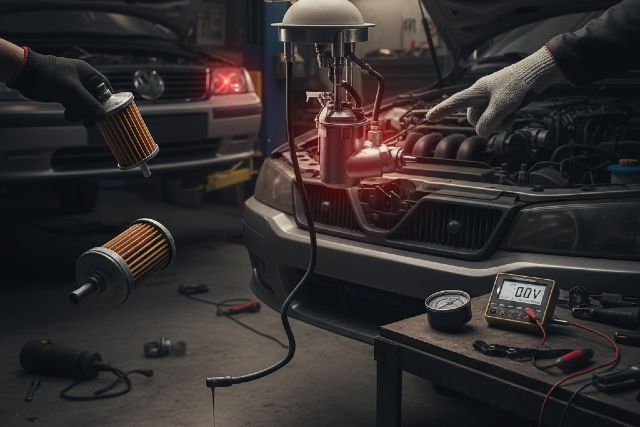
Fuel pressure testing is the most direct confirmation

A fuel pressure test is the fastest way to move from symptoms to proof. Many port fuel injection systems commonly run somewhere around the 40–60 psi range, but the correct spec varies by vehicle and engine design, so you should verify the exact specification for your model.

If your vehicle uses gasoline direct injection, pressures can be far higher at the rail and require different tools and procedures, which is one reason professional testing is often the safest route.

Scan tool fuel trims can support the diagnosis

If you have an OBD2 scanner, look at fuel trims. When the engine is running lean, the computer often adds fuel, which shows up as positive fuel trim numbers. High positive trims at idle can suggest vacuum leaks, while trims that worsen under acceleration can suggest fuel delivery limitations. This isn’t a standalone test, but it can reinforce what your symptoms already suggest.

Don’t skip electrical supply checks

A fuel pump that’s mechanically fine can act weak if it’s not getting proper voltage. A failing relay, corroded connector, weak ground, or voltage drop under load can cause intermittent pump performance. If a shop diagnoses your pump, it’s reasonable to ask whether they checked voltage and current draw, not just pressure.

Fuel pump symptoms vs other common problems

Fuel pump failure has a recognizable “load sensitivity.” In simple terms, the harder you ask the engine to work, the more obvious the problem becomes. Ignition coil or spark plug issues can also worsen under load, so the difference often comes down to what data and tests say. If pressure drops when you accelerate, that’s a strong sign of pump or supply issues. If pressure stays stable but misfires count climbs on specific cylinders, ignition becomes more likely.

Lean codes can be especially misleading. A vacuum leak often causes a rough idle that improves when you rev the engine slightly, while a weak pump often causes the opposite: it feels okay at idle and becomes worse under acceleration. Real-world behavior matters, and it’s why describing when the symptom occurs is more helpful than describing how it feels.

A real-world scenario of a pump failing quickly

A very common timeline looks like this. You notice a small hesitation during a highway merge that you can’t reproduce in city driving. A day or two later, the hesitation becomes more frequent on hills. Then the car takes longer to start, especially after it’s warm. Finally, the vehicle stalls once at a stop or feels like it’s about to die when you slow down.

This “failing fast” progression happens because once a pump begins to lose capacity, the margin disappears quickly. Modern engines can compensate only within limits. Recall documents also emphasize warning signs like reduced power, poor performance, and rough running before a stall event.

Is it safe to drive with bad fuel pump symptoms?

If you’re only dealing with mild sluggishness, you might be able to drive short distances, but it’s still risky to ignore. Once stalling or sudden power loss appears, the risk rises sharply. Any symptom that could cause you to lose power while merging or crossing traffic should be treated as urgent.

Because engine stalls while driving are explicitly linked to fuel pump failure risk in safety documentation, the safer move is to limit driving and diagnose quickly if stalling has occurred or feels imminent.

Fuel pump replacement cost and why estimates vary

Fuel pump replacement costs vary widely because access varies widely. Some vehicles allow service through an access panel under the rear seat, while others require dropping the fuel tank, which increases labor. Parts pricing also varies, especially if your vehicle uses a complete fuel pump module that includes the sender and housing.

As a general reality check, price guides show broad ranges, with some estimates reaching over a thousand dollars depending on vehicle and labor. RepairPal’s average estimates for many vehicles can exceed $1,200 total, while other sources describe a wide “ballpark” depending on model and shop rates.

Practical prevention that actually helps

Fuel pumps live longer when they’re kept cool and not overworked. Keeping the tank above a quarter when possible can help, especially in hot climates and during long trips. If your vehicle has a serviceable fuel filter, replacing it on schedule helps reduce restriction and pump strain. It also helps to avoid consistently buying fuel from stations with questionable turnover, since contamination and debris can shorten pump life.

None of this is magic, but it reduces the conditions that make weak pumps fail sooner and makes it less likely you’ll face an avoidable roadside breakdown.

FAQ: short, snippet-ready answers in paragraph form

Many drivers ask, “What are the most common bad fuel pump symptoms?” The most common signs are hard starting, hesitation under acceleration, loss of power at higher speeds, sputtering, rough running, check engine warnings related to lean conditions, unusual whining from the tank area, and stalling.

Another common question is, “Can a bad fuel pump cause a check engine light?” Yes, it can. When fuel pressure drops, the engine can run lean or misfire, and the engine computer may trigger a warning light. Some recall documentation notes check engine light warnings, rough running, and reduced power as signs that may appear before pump failure becomes severe.

People also ask, “How do I know if it’s the fuel pump or the fuel filter?” The most reliable method is measuring fuel pressure and observing how it behaves under load. A clogged filter can reduce flow, and a weak pump can fail to maintain pressure during acceleration. If your filter is overdue and your vehicle has a serviceable filter, replacing it may be part of the fix, but testing is the best way to avoid replacing the wrong part.

A practical question is, “Will my car still run with a failing fuel pump?” Often it will, especially at idle and low speeds. Many pumps weaken gradually, and symptoms show up first during high demand situations like hills, highway speeds, and quick acceleration. This is why drivers often report that the problem feels inconsistent until it becomes frequent.

Finally, drivers want to know, “Is it dangerous to drive with these symptoms?” It can be, particularly when stalling or sudden power loss is involved. Safety documents related to fuel pump failures warn that engine stall while driving increases crash risk, so if you’ve experienced stalling or power loss during merges, it’s wise to treat it as urgent.

Conclusion

Bad fuel pump symptoms are easiest to deal with when you catch them early. Long cranking, hesitation under load, power loss at speed, lean codes, and rough running are all signs that fuel delivery may be slipping. Once stalling appears, the priority shifts from convenience to safety, because pump failure can cause an engine stall while driving.

If you want the fastest path to certainty, focus on confirmation, not guessing: fuel pressure testing, basic electrical supply checks, and scan tool data together can pinpoint whether the pump is failing or whether another issue is mimicking it. Acting sooner usually saves time, reduces the risk of getting stranded, and helps you avoid collateral damage from prolonged lean operation.

Ceramic Tint vs Regular Tint: The Real Difference Most Shops Won’t Explain

0

If you’re comparing ceramic tint vs regular tint, you’ll hear the same pitch almost everywhere: “Ceramic blocks more heat, regular is cheaper.” That’s not wrong, but it’s incomplete. The real difference is how each film handles the full solar spectrum, how honest the performance numbers are, and what happens after months or years of sun exposure.

This matters because tint shopping is one of the easiest places to get “spec-washed.” A shop can quote a huge infrared number, call it “ceramic,” and still sell you something that doesn’t feel much cooler in real driving. To choose correctly, you need to understand what “regular” actually means, which metrics to compare, and how installation quality can make a great film look bad.

What “Regular Tint” Usually Means

“Regular tint” isn’t a single product type. In most shops, it’s a casual label for anything that isn’t positioned as ceramic. That can include dyed films, carbon films, hybrid constructions, and sometimes older metalized films. Two “regular” options can perform very differently depending on the brand, the film construction, and whether the shop is using a reputable manufacturer with published data.

So the first hidden trick is the label itself. When you hear “regular,” ask what film family and brand it is. If the answer is vague, that’s a sign you may be comparing marketing categories rather than real performance.

Ceramic Tint vs Regular Tint in One Sentence

The simplest true explanation is this: ceramic tint uses non-metal, nano-ceramic particles to reduce heat transmission and improve performance without signal interference, while many regular tints rely more on dyes or metals that can absorb heat, fade, or introduce connectivity issues.

That’s the foundation. Now let’s talk about what most shops don’t explain, because this is where the buying decision becomes obvious.

The #1 Thing Most Shops Won’t Explain: Heat Rejection Is Not Just “IR%”

Many sales pitches treat infrared rejection like a single universal standard. In reality, infrared numbers can be presented in ways that make them look impressive without guaranteeing the cabin will feel cooler. One reason is that some marketing focuses on one part of the spectrum while ignoring the rest. Window film industry education resources frequently point out that heat comes from more than just a narrow infrared slice, and that focusing on a single wavelength band can be misleading when comparing products.

If you want the most practical comparison metric for “how hot will my car feel,” you should pay attention to TSER.

Why TSER usually tells you more than IR marketing

TSER stands for Total Solar Energy Rejected. It represents how much of the sun’s total energy is prevented from entering through the glass as a system. In plain terms, higher TSER generally means less solar heat gets into the cabin, which typically means the car feels more comfortable in direct sun.

Here’s the nuance that helps you shop smarter: an infrared percentage can sound huge, but TSER is often the more honest “big picture” metric for comfort. That’s why technical data sheets from major film brands include TSER alongside visible light transmission and other performance values.

How Ceramic Tint Actually Works (Minus the Hype)

Ceramic films use nano-ceramic particle technology to improve solar performance while staying non-metallic. What you feel in real life is less “sun burn” through the glass and a cabin that recovers faster once the AC is running, especially after the car has been parked in the sun.

If you want proof that reputable manufacturers define these metrics carefully, look at how 3M describes IRER, which is “infrared energy rejection” across a stated wavelength range. In their technical documentation, IRER is defined over 780–2500 nm and explicitly accounts for transmitted and absorbed energy that can be re-radiated into the car. That kind of definition matters because it tells you what the number actually represents, instead of treating “IR” as a magic sticker.

The biggest practical advantage of ceramic for many drivers is that it can deliver strong heat performance without using metal layers, which is useful for modern cars loaded with antennas and electronics.

What Regular Tint Typically Does Well, and Where It Often Falls Short

Regular tint can be a great value when you’re buying from a reputable brand and your goals are mainly privacy and glare reduction. But the experience depends heavily on what “regular” means at that shop.

Dyed films are common entry-level options because they look good and reduce glare. Their weakness is that they often rely more on absorption than reflection or rejection, so the glass can still get hot under intense sun. Over time, the visual look can also change depending on film quality and UV exposure.

Metalized films can offer strong solar performance, but they can bring a more reflective appearance and may cause signal issues in some vehicles. Even when interference isn’t dramatic, many drivers simply prefer to avoid that risk, which is one reason non-metal ceramics became so popular in the automotive space.

Carbon films often sit between dyed and ceramic in marketing. Some carbon products can be excellent, especially if the manufacturer publishes solid TSER and durability data. The catch is that “carbon” is also used loosely as a label, so you still want to see the spec sheet.

The Clarity Difference: Why Ceramic Often Looks “Cleaner,” Especially at Night

A difference you can feel quickly, even before you notice heat performance, is optical clarity. Higher-end films are often engineered for better visibility and lower haze. Night driving is where people complain the most about cheap film, because haze around headlights and rainy glare can become annoying.

Ceramic films are frequently chosen by drivers who want a premium “neutral charcoal” look and better clarity. This doesn’t mean every ceramic is perfect and every regular tint is hazy. It means ceramic tends to be offered in the product lines where manufacturers invest more into optics, stability, and published performance targets.

If you do a lot of night driving, ask the shop to let you look through a sample on glass outside, not just a tiny sample card under indoor lighting. It’s a small step that can prevent big regret.

UV Protection: Ceramic and Regular Can Both Be Strong, but Don’t Assume

UV protection is one area where both ceramic and non-ceramic films can perform very well. The key is choosing a film from a reputable manufacturer with real data.

The Skin Cancer Foundation notes that UVA rays can pass through window glass and reach you in cars and indoors, which is why UV-protective window film can be a meaningful layer of protection.

This matters for drivers who commute daily in bright conditions, especially with sun exposure through the side window. It also matters for interiors, because UV contributes to fading and material breakdown over time.

What you shouldn’t do is treat “99% UV” as proof of quality by itself. Many films claim high UV blocking, but the reliability of that claim depends on the brand and documentation. A good shop will tell you the film line and show you the manufacturer’s published performance sheet.

Longevity and Color Stability: The “Purple Tint” Problem Explained

Most people have seen it: a car that used to look sharp, now with tint that looks purple, patchy, or uneven. That’s often a film quality and durability issue, commonly associated with lower-grade dyed films and harsh sun exposure.

Ceramic films tend to be more color-stable because they don’t depend on dye to achieve most of their performance. That doesn’t mean ceramic can’t fail. Poor installation, cheap off-brand film, or questionable warranties can still cause issues. But if you’re paying for longevity, ceramic is often the safer bet, particularly when paired with a reputable manufacturer warranty and a shop known for clean installs.

A useful habit is to ask how long the shop has carried the brand and what warranty claims look like in practice. A confident shop will be transparent about it.

The Spec Sheet “Cheat Code” That Makes Choosing Easy

If you want to make the ceramic tint vs regular tint decision simple, compare these numbers on a manufacturer technical data sheet rather than relying on a sales pitch.

VLT tells you how dark the tint looks and how much visible light passes through. TSER gives you the most practical “overall heat” comparison.

If the shop is quoting infrared performance, ask what that number means and what wavelength range it covers. Reputable manufacturers define IRER across stated ranges such as 780–2500 nm and clarify that absorbed energy can be re-radiated into the vehicle, which changes how meaningful the number is.

When a shop can’t show a data sheet, won’t name the brand, or only talks about one flashy IR number, you’re no longer shopping films. You’re shopping a story.

The Real-World Decision: When Ceramic Is Worth It

Ceramic is usually worth it when your daily reality is punishing heat. If you live in a hot climate, park outside, drive midday, or spend long stretches in traffic, the comfort difference tends to be obvious because heat management is where premium film earns its price.

Ceramic is also worth it when you want performance without surprises. Non-metal construction is a comfort for drivers who don’t want to think about signal issues. Optical clarity and stable color are a comfort for people who keep cars longer and hate the idea of re-tinting.

If your primary goal is privacy and a clean look on a tighter budget, a reputable non-ceramic film can still be a great purchase. You can get a strong result if you pick a good brand and a good installer, and if you keep your expectations realistic about peak heat performance in extreme sun.

A Practical Scenario That Makes the Choice Obvious

Imagine two drivers in the same city. Driver A parks outside at work, then sits in traffic during peak sun. Driver B parks in a garage and mostly drives evenings.

Driver A is likely to feel the benefit of ceramic every single day because the cabin heat load is constant. Driver B might care more about glare reduction and privacy and may not feel the same return on a premium film, especially if the budget matters.

That’s why “ceramic is always better” is too simplistic. Ceramic is often better, but the value is highest when your lifestyle makes heat and comfort a daily pain point.

Installation Quality: The Part Everyone Ignores Until It’s Too Late

Even the best film can look terrible if the installation is sloppy. Dust, creases, contamination, and poor edge finishing can ruin the appearance and reduce satisfaction even if the film is technically high-end.

It also helps to know what “normal” looks like right after installation. Many shops explain that curing takes time, and minor haziness or moisture can be present while the film settles. What matters is whether the shop sets correct expectations and stands behind the finish once curing is complete.

A simple way to reduce risk is to choose a shop that can show you recent installs on similar vehicles and can explain their warranty process without getting defensive.

FAQs That Aim for Featured Snippets

What is the main difference between ceramic tint and regular tint?

The main difference is construction and performance. Ceramic tint uses non-metal nano-ceramic technology to improve heat management and stability, while regular tint is often dyed, carbon, hybrid, or metalized, and performance varies widely by type and brand.

Does ceramic tint block more heat than regular tint?

Ceramic often blocks more overall heat, especially in direct sun, but you should compare TSER to judge real comfort. TSER is commonly used to represent total solar energy rejection rather than focusing on one part of the spectrum.

Why do some “IR%” claims feel misleading?

Infrared claims can be presented using different wavelength ranges and definitions, so two films can advertise impressive IR numbers that aren’t directly comparable. Reputable manufacturers define how they measure IR-related metrics, including the wavelength range used.

Does ceramic tint block UV better than regular tint?

Many quality window films, ceramic or not, can offer strong UV protection. UVA can pass through glass, which is why UV protective window film is commonly recommended as a protective layer for cars and indoor spaces.

Can regular tint interfere with phone signal or GPS?

Some metalized films can interfere with signals in certain vehicles because metallic layers can reflect or attenuate radio frequencies. Non-metal ceramic films are typically chosen to avoid that risk.

Conclusion: Ceramic Tint vs Regular Tint Comes Down to Honest Metrics and Your Daily Reality

If you take one thing from this ceramic tint vs regular tint guide, let it be this: don’t buy the label, buy the data. When comfort is the goal, compare TSER and read how IR metrics are defined, because IR marketing can be inconsistent if it’s not tied to clear standards and ranges.

Ceramic tint is usually the smarter long-term choice when you live in strong heat, want high performance without metal, care about clarity, and don’t want to re-tint later. Regular tint can still be a great value when your priorities are privacy and glare reduction and you’re buying a reputable film from a shop that installs cleanly and stands behind the work.

Best Asbestos Testing Kit for Homeowners: How to Choose Safely

0

If your home was built decades ago, there’s a good chance you’ve seen at least one “mystery material” that makes you pause before renovating. Maybe it’s popcorn texture on the ceiling, old vinyl flooring that’s starting to curl, or a chalky patch on a wall that’s been repainted a dozen times. In situations like these, an asbestos testing kit can help you make a smart decision before you drill, sand, scrape, or demo.

The most important thing to understand upfront is that you can’t reliably identify asbestos by sight. The U.S. EPA says the only way to be sure a material contains asbestos is to have it tested by a qualified laboratory. That’s why the “best” kit for homeowners is less about fancy packaging and more about whether it gets your sample to the right lab, in the right way, with clear results you can act on.

What an asbestos testing kit actually is

Most homeowner kits are not instant detectors. In practice, an asbestos testing kit is usually a sampling-and-shipping package. You collect a small sample from a suspect material, seal it, label it, and send it to a lab that performs asbestos analysis. If a kit promises a quick “dip strip” style test at home, treat that claim cautiously and verify whether an actual accredited lab is involved.

EPA guidance emphasizes that testing is best handled through qualified laboratory analysis, and it specifically recommends testing suspect materials when they are damaged or when a renovation would disturb them. That renovation detail matters a lot. Even if you’ve lived with a ceiling texture for years, the risk changes when you plan to cut holes for lighting or scrape it down.

Why the lab matters more than the kit brand

When people search for the best asbestos testing kit, they often compare what’s inside the box: gloves, bags, labels, maybe a mask. Those items help, but the lab is the engine. If the lab isn’t credible, the results aren’t useful.

A strong sign you’re doing this the right way is lab accreditation. In the U.S., the Consumer Product Safety Commission advises homeowners to send samples to an asbestos analysis laboratory accredited by NVLAP at NIST. NIST also maintains formal program requirements for NVLAP bulk asbestos fiber analysis, which is exactly what many building material samples fall under. EPA also points to NIST’s listing of accredited asbestos laboratories under NVLAP in its discussion of asbestos professionals and lab accreditation.

In plain English, this means the safest “best kit” is the one that clearly identifies the lab, shows you how that lab is accredited, and provides a report that you can rely on when deciding whether to stop work, switch plans, encapsulate, or hire a professional.

Asbestos health risk: why “just a little dust” is not a casual gamble

A homeowner’s biggest risk is often accidental disturbance. Asbestos isn’t dangerous because it exists behind paint or under a floor; it becomes dangerous when tiny fibers are released into the air and inhaled.

ATSDR, a U.S. public health agency, notes that disturbing asbestos-containing materials can release tiny fibers into the air, too small to see. The same agency explains that health effects depend on dose, duration, and how exposure happens, which is one reason experts focus so hard on limiting disturbance and controlling dust. For cancer risk context, the U.S. National Cancer Institute’s asbestos fact sheet discusses asbestos as a hazard linked with diseases including mesothelioma and lung cancer.

This is also why choosing a kit that encourages minimal disturbance and conservative sampling practices is a safety choice, not a convenience feature.

How to choose an asbestos testing kit safely

The phrase “best asbestos testing kit” really means “best process for a homeowner.” Here’s what that process should look like, without hype.

Look for an accredited lab that is named upfront

If a kit doesn’t tell you which lab will analyze your sample, it’s hard to verify anything. The best kits are transparent. They name the lab, state the testing method used for bulk samples, and provide paperwork that looks like something a serious lab would issue rather than a generic email.

As a homeowner, you don’t need to memorize accreditation codes, but you do want to see clear mention of NVLAP at NIST for asbestos analysis, because that’s what U.S. consumer safety guidance points you toward.

Favor kits that treat labeling and documentation as a priority

You can collect a perfectly good sample and still create confusion if you don’t document what it is. A reliable kit will give you an identification system and ask you to record where and when each sample was taken.

CPSC guidance specifically advises labeling the container with an identification number and clearly stating when and where the sample was taken. That might sound administrative, but it becomes crucial when you test more than one area, or when you need to show results to a contractor.

Make sure the kit matches your renovation reality, not just your curiosity

If you’re only trying to answer one question, a single-sample kit can be enough. But if you’re renovating, it’s common to need more than one sample because different layers can be different materials. Old flooring is a classic example. The surface layer might be one product, the adhesive beneath can be another, and the underlayment can be a third.

EPA’s guidance about testing specifically ties it to renovation that would disturb suspect materials, which implies you should test the materials you are actually about to cut, sand, scrape, or remove — not just the ones that look suspicious from a distance.

Trust instructions that emphasize “minimal disturbance” and know when to stop

A good kit reads like it was written by someone who wants you to be safe, not someone who wants you to ship more samples. If the instructions encourage aggressive scraping, dry sanding, or breaking brittle material, that’s a red flag.

Public health guidance stresses that disturbing asbestos-containing materials can release fibers into the air. If you begin sampling and the material crumbles easily, or you can’t access it without creating dust, it’s often safer to stop and consider professional help rather than forcing a DIY approach.

What materials homeowners commonly test

Many homeowners first consider an asbestos testing kit when a project touches older finishes or insulation. Popcorn and other textured ceiling coatings are common, especially if you plan to install can lights, repair cracks, or remove the texture entirely. Vinyl tiles and sheet flooring also come up frequently, particularly in kitchens, basements, and laundry rooms. Drywall joint compound and patching materials can be a hidden variable, especially around older repairs.

EPA emphasizes that testing is recommended when materials are damaged or when renovation would disturb them, which is why these common “disturbance zones” show up again and again in real-life projects.

DIY kit vs professional inspection: when a kit is the wrong tool

A homeowner kit can be reasonable for a small, accessible material sample that you can collect with minimal disturbance. It becomes a poor choice when the material is friable, meaning it crumbles easily, or when it’s already damaged and shedding. It also becomes a poor choice when the area is large, when the material is wrapped around pipes or heating equipment, or when access requires drilling, grinding, or sanding.

How the lab tests your sample, in plain language

Most homeowner building material samples are analyzed as bulk materials, and a common approach is polarized light microscopy for bulk asbestos fiber analysis. The lab will determine whether asbestos is present in the material you sent, and many reports will include the approximate percentage, depending on the method and sample type.

What matters for you is that the report is clear. You want it to state whether asbestos was detected, what method was used, and whether there were limitations. When you’re deciding whether to proceed with renovation, a clean report is more valuable than a fast report.

Understanding results: positive, negative, and what “it depends” really means

A positive result means asbestos was detected in that sampled material. Your next decision is usually about whether the material can remain in place safely or whether your renovation will disturb it. In many real-life homeowner scenarios, leaving intact material alone is safer than removing it, because removal can create exposure if it’s not done correctly. EPA’s guidance repeatedly circles back to disturbance as the key risk driver, which is why management-in-place is often considered when materials are not damaged and won’t be disturbed.

A negative result means asbestos was not detected in that specific sample, which can be reassuring. But it doesn’t automatically clear every similar-looking material in the house. Materials change across rooms, and even within one room, especially if previous owners made repairs or partial replacements.

Sometimes you’ll see results that feel less satisfying than a simple yes or no. A report can include limitations if the sample is non-homogeneous, if layers are mixed, or if the lab notes that a different method might be needed for greater sensitivity. In that situation, the best next step is often to talk to the lab directly and ask what they recommend based on the material type and what you’re planning to do.

A real homeowner scenario that explains why “one sample” can be misleading

Picture a 1970s bathroom renovation. You test one corner of the flooring and it comes back negative. You start removing the floor confidently, only to discover that the adhesive beneath is different in another area, or that an underlayment layer appears where you didn’t expect it. Now the project pauses mid-demo, and the cost of stopping, cleaning, and re-testing is higher than it would have been to plan a few targeted samples upfront.

This is why the best asbestos testing kit is often the one that makes multi-sample testing easy, because homes rarely behave like a single-sample problem.

Frequently asked questions about asbestos testing kits

What is an asbestos testing kit?

An asbestos testing kit is typically a sampling and shipping package that helps you collect a small piece of suspect material and send it to a laboratory for analysis. EPA explains that the only way to be sure a material contains asbestos is to have it tested by a qualified lab, which is why the lab component is essential.

Can I identify asbestos just by looking at my ceiling or flooring?

Not reliably. Many asbestos-containing materials look similar to non-asbestos materials, and EPA’s guidance emphasizes laboratory testing as the way to be sure.

Is asbestos exposure always dangerous?

Risk depends on factors such as how much asbestos you’re exposed to, how long the exposure lasts, and how you’re exposed. ATSDR highlights dose and duration as key determinants, and it warns that disturbing asbestos-containing material can release tiny fibers into the air.

Should I remove asbestos if my results are positive?

Not always. The practical decision is based on condition and whether your project will disturb the material. EPA’s renovation-focused guidance is a helpful lens, because the major risk driver is disturbance that releases fibers. If removal is needed, professional handling is often the safer path.

What lab should my kit use?

U.S. consumer safety guidance from CPSC tells homeowners to send samples to an asbestos analysis lab accredited by NVLAP at NIST. NIST also publishes the requirements for NVLAP bulk asbestos fiber analysis accreditation, reinforcing that NVLAP is a serious standard rather than a marketing label.

Conclusion: the safest way to pick the best asbestos testing kit

The “best” asbestos testing kit for homeowners is the one that leads to credible lab analysis and keeps you focused on safety. Prioritize transparency about the lab, look for NVLAP-at-NIST accreditation cues, and choose a kit that treats documentation and minimal disturbance as central — not optional. EPA’s guidance makes it clear that testing is most relevant when materials are damaged or when renovation will disturb them, and ATSDR’s warnings underline why disturbance control matters so much.

The Best Glasses Case for Sunglasses, Readers, and Prescription Glasses

0

A high-quality glasses case is more than just an accessory. It is an essential part of protecting your eyewear investment and keeping your lenses clear, frames aligned, and coatings intact. Whether you wear sunglasses outdoors, reading glasses at work, or prescription glasses all day, the right case can significantly extend the life of your eyewear.

Most people underestimate how much damage occurs when glasses are not stored properly. Lenses rub against keys, frames bend under pressure, and coatings slowly wear away. These problems are rarely caused by poor-quality glasses. They are usually caused by poor storage habits. Choosing the best glasses case helps eliminate these issues before they start.

The global eyewear market continues to grow, with the U.S. optical industry alone valued at over $68 billion in recent years. This growth reflects how essential eyewear has become in daily life. Protecting that investment starts with something as simple as using the right case.

Why a glasses case is essential for everyday eyewear protection

A glasses case serves one primary purpose: preventing physical damage. This includes scratches on lenses, bent frames, loose hinges, and coating degradation. Even lenses labeled as scratch-resistant can develop micro-scratches over time when exposed to friction and debris.

Many people place glasses face-down on desks or toss them into bags without protection. Over time, this leads to visible damage that affects vision clarity and comfort. A proper glasses case creates a controlled environment that shields lenses from pressure, dust, moisture, and impact.

For people who wear prescription glasses daily, a protective case is especially important. Prescription lenses often include advanced coatings such as anti-reflective or blue-light filtering layers. These coatings are effective but delicate, making proper storage essential.

Hard glasses case vs soft glasses case: which is better?

Choosing between a hard glasses case and a soft case depends largely on how and where you carry your eyewear. Both options serve a purpose, but they offer different levels of protection.

A hard glasses case provides the highest level of protection. It is designed to resist crushing forces, making it ideal for handbags, backpacks, briefcases, and travel luggage. Hard cases are particularly useful for prescription glasses and expensive sunglasses because they protect frames from bending and lenses from pressure-related scratches.

A soft glasses case, often made from fabric or leather, offers lightweight convenience. It takes up less space and is easy to slip into a pocket. However, soft cases provide limited protection against impact. They are best suited for reading glasses or backup pairs that are carried in low-risk environments.

If your glasses are frequently stored in bags with other items, a hard glasses case is almost always the better option.

Best glasses case for sunglasses

Sunglasses typically have larger lenses and thicker frames than standard prescription glasses. Because of their size and curvature, they are more vulnerable to pressure and lens distortion when stored improperly.

The best glasses case for sunglasses should offer enough internal depth to prevent the lenses from pressing against the case walls. It should also have a soft interior lining to protect against scratches caused by dust or sand, which is especially important for outdoor use.

Heat resistance is another important factor. Sunglasses are often stored in cars, where temperatures can rise quickly. A high-quality hard glasses case made from durable materials helps prevent warping or interior lining damage caused by heat.

For people who travel frequently or wear sunglasses daily, a structured hard case with a secure closure provides the most reliable protection.

Best glasses case for reading glasses

Reading glasses are often used briefly and frequently throughout the day. This makes convenience just as important as protection. Many people place their readers on desks, counters, or car seats, where they are easily scratched or crushed.

The best glasses case for reading glasses balances slim design with light padding. A bulky case may discourage regular use, while no case at all leads to damage. A semi-rigid or padded case offers enough protection without adding unnecessary bulk.

Quick access is also important for reading glasses. A case that opens easily encourages consistent use, which ultimately protects the glasses more effectively than a case that stays unused.

Best glasses case for prescription glasses

Prescription glasses are often worn for long periods and may be the only pair a person owns. This makes protecting them especially important. A damaged prescription lens can impact vision, productivity, and comfort.

The best glasses case for prescription glasses should provide strong crush resistance and a soft, non-abrasive interior lining. The interior should hold the glasses securely without squeezing the frame or allowing excessive movement.

Because prescription glasses often include specialized lenses, such as progressive or high-index lenses, protecting them from pressure and friction is critical. A rigid hard glasses case with a properly fitted interior is the safest choice for everyday use.

Glasses case materials and why they matter

The material of a glasses case directly affects its durability and protective capabilities. Hard cases are often made from polycarbonate, ABS plastic, metal, or reinforced EVA. These materials are lightweight yet strong, making them ideal for daily use.

Semi-hard cases made from EVA foam provide moderate protection while remaining flexible and compact. They are a good option for people who want a balance between protection and portability.

Leather and faux leather cases vary widely in quality. Some are structured and protective, while others function more like soft pouches. It is important to assess the internal structure rather than relying on appearance alone.

Regardless of material, the interior lining should feel smooth and soft. Rough or fibrous linings can trap debris and contribute to lens scratches over time.

How to choose the right size glasses case

A glasses case should fit your frames properly without being too tight or too loose. A case that is too small can put pressure on the lenses and hinges, while a case that is too large allows the glasses to move around and collide with the interior walls.

To find the right fit, consider the width of your frames, the height of the lenses, and the thickness of the temples. Larger sunglasses often require deeper and wider cases than standard prescription frames.

When placing glasses into a case, they should sit naturally without resistance when closing the lid. If you feel pressure when closing the case, it is likely too small.

Features that make a glasses case better

A secure closure is essential for keeping glasses protected inside the case. Zippers provide the highest level of security, especially for travel and bags. Clasp closures are convenient but should feel sturdy and well-aligned. Magnetic closures offer ease of use but should be tested to ensure they stay closed during movement.

Interior padding and lining quality play a major role in scratch prevention. A microfiber-style lining helps reduce friction and protects delicate lens coatings.

Water resistance is another valuable feature, particularly for people who carry glasses outdoors or in gym bags. Even minimal moisture protection helps preserve the interior lining and prevent odor buildup.

Common glasses case questions answered

Many people wonder whether soft glasses cases are bad for eyewear. The answer depends on usage. Soft cases can be effective for low-risk environments but are not ideal for bags or travel situations.

Another common question is whether lenses should face up or down in a case. The most important factor is that the lenses are not under pressure and the interior is clean. Orientation matters less than stability and cleanliness.

People also ask whether a glasses case can prevent frames from bending. A sturdy hard glasses case can prevent most bending caused by pressure or accidental drops, especially during travel or daily commuting.

How to keep your glasses case from causing damage

Even the best glasses case can become a problem if it is not maintained. Dust, sand, and debris can accumulate inside the case and scratch lenses over time.

Regularly emptying and cleaning the case interior helps prevent this issue. Storing clean glasses inside a clean case significantly reduces the risk of lens damage.

Eye care professionals consistently recommend cleaning glasses with mild soap and water and storing them in protective cases when not in use. These simple habits help maintain lens clarity and extend eyewear lifespan.

Conclusion: choosing the best glasses case for your lifestyle

The best glasses case is one that fits your glasses properly and fits your daily routine just as well. For sunglasses and prescription glasses, a lined hard case offers the highest level of protection. For reading glasses, a slim semi-hard or padded case often provides the best balance of convenience and safety.

Using a glasses case consistently, keeping it clean, and choosing the right size all contribute to longer-lasting eyewear. With the right case, you can prevent scratches, protect frames, and keep your sunglasses, readers, and prescription glasses in excellent condition for years to come.

Transmission Mount Failure: What Happens If You Ignore It

0

When a transmission mount starts to fail, most drivers first notice a small vibration or an occasional clunk during gear changes. Because the vehicle still drives, it’s easy to dismiss the issue. However, the transmission mount plays a critical role in holding the transmission firmly in place while absorbing torque and vibration. When it deteriorates, the transmission can move excessively, creating a chain reaction of mechanical stress that can quickly become expensive.

Ignoring transmission mount failure doesn’t just affect comfort. Over time, it can compromise drivetrain alignment, increase vibration throughout the vehicle, and accelerate wear on surrounding components.

What is a transmission mount and why is it important?

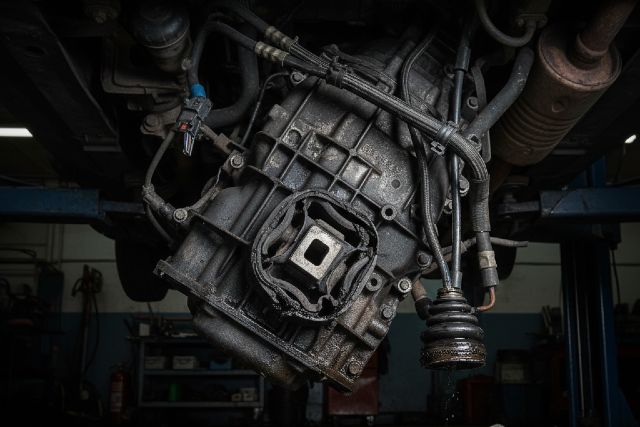
A transmission mount is a structural support made of metal and rubber, sometimes filled with hydraulic fluid, that secures the transmission to the vehicle’s frame or subframe. Its primary purpose is to keep the transmission properly aligned while isolating vibration and movement caused by engine torque and shifting.

Modern vehicles rely heavily on mounts to control NVH, which stands for noise, vibration, and harshness. Automotive engineering studies consistently identify the powertrain as one of the largest contributors to vehicle vibration, making the transmission mount essential for ride comfort and mechanical longevity. When the mount weakens, vibrations that were once absorbed are transferred directly into the cabin and drivetrain.

Early signs of transmission mount failure

One of the most common symptoms of a failing transmission mount is increased vibration. Drivers often feel this through the seat, steering wheel, or floor, especially while accelerating or when the vehicle is stopped in gear. The vibration tends to worsen under load because the mount can no longer dampen drivetrain movement effectively.

Another frequent sign is a clunking or banging noise when shifting from Park to Drive or Reverse. This sound occurs when the transmission shifts position suddenly due to insufficient support. As wear progresses, shifts may begin to feel harsher or jerky, even though the transmission itself is still mechanically sound.

In some vehicles, excessive drivetrain movement may also lead to secondary noises such as exhaust rattles or heat shield buzzing. These sounds happen because the transmission is no longer sitting exactly where it should, causing nearby components to make contact.

What happens if you ignore a failing transmission mount?

Ignoring a worn transmission mount almost always leads to worsening symptoms. Vibration tends to increase over time, and clunking noises become more pronounced. What starts as a minor annoyance can quickly turn into a constant reminder that something is wrong.

As the mount deteriorates further, additional stress is placed on the remaining engine and transmission mounts. These mounts are designed to share load evenly, so when one fails, the others are forced to compensate. This imbalance accelerates wear across the entire mounting system.

Excessive transmission movement can also affect shift quality. The transmission may still function correctly internally, but the added motion can make shifts feel delayed, harsh, or inconsistent. Many drivers mistake this for a failing transmission, when the real problem is external support failure.

Over time, uncontrolled drivetrain movement increases the risk of damage to nearby components such as exhaust connections, brackets, seals, and fluid lines. Prolonged vibration is widely recognized in automotive research as a contributor to accelerated mechanical wear, even when parts are not directly broken.

Is it safe to drive with a bad transmission mount?

In the early stages of transmission mount failure, a vehicle may still be drivable. However, continued driving increases the likelihood of secondary damage. Mild vibration and occasional clunks indicate early wear, while frequent banging noises, harsh shifts, and noticeable drivetrain movement suggest the mount is close to collapse.

Once symptoms become severe, the issue should be considered urgent. At that point, the transmission may be moving far beyond its designed limits, significantly increasing the risk of collateral damage.

What causes transmission mount wear?

Transmission mounts wear out due to age, heat cycles, and constant exposure to road conditions. Rubber components naturally degrade over time, especially when exposed to oil leaks, road salt, and extreme temperatures.

Aggressive driving, frequent towing, and high-torque applications place additional stress on mounts, shortening their lifespan. Some vehicles also use softer mounts for comfort, which can wear faster than performance-oriented designs.

How mechanics diagnose transmission mount failure

Diagnosing a bad transmission mount typically involves a visual inspection for cracked rubber, collapsed sections, or leaking hydraulic fluid. Mechanics also observe drivetrain movement under controlled conditions to identify excessive motion.

Because drivetrain vibration can originate from multiple sources, a proper diagnosis rules out other causes such as worn CV joints, engine mounts, or suspension issues. Accurate diagnosis prevents unnecessary repairs and ensures the correct component is addressed.

Transmission mount replacement cost explained

The cost to replace a transmission mount depends on vehicle design, mount location, and labor access. Front-wheel-drive vehicles often have more compact layouts that increase labor time, while rear-wheel-drive vehicles may offer easier access.

According to RepairPal, the average transmission mount replacement cost typically ranges between $361 and $439, including parts and labor. This figure can vary based on region and vehicle complexity, but it remains relatively low compared to major drivetrain repairs.

Replacing a mount early is usually far more affordable than dealing with secondary damage caused by prolonged drivetrain movement.

Real-world scenario: ignoring the warning signs

A common real-world example begins with a minor clunk when shifting into Reverse. Over several months, the vibration worsens as the mount continues to collapse. The transmission begins to move enough to alter exhaust positioning, causing rattling noises and harsher shifts.

By the time the vehicle is inspected, the transmission mount is torn, and one or more engine mounts are also damaged from excess stress. While the transmission itself remains intact, the repair bill is higher than it would have been if the mount had been replaced earlier.

Preventing transmission mount problems

Preventive maintenance plays a key role in extending mount life. Fixing oil leaks promptly prevents rubber contamination, and paying attention to early noises can stop small problems from becoming larger ones.

Vehicles used for towing or spirited driving benefit from periodic drivetrain inspections. When replacing one mount on a high-mileage vehicle, inspecting the remaining mounts helps prevent repeat failures.

Frequently asked questions about transmission mount failure

A transmission mount holds the transmission in place and reduces vibration by absorbing drivetrain movement. When it fails, vibration increases and shifting can become harsh.

Common signs of a bad transmission mount include clunking noises during shifts, excessive vibration, and noticeable drivetrain movement.

Driving with a bad transmission mount may be possible temporarily, but it increases the risk of damage to other mounts and drivetrain components over time.

The average cost to replace a transmission mount typically falls between $361 and $439, depending on the vehicle and labor requirements.

Conclusion

A failing transmission mount should never be ignored. While the symptoms often start small, the long-term consequences can include increased vibration, harsh shifting, and unnecessary stress on surrounding drivetrain components. Replacing a worn mount early helps maintain ride comfort, protect the transmission, and avoid costly secondary repairs.

If you want, share your vehicle’s year, make, model, and drivetrain layout, and I can provide a more precise cost estimate and symptom breakdown tailored specifically to your car.

Green Bag Explained: Why Everyone Is Switching to This Eco Trend

0

If you’ve seen more people carrying a green bag into grocery stores, cafés, and markets, it’s not just a vibe shift. It’s a practical response to a real issue: single-use packaging is everywhere, and plastic waste becomes pollution when it’s not properly managed.

A green bag is simply a reusable carry bag meant to replace disposable plastic or paper bags. Many are made to last for months or years, using materials like woven polypropylene, recycled PET, canvas cotton, or natural fibers. The reason this “eco trend” is taking off is that it’s one of the few sustainability habits that feels immediately useful in daily life, not like a sacrifice.

This article breaks down what a green bag really is, why it’s trending now, what the research says about reusable bags, and how to choose (and actually use) the right one so it delivers real environmental benefits.

What Is a Green Bag?

A green bag is a reusable shopping or everyday carry bag designed to reduce reliance on single-use bags. The “green” part refers to the intention: reuse a durable bag repeatedly so you create less waste over time.

Some green bags emphasize recycled content, others emphasize durability, and others focus on low-impact natural materials. In practice, all of these only matter if the bag gets used consistently. A green bag sitting in a drawer is just extra consumption. A green bag that’s in your hand three times a week is a meaningful behavior change.

Why the Green Bag Trend Is Exploding Right Now

You can trace the popularity of the green bag to three forces happening at the same time: awareness, policy pressure, and convenience.

First, plastic pollution is no longer a distant problem. When plastic waste is mismanaged, it becomes an environmental pollutant rather than a contained waste stream. That reality has pushed more people toward “reduce and reuse” habits that prevent waste from being created in the first place.

Second, institutions are leaning hard into reuse systems. UNEP’s recent work on plastic pollution highlights scaling reuse and refill approaches as part of reducing plastic pollution at the source. When policies and retail environments make reuse feel normal, personal habits follow.

Third, it’s genuinely easier than many other eco upgrades. A green bag doesn’t require new appliances, complicated routines, or expensive swaps. It’s one decision that “pays you back” in convenience every time you use it.

The Honest Question: Is a Green Bag Actually Better for the Environment?

Yes, it can be. But it’s only “better” if you reuse it enough.

This is where life cycle assessment (LCA) matters. LCA looks at a product’s impacts across its full life cycle, from raw material extraction to manufacturing, transportation, use, and end-of-life. A reusable bag usually has a bigger footprint upfront than a single-use bag, because it uses more material and energy to produce. The benefit appears when that footprint is spread across many shopping trips.

A major study commissioned by the Danish Environmental Protection Agency explains this tradeoff clearly: multiple-use carrier bags need to be reused a certain number of times to compensate for their manufacturing impacts.

In the Danish assessment, conventional cotton bags needed to be reused at least 52 times to outperform the reference single-use LDPE bag on climate change impact, and the “all indicators” break-even could be much higher depending on the impact category considered. The same report also found very different reuse thresholds across materials, reinforcing a key message: the number of times you use a bag directly influences its environmental impact per shopping trip.

What “Reuse Enough” Looks Like in Real Life

If you want a simple mindset, treat your green bag like a personal item, not a shopping accessory.

When a bag becomes part of your default “leave the house” kit, you rack up uses quickly. If you shop weekly, 52 uses happens in about a year. If you shop several times a week, it happens in months. That’s why the best green bag is rarely the most “eco-looking” one. It’s the one you will actually keep with you.

The Life Cycle Initiative’s synthesis of LCA evidence also emphasizes that doubling the use of a bag roughly halves the impact per shopping round, because production impacts are shared across more trips.

How to Choose the Right Green Bag for Your Routine

A lot of people overthink materials and underthink behavior. Materials matter, but your habits matter more.

If your main goal is groceries, choose a bag that holds its shape, handles weight comfortably, and survives repeated loading and unloading. If your main goal is “I forget bags,” choose a bag that folds small and lives permanently in your everyday carry, like a backpack or purse.

A good green bag should feel like an upgrade from disposable bags in three ways: it should carry more comfortably, hold more reliably, and last long enough to justify owning it.

Green bag materials explained in plain English

Woven polypropylene bags are popular because they’re sturdy and light, and they can survive frequent grocery trips. Recycled PET bags are similar in practicality, and they appeal to people who like the idea of using recycled plastic as a feedstock. Cotton canvas totes can be extremely durable and washable, but they come with higher production impacts, so they’re best for people who will use them a lot over a long period.

Natural fiber options like jute can be strong and stylish, but they’re often bulkier and less foldable. Paper “reusable” bags can work as occasional backups, but many don’t last long in humid conditions or under heavy loads, which reduces real-world reusability.

If you want the most practical rule, pick the bag that matches your life: frequent grocery shoppers benefit from durable structure, while forgetful shoppers benefit from portability and convenience.

The most overlooked feature is strap comfort

People abandon reusable bags when they’re uncomfortable. Wide straps help distribute weight on your shoulder. Longer straps help if you carry on your shoulder often, while shorter handles can be easier for hand-carrying heavier loads.

If your green bag hurts to carry, you’ll “accidentally” go back to single-use bags. Comfort is sustainability.

How to Make a Green Bag a Habit (So It Delivers Real Impact)

Most people don’t fail because they dislike reusable bags. They fail because the bag is in the wrong place when they need it.

Put your green bag where your life already happens. If you drive, keep at least one bag permanently in the car. If you walk, keep one folded in your everyday backpack. If you commute, keep one in your work bag. The goal is to make it harder to leave without the bag than to remember to bring it.

There’s also a psychological trick that works surprisingly well: decide your bag’s “home.” When you come back from shopping, immediately return it to its home spot. The fewer decisions you make, the more likely the habit sticks.

Hygiene and Maintenance: The Part People Avoid (But Shouldn’t)

A green bag lasts longer and stays more usable when it’s clean.

If you carry groceries, spills happen. If you put produce inside, moisture happens. Washing or wiping your bag prevents odors, staining, and the slow “I don’t feel like using this” drop-off that ends with the bag being replaced prematurely.

Cotton and canvas options are often machine washable. Many synthetic bags can be wiped with mild soap and water and air-dried. Maintenance isn’t just about cleanliness. It’s about extending lifespan, which is the whole sustainability value of a reusable item.

Greenwashing Watch: When “Eco Bags” Aren’t Really Eco

Not every product marketed as eco-friendly is a smart buy. Some brands sell thin “reusable” bags that tear quickly, which effectively turns them into disposable products with a bigger manufacturing footprint.

Another common trap is overbuying. If you buy ten tote bags and use two, you’ve increased consumption without increasing reuse. The most sustainable bag is often the one you already own, as long as it’s durable enough to keep using.

This is why UNEP and LCA-focused guidance often stresses evaluating impacts across the full life cycle, rather than relying on a single claim like “biodegradable” or “natural.”

Real-World Scenario: How a Household Quietly Eliminates Hundreds of Single-Use Bags

Picture a household that shops multiple times a week. A quick top-up run, a midweek grocery trip, and a weekend restock. In many places, that adds up to a steady flow of single-use bags entering the home, piling up under the sink, then going to the bin.

Now imagine a simple system: one green bag always lives in the car trunk, another lives by the front door, and a foldable one lives in a daily backpack. Nothing else changes. They shop the same way, buy the same things, and forget the bag far less often because it’s always nearby.

This is why the green bag trend sticks. It doesn’t rely on constant motivation. It relies on placement and routine.

FAQ: Green Bag Questions People Ask Most

What is a green bag?

A green bag is a reusable carry bag designed to replace single-use shopping bags. The goal is to reuse it many times so the environmental impacts of production are spread across many trips rather than one.

Are green bags better than plastic bags?

They can be, but only when reused enough. LCAs show that reuse count is a key driver of whether a reusable bag has lower impacts per trip than a single-use bag.

How many times should I reuse a green bag?

It depends on the material. In the Danish EPA LCA, a conventional cotton bag needed at least 52 reuses to beat the reference LDPE bag on climate change impact, while some “all indicators” thresholds were much higher depending on the category considered.

What material is best for a green bag?

The best material is the one you will reuse consistently. For frequent grocery trips, durability and comfort matter most. For forgetful shoppers, a foldable bag that stays with you tends to outperform a “perfect” bag you leave at home. Evidence syntheses also stress that use frequency is a major driver of per-trip impact.

How do I clean a reusable green bag?

Follow the manufacturer’s care instructions. Many cotton bags can be machine washed. Many synthetic bags can be wiped with soap and water and air-dried. Keeping the bag clean helps it last longer, which is what makes reuse environmentally meaningful.

Conclusion: Why the Green Bag Trend Is Worth It

The green bag isn’t popular because it’s trendy. It’s popular because it’s one of the rare eco habits that makes life easier while reducing waste. The key is not buying the “most sustainable-looking” bag. The key is choosing a bag you’ll reuse relentlessly, because reuse is what converts a reusable product into a real environmental win.

If you want this trend to actually work for you, keep the number of bags you own low, keep the ones you own easy to reach, and keep using them until they’ve truly earned their place in your routine. That’s how a green bag stops being a purchase and starts being a long-term habit that reduces single-use waste in the real world.

How Red Ballet Flats Instantly Elevate Even the Simplest Outfit

0

A simple outfit is supposed to be effortless. In reality, it often lands in that frustrating middle zone where you look “fine” but not finished. You’re not underdressed, yet you don’t feel styled. The difference is rarely more clothing. It’s usually one intentional detail that makes the basics feel like a look.

That’s why red ballet flats work so well. They add focus, personality, and polish in a single step, without the discomfort of heels or the fuss of statement layering. They also tap into a broader shift: flats and ballet-flat silhouettes have returned as a major footwear trend, showing up repeatedly in fashion coverage and seasonal “what to wear now” roundups.

This guide breaks down the “why” behind the magic, then moves into practical styling: what colors they pair best with, which outfits they upgrade fastest, how to choose the right shade and shape, and how to make them comfortable enough to wear on real days. Along the way, you’ll also get SEO-ready image alt text, internal link ideas, and quick answers to the questions shoppers ask most.

Why red ballet flats make basics look intentional

Red is a natural focal point. When your outfit is built from quiet staples like denim, knitwear, and neutral outerwear, a pop of red at the feet becomes the visual “anchor.” The eye has somewhere to land, which makes the entire look feel considered rather than accidental.

There’s also a reason red reads as confident and attention-holding in social settings. Research literature on the “red effect” has examined whether red can influence perceived attractiveness in certain contexts, and at least one meta-analysis synthesizes findings across studies to evaluate the evidence around that hypothesis. That doesn’t mean you need to dress by a psychology paper, but it helps explain why red consistently feels energetic and deliberate even when everything else is minimal.

Finally, the ballet-flat silhouette itself is having a visible fashion moment again. Recent fashion coverage points to modernized flat shapes, including updated cuts like V-cut flats and other refined designs that look sleek with everyday outfits. When you combine a current silhouette with a classic “statement color,” you get an upgrade that feels modern but still timeless.

The easiest styling principle: keep the outfit calm and let the shoes speak

If you want red shoes to look chic rather than loud, the simplest rule is balance. Give the red a clean canvas. Neutrals, denim, and classic tones like navy and grey do that naturally.

When the rest of your outfit is visually calm, red ballet flats read like a smart styling decision. When the rest of your outfit is already busy, the same shoes can feel like they’re competing. The secret isn’t avoiding patterns or color forever. It’s making sure only one part of the outfit is trying to be the headline at a time.

A helpful mental trick is to treat your red flats like a “finishing accessory.” People who don’t love layering often use a blazer or scarf as a finishing move, but shoes can do the same job with less effort and more comfort. This aligns with broader consumer preference trends in footwear, where comfort and practicality strongly influence what people actually buy and wear.

How to style red ballet flats with the basics you already own

Jeans and a tee, but elevated

The most common “simple outfit” is a plain tee and jeans. It’s also the easiest to elevate because the baseline is so clean.

With straight-leg jeans and a white tee, red flats bring instant contrast. If you want the look to feel even more polished, pay attention to the hem. Ballet flats look best when they’re visible. If denim pools over the shoe, the statement disappears and the outfit can look sloppy instead of styled.

If your wardrobe leans casual, try a structured element that doesn’t feel fussy. A crisp button-down worn open, a clean belt, or a tailored tote is enough. The shoes become the “intentional” part of the outfit, while everything else stays simple.

Monochrome black, instantly finished

All-black outfits can look sleek, but they can also look unfinished if the silhouette is simple and the accessories are minimal. Red flats solve that by adding a purposeful break in the monochrome.

A black knit dress with red flats reads classic and sharp. Black trousers, a black top, and red flats can feel like a uniform, in the best way, especially when the fabrics are matte or structured. If you prefer a subtler effect, choose a darker cherry red rather than a bright primary red.

White and cream, clean and expensive-looking

Red against white, cream, oatmeal, and other light neutrals looks crisp and “editorial.” It’s one of the quickest ways to make a basic outfit feel styled without adding extra accessories.

A cream sweater and light denim with red flats can look elevated even on days when you’re not wearing makeup or jewelry. If you want the vibe to feel particularly refined, choose leather or suede rather than overly glossy finishes.

Workwear that doesn’t sacrifice comfort

Red flats can be work-appropriate when the shape is classic and the styling is tailored. A refined ballet flat with a clean toe shape looks professional with trousers, blazers, and button-downs.

If your workplace is conservative, keep the rest of the outfit neutral and structured. Navy trousers and a crisp shirt with red flats reads confident but not flashy. Grey suiting with red flats can look modern and polished. For offices where sneakers aren’t acceptable but heels are unrealistic, this is a smart middle ground.

This also matches what consumer footwear research keeps pointing toward: comfort and wearability aren’t “nice extras” anymore, they’re core decision factors.

Dresses that feel modern, not overly sweet

Ballet flats can sometimes lean “cute,” especially with very romantic dresses. Red helps correct that because it adds attitude.

A midi dress with red flats looks intentional in a way that beige or black flats sometimes don’t. A slip dress and cardigan with red flats can look city-chic rather than sleepy. If the dress has a print, red works best when it either echoes a small element in the pattern or when the rest of your accessories are very quiet.

Choosing the right red ballet flats for your wardrobe

Shade matters: true red, cherry, tomato, or deep red

The most wearable red depends on the colors you already wear.

If you live in denim, black, and white, a true red or cherry red is a strong choice because it creates clean contrast. If you wear lots of camel, tan, warm beige, and earthy tones, a tomato or brick-leaning red tends to harmonize more naturally. If you’re nervous about bold color, a deeper red often feels more subtle while still delivering the “elevated” effect.

Shape matters: how to pick a toe that looks polished

Toe shape is one of the fastest ways to make flats look modern. Recent fashion coverage around flat-shoe trends and updated ballet-flat styles highlights how subtle design changes can make the silhouette feel current.

An almond toe usually looks the most polished and versatile. A slightly square toe can feel modern and fashion-forward, especially if your style is minimal. A round toe reads classic and can feel more casual, which can be great if you want an easy everyday shoe rather than a sharper “dress flat.”

Material matters more than people expect

If you want the “instantly elevated” look, prioritize materials that hold their shape and look refined up close.

Leather tends to read sleek and city-ready. Suede can look softer and more expensive, especially in deeper reds. Lightweight knit or mesh styles can look cool and current, and fashion coverage has spotlighted mesh flats as part of the ongoing flats trend. The trade-off is that very casual materials can make the outfit feel more relaxed, so pairing them with structured clothing helps.

Comfort features that prevent the classic ballet-flat problems

Ballet flats have a reputation: cute, but sometimes painful or slippery. The fix is construction.

A cushioned footbed makes a huge difference, especially under the ball of the foot. A slightly structured heel counter helps prevent slipping. A sole that’s flexible but not flimsy supports longer wear. If you often slip out of flats, modern strap variations or a snug topline can make them far more wearable.

If you’re building an “elevated basics” wardrobe, comfort is not separate from style. It’s what ensures you actually wear the item, which is why comfort keeps showing up as a central purchase driver in consumer footwear research and industry reporting.

How to keep red flats from feeling “too loud”

The simplest way is to reduce competition. If the shoes are bright, keep the bag neutral. If the shoes are bold, keep jewelry minimal and clean. If the shoes are shiny, keep the rest of the outfit matte.

Another strategy is echoing the red once, subtly. You don’t need to match. A tiny nod can make the outfit feel cohesive: a soft red lip tint, a small red detail in a print, or even a warm-toned manicure. The point is to make the red feel like it belongs, not like it wandered in from another outfit.

Also, let the shoes be seen. Cropped hems, ankle-length pants, and clean silhouettes give the red room to do its job.

Common questions about red ballet flats

Do red ballet flats go with everything?

They go with more than most people expect, especially if your wardrobe includes neutrals, denim, navy, grey, and camel. The easiest way to make them feel wearable is to treat them like a signature accent and keep the rest of the outfit calm. If you’re wearing a busy print, make your other accessories quiet so the shoes feel intentional.

Are red ballet flats appropriate for work?

In many workplaces, yes. The key is choosing a refined shape and material, then pairing them with tailored pieces. A classic red flat with trousers, a blazer, or a structured dress reads polished. If your office is formal, a deeper red often feels more understated.

Are ballet flats still in style right now?

Yes. Fashion coverage across 2025 and into 2026 continues to highlight flats, including ballet-flat silhouettes and updated cuts like V-cut flats, as relevant and wearable trends.

Why does red feel so “powerful” in an outfit?

Red is attention-holding by design, and research has specifically studied how red can influence perception in social contexts, including perceived attractiveness in certain settings. A meta-analysis synthesizing studies on the “red effect” discusses the evidence and the conditions under which the effect appears. In everyday style terms, red simply reads as confident and intentional, which is why it elevates basics so efficiently.

Conclusion: why red ballet flats are the simplest upgrade you’ll actually repeat

Style upgrades that work in real life have two qualities: they’re easy to repeat, and they make you feel like yourself. Red ballet flats hit both. They turn jeans and a tee into a look. They finish monochrome outfits. They sharpen soft dresses. They bring energy to neutral wardrobes without demanding complicated styling.

If you remember only one thing, make it this: keep the outfit simple, let the red be the focal point, and choose a pair that’s comfortable enough to wear often. With that combination, red flats stop being a “bold choice” and become your easiest, most reliable outfit elevator.

Steering Wheel Puller: Quick Fitment Checklist for Any Car

0

Removing a steering wheel can feel intimidating, especially on modern vehicles packed with airbags, electronics, and sensitive steering components. This is exactly where a steering wheel puller becomes essential. Instead of prying, yanking, or hammering, a steering wheel puller applies controlled, even pressure that safely separates the wheel from the steering shaft. When used correctly, it protects the steering column, avoids damage to threads, and prevents costly airbag or clockspring issues.

This article walks you through a practical, real-world fitment checklist that works for almost any car. Whether you are a DIY enthusiast or a professional technician, understanding proper steering wheel puller fitment will save time, reduce frustration, and help you complete the job safely.

What a steering wheel puller does and why fitment matters

A steering wheel is mounted onto a splined or tapered steering shaft and secured with a large center nut or bolt. Over time, corrosion, heat cycles, and constant steering input cause the wheel to bind tightly to the shaft. A steering wheel puller is designed to apply straight-line force that breaks this bond evenly, preventing side loading that can damage bearings or deform the column.

Fitment matters because steering wheels are not universal. The threaded holes in the steering wheel hub vary by manufacturer, vehicle age, and whether the wheel is factory or aftermarket. Using the wrong thread size or bolt length can strip the hub or crack the wheel, turning a simple removal into an expensive repair. According to major tool manufacturers, most general-purpose puller kits cover common domestic and import applications by including several bolt sizes and a forcing screw designed to protect the shaft.

Identifying puller compatibility before removal

Before installing a steering wheel puller, the first thing to check is whether the steering wheel hub has threaded puller holes. Most modern factory wheels include two or sometimes three threaded holes hidden behind the airbag module or trim cover. These holes are designed specifically for a steering wheel puller and are your primary mounting points.

If no threaded holes are visible, the wheel may require a manufacturer-specific adapter or may already be loose enough to remove once the center fastener is loosened. Some aftermarket steering wheels and quick-release hubs follow different removal procedures, so forcing a universal puller onto a non-compatible hub is a mistake worth avoiding.

Matching the correct steering wheel puller bolt thread

Matching the correct bolt thread is the most important step in steering wheel puller fitment. Most puller kits include commonly used thread sizes such as M8 x 1.25 and popular SAE sizes like 5/16-inch and 3/8-inch threads. These sizes cover a wide range of vehicles from domestic sedans to imported compact cars.

The correct bolt should thread smoothly into the hub by hand for several full turns without resistance. If the bolt tightens immediately or feels gritty, the thread pitch is likely wrong. Forcing it can permanently damage the hub threads. Thread identification charts published by fastener standards organizations confirm that metric and SAE threads can appear similar but are not interchangeable, which is why careful matching is critical.

Ensuring proper bolt length and thread engagement

Even when the correct thread diameter and pitch are selected, bolt length must still be verified. A bolt that is too short may only engage a few threads, increasing the risk of stripping under load. A bolt that is too long can bottom out inside the hub and crack the steering wheel casting.

A properly fitted steering wheel puller bolt should engage several full turns before contacting the puller bar. Most quality puller kits include multiple bolt lengths to accommodate different hub depths. Starting with a shorter bolt and increasing length as needed is the safest approach.

Protecting the steering shaft during puller use

Before applying force, the steering wheel center nut or bolt should be loosened but left threaded onto the shaft. This provides a flat surface for the puller’s forcing screw to press against and prevents sudden release when the wheel breaks free. Many steering wheel pullers include a swivel-tip forcing screw specifically designed to protect the shaft end from damage.

Technicians commonly leave the center nut threaded a few turns so that when the wheel pops free, it stops safely instead of striking the technician or damaging interior trim. This small step is a professional habit that greatly improves safety.

Airbag and SRS considerations for modern vehicles

On vehicles equipped with airbags, steering wheel removal is also a supplemental restraint system service procedure. Industry safety guidance consistently emphasizes disabling the airbag system and disconnecting the battery before working near airbag components. This step reduces the risk of accidental deployment and prevents fault codes from being stored during removal.

Airbags are powerful safety devices. According to the National Highway Traffic Safety Administration, frontal airbags saved more than 50,000 lives between 1987 and 2017, including thousands in a single recent year. That same force makes careful handling essential during repairs. Proper disconnection and storage of the airbag module face-up in a secure area is considered best practice.

Applying force evenly for clean removal

Once the puller is mounted and aligned, force should be applied gradually. The forcing screw should be turned in small increments while ensuring the puller bar remains square to the hub. Even pressure prevents the puller from cocking sideways and damaging threads.

If resistance increases suddenly or the puller begins to flex, stopping to reassess is critical. Often, repositioning the puller or verifying bolt engagement solves the issue. Excessive force is rarely the solution and often leads to broken components.

Differences by vehicle type and steering wheel design

Late-model vehicles with airbags tend to have tighter tolerances and more delicate components behind the wheel. These vehicles benefit the most from using a steering wheel puller designed for SRS applications. Older vehicles without airbags are mechanically simpler but may require more patience due to corrosion and age-related binding.

Aftermarket steering wheels and hub adapters vary widely in design. Some include standard puller holes, while others rely on brand-specific removal tools. In these cases, identifying the hub manufacturer before attempting removal is essential to avoid damage.

Common steering wheel puller problems and solutions

When a steering wheel refuses to come off, the issue is often incorrect bolt thread selection or uneven puller alignment. Slipping bolts usually indicate mismatched threads, while shaft damage typically results from removing the center nut entirely before applying force.

Airbag warning lights after reassembly often point to a disturbed clockspring or improperly connected SRS connector. These issues typically require a scan tool capable of reading airbag codes, not just a standard OBD reader.

Frequently asked questions about steering wheel pullers

A steering wheel puller is a tool that removes a steering wheel by applying straight, even pressure off the steering shaft using threaded hub holes and a central forcing screw. This controlled method reduces the risk of damage compared to pulling by hand.

While some steering wheels may come off without a puller, many are press-fit tightly. Using a steering wheel puller is the safest and most reliable method, especially on vehicles with airbags and electronic steering components.

Most steering wheel puller kits include common metric and SAE bolt sizes to cover a wide range of vehicles. These typically include M8 x 1.25 and popular 5/16-inch and 3/8-inch sizes.

Disconnecting the battery is a critical first step when working around airbags, but exact procedures vary by vehicle. Following manufacturer service information ensures the system is fully disabled before removal.

Conclusion

A steering wheel puller is one of those tools that proves its value the moment resistance appears. By following a proper fitment checklist that includes identifying hub threads, confirming bolt length, protecting the steering shaft, and respecting airbag safety procedures, you can remove a steering wheel cleanly on almost any car. Taking the time to match fitment correctly prevents stripped threads, damaged columns, and unnecessary SRS faults. When used properly, a steering wheel puller turns a potentially risky job into a controlled, professional-grade repair.