Home Blog Page 3

Most Protective iPhone 15 Case: Drop-Tested Favorites

0

If you’re shopping for an iphone 15 case, odds are you’ve either had a close call already or you’re trying to avoid the classic cracked-screen moment. That instinct is well-founded. Consumer protection-plan research has repeatedly shown that a large share of phone owners experience damage over a typical ownership cycle, and cracked screens remain one of the most common outcomes when a phone takes a hard hit. One widely cited example is SquareTrade’s reporting on the scale and cost of smartphone accidents in the U.S. market.

The helpful part is this: cases really do make a difference, especially when they’re engineered for impacts instead of only designed to look tough. In this guide, you’ll get a practical, protection-first breakdown of what “most protective” actually means for iPhone 15 models, how to interpret drop-testing language, and which case families are consistently recommended for real-world durability. You’ll also learn how to match protection level to your lifestyle so you don’t end up buying a bulky case you stop using after a week.

What “most protective” really means for an iPhone 15 case

The most protective iphone 15 case is not simply the thickest shell you can find. True protection is a system. It’s about how the case absorbs energy, how it spreads the force of an impact, how it prevents direct contact between glass and ground, and how it reduces the likelihood of drops in the first place.

Impact absorption is the first half of the equation. Many protective cases use a softer inner layer, commonly TPU or a similar elastomer, because it compresses during impact and lowers the peak force that reaches the phone. If you’ve ever squeezed a flexible case and felt it “give,” that “give” is not a flaw; it’s part of the shock management.

Impact distribution is the second half. A hard outer shell or reinforced frame helps spread an impact across a wider area. That matters because glass failures often happen when force concentrates in one spot, especially around edges, corners, or the camera module. A case that distributes impact can prevent that one sharp corner hit from becoming a catastrophic fracture.

Raised bezels and a raised camera lip deserve special attention for iPhone 15 models because the camera bump is prominent and the screen is still glass. A raised edge creates a buffer zone so the phone’s glass doesn’t strike first when it lands face-down or back-down. This isn’t marketing fluff; it’s simple geometry and contact mechanics. When the case makes first contact, it buys your glass a split second and a few millimeters that can decide whether you walk away with a scuff or a spiderweb crack.

Corner design is where the best protective cases earn their reputation. Most real drops aren’t perfectly flat. Phones tend to tumble, and corners are frequent first-contact points. That’s why rugged cases often use thicker corner zones or “air pocket” styling. Those corners are doing extra work.

Finally, grip is a protection feature, not an aesthetic detail. A case that feels secure in your hand reduces the number of drops you experience. Preventing a drop beats surviving a drop, every time.

The truth about “military-grade” and drop testing

You’ll see “military-grade” attached to many rugged iphone 15 case listings. It often references MIL-STD-810, a real testing framework used for evaluating equipment under environmental stresses, including shock. The nuance is that MIL-STD-810 includes multiple methods and allows tailoring based on the product and intended environment. That means two brands can both reference the standard while testing under different conditions.

As a shopper, the most useful approach is to treat “military-grade” as a starting clue rather than the final answer. The more convincing claims explain the testing approach in plain language. How many drops? From what height? Onto what surface? Is it repeated or a one-time event? Brands that publish a defined methodology are usually easier to trust than brands that only repeat the phrase.

Drop-tested favorites for the most protective iPhone 15 case experience

Protection needs differ by person, but certain case families repeatedly show up in protection-first recommendations because they combine structure, materials, and coverage in a way that survives messy daily life. The goal here is not to claim one universal winner for everyone; it’s to spotlight the strongest “known quantities” for durability.

OtterBox Defender Series: maximum rugged protection for harsh environments

When people ask for the “most protective” iphone 15 case, the OtterBox Defender family often comes up first for a reason. Defender-style construction typically uses multiple layers and prioritizes edge and corner protection, which are common failure points in real drops. OtterBox positions the Defender Series as a rugged, protection-maximized tier designed for high-risk use.

Defender tends to shine in situations where you’re around hard surfaces and unpredictable movement. Think parking lots, job sites, crowded public transit, or any context where your phone might fall onto concrete. It’s also popular with parents because kids tend to grab, drop, and fling phones in ways adults rarely do intentionally.

The tradeoff is bulk. The Defender approach usually adds noticeable thickness and weight. If pocketability is your top priority, you may want a balanced rugged option instead.

OtterBox Commuter Series: strong protection that stays practical

If you want a rugged-leaning iphone 15 case but you still care about comfort in a pocket or smaller bag, Commuter-style builds can be a smart middle ground. They typically use a two-part structure that absorbs and distributes impact without becoming as thick as maximum rugged cases.

TechGearLab’s iPhone 15 case testing has highlighted the OtterBox Commuter Series as a top overall pick in its comparisons, focusing on the balance between protection, usability, and day-to-day comfort.

Commuter tends to be the right choice if your main drop risks are from hand height, desk height, or the “slip out of the lap when you stand up” kind of everyday accident. It’s protective enough to matter, but not so bulky that you resent carrying your phone.

UAG Monarch and Monarch Pro: premium rugged structure with serious drop focus

Urban Armor Gear has built a reputation around rugged styling and impact-focused construction. UAG Monarch variants are frequently mentioned in mainstream “best case” roundups for the iPhone 15 Pro line, often emphasizing layered builds and higher protection claims.

A Monarch-type case often appeals to people who want ruggedness but prefer a more technical or premium aesthetic. The feel is typically structured, with confident grip and noticeable reinforcement around corners. This is a good fit if you’re hard on your phone but don’t want a case that looks purely industrial.

The main downside is usually cost. Premium rugged cases can be priced well above value options, so it’s worth deciding whether you need that extra build quality or simply want it.

Spigen Tough Armor: dependable value with a rugged design language

Spigen is widely known for cases that offer strong everyday protection at reasonable prices. The Tough Armor line is popular because it pairs reinforced design with daily usability. Even when the aesthetic is utilitarian, the performance-to-price ratio is often what wins people over.

This option is ideal if you want a protective iphone 15 case that can handle repeated typical drops without spending top-tier rugged-case money. It’s also a sensible pick for people who like to replace cases annually and don’t want a major investment each time.

The compromise is that it won’t feel as ultra-premium as some higher-priced rugged cases, and it isn’t the slimmest. But for many people, “reasonably slim” plus “meaningfully protective” is exactly the goal.

Speck Presidio Grip-style designs: protection boosted by drop prevention

Some of the smartest protection comes from preventing drops rather than surviving them. Speck’s grip-forward designs are frequently mentioned in iPhone case roundups because they prioritize a secure hold, which can reduce slip-related drops.

If your phone tends to fall because it slides off smooth surfaces or your hand gets sweaty while walking, running errands, or using your phone one-handed, grip matters. A slightly less bulky case that prevents more drops can outperform a thicker case that still slips out of your hand.

Peak Design Everyday Case: protective utility for people who mount their phone

If you use mounts for biking, cars, tripods, or creator workflows, protection is about more than drop survivability. It’s also about secure attachment. TechGearLab’s testing and comparisons have highlighted Peak Design as a strong option for accessory ecosystem compatibility.

For this audience, the “most protective” iphone 15 case may be the one that reduces risky handling and makes your phone more secure in everyday use. Fewer fumbles, fewer balancing acts, fewer accidents. That’s a form of protection that doesn’t show up in a drop-height number but shows up in your real life.

How to choose the right protection level without overbuying

It’s easy to overbuy protection and then quietly stop using the case because it feels annoying. The best case is the one that stays on your phone all day, every day.

If you work outdoors, you’re frequently around concrete, you have kids, you travel constantly, or you’ve already broken a phone in the past, maximum rugged protection tends to be worth it. The stress reduction alone is real, and the probability of accidents is high enough that extra protection often pays off. The broader trend of frequent phone damage is one reason rugged cases remain popular.

If your phone mostly falls from moderate heights in ordinary settings, such as slipping from a desk or dropping from your hand while walking, a balanced rugged case usually gives you the best experience. These cases protect well while feeling manageable in a pocket or bag. Comparative review testing can help validate these middle-tier picks.

If your most common “drops” are actually slides and slips, prioritize grip and texture. The case you can hold securely will reduce the number of impacts you ever need to survive.

Tips that make any protective iPhone 15 case work better

Even the most protective iphone 15 case performs best when you set up your whole protection system intelligently. A screen protector is one of the highest-impact add-ons because screen failures are common and impact angles vary. A good protector won’t make your phone invincible, but it can change the outcome of borderline impacts.

Fit matters more than many people realize. Make sure the case is made for your exact model, since iPhone 15, iPhone 15 Plus, iPhone 15 Pro, and iPhone 15 Pro Max differ in dimensions and camera layout. A poor fit can reduce corner coverage and weaken how the case holds the phone during impact.

Watch for case wear. TPU can stretch and lose snugness over time, and hard shells can crack or deform. Once a case’s structure is compromised, its ability to absorb and distribute impact decreases. If the case feels loose or you see damage, replacing it is a practical move.

Also pay attention to camera lip height. The iPhone 15 camera module is a frequent contact point when the phone lands on its back, and a properly raised lip helps keep lenses and rings off rough surfaces.

FAQ: iPhone 15 case drop protection

What is the most protective iPhone 15 case?

The most protective iphone 15 case is typically a multi-layer rugged case with reinforced corners, pronounced raised bezels, and a clearly described drop-testing approach. Heavy-duty lines like OtterBox’s Defender tier are designed specifically for maximum impact protection.

Are “military-grade” iPhone 15 cases actually better?

They can be, but the phrase alone doesn’t guarantee identical test conditions across brands. MIL-STD-810 is a broad framework with methods that can be tailored, so it’s best to also look for brands or reviewers that specify drop height, frequency, and surfaces.

What drop height should I look for in an iPhone 15 case?

A practical target is protection claims that match typical hand and pocket heights, since those are the most common drop scenarios. Some brands describe repeated-drop programs at around four feet as a baseline concept, which aligns with many everyday accidents.

Do cases really prevent cracked screens?

A good case reduces the risk, especially when it has raised bezels and strong corner engineering, but no case can guarantee survival in every impact angle or surface. Pairing a protective case with a high-quality screen protector usually improves outcomes in borderline drops.

What’s better: a thick case or a grippy case?

It depends on why your phone falls. If your phone drops because it slips, grip can prevent drops entirely and may be the most effective protection. If your phone drops during movement and impacts are more severe, structural ruggedness and corner reinforcement matter more.

Conclusion: the best drop-tested iphone 15 case is the one you’ll keep on

The best, most protective iphone 15 case is the one that matches your daily risk and still feels good enough that you don’t remove it. If you’re around concrete, travel constantly, work outdoors, or simply want maximum peace of mind, a Defender-style rugged case is built for that high-impact reality. If you want strong protection without the biggest bulk, mid-rugged options like Commuter-tier builds often deliver a better day-to-day experience, and comparative reviewers frequently highlight that balance. If your issue is slipping rather than impact, prioritize grip because fewer drops is the best protection available.


p0017 Troubleshooting: The Fastest Ways to Resolve It

0

If your scanner shows p0017, your engine computer is detecting a timing correlation issue between the crankshaft and camshaft. In most vehicles, p0017 maps to “Crankshaft Position–Camshaft Position Correlation (Bank 1, Sensor B),” which usually refers to the exhaust cam on the bank that contains cylinder 1. In simple terms, the ECU expects the crank and cam signals to line up in a specific pattern, and it’s seeing a mismatch.

Because modern engines use variable valve timing that depends heavily on clean oil and accurate sensor readings, p0017 troubleshooting can be quick if you follow the right order. Some cases are as simple as correcting low or degraded oil that’s causing VVT control problems. Others point to worn timing components, which should be handled promptly.

What p0017 means and why it happens

The engine relies on the crankshaft position sensor and camshaft position sensor(s) to synchronize ignition timing and fuel delivery. When the ECU sees that the crank and cam signals are not correlated as expected, it sets p0017. This mismatch can be caused by mechanical timing drift, a VVT system that isn’t moving the cam the way it should, or sensor signal problems.

Mechanical timing drift is often tied to timing chain stretch, tensioner weakness, or a chain that has jumped a tooth. VVT-related causes often involve dirty oil, incorrect oil viscosity, clogged VVT solenoid screens, or a failing cam phaser. Sensor and wiring causes include contaminated connectors, damaged harness routing, or a sensor that intermittently drops signal.

Common symptoms of p0017

Many drivers first notice the check engine light and a change in how the engine feels. Rough idle, hesitation during acceleration, reduced power, and poor fuel economy are common. Hard starting can happen, especially when the correlation is far off or the system struggles to control cam timing during startup. Some engines develop a rattling noise near the timing cover area, particularly on cold starts, which can be a clue pointing toward timing chain tension issues.

If the car is stalling, cranking for a long time, or making loud metallic rattling sounds, it’s smarter to avoid driving and get it inspected quickly. Correlation codes can escalate if the underlying problem is mechanical.

The fastest p0017 troubleshooting sequence

Step 1: Confirm the exact code definition and capture freeze-frame data

Start by scanning for stored, pending, and history codes and saving freeze-frame data. The freeze-frame tells you the conditions when the ECU decided the issue was real, such as engine temperature, RPM, speed, and load. If you also see correlation neighbors like p0016, p0018, or p0019, that often changes the diagnostic direction and suggests a broader timing or VVT control issue.

A fast win here is simply avoiding guesswork. Freeze-frame and related codes keep you from replacing parts that are not responsible.

Step 2: Check oil level, oil condition, and correct oil viscosity

This is the quickest and most overlooked step, and it matters because variable valve timing systems use oil pressure and controlled oil flow to move cam phasers. Low oil, heavily degraded oil, or the wrong viscosity can slow or prevent proper VVT operation, leading to correlation faults like p0017.

Check the dipstick level on flat ground and look at the oil’s condition. If the oil is thick, sludgy, or smells burned, an oil and filter change can be the fastest legitimate repair attempt. If the oil level is low, correct it and inspect for leaks or consumption. If the code clears and stays away after a few drive cycles, you likely caught a VVT control problem early.

Step 3: Inspect cam and crank sensor connectors and harness routing

If oil checks out, the next fastest step is a careful connector and wiring inspection. Correlation depends on clean signals, so a loose connector, oil-soaked plug, corrosion, or a harness rubbing through its insulation can create an intermittent mismatch. This is especially common near hot exhaust routing or where wiring is clipped to brackets.

Unplug the connectors, inspect for oil intrusion or corrosion, make sure pins are not bent, and confirm the connectors lock firmly. If you find oil inside a connector, that can indicate a leaking sensor seal or oil wicking through harness sheathing in some designs.

Step 4: Clear codes and replicate freeze-frame conditions

After you address oil and obvious signal issues, clear the code and drive the vehicle under conditions similar to the freeze-frame. If p0017 returns immediately on startup, that often points to either a persistent sensor signal problem or a mechanical/VVT position problem that’s present at all times. If it only returns under specific load or RPM ranges, VVT control issues become more likely.

When p0017 points to VVT problems

If the engine has variable valve timing, a sticking oil control solenoid or a worn cam phaser can cause the cam to lag behind commanded position, which the ECU interprets as a correlation error. Dirty oil and sludge are frequent contributors because small control passages and solenoid screens can clog.

A fast professional confirmation is comparing commanded cam angle to actual cam angle on a scan tool that supports live VVT PIDs. If the ECU commands a cam advance and the cam response is slow or inconsistent, VVT hardware or oil pressure/flow is suspect. Another fast check is verifying oil pressure if symptoms suggest low pressure, because insufficient pressure can prevent phasers from holding position.

When p0017 points to timing chain or mechanical timing issues

If the timing chain has stretched or a tensioner has weakened, the cam timing can drift enough that the ECU sees correlation as incorrect. A chain that has jumped a tooth is more severe and can cause major drivability issues, misfires, and in some engines risk internal damage. Rattling at cold start, persistent immediate-return correlation codes, and broad loss of power are classic clues.

Mechanical confirmation typically requires checking timing alignment marks or measuring chain stretch indirectly through scan tool cam/crank correlation data if supported. On many vehicles, timing chain service is labor-intensive, and published cost ranges often land in the roughly two-thousand-dollar neighborhood depending on engine layout and access.

The sensor question: should you replace the cam or crank sensor first?

People often replace sensors first because it’s easy, but correlation codes do not automatically mean a bad sensor. Sensors should be suspected when you have intermittent cut-outs, unstable RPM signals, or obvious connector and wiring issues. If the engine is mechanically noisy, consistently low on power, or the code returns immediately after clearing with clean connectors and correct oil, mechanical timing or VVT control becomes more likely than a sensor alone.

If you do replace a sensor, use a reputable part, confirm the connector seal is good, and avoid “parts cannon” behavior. A shop with scope testing can confirm if the cam/crank waveform relationship is drifting or if one signal is dropping out.

Real-world scenarios that resolve p0017 fast

A common “fast fix” case is a vehicle that throws p0017 after extended oil changes. The owner changes oil and filter with the correct spec, clears the code, and the code stays away because the VVT solenoid and phaser can move freely again.

Another common case is wiring damage. A harness near the valve cover or front timing cover rubs through, causing intermittent cam signal noise. Repairing the wiring and securing the harness eliminates the mismatch.

A more serious scenario is a cold-start rattle followed by persistent p0017. Inspection finds timing chain stretch and a weak tensioner. Replacing chain, guides, and tensioner restores correlation and prevents the problem from worsening.

FAQ-style answers for featured snippets

What is p0017?

p0017 is an OBD-II code indicating the engine computer sees the crankshaft and camshaft positions out of sync on Bank 1, Sensor B, often related to exhaust cam timing correlation.

Can low oil cause p0017?

Yes. Low oil, dirty oil, or incorrect viscosity can impair variable valve timing operation and trigger correlation codes like p0017.

Is p0017 serious?

It can be. Mild cases can be oil- or signal-related, but persistent correlation faults can also indicate timing chain stretch or mechanical timing problems that should be handled quickly.

How do you fix p0017 the fastest?

The fastest legitimate path is verifying oil level and condition, confirming correct oil viscosity, inspecting cam/crank sensor connectors and wiring, then validating VVT and timing integrity if the code returns.

Conclusion: the smartest way to clear p0017 without wasting money

p0017 troubleshooting is fastest when you start with what affects VVT and sensor accuracy first. Verify oil level, quality, and correct spec because VVT systems are oil-dependent and oil problems are common. Next, inspect cam and crank sensor connectors and wiring because correlation codes rely on clean signals. If the code persists or returns immediately, shift your focus to VVT solenoids, cam phasers, oil pressure, and finally mechanical timing components like the timing chain, guides, and tensioner.

White Kitten Heels: Best Styles for Weddings, Brunch & Date Night

0

White kitten heels are having a real moment—and not just because they look polished in photos. They’re the rare “dressy shoe” that can still feel walkable, which is why you’ll see them everywhere from wedding aisles to Sunday brunch patios to candlelit date nights. If you love the idea of wearing heels but hate the sore-forefoot regret that often follows, white kitten heels offer a smart middle ground: a lifted silhouette with a lower, steadier heel height.

In this guide, you’ll learn how to choose the best white kitten heel styles for weddings, brunch, and date night, how to match them to outfits (and venues), and how to keep them looking bright and scuff-free. Along the way, I’ll also explain why “lower heel” can matter for comfort using credible foot-pressure research, plus practical tips you can use immediately.

What are white kitten heels, exactly?

Kitten heels are typically defined as a short, slim heel in the neighborhood of about 1.5–1.75 inches, designed to add lift without the steep pitch of higher stilettos. In white, that classic shape becomes even more versatile because it reads clean, modern, and “intentional” across outfits—especially when you’re wearing light neutrals, pastels, florals, denim, or evening black.

If you’ve ever loved the elegance of heels but wished you could last past the first hour, you’re not alone. Research measuring in-shoe pressure has found that as heel height increases, pressure shifts forward and peak pressures in the forefoot rise—one study reported roughly a 30% increase in central forefoot peak pressure when comparing high heels to low heels. That doesn’t mean kitten heels are “magic comfort shoes,” but it does help explain why many people find a lower heel easier to wear for longer stretches.

Why white kitten heels work for so many occasions

White shoes used to feel “seasonal,” but now they’re year-round—especially in sleeker silhouettes. A kitten heel helps because it’s visually refined while still looking relaxed. It also pairs well with the kinds of outfits people actually wear to events today: satin slip dresses, tailored sets, wide-leg trousers, midi skirts, and elevated denim.

Fashion coverage has also pointed to kitten heels replacing flats for many outfits because they keep the look sharp without sacrificing practicality. When you choose white, you amplify that effect: the shoe becomes a bright finishing touch rather than a heavy anchor.

The best white kitten heel styles for weddings

Weddings are where white kitten heels shine the most, but the “best” style depends on your role and the venue. The goal is to look elevated in photos while staying comfortable for standing, mingling, and dancing.

For brides: sleek, minimal pumps and satin slingbacks

If you’re the bride, your shoes need to do three things at once: look timeless, photograph well, and survive a long day. White kitten heel pumps are the most classic pick because they elongate the leg under a gown without competing with embellishments. Satin or matte leather tends to read more bridal than a high-gloss patent, especially in daylight.

Slingbacks are a strong second choice because they feel airy and often reduce heel rub compared to closed-back pumps, as long as the strap placement is secure. If your dress has a clean silhouette, a pointed-toe kitten heel looks particularly modern; if your dress is lace-heavy or romantic, an almond toe can keep the vibe soft.

For wedding guests: strappy kitten heels and square toes

As a guest, you want comfort plus dance-floor survivability. Strappy white kitten heels can be the sweet spot because the straps help keep your foot stable, and the open design reduces pressure on toes during long wear. A square-toe kitten heel is especially good if you dislike the squeeze of a pointed toe, and it pairs beautifully with slip dresses and tailored jumpsuits.

If you’re attending an outdoor wedding, pay attention to heel shape. A very thin heel can sink into grass, gravel, or soft ground. A slightly thicker kitten heel—or a kitten heel with a wider base—often behaves better on lawns and garden paths.

A wedding planning resource focused on guest comfort highlights how common it is for guests to prioritize shoes that won’t hurt across hours of standing and dancing. Even if you’re choosing kitten heels for style, it’s worth treating comfort as a requirement, not a bonus.

For bridal parties: matching silhouettes that still flatter different feet

If you’re coordinating bridesmaids, the easiest way to keep everyone happy is to standardize the color (white or ivory) and heel height, then allow toe shape variation. One person might love a pointed toe; another might need a wider toe box. When photos are the priority, keeping the heel height and finish consistent usually matters more than forcing everyone into an identical toe shape.

The best white kitten heel styles for brunch

Brunch is casual, but it’s also one of the most photographed outings. White kitten heels elevate your look without feeling like you tried too hard. The trick is choosing a style that complements daytime fabrics and doesn’t look overly “evening.”

Slingbacks for effortless daytime polish

A white kitten heel slingback with a slightly rounded or almond toe is peak brunch energy. It works with midi skirts, linen trousers, and straight-leg jeans, and it looks good with bare ankles or sheer socks in cooler months. If you want your outfit to feel relaxed, avoid heavy embellishment and opt for a simple upper.

Mules for easy on-and-off wear

Mules are brunch-friendly because they’re slip-on, and they pair naturally with cropped hems. The only caution is stability: if you’ll be walking several blocks or navigating uneven sidewalks, a mule with a more secure vamp (the part that covers the top of the foot) tends to stay on better. Look for designs that hold your foot in place without forcing you to grip with your toes.

Kitten heel sandals for warm-weather plans

White kitten heel sandals look fresh with sundresses and matching sets. If you want them to feel more “day,” look for softer straps and minimal hardware. If you want them to feel more “fashion,” pick sharper geometry, a square toe, or a sculptural heel.

The best white kitten heel styles for date night

Date night shoes need a different balance: you want confidence, comfort, and a silhouette that feels intentional in low light. White is a bold choice here—in a good way—because it pops against darker outfits and looks clean and modern.

Pointed-toe pumps for a sleek, confident look

A pointed-toe white kitten heel pump with a low vamp creates a long leg line and looks incredible with an all-black outfit, a satin midi dress, or tailored trousers and a fitted top. It also reads “city chic” without needing extra accessories. If you’re worried about scuffs, choose matte leather or a textured finish; it tends to hide small marks better than patent.

Strappy sandals for softer, romantic styling

For dinners, rooftop drinks, and events, a strappy white kitten heel sandal feels light and flirty. This is where tiny details matter: a delicate ankle strap can look romantic, while a minimal single-strap mule reads more modern.

Slingback heels for “dressy but not fussy”

Slingbacks can bridge day and night better than almost any other style. They feel polished, they’re often more breathable, and they work with everything from dresses to jeans and a blazer. If you want one pair of white kitten heels to cover multiple occasions, a slingback is a strong “one-and-done” choice.

How to choose the right white kitten heels for comfort

Even though kitten heels are lower, fit still matters more than heel height alone. Here’s what to prioritize so you don’t buy a beautiful pair that stays in the box.

Toe shape and toe box space matter because pressure tends to concentrate in the forefoot in heels, especially as the heel rises. If your toes feel compressed in the store, they’ll feel worse after an hour. If you love a pointed toe look, consider sizing up a half size and using a slim heel grip to reduce slipping.

Straps and heel security matter because they reduce the micro-sliding that causes blisters. A slingback strap that sits too high can rub; one that sits too low can slip. If you’re between sizes, prioritize the size that keeps the heel seated without gripping your toes.

Cushioning matters because “low heel” isn’t the same as “soft landing.” A thin sole will feel harder on concrete sidewalks than a pair with a cushioned insole or a slightly thicker outsole.

Styling white kitten heels with outfits you already own

White kitten heels are easiest when you treat them like a neutral. If your closet is heavy on black, denim, beige, navy, olive, or pastels, you already have outfits that will work.

With denim: White kitten heels instantly make jeans look styled. Straight-leg or cropped wide-leg denim is ideal because it shows the shoe. Add a fitted tee and blazer for brunch, or a satin top for date night.

With dresses: For weddings, white kitten heels pair best with florals, pastels, and solid jewel tones. For date night, they look striking with black or red. For daytime, they complement linen and cotton dresses beautifully.

With tailoring: White kitten heels look modern with trousers, especially in cream, camel, gray, and black. If you’re wearing a full suit, a pointed toe feels sharper; if you’re wearing a relaxed set, a square toe or slingback keeps the vibe easy.

How to keep white kitten heels looking clean

White shoes are unforgiving, but they’re not high-maintenance if you do a few small things consistently.

Start with prevention: apply a protector spray that’s appropriate for the material, and do a quick wipe after each wear. Store them in a dust bag so they don’t pick up closet scuffs.

For scuffs on smooth leather, gentle spot cleaning is usually enough, but always patch test first. For satin, treat stains carefully and avoid soaking the fabric. If you’re wearing them to a wedding, pack a tiny emergency kit: a soft cloth and a stain-safe wipe can save you in five seconds when a mark appears.

FAQs about white kitten heels

Are white kitten heels comfortable for all-day events like weddings?

They can be, especially compared to higher heels, because lower heel heights generally reduce the forward shift of pressure. In-shoe pressure research shows forefoot pressure increases as heel height rises, which helps explain why lower heels are often easier to tolerate over time. Comfort still depends on fit, toe space, and stability.

Do white kitten heels work for wedding guests, or are they too “bridal”?

They work for guests when the design is clearly not a bridal satin pump. Strappy sandals, square-toe slingbacks, or textured leather styles read more “fashion neutral” than “bride.” If the event dress code is formal and your dress is colorful or patterned, white kitten heels usually look intentional rather than bridal.

What’s the easiest white kitten heel style to wear with everything?

A white kitten heel slingback is usually the most versatile because it transitions from day to night and pairs well with denim, dresses, and tailored outfits. Fashion coverage also notes kitten heels as a go-to alternative to flats for a polished look.

How do I stop my white kitten heels from slipping?

Look for a secure heel cup or slingback strap placement, and consider heel grips or a thin insole if you’re between sizes. Slipping often comes from the shoe being slightly too long, or from the foot sliding forward in a smooth interior.

Conclusion: the smart way to wear white kitten heels

White kitten heels are one of the easiest upgrades you can make to your wardrobe because they’re elegant without being intimidating. For weddings, they photograph beautifully and can be easier to last in than higher stilettos, especially given what pressure studies show about higher heel heights increasing forefoot load. For brunch, they elevate simple outfits like denim and midi skirts. For date night, they create a clean, modern contrast — especially with darker clothing.

If you want one “do-it-all” pair, start with a white kitten heel slingback in a durable finish, prioritize toe comfort, and protect the material early. Done right, white kitten heels won’t just be a trend buy — they’ll be the pair you reach for whenever you want to look polished and still feel like yourself.

Blue Heels Perfect for Weddings, Parties, and More

0

Blue heels have a way of turning an outfit from “nice” to “remembered.” They’re bold without being loud, romantic without being sugary, and surprisingly easy to style once you know which shade and finish to reach for. Whether you’re dressing for a wedding, a cocktail party, a formal dinner, or even a polished workday, blue heels can be the single piece that ties everything together while still feeling fresh.

If you’ve ever stood in front of your closet wondering what shoe color won’t compete with your outfit, blue is often the answer. It plays well with neutrals, complements jewel tones, and can soften florals better than black. It also photographs beautifully in both daylight and evening lighting, which is a big deal for weddings and events where pictures are basically guaranteed.

If you’re adding images to this page, one strong hero image could use an alt tag like “blue heels styled with a wedding guest dress” so the primary keyword appears naturally in the image description.

Why blue heels work for almost any occasion

The most useful “fashion secret” about blue is that it functions like a near-neutral in many outfits. Navy behaves similarly to black but feels lighter and more modern. Powder blue reads airy and romantic, which is why it shows up so often in spring and summer wedding looks. Cobalt is the statement-maker, especially with minimalist dresses or tailored jumpsuits. Metallic blues sit in a sweet spot where they feel festive without demanding an all-out glitter outfit.

Events can run long, especially weddings. The Knot’s reporting on average wedding costs is a reminder that these days are planned to the minute and photographed endlessly, so what you wear needs to look good and hold up for hours. Comfort matters because you’re not just standing still; you’re walking, greeting, dancing, and sometimes navigating grass, cobblestones, or hotel stairs.

Blue heels for weddings

Weddings are where blue heels shine the brightest because the color can be meaningful and practical at the same time. Brides often lean into “something blue,” and guests love that blue looks celebratory without pulling attention away from the couple. Brides.com even frames blue wedding shoes as a dedicated category because the demand is so consistent, ranging from pale satin pumps to deeper blue block heels designed for all-day wear.

Choosing the right shade for wedding dress codes

For formal and black-tie weddings, navy, midnight, and sapphire look expensive and intentional. These shades pair well with satin, velvet, crepe, and other evening textures. For garden or beach weddings, sky blue, cornflower, and soft periwinkle feel lighter and photograph beautifully under natural light. For daytime city weddings, a medium “true” blue can be the easiest to style with prints and structured dresses.

Heel height and comfort for long ceremonies and receptions

If you love stilettos, the reality is that wedding timelines often mean you’re wearing heels for hours. A recent peer-reviewed study in Scientific Reports examined transient pain and discomfort with high-heeled wear and found critical points around duration and heel height, suggesting that around 3.5 hours of wear and about 7.5 cm heel height were key thresholds associated with increased overall body pain. That doesn’t mean you can’t wear higher heels, but it does mean you’ll want a strategy if you plan to stay in them from ceremony to last dance.

If you want a science-backed approach, consider a mid-heel or a block heel when the day involves lots of walking, standing, or outdoor surfaces. Research on plantar pressure has also shown that as heel height increases, forefoot pressure increases, which helps explain why the ball of the foot can start to ache first.

The venue test, in real-world terms

If the wedding is on grass, you’ll want a wider heel or a platform because thin heels sink. If it’s on polished floors, you’ll want grip so you’re not sliding during dancing. If it’s a destination wedding with lots of walking, a supportive insole and a stable heel shape matter more than the last half-inch of height.

Blue heels for parties and nightlife

Parties are where you can push color and texture. Cobalt blue heels with a little shine can replace jewelry if your outfit is simple. Patent leather reads glossy and modern under party lighting. Metallic blue or rhinestone accents feel festive without forcing you into sequins head-to-toe.

The easiest party formula is to let the shoe be the star and keep the rest clean. A black slip dress with cobalt heels looks sharper than the same dress with black shoes, because the shoe becomes a deliberate styling choice instead of an afterthought. If you’re wearing a print, blue heels often work best when they echo one color already in the pattern, even subtly.

Blue heels for work, dinners, and “smart casual” days

Blue heels aren’t only for events. In fact, navy heels can be one of the most useful shoes in a professional wardrobe. They’re softer than black, but still formal enough for meetings and presentations. Pair navy pumps with charcoal, camel, cream, or crisp white and you get an outfit that reads polished without looking severe.

For dinners and date nights, a deep blue heel with a pointed toe can give the same elongating effect as black, but it feels more personal. If you like monochrome outfits, blue heels are a great way to add a single pop of color while still looking cohesive.

How to pick comfortable blue heels you’ll actually wear again

Comfort is the difference between “I love these” and “I never want to see them again.” The American Podiatric Medical Association’s survey findings are often cited in foot-health discussions because they highlight how common heel-related pain is, including that many heel wearers report discomfort. You don’t need to fear heels, but you do want to choose smart features that reduce the chance of pain.

Fit comes first, then everything else

If your heel slips as you walk, you’ll tense your toes to “hold on,” which leads to fatigue fast. If the toe box is too narrow, you’ll feel pressure at the forefoot and possibly rubbing at the little toe. If you’re between sizes, sizing up and using a quality insert can be more comfortable than squeezing into the smaller size, especially in pointed-toe styles.

Details that make blue heels more wearable

A supportive footbed and a stable heel shape can change everything. An ankle strap can add security, but it shouldn’t dig in. A slight platform can reduce the effective pitch, which many people feel instantly. If you’re choosing satin heels for weddings, pay attention to the inner lining because a smoother lining reduces friction and blister risk.

A practical “event day” strategy

If you’re wearing blue heels to a wedding or all-night party, test them at home for a realistic stretch of time. Walk on hard floors and carpet. Practice stairs. Pay attention to the ball of the foot, because that’s where pressure often concentrates as heel height increases. If you’re going to be in heels beyond a few hours, having a backup plan like a second pair of foldable flats in your car or bag can keep your night fun instead of painful, even if you don’t end up needing them.

Outfit pairings that make blue heels look intentional

Blue heels look best when they feel connected to the outfit, even in a small way. If you’re wearing neutrals, blue becomes the focal point and that’s easy. If you’re wearing color, you want either harmony or clean contrast.

With black, cobalt and sapphire create high contrast that feels sleek and modern. With white or cream, powder blue and periwinkle feel soft and romantic. With denim, almost any blue heel works, but a darker shoe can keep the look elevated. With florals, pick a blue that matches a flower or leaf tone in the print so the shoe feels “pulled from the outfit” rather than randomly added.

Blue heels by season

In spring, lighter blues feel fresh, especially with florals, lace, and pastel accessories. In summer, bright cobalt and turquoise-leaning blues feel lively and bold. In fall, navy and deep teal-blue shades pair well with darker palettes and richer fabrics. In winter, midnight blue and metallic blues look stunning with velvet, satin, and holiday textures.

This is also where material matters. Suede looks rich in cooler months. Satin and patent can shine year-round, but satin is especially wedding-friendly and patent pops at night.

Common questions people ask before buying blue heels

Are blue heels hard to match?

Not usually. Navy works like a neutral, and lighter blues pair naturally with whites, creams, and soft prints. If you’re unsure, choose a blue that echoes something in your outfit, even a small detail like jewelry or a clutch.

What blue heels are best for an outdoor wedding?

A block heel, wedge, or a style with a wider base is usually the safest choice because thin heels can sink into grass. If the venue includes uneven paths, prioritize stability over extra height.

Can I wear blue heels to a black-tie event?

Yes. Deep navy, sapphire, and midnight blue look formal, especially in satin, velvet, or a sleek leather finish. Keep the rest of the outfit streamlined so the shoe looks deliberate and elegant.

What heel height is most comfortable for long events?

Many people find mid-heels and block heels easier for long wear. Research suggests discomfort can rise with higher heel heights and longer wear time, so if you’ll be in heels for hours, aim for stability and support rather than maximum height.

Blue heels shopping cues that signal “good value”

A blue heel can look stunning online and disappoint in person if the materials feel cheap or the fit isn’t secure. Look for solid construction at the heel, a stable base, and a finish that matches your use case. Satin is beautiful for weddings but can scuff; suede looks luxe but can be sensitive to water; leather and patent are often easier to maintain. If you plan to re-wear your blue heels often, consider whether the shade fits multiple outfits, because that’s where cost-per-wear becomes your friend.

If you want a trustworthy style reference point for wedding guest heels, major fashion outlets regularly curate event-appropriate heel styles that emphasize walkability and venue considerations.

Conclusion: why blue heels belong in your closet

Blue heels earn their place because they’re versatile, flattering, and event-ready without feeling predictable. They can be your “something blue” for a wedding, your confidence boost for a party, or your subtle upgrade for a work outfit. When you choose the right shade, the right heel shape, and a fit that supports real-life movement, blue heels stop being a special-occasion purchase and become a repeat favorite.

If you’re adding a closing image, an alt tag like “blue heels perfect for weddings, parties, and more” naturally reinforces the main topic and matches how people search.

Sterile Water for CPAP: Do You Need It or Is Distilled Water Enough?

0

Travel is one of the few situations where sterile water becomes part of the conversation. When distilled water is unavailable, some users consider sterile water because it feels “safer” than local tap water. In reality, sterile water is typically designed for medical use such as wound care or inhalation therapy and is not specifically formulated for repeated humidifier use.

Sterile water can still contain minerals unless it is clearly labeled as sterile distilled water. That means you may still encounter mineral buildup in your CPAP humidifier chamber. Additionally, sterile water is often packaged in smaller, single-use containers, making it less convenient and more expensive for nightly CPAP therapy.

Sleep medicine professionals generally agree that if distilled water is unavailable during travel, using bottled water temporarily is acceptable as long as the humidifier chamber is cleaned thoroughly once you return home. The Sleep Foundation notes that short-term use of alternatives is unlikely to cause harm, but consistent use of distilled water remains the best practice.

Does Using Sterile Water Reduce Infection Risk?

This is one of the most common questions around sterile water for CPAP, and the answer may surprise you. Using sterile water does not eliminate infection risk if cleaning habits are poor. Once water is poured into the humidifier chamber and exposed to air, it is no longer sterile.

The Centers for Disease Control and Prevention emphasize that water-containing devices can become breeding grounds for germs when water is left standing or when devices are not cleaned properly. This risk exists regardless of whether the original water was sterile or distilled. In practice, consistent cleaning, frequent water replacement, and proper drying are far more effective at reducing risk than choosing sterile water over distilled water.

Manufacturer Recommendations on CPAP Water Use

Most CPAP manufacturers are very clear about their water recommendations. ResMed, one of the largest CPAP manufacturers in the world, explicitly recommends distilled water for use in CPAP humidifiers. Their guidance focuses on preventing mineral buildup and maintaining device longevity rather than achieving sterility.

Philips and other manufacturers offer similar guidance in their user manuals, emphasizing distilled water and routine cleaning as the foundation of safe and effective humidification.

Ignoring manufacturer recommendations can sometimes void warranties or lead to unnecessary wear on the humidifier tub, especially in regions with hard water.

Common CPAP Water Myths That Cause Confusion

One persistent myth is that sterile water is “safer” for your lungs than distilled water. In reality, CPAP humidifiers do not aerosolize water droplets directly into your lungs. Instead, they humidify airflow by adding moisture as vapor, which significantly reduces the risk of waterborne particles reaching the airway.

Another misconception is that distilled water is sterile. While freshly distilled water is very clean, it is not packaged or maintained in sterile conditions like medical-grade sterile water. However, for CPAP use, sterility is not the primary concern—mineral content and cleanliness are.

These misunderstandings often lead users to overthink water choices while underestimating the importance of daily habits.

How Often Should You Change CPAP Water?

Regardless of whether you use distilled or sterile water, best practice is to change the water daily or as frequently as practical. Letting water sit for multiple days increases the chance of microbial growth, especially in warm environments.

The EPA recommends emptying humidifiers daily and allowing them to dry to reduce the risk of bacteria and mold growth. This guidance applies directly to CPAP humidifiers as well.

Regular water changes combined with weekly cleaning using mild soap or vinegar-based solutions dramatically reduce risks and improve overall CPAP hygiene.

Frequently Asked Questions About Sterile Water for CPAP

Can I use sterile water every night in my CPAP?

You can, but it offers no clear benefit over distilled water for routine CPAP use and may increase cost without improving safety.

Is distilled water safer than tap water for CPAP?

Yes. Distilled water reduces mineral buildup and simplifies cleaning, which indirectly supports better hygiene.

What if I accidentally used tap water once?

Occasional tap water use is unlikely to cause harm. Simply rinse and clean the chamber before returning to distilled water.

Does sterile water prevent mold in CPAP machines?

No. Mold prevention depends on cleaning frequency, drying practices, and replacing water regularly — not on whether the water was sterile.

Final Verdict: Sterile Water for CPAP vs Distilled Water

For the vast majority of CPAP users, sterile water is not necessary. Distilled water is more than enough when combined with consistent cleaning and daily water changes. The real key to safe and effective CPAP humidification is reducing mineral buildup, preventing stagnant water, and following manufacturer care instructions.

Sterile water for CPAP may sound like a safer option, but in everyday use, it offers little advantage over distilled water and does not replace proper maintenance. If you focus on cleanliness, fresh water, and routine care, distilled water remains the most practical, cost-effective, and widely recommended choice.

Space Hopper Guide: Benefits, Safety Tips, and Best Uses

0

A space hopper may look like a simple toy, but it delivers far more than quick entertainment. From improving balance and coordination to encouraging active play in a screen-heavy world, the space hopper has earned its place as a movement tool for kids and even adults. Known by other names such as hopper ball, hopping ball, or inflatable bouncy ball with a handle, the space hopper combines fun with functional physical benefits.

This guide explores everything you need to know about a space hopper, including how it works, its health benefits, essential safety tips, and the best real-world ways to use it at home, outdoors, or in structured environments. Whether you are a parent, teacher, or simply curious, this article will help you make informed and safe choices.

What is a space hopper?

A space hopper is an inflatable ball designed to be sat on and bounced while holding a built-in handle or handles. Unlike a standard exercise ball, the handle allows users to stabilize their upper body while hopping forward. This design makes the space hopper accessible to children and beginners while still challenging balance and coordination.

The original space hopper became popular in the late 1960s and has remained relevant due to its simplicity and versatility. Modern versions are available in many sizes, materials, and designs, making them suitable for toddlers, older children, and even adults.

Space hopper benefits for physical development

The biggest strength of a space hopper is that it turns physical activity into play. Children rarely see it as exercise, yet their bodies receive multiple fitness benefits through repeated bouncing and controlled movement.

Balance and coordination improvement

Using a space hopper requires constant micro-adjustments to stay upright and move forward. Each bounce challenges balance, timing, and body awareness. Over time, this helps children develop better coordination, which can carry over into sports, playground activities, and everyday movement.

Research into play-based physical activity consistently shows that dynamic balance activities improve motor skills in children. Because a space hopper creates an unstable surface, it naturally promotes these adaptations without structured drills.

Core strength without boredom

To remain upright on a space hopper, the abdominal and lower back muscles must stay engaged. The hips and glutes also work continuously to stabilize the body during bouncing. This makes the space hopper a valuable tool for building functional core strength without traditional exercises that many children resist.

Pediatric therapy resources often highlight unstable surface play as a method for improving postural control and trunk stability. The space hopper fits neatly into this category. According to pediatric exercise guidance from therapy-focused sources, activities involving seated balance on balls encourage core engagement and postural endurance. Source: Your Therapy Source, pediatric core strengthening research.

Cardiovascular activity in short bursts

Repeated hopping raises heart rate quickly, especially during enthusiastic play. This makes a space hopper useful for short activity breaks that contribute to daily movement goals. Even five to ten minutes of hopping can add meaningful physical activity, particularly for children who are otherwise sedentary.

Short bursts of moderate-to-vigorous movement are supported by physical activity guidelines as a practical way to improve cardiovascular health in children. The playful nature of a space hopper makes this easier to sustain.

Bone health and impact loading

Jumping and hopping are weight-bearing movements that stimulate bone development. Studies reviewing school-based and play-based weight-bearing activities show positive effects on bone mineral density and content in children and adolescents. Source: ScienceDirect, weight-bearing exercise review.

While a space hopper is not a medical intervention, it encourages repeated impact loading through hopping, which is the same basic mechanism behind bone-strengthening activity.

Is a space hopper safe?

A space hopper is generally safe when used correctly, but most injuries occur due to improper surfaces, incorrect sizing, or lack of supervision. Toy safety reports show that hundreds of thousands of toy-related injuries are treated in emergency departments each year, with the majority involving children under 14. Source: U.S. Consumer Product Safety Commission injury estimates.

This does not mean space hoppers are inherently dangerous. It means that environment, setup, and rules matter.

Space hopper safety tips you should follow

Choosing the correct size is the single most important safety factor. When seated on a space hopper, the user’s feet should rest flat on the ground with knees bent comfortably. If the ball is too large, control is reduced. If it is too small, balance becomes awkward and unstable.

The surface also plays a major role. Soft ground such as grass, carpet, or foam mats significantly reduces injury risk. Hard or slippery floors increase the chance of falls and collisions.

The play area should always be clear of furniture, sharp corners, cords, and stairs. Most accidents happen not from bouncing itself, but from hitting obstacles at speed.

Supervision is especially important for younger children. Toddlers can move faster than expected on a space hopper and may not have the reflexes to stop safely.

Proper inflation matters as well. An underinflated space hopper wobbles excessively, while an overinflated one becomes too stiff and bouncy. A firm but slightly compressible feel is ideal.

Finally, always choose products that comply with toy safety standards. In the United States, ASTM F963 is the mandatory toy safety standard enforced by the Consumer Product Safety Commission. Source: CPSC toy safety guidelines.

Best uses for a space hopper

Indoor use

A space hopper can be a great indoor activity tool when outdoor play is limited. It works well for short movement breaks between homework sessions or as a controlled alternative to running indoors. Carpeted rooms or foam play mats help reduce noise and slipping.

Indoor use should always involve a defined play zone to avoid collisions with furniture or walls.

Outdoor play

Outdoor environments allow a space hopper to shine. Grass provides a forgiving surface, and open space reduces collision risk. Backyards and parks are ideal for free hopping, simple races, and creative movement games.

When used outdoors, it is important to keep play away from slopes, driveways, and hard pavement.

School and group settings

In schools and after-school programs, a space hopper can motivate children who are less interested in traditional sports. It works well in physical education stations, structured movement games, or short activity breaks between lessons.

Because group environments increase collision risk, clear rules, defined movement directions, and supervision are essential. Structured turns help keep play safe and enjoyable.

Therapy-style and skill development play

Although not a replacement for professional therapy, space hopper play can support balance, coordination, and trunk control in a playful way. Many therapists use ball-based activities for similar purposes, particularly to encourage active sitting and postural engagement. Source: Your Therapy Source, pediatric movement activities.

Parents should consult professionals if a child has medical or developmental concerns.

How to choose the right space hopper

Material quality matters more than appearance. Thicker, durable PVC resists punctures and maintains shape better over time. The handle should feel secure and be firmly attached to the ball.

Size should always be selected based on the user’s height rather than age alone. Manufacturer size charts are helpful, but observing seated foot contact with the ground is the best test.

Design also plays a role. Some space hoppers feature textured surfaces for grip, while others include animal shapes that appeal to younger children. These design elements do not affect performance but can influence engagement.

Common space hopper questions answered

A space hopper is best suited for children aged three and up, depending on size and supervision. Adult-sized models are available and can support light fitness use, though they are primarily designed for play rather than serious exercise.

Using a space hopper daily is generally fine if sessions are short and the surface is safe. Overuse on hard flooring should be avoided.

A space hopper is not the same as an exercise ball. The handle changes how balance is managed and makes hopping possible, which is why the movements and benefits differ.

Conclusion: why a space hopper is still worth it

A space hopper remains popular because it delivers what many modern toys do not: real movement, real laughter, and real physical benefits. When used on the right surface, at the right size, and with basic safety awareness, it supports balance, coordination, core strength, and active play.

Whether used indoors for quick movement breaks or outdoors for energetic fun, the space hopper proves that simple designs can still make a powerful impact. If your goal is to encourage movement without forcing structured exercise, a space hopper is one of the most effective and enjoyable tools you can choose.

Blind Flange Specifications, Sizes, and Pressure Ratings

0

A blind flange is the simplest-looking flange you’ll ever buy, and one of the easiest to get wrong.

Unlike weld neck or slip-on flanges, a blind flange has no bore. It’s a solid disk designed to close off the end of a piping run, a valve, or a pressure vessel nozzle. That “solid disk” job sounds straightforward, but sizing, facing, bolting, gasket selection, and pressure-temperature derating are where real projects succeed or fail.

In this guide, you’ll learn how blind flange specifications work, what “standard sizes” really mean, how pressure ratings are determined, and how to choose a blind flange that seals reliably in the real world.

What is a blind flange?

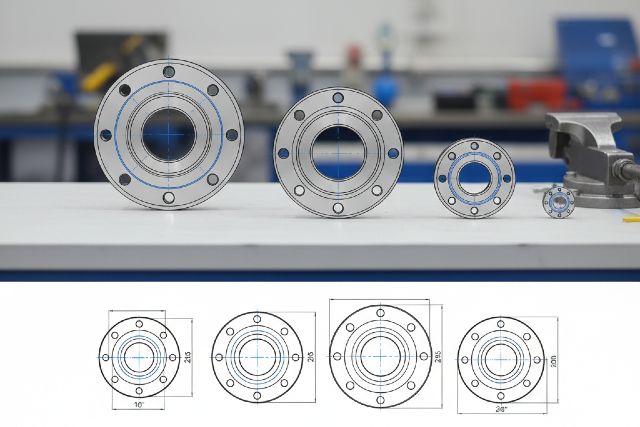
A blind flange is a pipe flange used to seal a pipeline or equipment opening by bolting a solid plate to a mating flange with a gasket in between. Because it must resist full internal pressure without the benefit of a pipe bore, it often needs greater thickness and careful bolting compared to many other flange types.

In most industrial projects, blind flanges are specified by a governing standard (such as ASME B16.5 or ASME B16.47), a size (NPS or DN), a pressure class (such as Class 150 or Class 600), a facing type (RF, FF, RTJ), and a material specification (such as ASTM A105, A182 F304/F316, etc.). ASME’s standard pages are the best “source of truth” for scope and size ranges.

Why blind flange selection matters more than it seems

Blind flanges show up everywhere: maintenance isolation points, future tie-in locations, hydrotest blinds, dead legs, and equipment nozzles. A mismatch in facing, bolt pattern, or pressure-temperature rating can create delays, expensive rework, or leaks.

Industry guidance on bolted flange joint assembly exists for a reason: leakage in bolted joints is widely recognized as a common and persistent reliability issue, and the assembly method (bolt load, pattern, lubrication, and gasket compression) is critical to getting a tight seal.

The key blind flange standards and what each covers

ASME B16.5 blind flange specifications

ASME B16.5 is the most common reference for pipe flanges in process piping. It covers flanges in sizes NPS 1/2 through NPS 24 for rating classes 150, 300, 400, 600, 900, 1500, and also Class 2500 in smaller sizes (the B16.5 scope explicitly notes Class 2500 coverage up to NPS 12 for certain flange types).

If your project says “blind flange, ASME B16.5,” you’re working in that NPS 1/2–24 universe, and you should expect pressure-temperature ratings to come from B16.5 tables that depend on material group and temperature.

ASME B16.47 blind flange specifications for large diameter

When you move into large diameters, ASME B16.47 comes into play. It covers NPS 26 through NPS 60, with pressure classes that include 75, 150, 300, 400, 600, and 900, and it includes blind flanges in its scope.

B16.47 is also where you’ll encounter Series A and Series B. In practice, these series differ in dimensions (especially bolt circle and drilling), so “NPS 36 Class 150 blind flange” is not complete unless the series is identified.

Series A vs Series B

Series A is historically aligned with MSS SP-44, while Series B is associated with API 605 lineage, and B16.47 incorporates that heritage. A practical takeaway is that bolt circles and drilling can differ between Series A and Series B at the same nominal size and class, so the flanges will not necessarily mate.

EN 1092-1 blind flange specifications (common in EU/metric projects)

For projects based on European standards, blind flanges may be specified to EN 1092-1 (often Type 05 for blinds), using PN ratings rather than ASME Class ratings. EN 1092-1 documents cover flange types, dimensions, and pressure classes across PN ranges.

If your plant uses mixed equipment (some ASME, some EN), you must explicitly identify which standard governs the blind flange to avoid bolt pattern conflicts.

Blind flange sizes: what “standard size” actually means

Blind flange size is usually given as NPS (Nominal Pipe Size) in ASME systems or DN (Nominal Diameter) in EN systems. Here’s the part that trips people up: NPS and DN are nominal designations, not literal measurements of outside diameter.

For ASME B16.5 blind flanges, you’ll see sizes from NPS 1/2 up to NPS 24, with each size tied to standardized outside diameter, thickness, bolt circle diameter, number of bolt holes, and bolt hole diameter per class.

For ASME B16.47, sizes run NPS 26 to 60, again with standard bolt patterns and thickness by series and class.

A quick reality check on fit-up

A blind flange must match its mating flange in three ways:

It must match the nominal size (NPS/DN), so the outside diameter and bolt circle line up.

It must match the pressure rating system (ASME Class or EN PN), so the drilling pattern and thickness expectations align.

It must match the facing type, so gasket seating behavior is correct.

When one of these doesn’t match, installers often try to “make it work” on site. That’s how you end up with uneven gasket compression and chronic seepage.

Facing types: RF, FF, and RTJ

Blind flanges are manufactured with a flange face that dictates how the gasket seals.

Raised Face (RF) is extremely common in ASME B16.5 and many process services. It uses a gasket that sits inside the bolting circle.

Flat Face (FF) is often used with certain cast iron components or where the mating flange requires it. Mixing FF and RF is not a casual decision; it changes gasket compression and can overstress weaker mating flanges.

Ring Type Joint (RTJ) is used in high-pressure and critical services, relying on a metal ring gasket in a machined groove for robust sealing.

Your flange standard and service requirements typically drive the face, but the mating flange is the final authority. If the nozzle is RF, your blind flange should be RF. If it’s RTJ, match RTJ groove details precisely.

Pressure ratings: what “Class 150” really means

This is the part most people oversimplify. ASME “Class” numbers are not a direct PSI rating. They are rating designations that map to allowable pressure at a given temperature for a given material group.

ASME flange standards provide pressure-temperature rating tables. That means the same “Class 600” blind flange can have different allowable pressures depending on the material group and the operating temperature.

ASME B16.5’s available rating classes include 150, 300, 400, 600, 900, 1500, and 2500, and these are explicitly discussed as the standardized rating designations used for B16.5 flanges.

ASME B16.47 similarly defines pressure classes in its scope for large diameter flanges, including Class 75 and up to Class 900.

Temperature derating is the hidden trap

Pressure ratings drop as temperature rises because material strength decreases. In practical terms, you can’t choose a blind flange by “pressure only” without checking the temperature column in the rating table for the correct material group.

Engineering references built around the ASME rating tables emphasize this derating behavior and highlight that allowable pressure can drop dramatically at elevated temperatures for the same class.

If you’re working in hot service, this is where many underspecified blinds come from: the designer selects Class 300 based on ambient intuition, but the line runs near a temperature where the allowable pressure is much lower than expected.

Blind flange thickness: why it varies by class and standard

Blind flange thickness is not arbitrary. Standards define minimum thicknesses by size and class because a blind flange behaves like a plate under pressure and must control stress and deflection.

For ASME B16.5, published dimension references show thickness values that increase as you go up in class for the same NPS.

For ASME B16.47, thickness is also standardized, but differs by Series A vs Series B in many sizes.

In real projects, “special thickness” blinds are sometimes specified for unusual loads or to reduce deflection in sensitive gasketed joints. If you go off-standard, treat it as an engineered design item, not a casual procurement tweak.

Materials: matching strength, corrosion resistance, and code requirements

Blind flanges come in a wide range of materials, and your choice should be driven by process fluid, corrosion allowance, operating temperature, and code requirements.

In ASME systems, the pressure-temperature rating tables depend on material grouping, so material selection directly impacts allowable pressure at temperature, not just corrosion resistance.

Common project patterns look like this:

Carbon steel (often specified via ASTM forging standards) for general hydrocarbons and utilities where corrosion is controlled.

Stainless steels (various grades) for corrosive media or where cleanliness matters.

Alloy steels for higher temperature service where strength retention is required.

The safest workflow is to start with the piping material class (line class) or the equipment nozzle material, then select the blind flange material to match the governing spec so rating tables and corrosion expectations remain consistent.

How to read a blind flange specification line item

A typical purchase description might look like:

“Blind flange, ASME B16.5, NPS 8, Class 600, RF, ASTM A105, NACE compliant, ANSI B16.5 drilling”

Even without a table, that line includes nearly everything procurement and fabrication needs. What it does not include, and what engineers should still verify, is the pressure-temperature suitability at the operating temperature for the specific material group used in the standard tables.

Real-world scenario: the “matches on paper” blind that still leaks

Here’s a common field story.

A unit has an RF blind flange installed on a seldom-used future tie-in. The blind matches NPS, class, and bolt pattern. During a turnaround, the team removes and reinstalls it, but it seeps during startup.

What happened? Very often it’s assembly and gasket stress, not the basic dimensions. Industry guidance exists precisely because bolted flange joints are sensitive to bolt load, lubrication assumptions, tightening sequence, and gasket selection, and leakage is frequently tied to these practical factors.

Actionable fix: treat reassembly like a critical joint. Use controlled tightening methods aligned with recognized guidance (such as PCC-1 style practices), confirm gasket condition and compatibility, and ensure the flange faces are clean and not damaged.

Choosing the right blind flange pressure rating, step by step

Start with your design pressure and design temperature, not operating conditions. Then confirm which standard governs the piping class or nozzle.

If the size is NPS 24 or smaller, ASME B16.5 is typically your default in ASME-based plants.

If it’s NPS 26 or larger, ASME B16.47 becomes relevant, and you must specify Series A or Series B.

Next, select the material and verify the allowable pressure at design temperature using the correct pressure-temperature tables for that material group. This is where “Class 300” becomes a real number for your exact service.

Finally, confirm facing type and gasket selection as a matched pair with the mating flange.

FAQ: blind flange specifications, sizes, and ratings

What is a blind flange used for?

A blind flange is used to close off the end of a pipe, valve, or nozzle by bolting a solid flange plate to a mating flange with a gasket. It’s commonly used for isolation, maintenance, future tie-ins, and hydrotesting.

Are blind flange pressure classes the same as PSI?

No. ASME “Class” numbers are rating designations tied to allowable pressure at specific temperatures for specific material groups, using pressure-temperature tables in the standard.

What sizes do ASME blind flanges come in?

ASME B16.5 covers NPS 1/2 through NPS 24 (with class coverage defined in the standard scope). ASME B16.47 covers large diameter flanges from NPS 26 through NPS 60 and includes blind flanges.

What’s the difference between ASME B16.5 and ASME B16.47 blind flanges?

B16.5 is the common standard for NPS 1/2–24. B16.47 applies to NPS 26–60 and introduces Series A and Series B dimensional systems, which can affect bolt patterns and interchangeability.

Can I mate a Series A blind flange to a Series B flange?

Not reliably. Series A and Series B can have different drilling and bolt circle dimensions at the same nominal size and class, so you must specify the series to match the mating flange.

Do I always need a gasket with a blind flange?

In standard bolted flange joints, yes. The gasket provides the seal between the flange faces. Seal performance depends heavily on assembly practices and achieving correct bolt load.

Conclusion: picking the right blind flange with confidence

A blind flange is a pressure boundary component, not just a “cap.” To specify it correctly, you need to align the governing standard (ASME B16.5 for common sizes or ASME B16.47 for large diameters), the size (NPS/DN), the facing type, and the pressure class while confirming pressure-temperature ratings for the actual material at the actual design temperature.

If you take one practical lesson from this guide, let it be this: most headaches come from incomplete specs and assumptions about ratings. When you state the full spec and treat assembly as part of the engineering system, your blind flanges stop being a recurring leak point and start behaving like the reliable isolation devices they’re meant to be.

Engine degreaser: How to Clean an Engine Bay Like a Detailer

0

A dirty engine bay is more than just an eyesore. Built-up grease, oil residue, and road grime can trap heat, hide leaks, and make routine maintenance harder than it needs to be. Using the right engine degreaser and following a professional process allows you to clean your engine bay safely without damaging electrical components or sensitive plastics. When done correctly, engine bay cleaning improves appearance, supports long-term reliability, and adds real value to your vehicle.

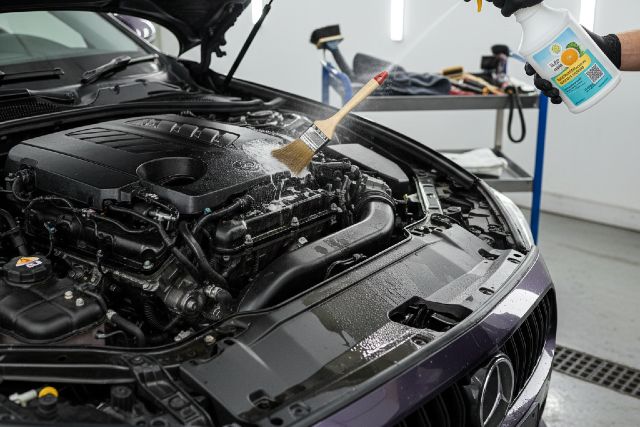
Professional detailers don’t rely on excessive water pressure or harsh chemicals. Instead, they use controlled cleaning techniques, proper dwell time, and high-quality engine degreasers designed to break down oil-based contamination while remaining safe on modern engine materials.

Why engine bay cleaning matters more than most people think

Many car owners avoid engine bay cleaning because they fear electrical damage. While that fear is understandable, modern vehicles are designed to withstand moisture under the hood. According to automotive engineering research published by SAE International, most engine bay components are weather-sealed to handle rain, humidity, and road splash exposure. Problems usually occur only when improper techniques or excessive pressure are used.

A clean engine bay also helps identify fluid leaks earlier. Oil or coolant leaks are far easier to spot on clean surfaces, which can prevent costly repairs. Mechanics often note that vehicles with clean engine bays are easier to service, reducing labor time and diagnostic errors.

What an engine degreaser does and how it works

An engine degreaser is formulated to dissolve petroleum-based contaminants such as oil, grease, and traffic film that accumulate under the hood. These contaminants bond tightly to metal, plastic, and rubber surfaces due to heat cycles and airflow. Standard car wash soap is not designed to break these bonds effectively.

Degreasers work by emulsifying oil molecules, allowing them to be safely lifted away from surfaces during light agitation and rinsing. Water-based engine degreasers are now the industry standard because they are safer on plastics and rubber while being more environmentally responsible. Solvent-based degreasers are still used in heavy-duty applications but require greater caution.

The Environmental Protection Agency explains that modern degreasers using water-based chemistry significantly reduce volatile organic compounds while maintaining cleaning performance. This makes them safer for home users when used as directed.

Choosing the right engine degreaser for your vehicle

Not all engine bays require the same strength of cleaner. Light dust and fresh grime often respond well to diluted all-purpose cleaners, while older vehicles with oil seepage benefit from a dedicated engine degreaser.

Modern plastic engine covers, rubber hoses, and wiring looms require pH-balanced or manufacturer-approved degreasers. Using overly aggressive products can cause discoloration or brittleness over time. Consumer testing conducted by Consumer Reports highlights that automotive-specific degreasers outperform household cleaners while causing less material degradation.

When in doubt, choosing a reputable automotive brand with clear dilution instructions is the safest option.

How professional detailers prepare an engine bay before degreasing

Preparation is the most overlooked step in engine bay cleaning. Detailers always start with a completely cool engine. Heat causes degreasers to evaporate too quickly, reducing cleaning effectiveness and increasing the risk of staining.

Sensitive components such as the alternator, exposed air intake filters, and aftermarket electronics are typically covered with plastic or aluminum foil. This simple step significantly reduces the chance of water intrusion while still allowing effective cleaning.

Loose debris such as leaves or sand is removed first. This prevents debris from turning into muddy residue once the degreaser is applied.

How to clean an engine bay using an engine degreaser safely

The degreaser is applied evenly across dirty areas, focusing on oil-stained surfaces rather than soaking the entire bay. Professional detailers allow the product to dwell for a short, controlled time so it can break down grime without drying.

Agitation is performed gently using soft brushes around plastic covers and medium bristles on metal components. The goal is to lift contamination, not scrub aggressively. According to Meguiar’s professional detailing guidelines, light agitation improves cleaning efficiency while minimizing surface wear.

Rinsing is done using low-pressure water or a controlled spray. High-pressure washers are avoided because they can force water past seals. In many professional shops, a pump sprayer or gentle hose flow is preferred.

Proper drying is what prevents electrical problems

Most engine bay issues happen after cleaning, not during it. Leaving moisture trapped around electrical connectors can cause temporary misfires or warning lights.

Detailers use microfiber towels and compressed air or blowers to remove standing water. Special attention is paid to coil packs, wiring junctions, and fuse boxes. Allowing the engine bay to air dry for additional time ensures residual moisture evaporates completely.

Running the engine for a few minutes after cleaning can help generate mild heat that speeds evaporation, a method commonly recommended by automotive service professionals.

Protecting plastics and rubber after degreasing

Once clean and dry, professional detailers apply a non-greasy protectant to plastic and rubber components. This restores color, adds UV protection, and reduces future dirt adhesion. Unlike shiny silicone dressings, modern water-based protectants leave a natural factory finish.

According to research from the Society of Automotive Engineers, UV exposure accelerates plastic degradation under the hood due to elevated temperatures.

Common engine degreaser mistakes to avoid

One of the biggest mistakes is using household degreasers not designed for automotive materials. These products can strip coatings or damage rubber over time. Another common error is overusing water, which increases the risk of moisture intrusion.

Cleaning too frequently is also unnecessary. Most vehicles only need engine bay cleaning once or twice per year unless there is active oil leakage.

Engine degreaser FAQs for featured snippet optimization

Is engine degreaser safe for modern cars?

Yes, engine degreaser is safe for modern vehicles when used on a cool engine, applied correctly, and rinsed gently without high pressure.

How often should you clean your engine bay?

Most vehicles benefit from engine bay cleaning every six to twelve months, depending on driving conditions and oil exposure.

Can engine degreaser damage electrical components?

Damage typically occurs only when high-pressure water or excessive soaking is used. Controlled application and proper drying prevent issues.

Should you rinse engine degreaser off completely?

Yes, residue should always be rinsed away to prevent staining and chemical buildup.

inal thoughts on using an engine degreaser like a detailer

Using an engine degreaser the right way transforms engine bay cleaning from a risky chore into a safe, confidence-boosting maintenance task. By working on a cool engine, choosing automotive-safe products, using gentle rinsing methods, and finishing with proper drying and protection, you can achieve professional-level results at home.

A clean engine bay isn’t just about looks. It supports easier maintenance, earlier leak detection, and long-term component health. When you clean your engine bay like a detailer, you’re not just improving appearance — you’re investing in your vehicle’s longevity.

How to Disconnect Car Battery in 2 Minutes: Quick, Safe Method

0

Knowing how to disconnect car battery correctly is a basic but essential skill for every car owner. Whether you are replacing a battery, working on electrical components, stopping battery drain, or resetting vehicle electronics, disconnecting the battery safely can prevent injuries and costly damage. The process itself is simple and can often be completed in about two minutes if the battery is easily accessible.

Many drivers make small mistakes when disconnecting a car battery, such as removing the wrong terminal first or using improper tools. These mistakes can cause sparks, short circuits, or damage to sensitive electronic systems. This guide explains the fastest and safest method, tailored for modern vehicles as well as older models, while addressing common concerns drivers have.

Why you might need to disconnect a car battery

Disconnecting a car battery is often necessary when performing basic maintenance or repairs. Many people disconnect the battery before replacing headlights, alternators, starters, or fuses to avoid electrical shock or accidental short circuits. It is also commonly done to stop parasitic battery drain when a vehicle is not being used for an extended period.

In modern cars, disconnecting the battery can help reset minor electrical issues such as dashboard warning lights or infotainment glitches. According to AAA, disconnecting the battery is a common safety step before servicing many vehicle components because batteries store enough energy to cause sparks and burns if mishandled.

How long does it really take to disconnect a car battery?

In most vehicles, the actual disconnection process takes less than two minutes. The only time it takes longer is when the battery is hidden under covers, located in the trunk, or installed under the rear seat. Even in those cases, once you reach the battery terminals, the disconnection itself is still very quick.

If corrosion is present on the terminals, it may add extra time. However, for a clean and accessible battery, disconnecting the negative terminal alone usually completes the job for most maintenance tasks.

The most important rule before you begin

The most critical rule in how to disconnect car battery safely is removing the negative terminal first. The negative terminal is connected to the vehicle’s chassis, which acts as a ground. Removing it first significantly reduces the risk of short circuits.

How to disconnect car battery in 2 minutes safely

Start by turning off the engine completely and removing the key from the ignition. Modern vehicles continue to draw power for a short time after shutdown, so waiting about a minute allows onboard systems to power down properly.

Open the hood and locate the battery. In most cars, the battery sits near the front of the engine bay and is clearly labeled. Identify the negative terminal, which is usually marked with a minus sign and connected to a black cable.

Using a wrench or socket, loosen the nut on the negative battery clamp just enough so the cable can slide off the terminal. There is no need to remove the nut entirely. Once loose, lift the negative cable off the terminal and carefully move it aside so it cannot accidentally touch the battery post again.

For many tasks, disconnecting only the negative terminal is sufficient. If full battery removal is required, you can then repeat the process on the positive terminal, which is usually marked with a plus sign and a red cable. Always ensure the negative terminal is disconnected first and reconnected last.

This method minimizes the chance of sparks and makes the process both fast and safe.

Why sparks happen and how to avoid them

Sparks occur when electrical current finds an unintended path, often through metal tools or body panels. Car batteries can produce hydrogen gas, which is flammable in enclosed spaces. The Canadian Centre for Occupational Health and Safety explains that sparks near batteries can ignite gases and cause injury if safety precautions are ignored.

By disconnecting the negative terminal first, you eliminate the grounding path that causes sparks. Wearing gloves and avoiding contact between tools and metal surfaces further reduces risk.

What happens when you disconnect a car battery?

Disconnecting a car battery cuts power to all electrical systems. This may reset the clock, radio presets, and infotainment settings. In some vehicles, power windows and sunroofs may need to be recalibrated after reconnection.

In newer cars, disconnecting the battery can also temporarily disable advanced driver assistance systems until the vehicle is restarted and driven for a short period. These effects are normal and usually resolve themselves automatically.

Special considerations for modern vehicles

Modern vehicles often include battery management systems and electronic control units that monitor voltage and charging behavior. Some manufacturers recommend using a memory saver tool if you plan to disconnect the battery for an extended period.

However, for short disconnections lasting a few minutes, most vehicles tolerate battery removal without issues. If your vehicle has a battery sensor attached to the negative terminal, be careful not to damage it when removing the cable. These sensors help regulate charging and fuel efficiency.

How to reconnect the battery correctly

Reconnecting the battery follows the reverse order of disconnection. Always reconnect the positive terminal first and the negative terminal last. This sequence ensures the vehicle remains grounded only after the positive connection is secure.

Tighten the clamps firmly but avoid overtightening, which can damage battery posts. Once reconnected, start the engine and check for warning lights or unusual behavior. Most systems will recalibrate automatically within a few minutes of driving.

Common mistakes to avoid when disconnecting a car battery

One of the most common mistakes is removing the positive terminal first. This increases the risk of sparks and short circuits. Another frequent error is allowing the disconnected cable to touch the battery terminal again, which can unintentionally restore power.

Using incorrect tools or forcing corroded clamps can also damage terminals. If corrosion is severe, cleaning the terminals before removal may be necessary.

Frequently asked questions about disconnecting a car battery

Is it safe to disconnect a car battery by yourself?

Yes, it is safe to disconnect a car battery if you follow the correct steps and terminal order. Wearing basic protective gear and using the proper tools significantly reduces risk.

Which battery terminal should I disconnect first?

You should always disconnect the negative terminal first. This reduces the chance of electrical shorts and sparks.

How long should a car battery stay disconnected?

For basic maintenance or resets, a few minutes is usually enough. For electrical resets, some mechanics recommend leaving it disconnected for 10 to 15 minutes.

Will disconnecting the battery damage my car?

Disconnecting the battery does not damage the car when done correctly. Some settings may reset, but no permanent harm occurs.

Conclusion: the fastest and safest way to disconnect a car battery

Learning how to disconnect car battery properly is a simple skill that can save time, prevent injuries, and protect your vehicle’s electronics. By turning the car off, disconnecting the negative terminal first, and keeping tools away from metal surfaces, you can safely disconnect a car battery in about two minutes.

This quick, safe method works for most vehicles and maintenance tasks, making it an essential technique for any driver. With the right approach, disconnecting your car battery becomes routine, stress-free, and completely safe.

LEL 4 Breakdown: Why Everyone Is Talking About It

0

The term lel 4 has been popping up more frequently in industrial safety conversations, gas detection forums, and workplace compliance discussions. While it may sound like a technical code only safety professionals understand, LEL 4 is actually a critical early-warning indicator that plays a major role in preventing fires and explosions.

In simple terms, lel 4 refers to a gas monitor reading that shows 4 percent of the Lower Explosive Limit. Although the number appears small, it signals the presence of flammable gas and highlights the importance of early detection, proper ventilation, and immediate situational awareness. Understanding what LEL 4 means and how to respond to it can make the difference between a controlled environment and a serious incident.

What Is LEL and Why It Matters

LEL stands for Lower Explosive Limit, which is the lowest concentration of a flammable gas or vapor in air that can ignite when exposed to an ignition source. Below this level, combustion cannot occur. At or above it, the risk of fire or explosion becomes real and immediate.

Gas detectors typically express flammable gas levels as a percentage of the LEL rather than as a direct gas concentration. This makes it easier to standardize safety thresholds across different gases. According to OSHA, combustible gas indicators are designed to measure and display gas concentrations as a percentage of the LEL of the gas for which they are calibrated. This approach helps workers recognize danger long before conditions become critical.

LEL 4 Meaning Explained Clearly

A lel 4 reading means the atmosphere contains flammable gas at approximately four percent of the concentration required to reach the Lower Explosive Limit. It does not mean the air is four percent gas. Instead, it means the gas concentration is four percent of the minimum amount needed for ignition.

This distinction is crucial. Many workplace incidents occur not because limits are exceeded instantly, but because early warnings are ignored. LEL 4 is often viewed as a cautionary signal that conditions are changing and need attention before escalation occurs.

Why LEL 4 Is Getting So Much Attention

One reason everyone is talking about lel 4 is increased awareness around confined space safety and gas monitoring technology. Modern gas detectors are more sensitive and more widely used than ever before, which means workers are seeing low-level readings more often and asking what they actually mean.

Another factor is evolving safety standards. Industry guidance frequently treats ten percent LEL as a hazardous condition, with some confined space procedures recognizing even five percent LEL as a threshold for additional controls. In that context, a lel 4 reading sits just below levels that demand immediate action, making it a critical early indicator rather than a number to ignore.

High-profile industrial accidents have also contributed to the conversation. Investigations often show that flammable gas was detected at low levels long before an explosion or fire occurred. These cases reinforce the idea that early readings like LEL 4 deserve serious consideration.

Is LEL 4 Dangerous?

On its own, lel 4 is generally not considered immediately dangerous in most industrial safety programs. However, it is not harmless either. The true risk depends on how quickly the reading is rising, where the gas is accumulating, and whether ignition sources are present.

A stable LEL 4 reading in a well-ventilated area may indicate a minor residual vapor issue. The same reading in a confined or poorly ventilated space could signal the beginning of a much more serious hazard. Because gas concentrations can change rapidly, treating LEL 4 as an early warning rather than a safe zone is considered best practice.

Common Causes of a LEL 4 Reading

LEL 4 readings often appear during routine operations. Small leaks from valves, flanges, or fittings can release trace amounts of flammable gas that accumulate slowly. Residual vapors after maintenance, cleaning, or fuel transfer are another common cause, especially in enclosed spaces.

Calibration factors can also influence readings. Gas monitors calibrated for one gas may respond differently when exposed to another flammable vapor. OSHA emphasizes that calibrating detectors with the specific gas expected in the work environment improves accuracy and reliability.

Environmental conditions play a role as well. Temperature changes, pressure fluctuations, and limited airflow can cause gas to pool in certain areas, leading to localized readings like LEL 4 even when the broader area seems clear.

What To Do When You See LEL 4 on a Gas Monitor

When a gas monitor displays lel 4, the first step is awareness. The reading should be acknowledged and communicated according to site procedures. Verifying that the monitor is functioning correctly is important, as blocked sensors or overdue calibration can affect accuracy.

Observing the trend is equally critical. If the reading remains stable or decreases with improved ventilation, the situation may be under control. If it increases steadily, further investigation and escalation may be required. NIOSH guidance stresses proper maintenance, calibration, and bump testing of gas monitors to ensure readings are reliable and actionable.

Ventilation should always be evaluated. Increasing airflow often reduces low-level gas concentrations quickly. If ventilation does not improve the reading, identifying and isolating the source becomes a priority.

LEL 4 vs Higher LEL Readings

Understanding how lel 4 compares to higher readings helps put the number into context. At low single-digit percentages of LEL, conditions are typically monitored closely. As readings approach ten percent LEL, many safety programs classify the atmosphere as hazardous and require additional controls or work stoppage.

At higher levels, the margin for error disappears quickly. This is why early indicators like LEL 4 are so valuable. They provide time to act before conditions reach a point where evacuation or emergency response becomes necessary.

Real-World Scenario: Why Early LEL Readings Matter

Consider a maintenance crew working in a utility vault. A gas monitor shows a steady lel 4 reading shortly after entry. Ventilation is increased, but the reading slowly climbs to six percent. Further investigation reveals a small upstream leak that would have gone unnoticed without early detection.

By responding at LEL 4, the crew prevents the concentration from approaching hazardous thresholds. This type of scenario is common in incident prevention case studies and highlights why low-level readings deserve attention.

Expert Tips for Managing Low LEL Readings

Experienced safety professionals treat lel 4 as a signal to slow down and reassess. Documenting the reading, monitoring trends, and ensuring controls are working as intended are key steps. Regular training helps workers understand that “low” does not mean “safe,” especially in confined spaces.

Using properly calibrated equipment and following manufacturer recommendations also reduces confusion and false confidence. Trusted organizations like OSHA and NIOSH consistently emphasize the importance of accurate gas detection and proactive response.

Frequently Asked Questions About LEL 4

What does LEL 4 mean on a gas detector?
LEL 4 means the detector has measured flammable gas at four percent of the Lower Explosive Limit, indicating the presence of combustible gas well below ignition levels but still requiring attention.

Is LEL 4 safe to work in?
In many situations it may be permitted with controls, but it should never be ignored. Site-specific procedures and trends determine whether work can continue safely.

Can LEL 4 turn dangerous quickly?
Yes. Changes in ventilation, leaks, or process conditions can cause gas levels to rise rapidly from low readings to hazardous concentrations.

Conclusion: Why LEL 4 Should Never Be Ignored

The growing focus on lel 4 reflects a broader shift toward prevention rather than reaction. While a four percent LEL reading is not an emergency by itself, it is a clear signal that flammable gas is present and conditions deserve attention.

By understanding what LEL 4 means, recognizing common causes, and responding appropriately, organizations can reduce risk, protect workers, and prevent incidents before they escalate. In modern safety culture, numbers like LEL 4 are not background noise. They are early warnings—and the smartest teams listen.