Home Blog Page 2

Mirror Drawing: The Brain Training Trick You’ll Want to Try Today

0

If you’re looking for a quick, low-cost way to challenge your mind, mirror drawing is one of those oddly satisfying exercises that feels like a game but behaves like real training. You’re doing a simple task — drawing a line, a shape, or a word — while only watching your hand in a mirror (or on a mirrored screen). Suddenly, your brain has to “re-map” left and right, slow down impulses, and build a new control strategy.

That mild frustration you feel in the first minutes? That’s the point. Mirror drawing creates a clean little storm of visuomotor coordination, sensorimotor adaptation, and procedural learning — the kind researchers use to study how the brain acquires skills.

What is mirror drawing?

Mirror drawing is a motor-learning task where you draw (often tracing a shape like a star) while viewing your hand and the drawing surface indirectly through a mirror, rather than looking directly at your hand. The mirror reverses visual feedback, so your usual hand-eye coordination rules don’t work — and your brain has to learn new ones.

In labs, it’s often called the mirror-drawing task or mirror tracing, and it’s been used for decades to measure improvement in speed and accuracy over repeated trials — classic signs of skill learning.

Why mirror drawing feels so hard (and why that’s good)

Mirror drawing is difficult for the same reason driving in a new country can feel mentally exhausting: your brain’s “autopilot” is tuned for one set of mappings, and now it’s wrong.

When you move your hand right, the mirror makes it look like it moved left. Your brain detects a mismatch between what you intended and what you see, then gradually recalibrates. That recalibration process is a core feature of motor learning, the same broad category researchers use to study how we acquire new movement skills.

It also tends to recruit procedural learning systems (skill memory), which are associated with circuits including the cerebellum and basal ganglia in many lines of research.

Mirror drawing benefits: what it can (and can’t) do

Let’s be honest: no single brain exercise turns you into a genius overnight. Most “brain training” claims fall apart when you demand broad, real-world transfer (like doing one game and suddenly improving at everything). Research on cognitive training often finds mixed results on transfer beyond the trained task.

So where does mirror drawing fit?

What mirror drawing is genuinely good for

Mirror drawing is especially strong for task-specific improvements such as:

  • Better hand-eye coordination under unusual visual conditions

  • Improved movement accuracy and steadier control with practice

  • Stronger attention and error-monitoring (you can’t zone out and succeed)

These are realistic, observable outcomes because the task forces your nervous system to build a new mapping.

What mirror drawing probably won’t do by itself

  • “Fix” memory, ADHD, anxiety, or cognition in a medical sense

  • Replace clinical rehab or therapy if you’re recovering from injury

  • Automatically improve unrelated skills (like math) without broader training habits

If you treat it like a focused skill drill — similar to learning a new instrument pattern — it shines.

How to do mirror drawing at home (simple setup)

You can do mirror drawing with almost no equipment.

Option A: The classic mirror method (best for the real effect)

You’ll need:

  • A small mirror (tabletop or standing)

  • Paper and a pen/pencil

  • A simple shape to trace (star, spiral, maze, block letters)

Steps

  1. Place the paper flat on the table.

  2. Put the mirror upright so you can see the paper in the reflection.

  3. Position your hand so you cannot see it directly—only in the mirror.

  4. Trace the shape slowly while only watching the reflection.

  5. Repeat for multiple short trials, aiming for fewer errors.

Option B: The “phone mirror” version (works in a pinch)

Use your phone’s selfie camera and flip it horizontally (many camera apps have a “mirror” setting). Watch the screen while you draw on paper.

Best shapes to start with (and why)

Your first shape matters because it controls frustration levels and learning speed.

A good progression:

  • Straight lines and corners (quick wins)

  • Simple spirals (smooth control)

  • Star tracing (classic research shape)

  • Letters/your name (higher cognitive load)

  • Complex mazes (advanced control + planning)

In research contexts, star shapes are popular because they produce measurable changes in time and errors across trials.

Mirror drawing practice plan (10 minutes a day)

If you want visible progress without burning out, use short, repeatable sessions.

Day 1–2: Calibration
Do 6–8 trials of 30–60 seconds each. Go slow. Your goal is to learn the “rules” of the mirror.

Day 3–5: Smoothness
Keep the same shape. Try to reduce jerky corrections. Aim for one clean continuous line, even if it’s slow.

Day 6–7: Transfer
Try a new shape or write a short word. Your brain will complain again—this is normal.

Many studies track learning by measuring reduced errors and faster completion times over repeated trials.

The science of mirror drawing: what’s happening in your brain?

Mirror drawing is a neat demonstration of how flexible your brain is when feedback changes.

1) Sensory conflict → adaptation

Your visual system says one thing; your motor system expects another. The brain resolves the conflict by adjusting predictions and control.

2) Procedural learning kicks in

Over repeated attempts, the skill becomes less effortful. In clinical and research contexts, mirror drawing is widely used as a procedural learning task.

3) Sleep and consolidation (a big reason practice feels “sticky”)

Mirror drawing is even used in experiments exploring how practice effects consolidate across time (including sleep-related designs).

Mirror drawing tips that speed up progress

Here are the moves that make the biggest difference fast:

Slow is not “worse”—it’s the training signal

Early on, speed makes errors explode. Accuracy teaches your brain the mapping.

Use a “micro-correction” strategy

Instead of big swings, make tiny corrections. This reduces oversteering (the #1 beginner problem).

Fix your posture and anchor your wrist

If your arm is floating, the task becomes a shaky endurance test, not a learning task.

Track one metric only

Choose either:

  • Time to complete, or

  • Number of boundary hits/errors

Obsessing over everything increases stress and worsens performance.

Common mistakes

Mistake: Switching shapes every session
Your brain needs repetition to stabilize the mapping. Keep the same shape for a few days first.

Mistake: Trying to “outsmart” the mirror
Don’t overthink left/right. Let your hand learn by feedback.

Mistake: Doing one long session
Short, spaced practice tends to be more sustainable and keeps attention high.

Who should try mirror drawing?

Mirror drawing is great for:

  • Students who want a quick focus drill

  • Adults who enjoy skill-based “brain games”

  • Artists and designers who like coordination challenges

  • Anyone working on patience and attention control

If you have hand pain, a tremor, or you’re recovering from a neurological injury, keep it gentle and consider professional guidance for rehab protocols. For clinical rehabilitation, approaches like mirror therapy are a separate (medical) category with its own evidence base, especially in stroke contexts.

Mirror drawing vs. mirror therapy: don’t mix these up

They sound similar but they’re used differently.

  • Mirror drawing: a skill task for motor learning and coordination (training/experiment style).

  • Mirror therapy: a rehab method using mirror visual feedback to improve movement or pain outcomes (clinical use), including post-stroke motor recovery research.

Mirror drawing can feel therapeutic, but it’s not a medical treatment by default.

FAQs about mirror drawing

Does mirror drawing actually train your brain?

Yes—mirror drawing reliably trains a specific skill: controlling movement under reversed visual feedback. It’s used in motor-learning research because people typically improve over repeated trials in speed and accuracy.

How long does it take to get better at mirror drawing?

Most people notice improvement within a few short sessions (often within a week) if they repeat the same shape and track errors or time. Research designs commonly use repeated trials to detect learning over time.

What’s the best mirror drawing shape for beginners?

Start with straight lines and corners, then move to spirals, then a star. Star tracing is common in studies because it gives clear accuracy and timing signals.

Can mirror drawing help with memory?

Mirror drawing is more strongly tied to procedural learning (skill memory) than to memorizing facts. It can support attention and control habits, but it’s not a direct “memory booster” for everyone.

Is mirror drawing good for kids?

It can be, as long as sessions are short and fun. Research has examined how mirror-drawing learning differs across development and practice.

Conclusion: why mirror drawing is worth trying today

Mirror drawing is one of the simplest ways to feel your brain learning in real time. It’s low-tech, fast to set up, and surprisingly effective at training coordination, attention, and motor control under a new set of rules. Keep sessions short, repeat one shape for a few days, and measure either time or errors — then watch how quickly the “impossible” starts to feel normal.

If you want a brain-training habit you’ll actually stick with, mirror drawing is a great place to start — because it’s not just theory. You can see the progress on paper.

Black Turtle Beans Nutrition Facts: Protein, Fiber, and More

0

If you’ve ever wondered why black turtle beans show up so often in “healthy meal” recipes, it’s not hype. They’re one of the most nutrient-dense pantry staples you can buy: high in plant protein, packed with fiber, and loaded with key minerals that support energy, heart health, and gut health.

In this guide, you’ll get clear black turtle beans nutrition facts, what those numbers actually mean for your body, and how to use black turtle beans in real life — whether you’re trying to eat more protein, improve digestion, or build filling meals on a budget.

What are black turtle beans?

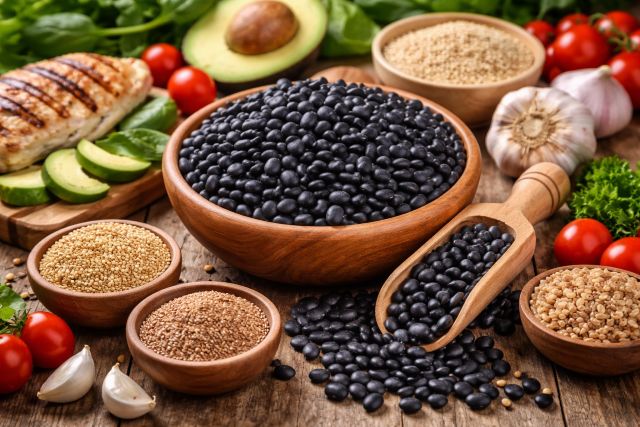
Black turtle beans are the small, shiny black beans commonly used in Latin American and Caribbean cooking (often called frijoles negros). Nutritionally, they’re a legume—meaning they bring a rare combination of protein + fiber + complex carbs that keeps meals satisfying and steady for blood sugar.

If your goal is “eat healthier without overcomplicating it,” black turtle beans are one of the simplest upgrades you can make.

Black turtle beans nutrition facts (1 cup cooked)

Here’s the nutrition profile for 1 cup cooked black turtle beans (about 172 g):

  • Calories: 227

  • Protein: 15.2 g

  • Total carbs: 40.8 g

  • Dietary fiber: 15 g

  • Fat: 0.93 g

  • Potassium: 610.6 mg

  • Iron: 3.6 mg

  • Magnesium: 120.4 mg

  • Folate: 256.3 mcg DFE

These values come from USDA FoodData Central data as presented by MyFoodData.

Quick takeaway: one cup gives you about 15 g protein + 15 g fiber—that’s why black turtle beans are so filling.

Why the protein in black turtle beans matters

The 15.2 grams of protein per cooked cup is a big deal for a plant food. It can help with:

Feeling full (and staying full)

Protein triggers satiety signals. When you combine protein with fiber (like black turtle beans naturally do), meals tend to keep you satisfied longer than refined carbs.

Supporting muscle maintenance

If you lift weights, walk a lot, or you’re trying to lose fat without losing muscle, protein intake matters. Black turtle beans won’t replace all protein sources, but they make it easier to hit daily targets—especially in plant-forward diets.

“Complete protein” question: do black turtle beans have all amino acids?

Like most legumes, black turtle beans are lower in methionine compared with animal proteins. That doesn’t mean they’re “incomplete” in a practical sense—just pair them with grains (rice, corn tortillas, whole wheat) across the day and you’ll cover the full spectrum easily.

Real-life example: the classic “beans + rice” combo is popular for a reason—it’s affordable, filling, and nutritionally complementary.

The fiber in black turtle beans is the real headline

A single cup has 15 grams of dietary fiber. For context, the FDA Daily Value for fiber is 28 g/day on a 2,000-calorie diet. That means one cup of black turtle beans can deliver more than half of a typical daily target.

What fiber actually does (beyond “helps you poop”)

Fiber supports several systems at once:

  • Digestive regularity and gut comfort (especially when you increase gradually)

  • Blood sugar stability by slowing digestion and carbohydrate absorption

  • Heart health: soluble fiber can help lower LDL cholesterol by reducing absorption in the gut

Harvard Health also notes many adults fall short of recommended fiber intake, and a common guideline is ~14 g fiber per 1,000 calories (about 28–34 g/day for many people).

Featured-snippet style definition

Black turtle beans are high-fiber legumes. One cooked cup provides 15 g fiber—over half of the FDA’s 28 g Daily Value—supporting fullness, digestion, and heart health.

Calories and carbs: are black turtle beans “high carb”?

Black turtle beans do contain carbs—about 40.8 g per cooked cup—but the type matters. A large portion is fiber (15 g), leaving fewer digestible carbs than it first appears. That’s why beans often perform well in diets aimed at blood sugar control and weight management.

If you’re counting macros, it’s also helpful to think in meals, not isolated numbers:

Example meal scenario:

  • ½ cup black turtle beans in a bowl (about half the numbers above)

  • paired with vegetables + avocado + lean protein (or tofu)
    This often lands as a filling, balanced meal without a blood sugar “crash.”

Micronutrients: the “hidden” benefits inside black turtle beans

Black turtle beans aren’t just protein and fiber—they’re also a mineral and B-vitamin package.

Folate (B9)

One cup provides 256 mcg DFE folate (64% DV). Folate is essential for DNA synthesis and red blood cell formation—important in pregnancy, growth, and general energy metabolism.

Magnesium

At ~120 mg per cup, black turtle beans contribute meaningfully to magnesium intake. Magnesium plays roles in muscle function, nerve signaling, and glucose metabolism.

Iron

Black turtle beans provide 3.6 mg iron per cup. If you eat mostly plant-based, iron strategy matters. Pair beans with vitamin C foods (citrus, bell peppers, tomatoes) to support absorption.

Potassium

With ~611 mg potassium per cup, they support electrolyte balance and heart function.

Antioxidants in black turtle beans: what the research suggests

The dark color of black turtle beans comes from plant compounds such as anthocyanins (also found in berries). Cleveland Clinic highlights that black beans contain antioxidants including anthocyanins and quercetin, which are linked to overall health and cellular protection.

You don’t need to treat antioxidants like magic. A practical view is: black turtle beans help you eat more plant diversity, and that’s consistently associated with better long-term health patterns.

Health benefits backed by credible sources

Heart health and cholesterol support

The American Heart Association encourages beans and legumes as part of a heart-healthy eating pattern, noting that swapping plant proteins for red meat can help lower blood cholesterol, and that beans’ fiber helps with satiety.

Research reviews also support the idea that bean-inclusive diets can improve risk markers like LDL cholesterol.

Better metabolic health (blood sugar, weight support)

Because black turtle beans combine fiber + protein and are minimally processed when cooked from dried or canned, they often fit well into eating patterns focused on stable energy and fullness—especially compared with refined grains.

Dried vs canned black turtle beans: which is healthier?

Both can be healthy. The bigger differences are sodium and convenience.

Option Pros Watch-outs
Dried black turtle beans Cheapest per serving, you control texture and sodium Requires soaking/cooking time
Canned black turtle beans Fast, consistent, great for weeknights Some brands are high sodium—rinse to reduce

If you go canned, rinsing can meaningfully cut sodium for many foods. And if you cook from dried, you can batch-cook and freeze portions for “canned-level” convenience.

How much black turtle beans should you eat?

A realistic “sweet spot” for most people is ½ to 1 cup cooked in a meal a few times per week. That range gives you a meaningful fiber/protein boost without overwhelming your digestion if you’re not used to legumes.

If you’re new to beans, start smaller:

  • Begin with ¼–½ cup, then increase over 1–2 weeks.

  • Drink enough water (fiber works best with hydration).

  • Choose well-cooked beans for better comfort.

Common issues: gas and bloating (and how to reduce it)

If black turtle beans make you gassy, it doesn’t mean they “don’t agree with you.” It often means your gut is adapting to more fermentable fiber.

Try these practical fixes:

  • Increase portions gradually (don’t jump from zero beans to a huge bowl)

  • Rinse canned beans very well

  • Cook dried beans thoroughly; consider soaking and discarding soak water

  • Pair beans with familiar foods (rice, soups, stews) rather than eating them alone

Most people notice improved tolerance over time as gut microbes adjust.

Best ways to eat black turtle beans (simple, high-impact ideas)

You don’t need complicated recipes to benefit from black turtle beans. Here are easy patterns that work in real kitchens:

  • Add ½ cup to salads for a protein + fiber upgrade

  • Stir into soups and chili to make them heartier

  • Use in taco bowls with salsa, lettuce, and a protein

  • Mash into a bean spread with olive oil, lime, garlic, and cumin

  • Blend into black bean brownies if you like experimenting (yes, it can work)

Actionable tip: If you want the benefits with minimal effort, keep two staples stocked: canned black turtle beans + frozen vegetables. That combo builds a meal fast.

FAQ: black turtle beans nutrition

Are black turtle beans high in protein?

Yes. One cup cooked black turtle beans has about 15.2 g of protein, making them one of the more protein-dense plant staples.

Are black turtle beans high in fiber?

Very high. One cup provides 15 g fiber, which is over half of the FDA’s 28 g Daily Value for adults on a 2,000-calorie diet.

How many calories are in black turtle beans?

About 227 calories per cooked cup (172 g), with most calories coming from carbs and protein, and very little fat.

Are black turtle beans good for heart health?

They can be. The American Heart Association supports beans and legumes in heart-healthy eating patterns, noting benefits from fiber and swapping plant proteins for red meat.

Are canned black turtle beans as healthy as dried?

Usually yes, especially if you rinse canned beans to reduce sodium. Dried beans give you more control, but canned is a great convenience option.

Conclusion: are black turtle beans healthy?

Black turtle beans are one of the best “everyday superfoods” because they deliver a rare combo of protein, fiber, and minerals at a low cost. One cooked cup provides 15.2 g protein and 15 g fiber, plus nutrients like folate, magnesium, iron, and potassium. With the FDA fiber Daily Value set at 28 g/day, black turtle beans can help you close the fiber gap quickly.

If you want a simple next step, start with ½ cup a few times per week — in salads, soups, or bowls — and build up gradually. Your gut (and your meal routine) will thank you.

New York Flag Colors & Coat of Arms: A Simple Guide

0

The new york flag is more than a blue piece of fabric flown outside government buildings. It is a visual summary of New York’s history, values, and identity, combining centuries-old heraldic traditions with symbols that reflect commerce, freedom, and justice. From its deep blue background to the detailed coat of arms at the center, every element of the flag carries meaning rooted in the state’s past.

In this guide, you’ll learn exactly what the New York flag colors represent, how the coat of arms developed, and why the symbols of Liberty, Justice, and the rising sun still matter today. Whether you’re a student, designer, history enthusiast, or simply curious, this article explains everything in clear and simple terms.

What the new york flag looks like

The official design of the new york flag is defined by state law as a blue field with the state’s coat of arms displayed prominently in the center. This design has remained largely unchanged since the late 19th century, even though the coat of arms itself dates back much earlier. According to the New York State Department of State, the flag reflects the “arms of the State of New York” rather than a decorative emblem created solely for modern use.

The blue background is intentionally plain. This allows the complex imagery of the coat of arms to stand out clearly, even from a distance. While different manufacturers may use slightly different shades of blue, the symbolic meaning remains consistent across all official versions.

The meaning behind New York flag colors

When people ask about New York flag colors, they often expect exact modern color codes. In reality, New York uses traditional heraldic color descriptions rather than standardized digital values. The law describes the colors using classic terms such as azure, or, argent, gules, and sable. These terms come from European heraldry and were commonly used when the original arms were created in the 18th century.

The blue background of the new york flag is described as “azure,” a color historically associated with loyalty, vigilance, and perseverance. Gold or yellow elements, known as “or,” symbolize generosity, excellence, and value. White or silver areas, referred to as “argent,” traditionally represent purity and sincerity. Red details, or “gules,” suggest courage and strength, while black, or “sable,” conveys firmness and dignity.

Because these descriptions focus on meaning rather than precise shades, you may notice slight variations in flags displayed across the state. This flexibility is intentional and rooted in heraldic tradition.

Understanding the New York coat of arms

At the center of the new york flag is the New York coat of arms, sometimes discussed alongside the Great Seal because they share the same imagery. The coat of arms tells a story about the state’s geography, economy, and political ideals.

The shield shows a river scene with two vessels, a square-rigged ship and a smaller sloop. This imagery represents commerce and navigation, highlighting New York’s historical role as a gateway for trade and transportation. The river is widely interpreted as the Hudson River, one of the most important waterways in early American history.

Behind the river, the land rises into hills and mountains, symbolizing the state’s natural resources and interior regions. Above the landscape, a radiant sun rises, a powerful symbol of hope, opportunity, and a new beginning. This rising sun reflects the optimism that shaped New York’s development after independence.

Liberty and Justice: the figures beside the shield

Standing on either side of the shield are two allegorical figures, Liberty and Justice. These figures are central to understanding the values behind the new york flag.

Liberty appears on the left, holding a staff topped with a liberty cap. This cap was a widely recognized symbol of freedom during the American Revolution and traces its roots back to ancient Rome. Beneath Liberty’s foot lies a broken crown, a clear reference to the rejection of British monarchy and colonial rule.

Justice stands on the right, holding a set of scales and a sword. The scales represent fairness and equality under the law, while the sword symbolizes the authority of the legal system. Notably, Justice is blindfolded, reinforcing the idea that the law should be applied impartially, without favoritism or bias.

Together, Liberty and Justice reflect the core principles on which New York, and the United States more broadly, were founded.

The eagle and the motto “Excelsior”

Above the shield sits a bald eagle, the national bird of the United States. Its presence emphasizes New York’s place within the federal union and its commitment to national ideals. The eagle’s wings are spread, suggesting protection and strength.

Below the shield is the state motto, “Excelsior,” a Latin word meaning “Ever Upward.” This motto captures New York’s forward-looking spirit and ambition. It reflects a belief in progress, growth, and constant improvement, ideas that have shaped the state’s identity from its early days to the present.

History of the new york flag and coat of arms

The origins of the New York coat of arms date back to 1778, just two years after the Declaration of Independence. At that time, New York adopted a provisional seal that included many of the elements seen today. Over the years, the design was refined, but the core symbolism remained intact.

The modern version of the new york flag was officially adopted in 1901. Before that, various versions of the state arms were used on banners and documents. The decision to place the coat of arms on a blue field followed a common pattern among U.S. state flags, many of which were formalized around the same period.

According to the New York State Department of State, the consistency of the design reflects a desire to preserve historical continuity while still presenting a recognizable state symbol.

Common questions about the new york flag

Many people wonder why the new york flag looks more complex than flags from other countries or states. The answer lies in heraldic tradition. Rather than focusing on minimalism, coats of arms were designed to tell detailed stories through imagery. Each symbol was intended to convey meaning to those who understood heraldry.

Another frequent question is whether the New York flag has an “official” shade of blue. As mentioned earlier, the answer is no in modern terms. The state relies on heraldic descriptions, which is why variations exist. This approach prioritizes symbolism over strict visual uniformity.

People also ask whether the New York flag and the Great Seal are the same. They are closely related but not identical in usage. The Great Seal is primarily used for official documents, while the flag displays the arms in a simplified, standardized format suitable for public display.

Why the new york flag still matters today

In an age of branding and digital design, the new york flag may seem old-fashioned. However, its symbolism remains deeply relevant. Liberty and Justice continue to define the state’s legal and cultural values. Commerce and innovation, represented by the ships and rising sun, are still central to New York’s economy.

For educators, the flag provides a valuable teaching tool for understanding American history and civic ideals. For designers and organizations, it offers a powerful visual identity grounded in tradition and authority.

Final thoughts on the new york flag colors and coat of arms

The new york flag is not just a state symbol; it is a historical document rendered in color and imagery. Its blue field represents loyalty and perseverance, while the coat of arms tells a story of freedom, fairness, progress, and resilience. From the broken crown beneath Liberty’s foot to the motto “Excelsior,” every detail reinforces the idea of a state always striving upward.

Understanding the New York flag colors and coat of arms helps you see beyond the surface and appreciate the values they represent. Whether flying above a courthouse or printed in a textbook, the flag continues to remind New Yorkers of where they came from and what they stand for.

Does Kombucha Have Caffeine? A Clear Guide for Sensitive Sleepers

0

Does kombucha have caffeine? Yes — because kombucha is usually made from brewed tea (black, green, or a blend), and tea naturally contains caffeine. The more important question for sensitive sleepers isn’t “is there caffeine?” but “how much is in this bottle, and will it affect my sleep tonight?”

If you’ve ever felt surprisingly wired after a late-afternoon kombucha, you’re not imagining things. Even small caffeine doses can matter if you’re caffeine-sensitive, if you drink it late, or if you metabolize caffeine slowly. And kombucha’s caffeine content can vary more than people expect — depending on tea strength, fermentation time, serving size, and whether the brand tests and discloses caffeine levels.

Quick, featured-snippet answer: does kombucha have caffeine?

Kombucha does have caffeine because it’s made from caffeinated tea. Most commercial kombucha contains small amounts — often roughly 6–14 mg per 8 oz in some reported brand averages, but ranges can be wider across products.

That’s far less than coffee, but for sensitive sleepers, timing and total daily caffeine load can matter just as much as the headline number.

How much caffeine is in kombucha, really?

The most honest answer is: it depends.

Some publications and brand discussions commonly cite kombucha at “low caffeine,” and at least one mainstream write-up pegs many commercial kombuchas around 6–14 mg per 8 oz. Meanwhile, lab-focused research on commercial kombucha shows there can be substantial variability in chemical composition across products, including caffeine—meaning two “similar” bottles can behave very differently.

Why kombucha caffeine varies so much

Kombucha starts as tea + sugar. During fermentation, yeast and bacteria consume sugars and transform the drink’s chemistry. Caffeine doesn’t magically disappear—but it can be diluted (by added juices), reduced relative to the starting tea (depending on process), and vary by tea type and brew strength.

Here are the biggest drivers:

Tea base: Black tea generally starts higher in caffeine than green tea, and blends are all over the map. (This matters if a brand uses strong concentrate.)
Brew strength and batch size: “Extra strong” tea means more caffeine going into the ferment.
Fermentation and formulation: Caffeine can differ across batches and brands; studies of commercial products show “great differences” in chemical profiles across kombuchas.
Serving size tricks: One label may treat 8 oz as a serving, another 12 or 16 oz. If you drink the whole bottle, you might be consuming 1.5–2 servings without realizing it.
Added tea or extracts: Some “energy” kombuchas include extra tea, yerba mate, guarana, or added caffeine-like ingredients — always check the ingredient list.

Does fermentation remove caffeine from kombucha?

Fermentation can change many components of tea, but the safest assumption for sleep-sensitive people is: caffeine is still present unless the product is explicitly made with decaffeinated tea and tested.

The reason this matters is practical. If you treat kombucha like a “caffeine-free soda alternative,” you may drink it later in the day — exactly when small amounts of caffeine can feel bigger.

Why “a little caffeine” can still harm sleep

If you’re a sensitive sleeper, you’ve probably learned the hard way that caffeine isn’t just about jitters. It can show up as:

A harder time falling asleep, more nighttime awakenings, lighter sleep, or waking “tired but wired.”

Caffeine’s half-life (how long it takes your body to clear half of it) is commonly around 5–6 hours, and it can linger longer depending on the person. Even more important: a controlled sleep study found that a large caffeine dose taken 6 hours before bedtime still significantly disrupted sleep — supporting the idea that timing matters, not just dose.

Now, kombucha is typically nowhere near that study’s dose. But here’s the sleeper’s takeaway:

If you’re sensitive, your “sleep cutoff” may need to be earlier than you think—even for low-caffeine drinks.

A real-world scenario (why your kombucha “hit harder” than expected)

Let’s say you drink a bottle at 5:30 pm because it “only has a little caffeine.” If you’re a slow metabolizer or you’re stacking other caffeine (tea, chocolate, pre-workout), that small amount may be the final nudge that pushes your nervous system into “not sleepy yet” mode.

People also underestimate compounding: one coffee at 9 a.m., chocolate at 2 p.m., kombucha at 5 p.m. Each piece alone seems minor; together, sleep suffers.

Does kombucha have caffeine compared with coffee or tea?

In general, kombucha usually lands far below coffee. A typical 8 oz coffee is often around ~95 mg (varies widely), whereas many kombuchas are in the single digits to low teens per 8 oz in common brand discussions.

But for sensitive sleepers, the “relative” comparison can be misleading. Ten to fifteen milligrams at the wrong time can still be noticeable — especially if you’re already near your personal threshold.

How to tell if your kombucha has caffeine

Because exact caffeine amounts often aren’t mandatory on many beverage labels, you can’t rely on every bottle to tell you the number.

Instead, use this quick decision logic:

If it’s brewed from black or green tea, assume caffeine.
If it includes yerba mate, guarana, matcha, “tea extract,” or “energy” positioning, assume more caffeine unless proven otherwise.
If the label states caffeine mg, trust that more than guesswork—but still respect serving size.

What to do if caffeine isn’t listed

Look for these clues:

Ingredients list: “Green tea,” “black tea,” “oolong,” “matcha,” “mate,” “guarana.”
Marketing cues: “Energy,” “lift,” “focus,” “spark,” “boost.”
Brand FAQ: Some brands publish caffeine ranges or test results on their websites.

If you’re extremely sleep-sensitive, consider contacting the brand and asking for tested caffeine per bottle. The key word is “tested.” “Estimated” can be a guess based on recipe, not lab results.

Best time to drink kombucha if you’re caffeine-sensitive

A sleep-friendly default is: treat kombucha like tea, not like sparkling water.

Because caffeine can have a 5–6 hour half-life on average, many sleep-hygiene recommendations suggest stopping caffeine well before bed. If you’re sensitive, build more buffer than the average person.

A practical approach:

If you go to bed around 11 p.m., make kombucha a morning or early afternoon drink. If you want it with dinner, choose a version made from decaf tea (and ideally tested), or switch to a caffeine-free alternative.

Sleep-safe tips: how to enjoy kombucha without insomnia

If you love kombucha for digestion, taste, or as a soda replacement, you don’t necessarily need to quit. You just need a tighter strategy.

Start with a “micro-serving.” Try 4 oz earlier in the day and see what happens that night. TIME has noted that starting with small servings can be a reasonable approach for tolerance in general.
Avoid “stacking.” If you’ve already had coffee or strong tea, treat kombucha as “extra caffeine,” not “free.”
Choose lower-caffeine styles. Many fruit-forward kombuchas may taste less “tea-like,” but still contain tea—so verify the base.
Watch sugar + acidity at night. Even beyond caffeine, some people find sweet or acidic drinks near bedtime can cause reflux or restlessness (individual response varies).
Track two data points: what time you drank it, and how long it took to fall asleep. Patterns emerge fast.

“Caffeine-free kombucha”: does it exist?

Sometimes. But be careful with the phrasing.

Some products may be made with decaffeinated tea or herbal infusions. Others may be “very low caffeine” but not zero. If you need truly caffeine-free, look for:

Decaf tea base plus a statement about caffeine testing or an explicit “caffeine-free” claim that the brand can support.

And remember: “herbal” kombucha-style drinks exist (fermented botanicals), but they may not be kombucha in the traditional tea-based sense.

FAQ: does kombucha have caffeine and other common sleep questions

Does kombucha have caffeine if it’s made from green tea?

Yes. Green tea naturally contains caffeine, so green-tea kombucha typically does too—though often less than coffee and sometimes less than black-tea-based kombucha, depending on recipe and serving size.

Can kombucha keep you awake at night?

It can — especially if you’re sensitive, you drink it late, or you’ve already had other caffeine that day. Caffeine can reduce sleep, and its effects can last for hours due to its half-life.

Is kombucha safe if I’m trying to quit caffeine?

It depends on your definition of “quit.” If you mean zero caffeine, most traditional kombucha won’t fit. If you mean dramatically lower caffeine, some kombuchas may work earlier in the day — provided you’re not reacting to even small doses.

Why does one kombucha affect me more than another?

Because caffeine (and other stimulating compounds) can vary by tea base, brew strength, batch variability, and serving size. Research on commercial kombuchas shows meaningful differences in chemical profiles across products.

How much caffeine is “too much” overall?

For most healthy adults, the FDA cites 400 mg/day as an amount not generally associated with dangerous negative effects. But “too much for sleep” can be far lower than “too much for safety,” especially for sensitive sleepers.

Conclusion: does kombucha have caffeine, and should sensitive sleepers avoid it?

Does kombucha have caffeine? Yes — because it’s typically brewed from caffeinated tea, and the finished drink usually retains some caffeine, even if it’s much less than coffee.

If you’re a sensitive sleeper, you don’t have to fear kombucha — you just need to treat it like a low-dose caffeinated drink. Drink it earlier, respect serving size, avoid stacking it with other caffeine, and favor products that disclose tested caffeine content. With the right timing and a little label detective work, kombucha can stay a refreshing habit without stealing your sleep.

String Cheese Explained: Ingredients, Nutrition, and Myths

0

String cheese is one of those foods almost everyone has eaten, yet very few people truly understand. Found in school lunches, gym bags, office fridges, and late-night snack rotations, string cheese has built a reputation as a convenient, protein-rich snack. Still, questions keep popping up. Is string cheese actually healthy? Is it overly processed? Does peeling it instead of biting make any difference at all?

This in-depth guide explains everything you need to know about string cheese, from its ingredients and nutrition profile to common myths and evidence-based health insights. Whether you eat string cheese daily or are just curious about what you’re really pulling apart, this article clears the confusion.

What Is String Cheese?

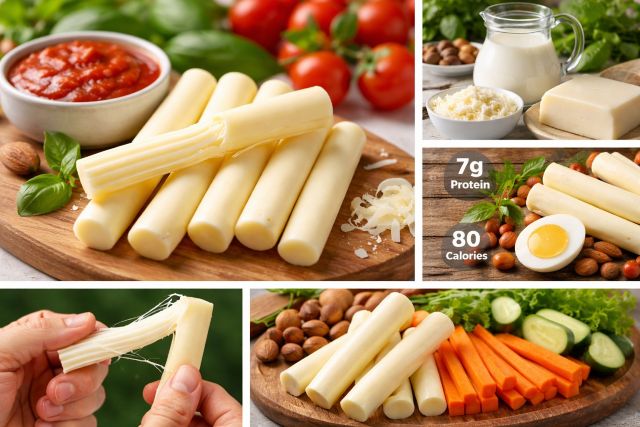
String cheese is a form of mozzarella or mozzarella-style cheese that has been heated and stretched during production. This stretching process aligns the milk proteins in a way that allows the cheese to pull apart into thin strands, giving string cheese its name and signature texture.

Most string cheese sold today is made from low-moisture mozzarella or part-skim mozzarella. These types are ideal because they maintain structure, peel cleanly, and hold up well in individual packaging. Fresh mozzarella, by contrast, contains too much moisture to form strings and is meant to be sliced rather than peeled.

From a regulatory standpoint, mozzarella and low-moisture mozzarella are defined under U.S. food standards, which outline acceptable ingredients and production methods. This means properly labeled string cheese must meet specific criteria to be called cheese at all. According to the U.S. Code of Federal Regulations, mozzarella is a standardized dairy product made using milk, cultures, salt, and enzymes, not artificial fillers or substitutes.

String Cheese Ingredients Explained

One of the biggest misconceptions about string cheese is that it contains a long list of artificial ingredients. In reality, most high-quality string cheese contains very few components.

The foundation of string cheese is milk, typically cow’s milk. Cultures are added to ferment the milk and develop flavor. Enzymes help coagulate the milk into curds, while salt enhances taste and helps preserve freshness. Some brands include calcium chloride to improve texture consistency, especially when using pasteurized milk. Others may apply natamycin to the surface to prevent mold growth, which does not affect the cheese itself.

If you want the cleanest option, checking the ingredient label is key. When you see only milk, cultures, salt, and enzymes, you are looking at a traditional cheese product rather than a heavily processed food.

How String Cheese Is Made

The reason string cheese pulls apart so neatly comes down to a traditional cheesemaking technique known as pasta filata, which means “spun paste.” After the milk curds form, they are heated and mechanically stretched. This process aligns the casein proteins into long, parallel strands.

Once stretched, the cheese is shaped into sticks, cooled, and packaged. Cooling locks the protein structure in place, preserving the stringy texture. When you peel string cheese, you are simply separating those aligned protein fibers.

Biting straight into string cheese cuts across the protein structure, while peeling follows it. The difference is mechanical, not nutritional.

String Cheese Nutrition Facts

From a nutritional perspective, string cheese is often praised for its balance of protein, fat, and calories. A standard one-ounce stick of string cheese typically contains around 80 to 90 calories. Protein content usually falls between six and seven grams, making it relatively high in protein for its size. Fat content averages about six grams, depending on whether the cheese is made from whole milk or part-skim milk. Carbohydrates are minimal, often zero to one gram per serving.

According to USDA-referenced nutrition data, mozzarella string cheese provides a concentrated source of protein and calcium with very little sugar.

Calcium is another important benefit. Many string cheese products provide a noticeable percentage of the daily recommended calcium intake, supporting bone health, muscle function, and nerve signaling.

Is String Cheese Healthy?

Whether string cheese is healthy depends largely on how it fits into your overall diet and goals. For many people, it works extremely well as a convenient, portion-controlled snack.

If weight management is a priority, string cheese can help curb hunger thanks to its protein and fat combination. Protein promotes satiety, while fat slows digestion, helping you feel full longer. Because string cheese is individually wrapped, it naturally limits portion sizes, which can be helpful for mindful eating.

For people focused on muscle maintenance or recovery, string cheese provides quick, digestible protein. While it is not enough to serve as a complete post-workout meal, it can bridge the gap between meals when paired with carbohydrates such as fruit or whole grains.

String cheese also fits well into low-carbohydrate or ketogenic eating patterns due to its minimal carb content. The main consideration in these cases is sodium intake, as some brands contain more salt than others.

Common Myths About String Cheese

One persistent myth is that string cheese is not real cheese. This confusion often comes from mixing it up with processed cheese products. Real string cheese is made using traditional cheesemaking ingredients and techniques. As long as it is labeled as mozzarella or part-skim mozzarella and has a simple ingredient list, it qualifies as real cheese under food regulations.

Another common myth is that string cheese is high in sugar or carbohydrates. In reality, most string cheese contains virtually no sugar and very few carbs. The lactose content is naturally low because much of it is removed during cheesemaking.

Some people believe peeling string cheese makes it healthier. While peeling may slow down eating and increase mindfulness, it does not change the nutritional content. The calories, protein, and fat remain exactly the same.

There is also a belief that string cheese is bad for adults and only suitable for kids. This idea has more to do with marketing than nutrition. String cheese is simply a portioned dairy snack and can be enjoyed by people of any age.

String Cheese and Satiety

One reason string cheese is so effective as a snack is its impact on satiety. Protein has been shown to increase feelings of fullness and reduce overall calorie intake later in the day. Fat further enhances this effect by slowing gastric emptying.

Eating string cheese as a standalone snack can help prevent energy crashes, especially compared to refined carbohydrate snacks. When paired with fiber-rich foods, such as fruit or vegetables, its hunger-reducing effect becomes even stronger.

Choosing the Best String Cheese

Not all string cheese is the same. Some varieties are made with whole milk, while others use part-skim milk. Whole milk string cheese tends to be creamier and slightly higher in calories and fat. Part-skim options are lower in calories while still offering a similar protein content.

Flavor variations, such as cheddar-style or pepper-infused string cheese, can be enjoyable but may contain added coloring or flavoring ingredients. Reading labels helps ensure you are choosing a product that aligns with your preferences and dietary needs.

Organic and grass-fed options may appeal to consumers focused on sourcing and farming practices, though nutritionally they are similar to conventional options.

String Cheese Storage and Safety

Proper storage matters for both quality and safety. String cheese should be kept refrigerated and consumed by the expiration date on the package. While it may survive short periods at room temperature, especially when sealed, prolonged exposure to heat increases the risk of spoilage.

Once opened, string cheese should be eaten promptly. If the surface becomes slimy or develops an off smell, it should be discarded.

Frequently Asked Questions About String Cheese

Many people wonder whether string cheese is good for kids. In moderation, it can be a nutrient-dense snack that provides protein and calcium for growing bodies. However, balancing it with fruits, vegetables, and whole foods is important.

Another common question is whether string cheese causes weight gain. Like any food, excessive consumption can contribute to excess calories, but when eaten mindfully, string cheese is unlikely to cause weight gain on its own.

Some ask if lactose-intolerant individuals can eat string cheese. Because mozzarella is relatively low in lactose, many people with mild lactose intolerance tolerate it well, though individual responses vary.

Final Thoughts on String Cheese

String cheese is far more than a nostalgic lunchbox snack. It is a real cheese made with simple ingredients, offering a practical balance of protein, fat, and calcium. When eaten as part of a balanced diet, string cheese can support satiety, convenience, and nutritional consistency.

The key is choosing quality options, paying attention to portions, and understanding that no single food determines health. Whether you peel it slowly or bite straight in, string cheese remains a reliable, evidence-backed snack that earns its place in modern diets.

Cream Top Milk Benefits: Is It Healthier Than Regular Milk?

0

Cream top milk has been making a quiet comeback as more people look for traditional, less-processed foods. If you have ever opened a glass bottle of milk and noticed a thick layer of cream floating on the surface, you have already encountered cream top milk. This old-fashioned dairy product is often associated with farm freshness, richer flavor, and higher quality. But does that mean cream top milk is actually healthier than regular milk, or is it simply a different experience?

In this in-depth guide, we’ll explore what cream top milk is, how it differs from regular milk, its nutritional profile, and whether science supports the health claims surrounding it. By the end, you’ll know if cream top milk deserves a place in your daily routine.

What is cream top milk?

Cream top milk, also known as creamline milk or non-homogenized milk, is milk that has not undergone the homogenization process. In regular milk production, homogenization breaks down fat globules into smaller particles so they stay evenly distributed throughout the milk. When this step is skipped, the fat naturally rises to the surface, forming a visible cream layer.

It is important to understand that cream top milk can still be pasteurized. Pasteurization and homogenization are two separate processes. Pasteurization heats milk to eliminate harmful bacteria, while homogenization changes the physical structure of milk fat. Many people mistakenly assume cream top milk is raw milk, but that is not always the case.

How cream top milk differs from regular milk

The primary difference between cream top milk and regular milk lies in processing, not ingredients. Both start as whole milk from cows. Regular milk is homogenized to ensure consistency, while cream top milk is left in its natural state, allowing the cream to separate over time.

This difference affects texture and flavor more than nutrition. Cream top milk tends to taste richer and fuller because the fat is not evenly dispersed. Some sips may contain more cream, while others may be leaner unless the bottle is shaken. Regular milk offers a uniform taste in every pour, which many consumers find convenient.

Cream top milk nutrition explained

From a nutritional standpoint, cream top milk is surprisingly similar to regular whole milk. It contains protein, calcium, vitamin B12, phosphorus, and fat-soluble vitamins such as A and D. The total nutrient content is generally the same, assuming both are whole milk and pasteurized.

The main difference lies in how fat is consumed. Because the cream separates, the fat content per glass can vary depending on how the milk is poured. Drinking milk from the top without mixing can result in higher calorie and saturated fat intake, while later servings may contain less fat.

This variability makes cream top milk feel more indulgent, but it does not automatically make it more nutritious.

Cream top milk benefits people actually experience

One of the most noticeable cream top milk benefits is taste. Many people describe it as creamier, smoother, and more satisfying than regular milk. This makes it especially popular for coffee, lattes, hot chocolate, and cereal.

Another benefit is versatility. The cream layer can be skimmed and used like light cream for cooking, sauces, or baking. This gives cream top milk a practical advantage for home cooks who enjoy richer textures without buying separate dairy products.

Some consumers also prefer cream top milk because it is less processed in a technical sense. Skipping homogenization appeals to people seeking traditional or minimally altered foods, even though this does not necessarily translate into improved health outcomes.

Is cream top milk healthier than regular milk?

This is the most common question, and the answer is nuanced. From a scientific standpoint, there is no strong evidence that cream top milk is inherently healthier than regular homogenized milk for the average person. Research has not shown consistent links between homogenization and increased risk of heart disease, diabetes, or allergies.

Health differences are more closely tied to fat content rather than homogenization. Cream top milk is usually whole milk, meaning it contains saturated fat. While full-fat dairy can be part of a balanced diet, excessive saturated fat intake may raise LDL cholesterol in some individuals.

If cream top milk encourages larger servings or heavier cream consumption, it could contribute to higher calorie intake. However, if consumed mindfully, it can fit into a healthy eating pattern just as regular whole milk can.

Cream top milk and digestion

Some people report that cream top milk feels easier to digest, although scientific evidence does not strongly support this claim. Lactose intolerance is caused by a lack of lactase enzyme, and homogenization does not significantly affect lactose levels.

That said, slower drinking, richer texture, and higher fat content may influence how milk feels in the stomach. Individual responses vary, and digestion comfort is highly personal.

Cream top milk vs raw milk safety concerns

Cream top milk is often confused with raw milk, but they are not the same. Raw milk has not been pasteurized and carries a higher risk of harmful bacteria such as Salmonella, E. coli, and Listeria. Public health agencies consistently warn against consuming raw milk, especially for children, pregnant individuals, and those with weakened immune systems.

Pasteurized cream top milk provides the traditional creamline experience without the safety risks associated with raw milk. Always check the label to confirm pasteurization.

Who should choose cream top milk?

Cream top milk is a good choice for people who value flavor, texture, and traditional dairy experiences. It works well for coffee lovers, home cooks, and those who enjoy whole milk in moderation.

However, individuals managing heart disease, high cholesterol, or calorie intake should be mindful of portion size. In such cases, regular lower-fat milk options may be more suitable.

How to use cream top milk properly

To get consistent nutrition and flavor, gently shaking the bottle before pouring is recommended. If you prefer richer servings, you can leave the cream undisturbed and enjoy it separately. Storage is also important, as cream top milk should be kept cold and consumed within its freshness window.

Final thoughts on cream top milk benefits

Cream top milk offers a nostalgic, creamy, and versatile dairy experience that many people genuinely enjoy. While it is not scientifically proven to be healthier than regular milk, it is not worse either when consumed responsibly. The real cream top milk benefits lie in taste, texture, and culinary flexibility rather than dramatic nutritional superiority.

If you enjoy full-fat dairy and appreciate minimally processed foods, cream top milk can be a satisfying addition to your diet. As with all dairy products, balance and moderation are key.

Hop Up vs. Everything Else: What’s Different and What Works Best

0

If your shots drop early, float upward, or curve off target, hop up is usually the first system to blame—and most of the time, that’s fair. Hop up is the part of an airsoft gun that gives BBs backspin, which helps them fly flatter and farther. That single job makes hop up fundamentally different from every other upgrade people talk about, because it doesn’t just “improve parts.” It changes the physics of the shot.

In the first few minutes of tuning, hop up can transform your effective range more than a stronger spring or a tighter barrel. But hop up also exposes weaknesses elsewhere. If your air seal is inconsistent or your ammo is poor quality, your hop won’t behave the same from shot to shot.

What Is Hop Up and Why It Matters So Much?

Hop up is a mechanism that presses a rubber contact surface against the BB as it moves through the hop chamber and into the barrel. That contact creates backspin. Backspin changes airflow around the BB and produces lift through the Magnus effect, which is a well-documented aerodynamic phenomenon involving spinning objects moving through air. Britannica explains the Magnus effect as a force acting on spinning bodies traveling through a fluid, which can alter their path. NASA’s aerodynamics education materials also describe how spin can generate lift and influence trajectory behavior.

In airsoft terms, hop up is commonly described as the feature that increases range and flattens trajectory by applying backspin to the BB.

What makes hop up different from “everything else” is that it directly controls whether your BB flight is usable at all. Many upgrades improve consistency around the edges, but hop up determines the basic shape of the trajectory. Without correct hop up, even high FPS setups can look impressive on a chrono and disappointing in actual games.

Hop Up vs. Barrel Upgrades: Which Changes Accuracy More?

A better barrel can improve shot-to-shot consistency by reducing imperfections that cause random flyers. It can also help groupings when your stock barrel has poor finish or inconsistent dimensions. That said, a barrel does not create lift and it cannot compensate for incorrect or inconsistent hop.

Hop up is usually the bigger performance lever because it decides how much spin is applied and how evenly it’s applied. If hop pressure is uneven, you’ll see curved shots. If it’s inconsistent, you’ll see random height changes. If it’s simply wrong for your BB weight, you’ll see early drops or late climbs.

In practical terms, if your accuracy problem looks like “my shots don’t fly the same twice,” hop up and alignment are the first place to fix. If your accuracy problem looks like “my shots are consistent but not tight,” a barrel upgrade becomes more meaningful.

Hop Up vs. BB Weight: Why These Two Are a Package Deal

BB weight and hop up tuning are tied together. Changing BB weight changes how your hop behaves, and changing hop changes which BB weights feel “stable.”

Heavier BBs are often more stable outdoors because they handle wind better and tend to carry energy more reliably downrange. But heavier BBs also require a hop setup that can apply consistent backspin without over-pressuring the BB or creating uneven contact.

The Airsoft Trajectory Project, which models airsoft BB flight behavior, discusses how BB mass and spin interact, including how heavier BBs may require higher hop input to reach suitable spin rates and stable flight. Practical tuning guides also emphasize adjusting hop for different BB weights rather than expecting a single hop setting to work universally.

If you want your setup to “work best,” focus on matching BB weight to the distance and wind conditions you actually play in, then tune hop up to produce a flat flight path that finishes with a gentle drop rather than a dramatic fall or a sudden climb.

Hop Up vs. FPS and Power: Why More Energy Doesn’t Automatically Mean More Range

FPS upgrades increase muzzle velocity, but that doesn’t automatically translate to more hit probability at range. Airsoft BBs lose speed quickly because they are light, and drag matters a lot. Hop up is what keeps the BB flying flatter long enough to be useful.

The Airsoft Trajectory Project highlights how velocity, drag, and spin ratios influence the shape of the trajectory and can produce very different outcomes depending on hop settings and BB behavior. This is why two guns at the same FPS can have wildly different effective ranges. The gun with the better hop setup often wins in real games because it places shots more predictably.

If you’re chasing performance, power should usually come after consistency. A strong spring on an inconsistent hop setup often produces impressive-looking arcs and frustrating shot placement.

Hop Up vs. Flat Hop vs. R-Hop: What’s Actually Different?

Flat hop and R-hop are not alternatives to hop up. They are alternative ways of creating hop contact. The goal is to apply backspin more evenly and more consistently, especially when using heavier BBs or trying to push distance.

Flat hop typically increases the size and consistency of the contact patch compared to a standard nub setup. R-hop uses a more specialized patch approach that many players associate with high consistency at longer ranges, especially with heavier ammo. Comparisons often describe R-hop as higher potential but more sensitive to installation quality and tuning.

If you want “best results” without turning your build into a long tuning project, many players treat flat hop as a strong balance between effort and performance. If you want maximum range consistency and you’re comfortable testing, adjusting, and re-testing, R-hop can be worth it when installed correctly.

What Works Best in Real Games?

What works best is the setup that produces repeatable flight under your actual field conditions. Hop up is the core of that, but it performs best when the rest of your system supports consistency.

In CQB environments, extreme range matters less than fast, predictable shots. Hop up still matters, but the “best” hop setup here is usually one that avoids over-hop, keeps flight straight, and stays stable across rapid fire.

Outdoors, hop up becomes the primary driver of usable range. The best outcome is a flat trajectory that holds line until the last portion of flight, then drops predictably. This is where BB weight, hop consistency, and clean alignment matter most.

For long-range-focused builds, the best results usually come from pairing heavier BBs with a hop contact method that stays stable, along with careful alignment and consistency. Hop settings in this category tend to be more sensitive, so reliability comes from careful tuning rather than chasing maximum lift.

Common Hop Up Problems and Why They Happen

If your BBs curve left or right, the most common cause is uneven hop contact creating side spin. That often happens when the bucking is not seated perfectly, the nub is misaligned, or the hop unit is not centered with the barrel. This is one of the biggest reasons “my barrel is bad” gets blamed when the real issue is hop alignment.

If your BBs climb at the end of the trajectory, you are typically over-hopping. In that case, you want to reduce hop until the BB flies flatter and finishes with a controlled drop.

If your BBs drop early even with hop applied, the issue can be under-hopping, a hop arm that can’t apply enough pressure, or a bucking hardness that doesn’t match your energy and BB weight. It can also be inconsistent compression or air seal that changes how the BB leaves the system from shot to shot, which makes hop behavior feel random.

Tuning guides generally recommend making very small hop adjustments and testing at consistent distances so you can see true changes rather than chasing noise.

FAQ

What does hop up do in airsoft?
Hop up applies backspin to the BB to create lift, which helps BBs fly flatter and farther instead of dropping quickly.

Is hop up more important than a tightbore barrel?
For most players, hop up tuning and consistency produce bigger gains than a barrel upgrade because hop controls lift and flight stability, while the barrel mainly refines consistency once hop is stable.

Does higher FPS mean better range if hop up is bad?
Not reliably. Higher FPS increases speed, but without consistent hop up, BBs still drop early, curve, or behave unpredictably — especially outdoors where drag and wind matter.

What BB weight works best with hop up?
The best BB weight is the one your hop up can lift consistently while staying stable in your field conditions. Outdoors often favors heavier BBs, while CQB can work well with lighter weights if consistency is good.

Conclusion: Hop Up Is the Core, Not an Optional Upgrade

If you want the biggest improvement in real gameplay performance, hop up is the upgrade and tuning category that most directly affects range, consistency, and hit probability. Barrels, FPS increases, and other internal upgrades can matter, but they work best when hop up is already stable and correctly matched to your BB weight.

The simplest “what works best” answer is this: get your hop up consistent first, choose BBs that match your field, then upgrade supporting parts only after you’ve verified repeatability. When hop up is dialed in, you don’t just shoot farther—you shoot more predictably, and that’s what wins exchanges.

Custom Body Pillow: Why Everyone’s Switching to Personalized Sleep Comfort

0

If you’ve been waking up with a stiff neck, sore hips, or that “I slept, but I’m still tired” feeling, you’re not alone. Many adults report getting less sleep than recommended, and sleep quality complaints are common. That’s one reason the custom body pillow has moved from “nice to have” to a nightly essential for so many people: it’s designed to support your whole body in a way standard pillows can’t, and it can be tailored to your size, sleep position, and comfort preferences.

A body pillow helps by supporting key pressure points at the same time, especially if you sleep on your side. Side sleeping is widely reported as the most common sleep position, and it’s also the position where alignment issues show up most clearly at the hips, knees, and shoulders. When you personalize that support through a custom build, the pillow stops being “extra bedding” and starts functioning like a comfort tool that works with your body rather than against it.

What is a custom body pillow?

A custom body pillow is an extended pillow designed to support multiple parts of the body at once, typically along the legs, hips, torso, and arms. The “custom” part means you can choose specifications that match how you actually sleep, such as the pillow’s length, thickness, firmness, fill material, and cover fabric. Many brands also offer personalization like monograms, custom colors, or printed designs, which makes the pillow feel more like a permanent part of your sleep setup instead of a temporary accessory.

In practice, customization matters because there isn’t one universally “correct” pillow feel. The best pillow is the one that supports your joints and posture in your preferred sleep position while staying comfortable in your bedroom’s temperature and humidity.

Why a custom body pillow feels different from a regular body pillow

A standard body pillow is usually made in one general size and firmness, assuming the average user. A custom body pillow aims to fit your height, your bed size, and the way your body naturally rests. That difference seems subtle until you experience it. When the pillow is too short, your knees or ankles lose support and you end up twisting. When it’s too soft, it collapses and stops doing its job halfway through the night. When it’s too firm, it can push your shoulder or hip into an awkward position.

Customization helps you avoid those mismatches. Instead of adapting your posture to the pillow, you pick a pillow that adapts to you.

The real reason people switch: alignment and pressure relief

Most people buy a custom body pillow for comfort, but the comfort is usually a result of better body mechanics. Side sleeping often creates gaps and pressure points. Your top knee tends to drop forward, your hips can rotate, and your upper shoulder can compress. A properly sized body pillow can support the top leg and keep the knees separated, which can reduce twisting through the lower back. It can also give the upper arm and shoulder somewhere to rest so your chest doesn’t collapse inward.

Research on pillow design frequently points to the importance of matching shape and height to the individual, particularly for side sleepers where shoulder width and neck angle change what “supportive” means. That’s a major reason a custom body pillow can feel dramatically better than a generic one, even if they look similar at first glance.

Custom body pillow comfort is also about temperature

If you wake up hot, it’s rarely just “the room.” Bedding materials can trap heat and moisture, which can interrupt sleep. Studies comparing pillow materials have found measurable differences in temperature change and comfort ratings depending on design and materials. Even though those studies may focus on head pillows, the logic applies to long pillows too because a body pillow has more surface contact with your skin and bedding.

This is where customization becomes practical. If you sleep warm, choosing a breathable fill and a cooling cover can make a meaningful difference. If you sleep cold, a softer, cozier cover may be the better choice. The goal is not “cool at all costs,” but stable comfort that doesn’t wake you up.

How to choose the right custom body pillow without overcomplicating it

The easiest way to choose is to start with your sleep position, then choose support level, then decide on fabric.

If you’re a side sleeper, you’ll usually benefit most from a longer pillow that supports both knees and the upper body at the same time. If you’re tall, extra length can matter because losing leg support at the bottom can cause subtle twisting. If you share a bed, a custom length can keep the pillow supportive without constantly drifting into your partner’s space.

Next comes firmness and fill. If you like a pillow that molds to you and stays in place, memory foam or adjustable shredded foam tends to work well. If you want something lighter and fluffier that you can reposition easily, down alternative fills are popular, although they may need more refluffing. If you dislike the “sink” feel and want springy support with better airflow, latex-based fills can be a great middle ground.

Finally, choose the cover fabric based on how you sleep. If you overheat, look for breathable fabrics designed to wick moisture and release heat. If skin sensitivity is an issue, softer knits or smoother fabrics can reduce irritation. If you want the pillow to match your room, custom prints and color options let you treat it like décor rather than a medical-looking sleep aid.

Personalization isn’t just aesthetic, it can make the habit stick

A surprising reason people keep using a custom body pillow is emotional attachment. When the pillow looks good on the bed and feels like it belongs there, you’re less likely to toss it aside after the novelty wears off. Personalization can also make it easier to build a consistent sleep routine, which matters because consistency is a major driver of better sleep over time.

There’s also a comfort psychology element. Many people naturally hug a body pillow. Touch-based soothing has been studied in stress contexts, and research suggests that comforting touch can reduce stress responses. A body pillow isn’t a substitute for human connection, but it can provide a calming, grounded posture that helps some people relax at bedtime.

What a custom body pillow can help with, in real life

Consider the desk worker whose hips feel tight and whose lower back feels stiff in the morning. Side sleeping with the top knee drifting forward can rotate the pelvis slightly all night. A supportive body pillow between the knees can keep the hips more stacked, reducing that nightly twist.

Consider the hot sleeper who falls asleep quickly but wakes up sweaty at 2 a.m. A custom body pillow with a breathable fill and cooling cover can reduce heat buildup, and the bigger contact surface makes that improvement noticeable.

Consider the light sleeper who wakes up repeatedly from discomfort rather than noise. When pressure points are reduced, you often move less. Less movement can mean fewer micro-awakenings, and that can improve how rested you feel even if your total hours don’t change much.

How to use a custom body pillow correctly

The most common mistake is letting the pillow push your shoulders forward. For side sleeping, you want to hug the top portion lightly so your chest stays open, while the lower portion sits comfortably between your knees. The pillow should support the leg without forcing your hip upward. If it feels like you’re being pried open, it’s usually too thick or too firm for your frame. If it collapses and your knees touch again, it’s likely too soft or too thin.

It also helps to pair the body pillow with a head pillow that supports your neck correctly. Body alignment is a chain, and the neck is part of it. Research that looks at individualized pillow support highlights how the right dimensions and support can influence comfort in side sleeping.

FAQs for featured snippets

Is a custom body pillow worth it?

A custom body pillow is worth it if you want more consistent support than a standard pillow can offer. Custom sizing and firmness help prevent the common issues of being too short, too flat, or too warm, which are often the reasons people stop using regular body pillows.

What size should my custom body pillow be?

The right size depends on your height and bed size. A taller sleeper typically benefits from extra length so the pillow supports knees and lower legs at the same time. A smaller bed often benefits from a slightly shorter custom length to prevent bunching and overcrowding.

What is the best fill for a custom body pillow?

The best fill depends on your preference. Memory foam and adjustable shredded foam offer stable, moldable support. Down alternative tends to feel plush and easy to reposition. Latex-based fills can feel springier and often sleep cooler. Material and design choices can affect perceived comfort and temperature.

Can a body pillow help with stress at night?

For some people, yes. Many people find hugging a body pillow calming, and touch-based soothing has been associated with reduced stress responses in research settings. A body pillow can encourage a relaxed posture and reduce physical discomfort that keeps the body alert.

How do I care for a custom body pillow?

Most people find maintenance easiest when the pillow has a removable, washable cover. Follow the care instructions for the specific fill, because some fills can be machine washed while others should only be spot-cleaned.

Conclusion

A custom body pillow works because it solves the real problems that keep people from sleeping comfortably: misalignment, pressure points, overheating, and restless repositioning. Side sleeping is common, and it’s exactly where full-body support can make the biggest difference. When you personalize the pillow’s length, firmness, fill, and fabric, you’re not just upgrading your bedding, you’re creating a sleep setup that fits your body and your habits.

Countryside Quiz: Match the Landscape to the Country

0

If you’ve ever looked at a photo of rolling hills, patchwork fields, or a dramatic valley and wondered where it was taken, you’ll enjoy a countryside quiz. This format turns travel curiosity into a game: you study a rural scene and match it to the correct country using visual clues such as terrain, vegetation, architecture, and farming patterns. A well-designed countryside quiz isn’t just entertaining; it teaches you how landscapes reveal climate, culture, and history.

In the first moments of any countryside quiz, most people rely on instinct. The trick is learning a repeatable way to read the land. Landscapes are shaped by processes like tectonics, erosion, and human land use, and those forces leave consistent patterns you can learn to spot. National Geographic describes a landscape as a portion of Earth’s surface you can view from one place, made up of features that characterize an area. Those features include landforms such as mountains, plains, plateaus, and valleys, which are found worldwide but take on different signatures depending on regional geology and climate.

What a countryside quiz is and why it’s so addictive

A countryside quiz is a challenge that asks you to match a rural landscape to a country based on a photo, a short description, or both. Some quizzes focus on iconic rural regions, while others deliberately choose “look-alike” scenes to test whether you can separate similar climates and land uses. The most valuable quizzes provide explanations, because the explanation is where you actually learn.

The appeal is simple. Landscapes feel familiar, but they also contain hidden complexity. A green hillside can belong to multiple countries, yet the type of fence, the roof pitch of a farmhouse, or the shape of fields can narrow it down quickly. Over time, a countryside quiz trains your brain to shift from guessing to pattern recognition, the same way people improve at identifying birds or cars.

Interactive formats tend to keep readers engaged because they require active participation. That’s one reason quizzes have become a popular content format across many industries. Demand Gen Report has published findings showing interactive content can outperform static content for education and engagement in marketing contexts. The underlying learning idea still applies to a countryside quiz: when you actively try, fail, and correct, you remember.

Why matching rural landscapes to countries is challenging

Landforms repeat across the planet. Mountains are not exclusive to one nation, and valleys appear on every continent. National Geographic’s landform overview emphasizes how common landform categories are worldwide, which is why “it’s mountainous” rarely narrows it enough. A valley can be a river valley, a glacial valley, a rift valley, or something else, and each type can exist in many countries.

Another complication is that “rural” is defined differently depending on the organization and country. The OECD notes that rural and urban classifications vary and provides frameworks for comparing territories, which highlights how slippery the term can be across borders. In one country, rural might imply dense villages surrounded by small farms. In another, rural might mean vast open rangeland with very few buildings.

A final challenge is photography bias. The same landscape can look dramatically different based on season, time of day, and lens choice. A wide-angle lens makes hills feel grander and valleys deeper. A winter shot hides crops and makes architecture carry more of the identification load. That’s why the best way to win a countryside quiz is to stack multiple clues instead of relying on one.

How to read a landscape like a pro in a countryside quiz

A reliable countryside quiz strategy is to move from broad clues to specific clues. You start by identifying what kind of environment you’re in, then you narrow to a region, then you consider country-level tells such as building style and farming patterns. Each step removes wrong answers.

Start with landforms and terrain

Landforms are your first filter. National Geographic’s definition of landforms includes features like mountains, hills, plateaus, and plains, shaped by long-term Earth processes. In a countryside quiz, you can often decide within seconds whether you’re looking at a lowland agricultural plain, a rugged mountain region, a coastal cliff landscape, or a high plateau.

If the peaks are jagged and sharp, you may be looking at younger mountain ranges or heavily glaciated terrain. If the hills are rounded and smooth, erosion has likely softened the landscape over time. When a scene includes a valley, look for its shape. Broad U-shaped valleys are often associated with glacial carving, while narrow V-shaped valleys commonly reflect river erosion. National Geographic’s overview of valleys explains how valleys form and vary, which helps you interpret what you’re seeing.

Terrain also influences how humans build. In steep regions, you’ll often see terracing, winding roads, and clustered settlements. In flat plains, you may see straight roads, larger field blocks, and more dispersed farm structures.

Read vegetation as a climate shortcut

Vegetation is one of the fastest ways to estimate climate. Dense, bright greens and thick tree cover suggest abundant moisture. Dry scrub, pale grasses, and bare soils suggest aridity or a pronounced dry season. Evergreen forests point toward cooler or wetter zones, while sparse trees and scrub often appear in semi-arid countryside.

This is where many countryside quiz answers become clearer. Countries sharing similar terrain can still have very different vegetation profiles based on rainfall patterns, elevation, and seasonal temperature ranges. Even when two places are equally green, the type of green matters. Broadleaf forests look different from conifer-dominated landscapes. Pastures look different from crop fields.

Seasonality is also a clue. If you see golden stubble fields, it might indicate a post-harvest period. If the fields are intensely green while trees are bare, you may be seeing a cool-season crop cycle in a temperate climate.

Use agriculture as a fingerprint

Farming is geography plus culture. The way land is divided, planted, and maintained carries strong regional signals.

Field shape is one of the most underrated countryside quiz clues. Large rectangular fields often appear where mechanized agriculture dominates and where land consolidation is common. Smaller patchwork fields may suggest older land division patterns, hilly terrain, or mixed farming. Boundaries matter too. Hedges, stone walls, tree lines, and fencing styles can all hint at a particular region.

Crop type can narrow the options quickly, though you have to be careful. Vineyards appear in many countries, for example, but the slope, trellising style, and nearby architecture can help differentiate. Olive groves often suggest Mediterranean climates. Rice terraces suggest humid climates with intensive hillside farming, though terracing itself isn’t exclusive to one continent.

The presence of livestock is another clue. A landscape dominated by grazing animals and open pasture can point to a different rural economy than one dominated by orchards or row crops.

Notice buildings and infrastructure

If the countryside quiz includes buildings, treat them like a passport stamp. Roof pitch often reflects climate. Steeper roofs shed snow and rain more easily, while flatter roofs are more common where heavy snow load is not a concern. Building materials can be even more revealing. Stone, timber, brick, and earth-toned materials each cluster in different traditions depending on geology, forests, and historical practices.

Settlement pattern matters as well. Compact villages on hills can signal defensive history and older settlement patterns. Scattered farmhouses can signal different land ownership systems and agricultural organization.

Road style and signage, if visible, can be decisive. Even when text isn’t legible, the design of road markings and guardrails often differs regionally.

Pay attention to water and coastlines

Rivers, lakes, wetlands, and coastal features change what’s possible in the countryside. A lush river valley in an otherwise dry region can create a green ribbon effect. Coastal scenes may show windswept vegetation, rugged cliffs, or dunes.

If the landscape looks like a long narrow inlet with steep sides, you might be looking at a fjord-like formation shaped by glaciers. That still doesn’t identify a country by itself, but it strongly narrows the set of plausible locations.

Use “light” and atmosphere as subtle confirmation

Light is not a primary clue, but it’s a strong confirmation clue. High-altitude air can look crisp with sharp shadows. Humid coastal air can appear hazy and soften distant ridges. Some volcanic regions have distinctive soil colors that affect the overall palette of the image.

If your best guess is a cool, wet maritime country, and the scene has soft contrast with frequent low cloud, that alignment increases confidence. If the colors and shadows don’t match your climate assumption, reconsider.

Common countryside quiz “look-alikes” and how to separate them

A good countryside quiz often uses landscapes that resemble each other to test deeper observation. Here are a few frequent confusion patterns and what typically breaks the tie.

Green rolling hills can appear in multiple temperate countries. The differentiator is often the field boundaries, the style of farm buildings, and the way villages cluster. If the scene includes thick hedgerows and irregular field shapes, that suggests older boundary systems, whereas large uniform fields suggest newer consolidation.

Mediterranean hillsides can also be tricky because several countries share warm light, stone villages, and cypress or similar vertical trees. In those cases, look closely at roof tiles, wall color, and agricultural patterns like olive groves versus vineyards.

Mountain valleys can confuse people because mountain ranges exist almost everywhere. The deciding factor is often the treeline and the type of settlement. Extremely high valleys with sparse trees and grazing may differ from lower alpine valleys with dense forest and chalet-style buildings.

Terraced agriculture is a classic trap. Terraces exist in Asia, Europe, Africa, and the Americas. The difference usually comes from vegetation density, humidity cues, and architectural style. A misty, intensely green terrace scene points toward humid climates, while terraces in drier climates may show more exposed soil and different crops.

How to design a countryside quiz that ranks and retains readers

If you’re publishing a countryside quiz on a site and want it to perform well in search results, you need it to be both useful and engaging. Search engines increasingly reward pages that satisfy intent, and a quiz page satisfies intent best when it includes explanations and supporting content, not just images and answer keys.

Start by making your quiz theme clear in the title and introduction. People searching “countryside quiz” want exactly what it sounds like: a game that matches landscapes to countries. They also want quick feedback and a sense that they learned something new.

Then, include short but meaningful explanations for each answer. The explanation should reference specific cues in the image, like “terraced rice paddies indicate intensive hillside farming in humid regions” or “stone walls and hedgerows suggest long-established field boundaries.” Those explanations also naturally introduce related keywords such as rural landscape quiz, geography quiz, travel trivia, and scenic countryside.

Add supporting sections that help the reader improve, like the clue stack you saw above. This expands content depth, increases time on page, and can help you rank for informational queries like “how to identify countries from landscapes.”

Countryside quiz FAQs

What is the goal of a countryside quiz?

The goal of a countryside quiz is to match a rural landscape to the correct country using clues such as terrain, vegetation, agriculture, and architecture. The best quizzes also teach you why the correct answer fits.

How can I quickly identify a country from a landscape photo?

Start with landforms to narrow the region, then confirm with vegetation and farming patterns, and finally use buildings, roads, and settlement style as the deciding evidence. Landforms and valleys are globally common, so stacking clues is essential.

Why do some countryside landscapes look similar across different countries?

Many countries share similar climates and landforms, and landform types like mountains, plains, and valleys occur worldwide. Similar land use practices can also produce similar-looking fields, even in different nations.

Are countryside quizzes accurate for learning geography?

They can be, especially when each question includes an explanation based on visible geographic and cultural cues. Without explanations, you’re mostly practicing guessing rather than learning.

What clues matter most: nature or human features?

Both. Natural features like landforms and vegetation narrow the possibilities, while human features like architecture, field boundaries, and settlement patterns often provide the final country-level clue.

Conclusion: become sharper at every countryside quiz

A countryside quiz is one of the most enjoyable ways to build real-world geography intuition. Each round teaches you to read the land through layers: landforms first, then climate and vegetation, then agriculture, then the built environment. Over time, you stop seeing “pretty hills” and start seeing a story about geology, weather patterns, and human choices that shape rural life.

If you want to improve fast, treat every countryside quiz answer like a mini-lesson. When you get one wrong, don’t just move on. Ask what clue you missed, then look for that same clue in the next image. Do that consistently, and you’ll be surprised how quickly you can match landscapes to the right country with confidence.

CSCS Mock Test Guide: Everything You Need to Pass Fast

0

If you’re aiming for a CSCS card, a cscs mock test is one of the fastest ways to build confidence and raise your score for the CITB Health, Safety & Environment (HS&E) test. The key is using mock tests strategically, not casually. When you practise the right way, you learn the question style, improve your timing, and quickly spot the topics that cost you marks.

This article explains exactly how the CSCS test works, how to use mock tests to improve fast, what to revise first, and how to avoid common mistakes that make capable candidates fail. You’ll also get a simple pass-focused study approach, realistic scoring targets, and clear answers to popular questions people search for before booking their exam.

What is a CSCS mock test?

A cscs mock test is a practice version of the CITB HS&E test designed to simulate the real exam. It uses the same kind of wording, similar difficulty, and the same time pressure so you can practise in realistic conditions. This matters because the official HS&E test is strict. It includes 50 questions and you must score 45 out of 50 to pass, which means you can only afford a small number of mistakes. CITB confirms the pass mark requirement for the HS&E test routes on its official guidance pages.

What makes mock tests powerful is not the act of doing them, but what you do immediately after. A well-used mock test becomes a feedback tool that tells you exactly which safety topics need work, which question types confuse you, and whether your timing is strong enough for exam day.

Why the CSCS test matters on real construction sites

Construction remains a high-risk industry, so the HS&E test is not just a formality. It is meant to check practical safety competence that reduces accidents and protects workers and the public. The UK Health and Safety Executive regularly reports on workplace fatal injury totals and industry risk, which is part of the reason safety training and testing standards remain strict.

Because many job roles and principal contractors expect a valid CSCS card, passing fast helps you get on site sooner. But passing properly also matters because the knowledge is used daily, especially around PPE, working at height, site traffic, manual handling, dust exposure, and emergency response.

Which HS&E test are you preparing for?

One reason people struggle is that they practise the wrong mock test. CSCS cards require you to pass the right type of HS&E test for your role and card level, and the certificate must be recent enough to meet the CSCS requirements. CSCS explains the HS&E test requirement and validity rules for card applications in its official guidance.

For many candidates, the Operatives HS&E test is the correct route. Others need a Specialist test that includes trade-specific content, or the Managers and Professionals test which focuses more on responsibilities, planning, and risk control. The best approach is to match your mock tests to your test route so your practice aligns with what you will face.

What is inside the real CITB HS&E test?

The real test focuses on everyday site hazards and expected safe behaviour. The question style often tests judgement rather than memorisation. You might know a rule but still lose marks if you miss a word like “first,” “best,” or “most appropriate.”

CITB publishes official preparation materials such as the revision book and app to help candidates practise the topics included in the HS&E test. Preparing with official-aligned content reduces the risk of wasting time on outdated or irrelevant questions.

You will typically see questions around site set-up and safe access, safe systems of work, personal protective equipment, working at height controls, manual handling, fire safety, hazardous substances, occupational health risks like dust and noise, and emergency procedures. If your test is Specialist or MAP, the emphasis and scenarios shift accordingly.

How to use a CSCS mock test the smart way

Most people think more practice automatically equals a pass. That is only true if you practise with a system. If you simply repeat full mock tests without understanding why you got things wrong, you are likely to repeat the same errors under pressure.

Start with one timed mock test to get a baseline score. Do it as if you are at the test centre. No notes, no pausing, and no checking answers mid-way. This gives you a true picture of your current level and the topics you struggle with most.

After that, review every wrong answer and label it by topic. Then rewrite the learning as a simple on-site rule you can remember. This is important because the exam rewards practical decision-making. Your aim is to turn mistakes into rules you will not forget.

A strong example is dust control. Many candidates jump straight to masks in their minds, but the safest “best answer” frequently involves reducing dust at source first, such as using wet cutting methods or extraction, and then using PPE as a final layer. When you convert knowledge into “order of control” thinking, many tricky questions become easy.

Next, train in targeted sessions. Instead of doing five random full mocks, do focused practice on your weakest topic areas. Targeted practice improves faster because it tackles the exact gaps that are lowering your score. Once those gaps improve, return to full timed mocks to verify readiness and test your pacing.

How many mock tests should you do before the real exam?

There is no magic number, but there is a reliable indicator. You are ready when you can consistently score above the pass mark in timed conditions. Because the pass mark is tight, it is wise to aim higher at home. Many candidates treat 45 as the target, but a smarter target is 47 to 49 in practice so you have a buffer for exam-day nerves.

If you are scoring below 35, you likely need structured learning first rather than endless testing. If you are scoring 35 to 44, you are close and should focus on weak topics and question wording. If you are scoring 45 or above but not consistently, you should keep practising timed mocks until your results stabilise.

A fast-track plan to pass your CSCS test quickly

If your test is soon, speed matters, but structure matters more. The fastest improvements usually come from fixing your biggest weak topic first, then your second, and so on. A simple rhythm that works is alternating between targeted practice and timed full mocks.

On your first day, take a timed full mock and review all mistakes. On the second day, focus deeply on your worst topic, then finish with a short timed quiz. On the third day, repeat that approach for your next weakest topic. On the fourth day, take a timed full mock again, and pay attention to timing discipline. On the fifth day, focus on tricky wording and judgement-style questions. On the sixth day, do another timed full mock and review your “error notebook.” On the final day, do light revision, one short mock for confidence, then rest so your concentration is strong on test day.

This plan works because it avoids a common trap: practising what you already know. Your score rises when you attack what you keep getting wrong.

The biggest mistakes candidates make in CSCS mock tests

One of the biggest mistakes is rushing and guessing early. The test is not designed to trick you, but it does punish careless reading. Many wrong answers happen because the candidate missed a single word such as “first,” “best,” “safest,” or “most appropriate.” Training yourself to slow down for these qualifiers can raise your score quickly.

Another major mistake is learning answers instead of learning reasons. If you memorise the correct option letter, you will fail when the scenario changes slightly. But if you understand why the safest action is correct, the wording can change and you will still pick the right answer.

A third mistake is ignoring occupational health topics. People focus heavily on obvious safety hazards like falls and machinery, but the HS&E test often includes health risks such as dust, noise, vibration, and manual handling. These topics are easy marks once you learn the control principles.

Best resources for CSCS mock test practice

The safest and most reliable resources are the official CITB materials and reputable training providers that align their question sets to the current test content. CITB’s official revision products are widely used because they reflect the test format and cover the topics you are expected to know.

If your site has an internal training provider, or your employer offers access to online learning, use it alongside official-aligned mock tests. What matters most is content accuracy and relevance to your test route, not the quantity of questions.

What score do you need to pass, and how hard is it?

You need 45 out of 50 to pass the standard HS&E test format. This is confirmed in CITB guidance for the HS&E tests.

Is it hard? It depends on preparation style. If you revise by reading once and hoping for the best, it can feel difficult because the pass margin is small. If you revise with mock tests, analyse your mistakes, and fix weak topics, it becomes very manageable. Most candidates who fail do not fail because they are incapable. They fail because they practise without a system.

What happens if you fail the CSCS test?

If you fail, you can retake the test. Many candidates pass on the second attempt after targeted revision. The key is to avoid repeating the same approach. Your score report and your mock test history should guide you toward the topic areas that need improvement.

Also, if you failed by a small margin, it often means you are close and simply need better question-reading habits and stronger knowledge in one or two categories.

Featured snippet: Quick definition and pass-fast summary

A cscs mock test is a timed practice exam that mirrors the CITB HS&E test, helping you improve speed, accuracy, and safety knowledge before the real assessment. To pass fast, start with a timed baseline mock, review every mistake by topic, drill your weakest topics in focused sessions, then return to timed full mocks until you consistently score 47 to 49.

FAQs about CSCS mock tests

How long is the CSCS test and how many questions are there?

The CITB HS&E test is 45 minutes long and contains 50 questions in the common test routes. CITB describes the format and pass mark requirements in its official test overview.

Can I pass just by doing mock tests?

Yes, if you use mock tests correctly. The difference is whether you review mistakes and fix weak topics. If you only repeat random mocks, you can plateau and still fail.

How many days does it take to prepare?

Many candidates can prepare in a week with focused study, especially if they already work on site and understand basic safety. If you are new to construction or have been away from site work, plan for two weeks so you can cover occupational health and high-risk topics properly.

Are free CSCS mock tests reliable?

Some are, many are not. The risk with random free sets is outdated content or incorrect answers. Prioritise official-aligned resources and reputable providers that update their questions to match current guidance.

What should I do the night before the test?

Avoid heavy studying. Do one short mock to stay sharp, review your common mistakes, prepare your ID and travel plan, and get proper rest so you can focus.

Conclusion: Use CSCS mock tests to pass fast with confidence

A cscs mock test is the fastest, most practical way to prepare for the CITB HS&E exam because it trains your knowledge, timing, and judgement in the same format you will face on test day. The secret to passing fast is simple: take a timed baseline, analyse every mistake, drill your weak topics, and keep testing until you consistently score above the pass mark with breathing room.

If you want the shortest path to a pass, don’t chase endless random questions. Use mock tests as a diagnostic tool, build targeted practice around your weak areas, and treat the wording carefully. Do that, and you’ll walk into the test centre ready.