
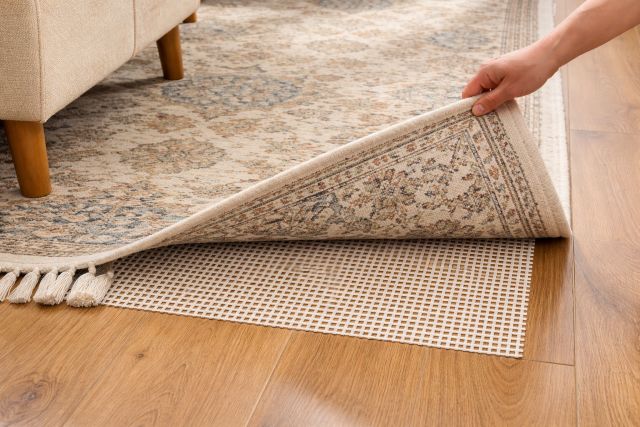

A non slip mat is one of those small home upgrades that feels almost too simple—until you trip on a curled corner or watch your rug drift across the floor like it has a mind of its own. If you’ve ever straightened a rug three times in one day, or worried about kids running through the hallway, a rug grip mat can make your space feel instantly calmer, safer, and more “finished.”
And the safety angle is real. Falls are a major cause of injury, especially for older adults. The CDC notes that more than 14 million (about 1 in 4) adults age 65+ report a fall each year, and falls lead to millions of emergency department visits. That’s why keeping walking paths stable — including area rugs — matters more than most people think.
In this guide, you’ll learn exactly what a non slip mat for rugs does, how to pick the right one for your flooring, how to size and install it so your rug lies flat, and how to avoid common mistakes that can damage floors or make slipping worse.
What is a non slip mat for rugs?
A non slip mat (often called a rug pad, rug grip, anti slip rug pad, or rug underlay) is a thin layer placed between your rug and the floor. Its job is to increase friction, prevent shifting, and reduce bunching or rippling — especially on hard floors like hardwood, tile, laminate, and vinyl.
Think of it as the “traction layer” your rug is missing. The rug’s backing often isn’t designed to grip floors (and many decorative rugs are intentionally smooth underneath), so the mat does the gripping instead.
What a quality rug grip mat should do
A good mat typically helps in three ways:
Stops sliding: Keeps the rug from shifting when you step or drag a chair.
Reduces curling and ripples: Helps the rug lie flatter, reducing trip hazards.
Adds comfort and protects the rug: Many pads add a bit of cushion and reduce wear by minimizing rug movement.
Safety organizations and standards bodies pay close attention to traction and slip resistance because it has such a big impact on injuries. For example, the CPSC works with standards groups on voluntary standards aimed at reducing consumer slips, trips, and falls.
Why rugs slide and curl (and why it’s not just annoying)
Rugs move for a few common reasons:
Smooth surfaces: Hardwood and tile offer less “bite,” especially with dust and polish.
Lightweight rugs: Thin rugs don’t have enough mass to stay put.
Foot traffic patterns: Repeated steps push the rug gradually in one direction.
Vacuuming: The vacuum head can tug and lift edges, starting a curl.
Humidity and temperature changes: Fibers expand/contract slightly, sometimes causing waviness.
The bigger issue is what movement creates: a shifting rug edge can become a trip point. And because falls can have serious consequences — at home and at work — it’s worth treating rug stability as a real safety feature, not just a styling detail. The National Safety Council highlights falls as a major cause of unintentional injury deaths.
Non slip rug mat vs rug pad: what’s the difference?
People often use these terms interchangeably, but there’s a practical distinction:
Non slip mat / rug grip: Prioritizes traction. Usually thinner. Great for preventing movement.
Rug pad: Can mean traction, cushioning, insulation, sound reduction — or all of the above. Often thicker.
If your main problem is sliding or curling edges, prioritize grip first. If you also want plushness underfoot, you can choose a hybrid rug pad that grips and cushions.
Types of non slip mats for rugs (and which floors they fit)
1) Rubber or natural latex grip mats (best for hard floors)
These are classic “anti-slip” options. They’re usually thin, tacky, and excellent for hardwood, tile, laminate, and vinyl.
Best for: Hallways, entry rugs, kitchen runners, living rooms on hard floors.
Watch for: Some rubber materials can discolor certain finishes over time. If you have delicate hardwood or newer vinyl, pick a pad labeled “safe for hardwood/vinyl” and avoid anything that smells strongly of chemicals.
2) Felt + rubber combo pads (best all-around)
These combine a grippy bottom with a soft felt top. They reduce sliding and add comfort.
Best for: Larger area rugs, living rooms, bedrooms, dining rooms.
Why people love them: Your rug feels more luxurious and stays put.
3) Felt-only pads (best on carpet, limited on hard floors)
Felt-only pads can work well when a rug sits on top of carpet (because carpet-on-carpet already has friction), but they often don’t stop sliding on hardwood or tile.
Best for: Area rugs over carpet.
Watch for: On slick floors, felt-only can still drift.
4) Rug tape, corner grips, and non-slip rug stickers (best for targeted fixes)
If your rug mostly behaves except for the corners, tape or corner grips can help.
Best for: Small rugs, door mats, corners that lift, temporary rentals.
Watch for: Adhesives can leave residue or damage some finishes.
How to choose the best non slip mat for your rug
Match the mat to your flooring
Hard floors usually need a grippy material (rubber/latex or a rubber-felt combo). Carpeted rooms need a different approach — often a felt pad designed for carpet or a specialized “carpet-to-carpet” rug pad.
Pick the right thickness
For stability and doors that swing over rugs, thinner is better.
For comfort and noise reduction, go thicker (especially under large rugs).
Consider the room’s “movement profile”
A hallway runner needs stronger grip than a bedroom rug that rarely gets walked on. A dining room rug needs enough stability for chair movement without bunching.
Get the right size (this matters more than most people realize)
Your non slip mat should typically be slightly smaller than the rug — often by about 1–2 inches on all sides—so it doesn’t peek out.
When a pad is too big, edges can catch dust, curl, or create a visible outline. When it’s too small, the rug edges are left unsupported and more likely to curl.
Installation: how to keep your rug flat (step-by-step)
Clean the floor first. Dust reduces friction.
Lay the non slip mat flat where the rug will sit.
Trim if needed so the mat is slightly smaller than the rug footprint.
Place the rug on top and align it carefully.
Smooth outward from the center to remove bubbles and ripples.
Let it settle for a day if the rug was folded or rolled; fibers often relax.
If your rug corners still curl, the issue may be the rug itself (especially with thin weaves). In that case, adding corner grips or gently reverse-rolling the corners overnight can help.
Real-world scenarios: choosing the right rug grip quickly
Scenario 1: A runner that slides every morning
You have a hallway runner on tile and it shifts daily. A thin rubber grip mat is usually the fastest fix because it maximizes traction without adding height that could catch toes.
Scenario 2: Dining chairs keep “walking” the rug
A felt + rubber combo pad adds friction and a bit of cushion so chair legs don’t bunch the rug. This setup also tends to reduce wear because the rug fibers aren’t constantly flexing against the floor.
Scenario 3: Rug on carpet that bunches and buckles
You’ll likely need a pad designed for rugs over carpet (often a denser felt or a specialized “carpet lock” style). Hard-floor grip pads can actually perform poorly on carpet.
Common mistakes to avoid (that can ruin floors or waste money)
Using the wrong pad on vinyl or certain finishes. Some materials can stain or react over time, especially in heat and humidity.
Choosing thickness without checking doors. If the door catches the rug, it’s a trip hazard waiting to happen.
Oversizing the pad. A pad sticking out can attract grime and curl.
Assuming “grip” means “safe anywhere.” Different floor materials behave differently when wet or dusty.
Traction science is a big deal in flooring. In tile, for example, industry specs often reference friction measurements for wet surfaces (like DCOF). ANSI A137.1 references a wet DCOF value (commonly cited as 0.42 for certain interior wet applications). While your rug pad isn’t a tile, the principle is the same: consistent friction reduces slip risk.
FAQ: Non slip mats for rugs
What is the best non slip mat for rugs on hardwood floors?
For hardwood, a non slip mat made from natural rubber/latex or a felt + rubber combo pad is usually best. The key is a pad labeled as safe for hardwood finishes and designed to prevent sliding without leaving residue.
Do rug pads damage hardwood floors?
Some can, especially low-quality rubber or adhesive products left down for years without cleaning. Choose a pad designed for hardwood and occasionally lift it to clean underneath and let the floor breathe.
How do you keep a rug from slipping on tile?
Tile is slick, so you typically need a grippy rubber/latex pad or a high-traction combo pad. Make sure the floor is clean — dust can act like tiny ball bearings under rugs.
Should a rug pad be the same size as the rug?
Usually no. A rug pad should be slightly smaller (around 1–2 inches shorter on each side) so it stays hidden and supports the rug without sticking out.
Can I show a non slip mat under a rug?
It’s better not to. Exposed edges can collect dirt and may peel upward. If your rug is very thin and you’re worried about visibility, use a thinner mat and trim carefully.
Conclusion: the easiest way to make rugs safer and smarter
A non slip mat is one of the most cost-effective ways to make your home feel safer, quieter, and more put-together. It prevents the daily frustration of shifting rugs, helps reduce curling edges that can trip people up, and protects both your rug and your flooring from unnecessary wear.
Given how serious falls can be — especially for older adults, where falls lead to millions of medical visits and major injuries each year — keeping rugs stable isn’t just a design preference. It’s a practical safety upgrade you’ll appreciate every single day.










Leave a comment