
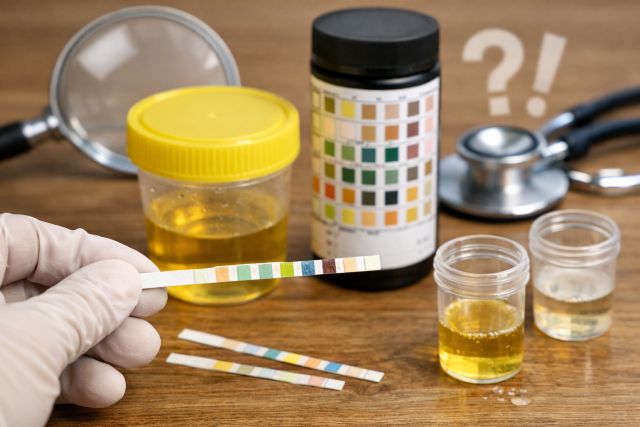

At-home urine testing can feel almost magical. You dip, wait a few seconds, and compare colors that seem to translate your body into clear answers. But urine test strips are not mind readers, and they’re not miniature lab machines either. They are fast screening tools that can be genuinely useful, yet their accuracy depends on what you’re checking, how you collect the sample, how carefully you time the reading, and even what supplements you took that day.
If you’ve ever wondered why a strip said “UTI” when you felt fine, or why it was negative when you were sure something was off, you’re not alone. In this guide, you’ll learn what urine strips do well, where they commonly mislead, and how to avoid the mistakes that cause the majority of false positives and false negatives.
What urine test strips measure, and what “accuracy” really means
Most multi-parameter urine dipsticks contain several small reagent pads. Each pad changes color when it reacts with a specific substance or property in urine. Depending on the brand, you may see pads for leukocyte esterase, nitrite, blood, protein, glucose, ketones, pH, specific gravity, bilirubin, and urobilinogen. A 2022 review from the American Academy of Family Physicians (AAFP) summarizes common dipstick parameters and how they are used in office-based urinalysis.
When we talk about accuracy, it helps to separate three ideas that often get blended together. First is analytical performance, meaning the chemistry of the pad reacts as designed. Second is clinical performance, meaning the result actually predicts a real condition in the body. Third is usability accuracy, meaning you collected the sample correctly and read the strip at the correct time under decent lighting.
Urine dipsticks can be analytically reliable and still clinically confusing, because many pads are indirect signals. A pad can flag “blood,” for example, because it reacts with hemoglobin’s peroxidase activity. That reaction can happen when red blood cells are present, but it can also happen when hemoglobin or myoglobin are present without intact red blood cells. That’s why experts describe dipstick hematuria as a nondiagnostic screening test that must be confirmed with microscopy.
The most important mindset shift is this. Urine test strips are best at screening and pattern-spotting, not at giving final diagnoses.
How accurate are urine test strips for UTIs?
This is the most common reason people buy urine strips, so it’s worth getting very practical here. Most UTI-focused dipsticks rely primarily on two pads: leukocyte esterase and nitrite. Leukocyte esterase suggests white blood cells are present, which can happen in infection but also in other inflammatory conditions. Nitrite suggests some bacteria have converted nitrate to nitrite, which is a helpful clue, but not all bacteria do this.
The AAFP’s urinalysis review notes that uncomplicated UTIs with positive leukocyte esterase and nitrite tests can often be treated without culture in the appropriate clinical context, which reflects how dipsticks are used as a decision-support tool rather than a perfect standalone test.
The issue is that real-life UTI situations are messy. People test at different times of day. Some don’t hold urine in the bladder long enough for nitrite to build up. Some infections are caused by organisms that don’t produce nitrite. Some samples are contaminated. In older adults, interpretation gets even trickier because bacteriuria without symptoms is more common, so a positive dipstick can mean far less than people assume.
A useful way to think about it is this. If you have classic UTI symptoms such as burning with urination and urgency, a positive dipstick supports your suspicion. If you have no symptoms and you’re just checking “to be safe,” a weakly positive result is much more likely to be contamination, harmless bacteriuria, or irritation that has nothing to do with a true symptomatic infection.
Why UTI strips give false negatives
False negatives are more common than people expect, especially when timing and biology work against the test. Nitrite may be negative early in infection or if you urinate frequently because urine doesn’t sit in the bladder long enough for conversion to happen. Nitrite can also be negative if the organism doesn’t produce it.
On top of that, certain substances can interfere with pad reactions. Vitamin C is one of the best-known examples. A large clinical study published on Europe PMC reported that vitamin C was found in urine in a notable portion of subjects and that vitamin C interference led to false-negative dipstick results for glucose, hemoglobin, and leukocyte esterase in some cases when compared against sediment and blood glucose data.
If your symptoms are strong but the strip is negative, that mismatch matters. It’s a sign to stop treating the dipstick as the “judge” and treat it as one imperfect clue.
Why UTI strips give false positives
False positives often come from collection issues. Skin flora or vaginal discharge can introduce cells and bacteria that do not reflect what’s happening in the bladder. That’s why proper collection technique matters if you’re trying to use the dipstick for anything beyond curiosity.
False positives can also happen when inflammation exists without a bacterial UTI. Irritation, kidney stones, some sexually transmitted infections, and other conditions can cause white blood cells or symptoms that mimic UTI, which means leukocyte esterase is not a guarantee of infection.
“Blood” on a dipstick: accurate chemistry, easy to misunderstand
Seeing “blood” on a dipstick is one of the most alarming results for many people, and it’s also one of the most misunderstood. The Cleveland Clinic Journal of Medicine explains that the dipstick test for hematuria is nondiagnostic and that factors such as hemoglobinuria, myoglobinuria, concentrated urine, menstrual blood in the sample, and vigorous exercise can cause false positives. It also emphasizes that hematuria cannot be diagnosed by dipstick alone.
Cleveland Clinic’s patient-facing hematuria page echoes this in plain language, noting that dipstick hematuria has a relatively high false-positive rate and needs confirmation with microscopic urinalysis.
A realistic scenario makes this clearer. If you do a hard leg workout, then test later that day and see a positive “blood” pad, you might be seeing a benign false positive from exercise-related effects or concentrated urine. If you retest after resting and hydrating and it’s still positive, that repetition is a stronger signal that you should confirm with proper lab testing.
Protein on a strip: useful for screening, not the whole kidney story
Protein dipsticks can be valuable as a simple screen, but interpretation is sensitive to circumstances. Concentrated urine can make protein look higher. Temporary proteinuria can happen with fever, intense exercise, or stress. A single positive reading does not equal “kidney disease,” but repeated positives should be taken seriously and typically warrant confirmation with quantitative tests such as an albumin-to-creatinine ratio, depending on clinical context.
AAFP’s office-based urinalysis review discusses how urinalysis can reveal kidney and urinary tract disease signals, but it also reinforces the broader theme that urine testing works best when results are interpreted in context and confirmed appropriately.
Glucose and ketones: decent signals, still not a diagnosis by themselves
Glucose and ketone pads are commonly used by people monitoring diabetes risk or metabolic changes. They can be helpful, but there are caveats. Not everyone spills glucose into urine at the same blood sugar level. Hydration can dilute results. Dietary patterns can affect ketones. And again, vitamin C interference can cause false negatives for some pads, which matters if someone is using strips to decide whether everything is “fine.”
A 2015 paper in Annals of Clinical & Laboratory Science also evaluates vitamin C’s influence on dipstick test results, supporting the reality that supplements can meaningfully change what your strip shows.
The single biggest reason urine test strips seem “inaccurate”: timing and technique
Even if the strip chemistry is solid, user technique can sink accuracy fast. The good news is that most of the big errors are preventable.
The “old urine” problem
Urine is biologically active. Bacteria can multiply after the sample is collected, pH can shift, and cells can break down. A paper on the preanalytical requirements of urinalysis explains why collection, transport, and timely analysis matter and why standardized handling improves reliability.
A separate urinalysis guidance document notes that if a freshly voided specimen cannot be tested within about two hours, refrigeration is needed because storage at room temperature contributes to bacterial overgrowth and chemical changes that can alter dipstick and microscopic results.
If you’re doing home testing, the simplest rule is to test promptly. If you can’t, treat the result with caution.
The clean-catch issue
Many “mystery positives” come from contamination, especially for leukocytes and bacteria-associated markers. Midstream clean-catch collection reduces contamination from skin and external genitalia, which matters if you’re using the results to make decisions rather than just satisfy curiosity.
The timing window issue
Most dipsticks have different recommended read times per pad. Reading too early can miss a reaction. Reading too late can show “pad creep” where colors darken and look falsely positive. Even medical references emphasize reading dipsticks at the recommended time and tapping off excess urine.
Image suggestion with alt text: A dipstick beside a smartphone timer, with the alt text “timing read windows to improve urine test strips accuracy.”
The lighting issue
Color matching is subjective. Warm bathroom lighting can distort yellow and green shades, and borderline results invite wishful interpretation. Neutral daylight or bright white lighting makes a bigger difference than most people expect.
The storage issue
Humidity and heat degrade reagents. If you leave the bottle open or store strips in a steamy bathroom, accuracy drops over time. Expiration dates matter here because the chemistry literally changes.
Actionable tips to make urine test strips as accurate as possible
Start by treating collection as part of the test, not a casual step. Use a clean, dry container. Collect midstream urine when possible. Test soon after collection rather than letting the sample sit. If you need to delay, refrigerate the sample and bring it back to room temperature before dipping, while keeping in mind that best practice is still timely analysis.
Then treat timing like a recipe. Dip briefly according to your brand’s instructions, remove excess urine, and use a timer. Read each pad at its correct window rather than guessing.
Finally, interpret with context. Think about hydration, heavy exercise, menstruation, and supplements, especially vitamin C. If a result surprises you, repeat the test the next day using careful technique before you draw conclusions.
When a urine strip result should prompt confirmation
A repeat finding is more meaningful than a one-off. This is especially true for a positive blood pad. Clinical guidance and expert reviews emphasize that dipstick hematuria should be confirmed with microscopy, because dipstick alone cannot establish true hematuria.
It’s also wise to confirm when symptoms and strip results disagree. Strong UTI symptoms with a negative dipstick can still warrant medical evaluation, especially if there is fever, flank pain, pregnancy, immunosuppression, or symptoms that persist.
FAQ: quick answers for featured snippets
Are urine test strips accurate for UTIs?
They are helpful screening tools using leukocyte esterase and nitrite, but false negatives and false positives happen. They work best when interpreted alongside symptoms, and confirmation with urinalysis or culture may be needed when the situation is unclear or symptoms persist.
Can a urine dipstick show blood when there isn’t real hematuria?
Yes. Dipsticks can react to hemoglobin or myoglobin and can be falsely positive with concentrated urine, menstrual contamination, and vigorous exercise. Confirmation requires microscopic urinalysis.
What causes false negatives on urine test strips?
The most common causes are reading at the wrong time, diluted urine, early infection, and chemical interference. Vitamin C in urine is a well-documented cause of false-negative results for some dipstick parameters, including hemoglobin and leukocyte esterase in certain settings.
How fast should you test urine after collecting it?
Fresh testing is best. If you cannot test within roughly two hours, guidance documents recommend refrigeration because room-temperature storage can lead to bacterial overgrowth and chemical changes that affect results.
Conclusion: the honest truth about urine test strips
Urine test strips are accurate enough to be useful, but not reliable enough to be your final answer in high-stakes situations. They shine as quick screening tools, especially when you follow clean-catch collection, test fresh urine, time your readings carefully, and interpret results in context. Their biggest limits come from indirect chemistry, biological variation, and very common user errors. If you remember one rule, make it this: trust patterns more than single readings, and confirm repeat positives or symptom-result mismatches with proper medical testing.
















Leave a comment