
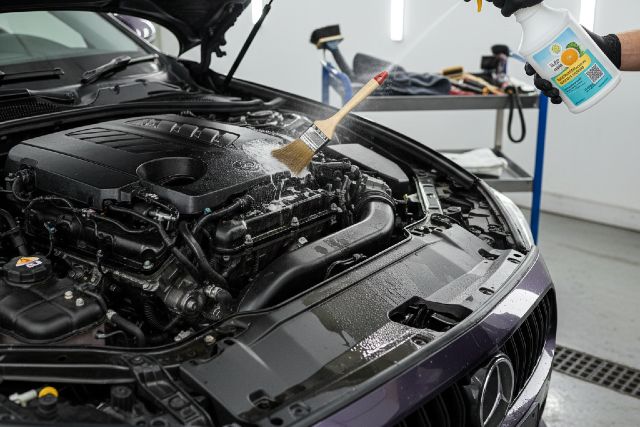

A dirty engine bay is more than just an eyesore. Built-up grease, oil residue, and road grime can trap heat, hide leaks, and make routine maintenance harder than it needs to be. Using the right engine degreaser and following a professional process allows you to clean your engine bay safely without damaging electrical components or sensitive plastics. When done correctly, engine bay cleaning improves appearance, supports long-term reliability, and adds real value to your vehicle.
Professional detailers don’t rely on excessive water pressure or harsh chemicals. Instead, they use controlled cleaning techniques, proper dwell time, and high-quality engine degreasers designed to break down oil-based contamination while remaining safe on modern engine materials.
Why engine bay cleaning matters more than most people think
Many car owners avoid engine bay cleaning because they fear electrical damage. While that fear is understandable, modern vehicles are designed to withstand moisture under the hood. According to automotive engineering research published by SAE International, most engine bay components are weather-sealed to handle rain, humidity, and road splash exposure. Problems usually occur only when improper techniques or excessive pressure are used.
A clean engine bay also helps identify fluid leaks earlier. Oil or coolant leaks are far easier to spot on clean surfaces, which can prevent costly repairs. Mechanics often note that vehicles with clean engine bays are easier to service, reducing labor time and diagnostic errors.
What an engine degreaser does and how it works
An engine degreaser is formulated to dissolve petroleum-based contaminants such as oil, grease, and traffic film that accumulate under the hood. These contaminants bond tightly to metal, plastic, and rubber surfaces due to heat cycles and airflow. Standard car wash soap is not designed to break these bonds effectively.
Degreasers work by emulsifying oil molecules, allowing them to be safely lifted away from surfaces during light agitation and rinsing. Water-based engine degreasers are now the industry standard because they are safer on plastics and rubber while being more environmentally responsible. Solvent-based degreasers are still used in heavy-duty applications but require greater caution.
The Environmental Protection Agency explains that modern degreasers using water-based chemistry significantly reduce volatile organic compounds while maintaining cleaning performance. This makes them safer for home users when used as directed.
Choosing the right engine degreaser for your vehicle
Not all engine bays require the same strength of cleaner. Light dust and fresh grime often respond well to diluted all-purpose cleaners, while older vehicles with oil seepage benefit from a dedicated engine degreaser.
Modern plastic engine covers, rubber hoses, and wiring looms require pH-balanced or manufacturer-approved degreasers. Using overly aggressive products can cause discoloration or brittleness over time. Consumer testing conducted by Consumer Reports highlights that automotive-specific degreasers outperform household cleaners while causing less material degradation.
When in doubt, choosing a reputable automotive brand with clear dilution instructions is the safest option.
How professional detailers prepare an engine bay before degreasing
Preparation is the most overlooked step in engine bay cleaning. Detailers always start with a completely cool engine. Heat causes degreasers to evaporate too quickly, reducing cleaning effectiveness and increasing the risk of staining.
Sensitive components such as the alternator, exposed air intake filters, and aftermarket electronics are typically covered with plastic or aluminum foil. This simple step significantly reduces the chance of water intrusion while still allowing effective cleaning.
Loose debris such as leaves or sand is removed first. This prevents debris from turning into muddy residue once the degreaser is applied.
How to clean an engine bay using an engine degreaser safely
The degreaser is applied evenly across dirty areas, focusing on oil-stained surfaces rather than soaking the entire bay. Professional detailers allow the product to dwell for a short, controlled time so it can break down grime without drying.
Agitation is performed gently using soft brushes around plastic covers and medium bristles on metal components. The goal is to lift contamination, not scrub aggressively. According to Meguiar’s professional detailing guidelines, light agitation improves cleaning efficiency while minimizing surface wear.
Rinsing is done using low-pressure water or a controlled spray. High-pressure washers are avoided because they can force water past seals. In many professional shops, a pump sprayer or gentle hose flow is preferred.
Proper drying is what prevents electrical problems
Most engine bay issues happen after cleaning, not during it. Leaving moisture trapped around electrical connectors can cause temporary misfires or warning lights.
Detailers use microfiber towels and compressed air or blowers to remove standing water. Special attention is paid to coil packs, wiring junctions, and fuse boxes. Allowing the engine bay to air dry for additional time ensures residual moisture evaporates completely.
Running the engine for a few minutes after cleaning can help generate mild heat that speeds evaporation, a method commonly recommended by automotive service professionals.
Protecting plastics and rubber after degreasing
Once clean and dry, professional detailers apply a non-greasy protectant to plastic and rubber components. This restores color, adds UV protection, and reduces future dirt adhesion. Unlike shiny silicone dressings, modern water-based protectants leave a natural factory finish.
According to research from the Society of Automotive Engineers, UV exposure accelerates plastic degradation under the hood due to elevated temperatures.
Common engine degreaser mistakes to avoid
One of the biggest mistakes is using household degreasers not designed for automotive materials. These products can strip coatings or damage rubber over time. Another common error is overusing water, which increases the risk of moisture intrusion.
Cleaning too frequently is also unnecessary. Most vehicles only need engine bay cleaning once or twice per year unless there is active oil leakage.
Engine degreaser FAQs for featured snippet optimization
Is engine degreaser safe for modern cars?
Yes, engine degreaser is safe for modern vehicles when used on a cool engine, applied correctly, and rinsed gently without high pressure.
How often should you clean your engine bay?
Most vehicles benefit from engine bay cleaning every six to twelve months, depending on driving conditions and oil exposure.
Can engine degreaser damage electrical components?
Damage typically occurs only when high-pressure water or excessive soaking is used. Controlled application and proper drying prevent issues.
Should you rinse engine degreaser off completely?
Yes, residue should always be rinsed away to prevent staining and chemical buildup.
inal thoughts on using an engine degreaser like a detailer
Using an engine degreaser the right way transforms engine bay cleaning from a risky chore into a safe, confidence-boosting maintenance task. By working on a cool engine, choosing automotive-safe products, using gentle rinsing methods, and finishing with proper drying and protection, you can achieve professional-level results at home.
A clean engine bay isn’t just about looks. It supports easier maintenance, earlier leak detection, and long-term component health. When you clean your engine bay like a detailer, you’re not just improving appearance — you’re investing in your vehicle’s longevity.













Leave a comment