
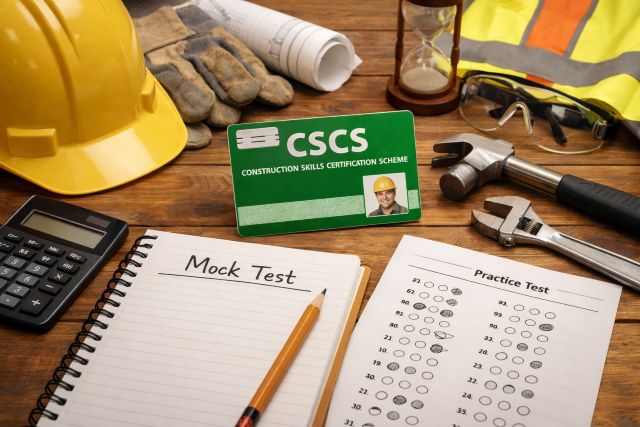

If you’re aiming for a CSCS card, a cscs mock test is one of the fastest ways to build confidence and raise your score for the CITB Health, Safety & Environment (HS&E) test. The key is using mock tests strategically, not casually. When you practise the right way, you learn the question style, improve your timing, and quickly spot the topics that cost you marks.
This article explains exactly how the CSCS test works, how to use mock tests to improve fast, what to revise first, and how to avoid common mistakes that make capable candidates fail. You’ll also get a simple pass-focused study approach, realistic scoring targets, and clear answers to popular questions people search for before booking their exam.
What is a CSCS mock test?
A cscs mock test is a practice version of the CITB HS&E test designed to simulate the real exam. It uses the same kind of wording, similar difficulty, and the same time pressure so you can practise in realistic conditions. This matters because the official HS&E test is strict. It includes 50 questions and you must score 45 out of 50 to pass, which means you can only afford a small number of mistakes. CITB confirms the pass mark requirement for the HS&E test routes on its official guidance pages.
What makes mock tests powerful is not the act of doing them, but what you do immediately after. A well-used mock test becomes a feedback tool that tells you exactly which safety topics need work, which question types confuse you, and whether your timing is strong enough for exam day.
Why the CSCS test matters on real construction sites
Construction remains a high-risk industry, so the HS&E test is not just a formality. It is meant to check practical safety competence that reduces accidents and protects workers and the public. The UK Health and Safety Executive regularly reports on workplace fatal injury totals and industry risk, which is part of the reason safety training and testing standards remain strict.
Because many job roles and principal contractors expect a valid CSCS card, passing fast helps you get on site sooner. But passing properly also matters because the knowledge is used daily, especially around PPE, working at height, site traffic, manual handling, dust exposure, and emergency response.
Which HS&E test are you preparing for?
One reason people struggle is that they practise the wrong mock test. CSCS cards require you to pass the right type of HS&E test for your role and card level, and the certificate must be recent enough to meet the CSCS requirements. CSCS explains the HS&E test requirement and validity rules for card applications in its official guidance.
For many candidates, the Operatives HS&E test is the correct route. Others need a Specialist test that includes trade-specific content, or the Managers and Professionals test which focuses more on responsibilities, planning, and risk control. The best approach is to match your mock tests to your test route so your practice aligns with what you will face.
What is inside the real CITB HS&E test?
The real test focuses on everyday site hazards and expected safe behaviour. The question style often tests judgement rather than memorisation. You might know a rule but still lose marks if you miss a word like “first,” “best,” or “most appropriate.”
CITB publishes official preparation materials such as the revision book and app to help candidates practise the topics included in the HS&E test. Preparing with official-aligned content reduces the risk of wasting time on outdated or irrelevant questions.
You will typically see questions around site set-up and safe access, safe systems of work, personal protective equipment, working at height controls, manual handling, fire safety, hazardous substances, occupational health risks like dust and noise, and emergency procedures. If your test is Specialist or MAP, the emphasis and scenarios shift accordingly.
How to use a CSCS mock test the smart way
Most people think more practice automatically equals a pass. That is only true if you practise with a system. If you simply repeat full mock tests without understanding why you got things wrong, you are likely to repeat the same errors under pressure.
Start with one timed mock test to get a baseline score. Do it as if you are at the test centre. No notes, no pausing, and no checking answers mid-way. This gives you a true picture of your current level and the topics you struggle with most.
After that, review every wrong answer and label it by topic. Then rewrite the learning as a simple on-site rule you can remember. This is important because the exam rewards practical decision-making. Your aim is to turn mistakes into rules you will not forget.
A strong example is dust control. Many candidates jump straight to masks in their minds, but the safest “best answer” frequently involves reducing dust at source first, such as using wet cutting methods or extraction, and then using PPE as a final layer. When you convert knowledge into “order of control” thinking, many tricky questions become easy.
Next, train in targeted sessions. Instead of doing five random full mocks, do focused practice on your weakest topic areas. Targeted practice improves faster because it tackles the exact gaps that are lowering your score. Once those gaps improve, return to full timed mocks to verify readiness and test your pacing.
How many mock tests should you do before the real exam?
There is no magic number, but there is a reliable indicator. You are ready when you can consistently score above the pass mark in timed conditions. Because the pass mark is tight, it is wise to aim higher at home. Many candidates treat 45 as the target, but a smarter target is 47 to 49 in practice so you have a buffer for exam-day nerves.
If you are scoring below 35, you likely need structured learning first rather than endless testing. If you are scoring 35 to 44, you are close and should focus on weak topics and question wording. If you are scoring 45 or above but not consistently, you should keep practising timed mocks until your results stabilise.
A fast-track plan to pass your CSCS test quickly
If your test is soon, speed matters, but structure matters more. The fastest improvements usually come from fixing your biggest weak topic first, then your second, and so on. A simple rhythm that works is alternating between targeted practice and timed full mocks.
On your first day, take a timed full mock and review all mistakes. On the second day, focus deeply on your worst topic, then finish with a short timed quiz. On the third day, repeat that approach for your next weakest topic. On the fourth day, take a timed full mock again, and pay attention to timing discipline. On the fifth day, focus on tricky wording and judgement-style questions. On the sixth day, do another timed full mock and review your “error notebook.” On the final day, do light revision, one short mock for confidence, then rest so your concentration is strong on test day.
This plan works because it avoids a common trap: practising what you already know. Your score rises when you attack what you keep getting wrong.
The biggest mistakes candidates make in CSCS mock tests
One of the biggest mistakes is rushing and guessing early. The test is not designed to trick you, but it does punish careless reading. Many wrong answers happen because the candidate missed a single word such as “first,” “best,” “safest,” or “most appropriate.” Training yourself to slow down for these qualifiers can raise your score quickly.
Another major mistake is learning answers instead of learning reasons. If you memorise the correct option letter, you will fail when the scenario changes slightly. But if you understand why the safest action is correct, the wording can change and you will still pick the right answer.
A third mistake is ignoring occupational health topics. People focus heavily on obvious safety hazards like falls and machinery, but the HS&E test often includes health risks such as dust, noise, vibration, and manual handling. These topics are easy marks once you learn the control principles.
Best resources for CSCS mock test practice
The safest and most reliable resources are the official CITB materials and reputable training providers that align their question sets to the current test content. CITB’s official revision products are widely used because they reflect the test format and cover the topics you are expected to know.
If your site has an internal training provider, or your employer offers access to online learning, use it alongside official-aligned mock tests. What matters most is content accuracy and relevance to your test route, not the quantity of questions.
What score do you need to pass, and how hard is it?
You need 45 out of 50 to pass the standard HS&E test format. This is confirmed in CITB guidance for the HS&E tests.
Is it hard? It depends on preparation style. If you revise by reading once and hoping for the best, it can feel difficult because the pass margin is small. If you revise with mock tests, analyse your mistakes, and fix weak topics, it becomes very manageable. Most candidates who fail do not fail because they are incapable. They fail because they practise without a system.
What happens if you fail the CSCS test?
If you fail, you can retake the test. Many candidates pass on the second attempt after targeted revision. The key is to avoid repeating the same approach. Your score report and your mock test history should guide you toward the topic areas that need improvement.
Also, if you failed by a small margin, it often means you are close and simply need better question-reading habits and stronger knowledge in one or two categories.
Featured snippet: Quick definition and pass-fast summary
A cscs mock test is a timed practice exam that mirrors the CITB HS&E test, helping you improve speed, accuracy, and safety knowledge before the real assessment. To pass fast, start with a timed baseline mock, review every mistake by topic, drill your weakest topics in focused sessions, then return to timed full mocks until you consistently score 47 to 49.
FAQs about CSCS mock tests
How long is the CSCS test and how many questions are there?
The CITB HS&E test is 45 minutes long and contains 50 questions in the common test routes. CITB describes the format and pass mark requirements in its official test overview.
Can I pass just by doing mock tests?
Yes, if you use mock tests correctly. The difference is whether you review mistakes and fix weak topics. If you only repeat random mocks, you can plateau and still fail.
How many days does it take to prepare?
Many candidates can prepare in a week with focused study, especially if they already work on site and understand basic safety. If you are new to construction or have been away from site work, plan for two weeks so you can cover occupational health and high-risk topics properly.
Are free CSCS mock tests reliable?
Some are, many are not. The risk with random free sets is outdated content or incorrect answers. Prioritise official-aligned resources and reputable providers that update their questions to match current guidance.
What should I do the night before the test?
Avoid heavy studying. Do one short mock to stay sharp, review your common mistakes, prepare your ID and travel plan, and get proper rest so you can focus.
Conclusion: Use CSCS mock tests to pass fast with confidence
A cscs mock test is the fastest, most practical way to prepare for the CITB HS&E exam because it trains your knowledge, timing, and judgement in the same format you will face on test day. The secret to passing fast is simple: take a timed baseline, analyse every mistake, drill your weak topics, and keep testing until you consistently score above the pass mark with breathing room.
If you want the shortest path to a pass, don’t chase endless random questions. Use mock tests as a diagnostic tool, build targeted practice around your weak areas, and treat the wording carefully. Do that, and you’ll walk into the test centre ready.
















Leave a comment