
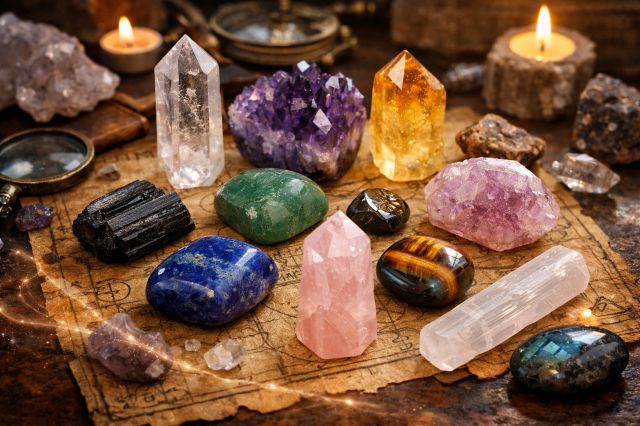

If you’ve been curious about crystal explorers — the people who collect, study, and use crystals for intention-setting, décor, meditation, or spiritual practice — you’re not alone. Crystals have surged in popularity because they’re beautiful, tactile, and easy to weave into daily routines. But what are they actually used for, and what’s hype versus helpful?
Here’s the honest, useful answer: while there’s no solid evidence that crystals “heal” diseases by emitting special energies, many people still experience real benefits from crystal practices through ritual, attention, and expectation — the same psychological mechanisms behind placebo effects. Placebo responses can measurably influence subjective symptoms like stress and pain, and expectations matter a lot in how we feel day to day.
At the same time, practices that often pair well with crystals — like mindfulness meditation — do have research support for reducing stress and anxiety symptoms. So the most grounded way to approach crystals is: use them as tools for focus, habit-building, mindfulness, and meaning — not as a substitute for medical care.
What “crystal explorers” means (and why it matters)
Crystal explorers are intentional crystal users: they don’t just buy stones; they learn them — how they form, how to tell real from fake, what traditions say about them, and how to use them safely and practically.
A simple definition (featured-snippet friendly):
Crystal explorers are people who collect and use crystals as tools for mindfulness, intention-setting, and self-care rituals — often combining aesthetics, geology, and personal meaning.
The science-friendly way to think about crystals
Let’s separate two ideas:
Geology is real. Quartz really is piezoelectric and is used in timekeeping because it vibrates at a stable frequency in quartz clocks and watches.
Metaphysical claims are personal beliefs. Studies and scientific reviewers generally conclude crystal healing effects don’t outperform placebo.
That doesn’t mean you can’t benefit from crystals. It means the strongest “how it works” explanation is usually:
attention + ritual + expectation + relaxation response
plus any proven practice you pair with them (breathwork, meditation, journaling).
Crystal Explorers’ Field Guide: 9 powerful crystals and what they’re used for
Below are nine favorites with the most common real-world uses (mindset, routines, décor, meditation), plus what they are geologically.
1) Clear Quartz (the “amplifier” for focus and routines)
Clear quartz is silicon dioxide (SiO₂), the classic quartz many people recognize in points and clusters.
What crystal explorers use it for
A “default” crystal for clarity and concentration during study/work blocks
Anchoring a daily ritual (morning intention, evening reflection)
Pairing with journaling: place it near your notebook to cue the habit
A practical scenario:
If you’re building a new habit (like 10 minutes of journaling), put clear quartz on your desk and only touch it when you start. Over time, that object becomes a cue — like a tiny “start button.”
2) Amethyst (calm, sleep cues, and wind-down rituals)
Amethyst is a purple variety of quartz; its color is linked to iron impurities and natural radiation exposure over time.
What crystal explorers use it for
Wind-down routines (reading, tea, low light)
Sleep hygiene cues (placing it on a nightstand)
Meditation object for “soft focus” attention
Reality check that still helps:
Amethyst won’t medically treat insomnia — but it can support a consistent bedtime ritual, which often matters more than people realize.
3) Rose Quartz (self-compassion and relationship rituals)
Rose quartz is a pink quartz variety; its color can come from microscopic inclusions.
What crystal explorers use it for
Self-compassion prompts (especially after a tough day)
Communication rituals (hold before a difficult conversation)
“Softening” spaces — many people simply find it emotionally comforting as décor
Micro-practice:
Before reacting to a stressful message, hold rose quartz and take 6 slow breaths. The crystal isn’t the mechanism—the pause is.
4) Citrine (confidence, motivation, and “start energy”)
Citrine is a yellow variety of quartz. Natural citrine is relatively rare; much commercial citrine is heat-treated amethyst or smoky quartz.
What crystal explorers use it for
Motivation rituals (starting a project, returning to the gym)
“Confidence cue” before presentations or interviews
Workspace brightness — citrine’s color is often used symbolically for optimism
Buyer tip (expert move):
Ask whether it’s natural or heat-treated. Heat-treated isn’t “bad,” but transparency matters.
5) Black Tourmaline (grounding and boundary-setting)
Black tourmaline (often schorl) is part of the tourmaline mineral group (complex borosilicates).
What crystal explorers use it for
A grounding object during stressful workdays
Boundary rituals (end-of-day “work is done” cue)
A tactile stress tool: many pieces have ridges that feel satisfying to hold
Important safety note:
Tourmaline is generally fine to handle, but don’t use crystals as substitutes for medical or mental health care. For stress and anxiety, mindfulness-based programs have evidence for symptom improvement.
6) Selenite (space-clearing aesthetics and “reset” rituals)
Selenite is a crystalline variety of gypsum (calcium sulfate dihydrate, CaSO₄·2H₂O) and is very soft (Mohs hardness ~2).
What crystal explorers use it for
Visual “reset” moments (placing a wand near a doorway or desk)
Meditation: gentle, calming symbolism
Storing other stones on selenite plates (a common ritual practice)
Care tip:
Because it’s soft and water-sensitive, avoid washing it or leaving it in humid places.
7) Labradorite (intuition, creativity, and “pattern breaking”)
Labradorite is a feldspar known for labradorescence—an optical effect from internal structures that scatter light.
What crystal explorers use it for
Creativity rituals (writing, design, brainstorming)
“Intuition” prompts (choosing what matters, not what’s loud)
A reminder to explore possibilities — its flash literally rewards changing angles
Try this:
When stuck, rotate the stone under light while asking: “What’s the smallest next step?” You’re training flexible thinking.
8) Lapis Lazuli (communication, learning, and confidence in speaking)
Lapis lazuli is a rock composed largely of lazurite and often includes pyrite and calcite.
What crystal explorers use it for
Public speaking confidence rituals
Study sessions and learning symbolism
“Say what you mean” prompts during relationship check-ins
A grounded use-case:
If you’re practicing difficult conversations, lapis can be a physical cue to slow down and speak clearly—like a mini coaching anchor.
9) Obsidian (shadow work, reflection, and emotional honesty)
Obsidian is volcanic glass formed when silica-rich lava cools rapidly.
What crystal explorers use it for
Reflection rituals (“what am I avoiding?” journaling prompts)
Emotional processing (holding during therapy homework or self-inquiry)
Protective symbolism—many people associate it with strong boundaries
Use responsibly:
Obsidian practices can bring up heavy feelings. If you’re working through trauma, consider doing that with professional support.
How to choose the right crystal (without overthinking it)
Most crystal explorers end up using one of these selection methods:
Function-first: pick based on your goal (sleep, focus, confidence)
Body cue: choose what feels calming or energizing in your hand
Environment cue: choose what fits the space (desk vs. bedroom)
A useful mindset: your crystal is a ritual tool, not a miracle tool.
Common questions crystal explorers ask (FAQ for featured snippets)
Do crystals actually work?
Crystals are not supported as medical treatments, and crystal healing effects are generally not shown to exceed placebo.
However, rituals and expectations can influence how we perceive symptoms like stress or discomfort, which is part of why people report benefits.
What’s the best crystal for beginners?
Clear quartz is a common beginner choice because it’s durable, widely available, and easy to use as a “focus cue.” Quartz is also well-known in technology due to its stable vibration properties used in timekeeping.
Can I use crystals for anxiety or stress?
You can use crystals as supports for calming routines, but not as replacements for evidence-based care. Mindfulness meditation programs show measurable benefits for psychological stress and well-being in research reviews.
How do I cleanse crystals?
“Cleansing” is mostly a cultural or spiritual practice. If you like it, use safe methods: gentle wiping, smoke cleansing (with ventilation), or placing stones on a selenite plate. Avoid water for stones that are soft or reactive — selenite/gypsum is water-sensitive.
Are some crystals fake?
Yes — especially “citrine” (often heat-treated amethyst) and brightly colored stones that may be dyed. Natural citrine is rarer than many buyers expect.
Conclusion: crystal explorers use meaning + method
The most effective crystal explorers approach is both practical and honest: enjoy crystals for their beauty, history, and symbolism, and use them as tools to build calming routines, better focus, and deeper self-reflection. Pair them with evidence-supported practices like mindfulness, journaling, and good sleep habits.
When you treat crystals as anchors for intention — not replacements for healthcare — you get the best of both worlds: wonder and wisdom.














Leave a comment