
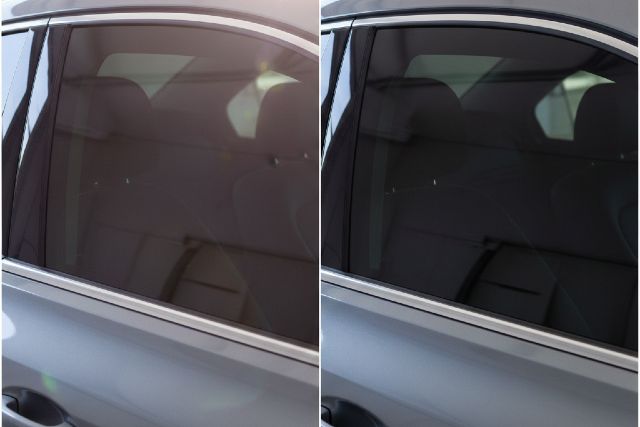

If you’re comparing ceramic tint vs regular tint, you’ll hear the same pitch almost everywhere: “Ceramic blocks more heat, regular is cheaper.” That’s not wrong, but it’s incomplete. The real difference is how each film handles the full solar spectrum, how honest the performance numbers are, and what happens after months or years of sun exposure.
This matters because tint shopping is one of the easiest places to get “spec-washed.” A shop can quote a huge infrared number, call it “ceramic,” and still sell you something that doesn’t feel much cooler in real driving. To choose correctly, you need to understand what “regular” actually means, which metrics to compare, and how installation quality can make a great film look bad.
What “Regular Tint” Usually Means
“Regular tint” isn’t a single product type. In most shops, it’s a casual label for anything that isn’t positioned as ceramic. That can include dyed films, carbon films, hybrid constructions, and sometimes older metalized films. Two “regular” options can perform very differently depending on the brand, the film construction, and whether the shop is using a reputable manufacturer with published data.
So the first hidden trick is the label itself. When you hear “regular,” ask what film family and brand it is. If the answer is vague, that’s a sign you may be comparing marketing categories rather than real performance.
Ceramic Tint vs Regular Tint in One Sentence
The simplest true explanation is this: ceramic tint uses non-metal, nano-ceramic particles to reduce heat transmission and improve performance without signal interference, while many regular tints rely more on dyes or metals that can absorb heat, fade, or introduce connectivity issues.
That’s the foundation. Now let’s talk about what most shops don’t explain, because this is where the buying decision becomes obvious.
The #1 Thing Most Shops Won’t Explain: Heat Rejection Is Not Just “IR%”
Many sales pitches treat infrared rejection like a single universal standard. In reality, infrared numbers can be presented in ways that make them look impressive without guaranteeing the cabin will feel cooler. One reason is that some marketing focuses on one part of the spectrum while ignoring the rest. Window film industry education resources frequently point out that heat comes from more than just a narrow infrared slice, and that focusing on a single wavelength band can be misleading when comparing products.
If you want the most practical comparison metric for “how hot will my car feel,” you should pay attention to TSER.
Why TSER usually tells you more than IR marketing
TSER stands for Total Solar Energy Rejected. It represents how much of the sun’s total energy is prevented from entering through the glass as a system. In plain terms, higher TSER generally means less solar heat gets into the cabin, which typically means the car feels more comfortable in direct sun.
Here’s the nuance that helps you shop smarter: an infrared percentage can sound huge, but TSER is often the more honest “big picture” metric for comfort. That’s why technical data sheets from major film brands include TSER alongside visible light transmission and other performance values.
How Ceramic Tint Actually Works (Minus the Hype)
Ceramic films use nano-ceramic particle technology to improve solar performance while staying non-metallic. What you feel in real life is less “sun burn” through the glass and a cabin that recovers faster once the AC is running, especially after the car has been parked in the sun.
If you want proof that reputable manufacturers define these metrics carefully, look at how 3M describes IRER, which is “infrared energy rejection” across a stated wavelength range. In their technical documentation, IRER is defined over 780–2500 nm and explicitly accounts for transmitted and absorbed energy that can be re-radiated into the car. That kind of definition matters because it tells you what the number actually represents, instead of treating “IR” as a magic sticker.
The biggest practical advantage of ceramic for many drivers is that it can deliver strong heat performance without using metal layers, which is useful for modern cars loaded with antennas and electronics.
What Regular Tint Typically Does Well, and Where It Often Falls Short
Regular tint can be a great value when you’re buying from a reputable brand and your goals are mainly privacy and glare reduction. But the experience depends heavily on what “regular” means at that shop.
Dyed films are common entry-level options because they look good and reduce glare. Their weakness is that they often rely more on absorption than reflection or rejection, so the glass can still get hot under intense sun. Over time, the visual look can also change depending on film quality and UV exposure.
Metalized films can offer strong solar performance, but they can bring a more reflective appearance and may cause signal issues in some vehicles. Even when interference isn’t dramatic, many drivers simply prefer to avoid that risk, which is one reason non-metal ceramics became so popular in the automotive space.
Carbon films often sit between dyed and ceramic in marketing. Some carbon products can be excellent, especially if the manufacturer publishes solid TSER and durability data. The catch is that “carbon” is also used loosely as a label, so you still want to see the spec sheet.
The Clarity Difference: Why Ceramic Often Looks “Cleaner,” Especially at Night
A difference you can feel quickly, even before you notice heat performance, is optical clarity. Higher-end films are often engineered for better visibility and lower haze. Night driving is where people complain the most about cheap film, because haze around headlights and rainy glare can become annoying.
Ceramic films are frequently chosen by drivers who want a premium “neutral charcoal” look and better clarity. This doesn’t mean every ceramic is perfect and every regular tint is hazy. It means ceramic tends to be offered in the product lines where manufacturers invest more into optics, stability, and published performance targets.
If you do a lot of night driving, ask the shop to let you look through a sample on glass outside, not just a tiny sample card under indoor lighting. It’s a small step that can prevent big regret.
UV Protection: Ceramic and Regular Can Both Be Strong, but Don’t Assume
UV protection is one area where both ceramic and non-ceramic films can perform very well. The key is choosing a film from a reputable manufacturer with real data.
The Skin Cancer Foundation notes that UVA rays can pass through window glass and reach you in cars and indoors, which is why UV-protective window film can be a meaningful layer of protection.
This matters for drivers who commute daily in bright conditions, especially with sun exposure through the side window. It also matters for interiors, because UV contributes to fading and material breakdown over time.
What you shouldn’t do is treat “99% UV” as proof of quality by itself. Many films claim high UV blocking, but the reliability of that claim depends on the brand and documentation. A good shop will tell you the film line and show you the manufacturer’s published performance sheet.
Longevity and Color Stability: The “Purple Tint” Problem Explained
Most people have seen it: a car that used to look sharp, now with tint that looks purple, patchy, or uneven. That’s often a film quality and durability issue, commonly associated with lower-grade dyed films and harsh sun exposure.
Ceramic films tend to be more color-stable because they don’t depend on dye to achieve most of their performance. That doesn’t mean ceramic can’t fail. Poor installation, cheap off-brand film, or questionable warranties can still cause issues. But if you’re paying for longevity, ceramic is often the safer bet, particularly when paired with a reputable manufacturer warranty and a shop known for clean installs.
A useful habit is to ask how long the shop has carried the brand and what warranty claims look like in practice. A confident shop will be transparent about it.
The Spec Sheet “Cheat Code” That Makes Choosing Easy
If you want to make the ceramic tint vs regular tint decision simple, compare these numbers on a manufacturer technical data sheet rather than relying on a sales pitch.
VLT tells you how dark the tint looks and how much visible light passes through. TSER gives you the most practical “overall heat” comparison.
If the shop is quoting infrared performance, ask what that number means and what wavelength range it covers. Reputable manufacturers define IRER across stated ranges such as 780–2500 nm and clarify that absorbed energy can be re-radiated into the vehicle, which changes how meaningful the number is.
When a shop can’t show a data sheet, won’t name the brand, or only talks about one flashy IR number, you’re no longer shopping films. You’re shopping a story.
The Real-World Decision: When Ceramic Is Worth It
Ceramic is usually worth it when your daily reality is punishing heat. If you live in a hot climate, park outside, drive midday, or spend long stretches in traffic, the comfort difference tends to be obvious because heat management is where premium film earns its price.
Ceramic is also worth it when you want performance without surprises. Non-metal construction is a comfort for drivers who don’t want to think about signal issues. Optical clarity and stable color are a comfort for people who keep cars longer and hate the idea of re-tinting.
If your primary goal is privacy and a clean look on a tighter budget, a reputable non-ceramic film can still be a great purchase. You can get a strong result if you pick a good brand and a good installer, and if you keep your expectations realistic about peak heat performance in extreme sun.
A Practical Scenario That Makes the Choice Obvious
Imagine two drivers in the same city. Driver A parks outside at work, then sits in traffic during peak sun. Driver B parks in a garage and mostly drives evenings.
Driver A is likely to feel the benefit of ceramic every single day because the cabin heat load is constant. Driver B might care more about glare reduction and privacy and may not feel the same return on a premium film, especially if the budget matters.
That’s why “ceramic is always better” is too simplistic. Ceramic is often better, but the value is highest when your lifestyle makes heat and comfort a daily pain point.
Installation Quality: The Part Everyone Ignores Until It’s Too Late
Even the best film can look terrible if the installation is sloppy. Dust, creases, contamination, and poor edge finishing can ruin the appearance and reduce satisfaction even if the film is technically high-end.
It also helps to know what “normal” looks like right after installation. Many shops explain that curing takes time, and minor haziness or moisture can be present while the film settles. What matters is whether the shop sets correct expectations and stands behind the finish once curing is complete.
A simple way to reduce risk is to choose a shop that can show you recent installs on similar vehicles and can explain their warranty process without getting defensive.
FAQs That Aim for Featured Snippets
What is the main difference between ceramic tint and regular tint?
The main difference is construction and performance. Ceramic tint uses non-metal nano-ceramic technology to improve heat management and stability, while regular tint is often dyed, carbon, hybrid, or metalized, and performance varies widely by type and brand.
Does ceramic tint block more heat than regular tint?
Ceramic often blocks more overall heat, especially in direct sun, but you should compare TSER to judge real comfort. TSER is commonly used to represent total solar energy rejection rather than focusing on one part of the spectrum.
Why do some “IR%” claims feel misleading?
Infrared claims can be presented using different wavelength ranges and definitions, so two films can advertise impressive IR numbers that aren’t directly comparable. Reputable manufacturers define how they measure IR-related metrics, including the wavelength range used.
Does ceramic tint block UV better than regular tint?
Many quality window films, ceramic or not, can offer strong UV protection. UVA can pass through glass, which is why UV protective window film is commonly recommended as a protective layer for cars and indoor spaces.
Can regular tint interfere with phone signal or GPS?
Some metalized films can interfere with signals in certain vehicles because metallic layers can reflect or attenuate radio frequencies. Non-metal ceramic films are typically chosen to avoid that risk.
Conclusion: Ceramic Tint vs Regular Tint Comes Down to Honest Metrics and Your Daily Reality
If you take one thing from this ceramic tint vs regular tint guide, let it be this: don’t buy the label, buy the data. When comfort is the goal, compare TSER and read how IR metrics are defined, because IR marketing can be inconsistent if it’s not tied to clear standards and ranges.
Ceramic tint is usually the smarter long-term choice when you live in strong heat, want high performance without metal, care about clarity, and don’t want to re-tint later. Regular tint can still be a great value when your priorities are privacy and glare reduction and you’re buying a reputable film from a shop that installs cleanly and stands behind the work.













Leave a comment