
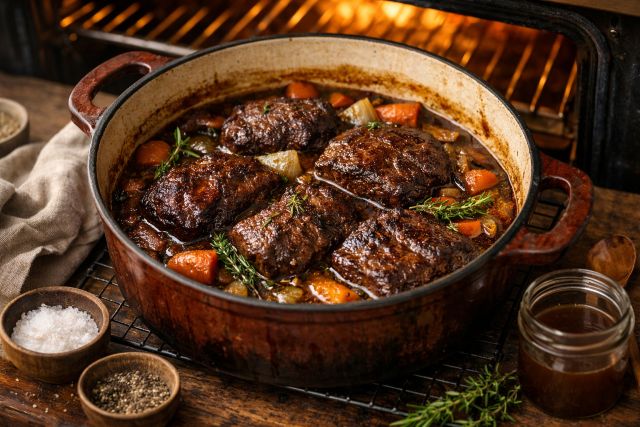

If you’ve ever bought a “stewing” or braising steak and ended up with chewy, dry meat, the issue usually isn’t the cut — it’s the method. Braising is the technique that turns tough, collagen-rich beef into something spoon-tender and deeply savory, and the oven is your best friend for making it consistent. Unlike stovetop simmering (where heat can spike and scorch), the oven delivers steady, gentle heat that coaxes connective tissue to soften while your sauce concentrates into real, restaurant-style depth.
In this guide, you’ll learn the no-fail, repeatable approach to braising steak in the oven — plus the “why” behind each step so you can improvise confidently with whatever cut, pot, and pantry you have.
What is braising steak?
Braising steak is a general label for tougher beef cuts that shine when cooked low and slow with moisture. Think of it as “the right steak for a stew or pot roast,” not a quick-sear dinner steak. These cuts contain more connective tissue (collagen), which needs time and gentle heat to transform into gelatin — the key to that luxurious, sticky tenderness people describe as “fall-apart.” Collagen starts dissolving into gelatin around 160–180°F (71–82°C), but it takes time at those temperatures for the full magic to happen.
Why the oven method is the most foolproof way to braise
Oven braising is reliable because it reduces the two biggest home-cook risks:
Temperature spikes and boiling: Braises should simmer gently, not boil hard. Boiling can tighten proteins and make the meat taste stringy before collagen fully breaks down.
Hot spots: Stovetop burners can create localized scorching, especially with thick sauces. The oven surrounds your pot with even heat.
A good oven braise is essentially controlled, gentle heat + time + just enough liquid to keep things moist.
Best cuts for braising steak
When shopping, look for marbling (white streaks of fat) and visible connective tissue (silvery seams). Those are flavor and texture insurance.
Great options for braising include:
Chuck (boneless chuck steak, chuck roast cut into steaks)
Blade steak
Round cuts sold as braising/stewing steak (they work, but can be lean—use extra care)
Short ribs cut into chunks (more luxurious, usually pricier)
If your package simply says “braising steak,” assume it’s a tougher working-muscle cut and treat it accordingly: low oven temperature, enough time, and don’t rush the finish.
The no-fail oven method for braising steak
Overview (what you’re aiming for)
You’re going to:
season and sear for deep flavor,
build a braising liquid with a quick deglaze,
cover and oven-braise at a steady temp until tender,
reduce and finish the sauce so it tastes intentional — not watery.
Searing matters because browning creates complex roasted flavors via the Maillard reaction, which kicks in around 300°F / 150°C on the meat’s surface.
Ingredients (flexible template)
You can treat this as a base formula:
Braising steak: 2–3 pounds (900–1350 g), cut into large chunks
Salt + pepper
Oil: for searing
Aromatics: onion + garlic (or shallot/leek)
Braising liquid: beef stock, or stock + wine/beer
Tomato element (optional): paste or crushed tomato for body
Herbs: bay leaf, thyme, rosemary
Flavor boosters (optional): Worcestershire, soy sauce, mustard, balsamic
Equipment
A heavy, oven-safe pot with a lid is ideal (Dutch oven). If you don’t have one, use a deep roasting pan tightly covered with foil.
Step-by-step: braising steak in the oven (with exact temps)
1) Preheat and season
Preheat the oven to 300°F (150°C).
Pat the meat dry, then season generously with salt and pepper. Dry meat browns faster, which means better flavor and less steaming.
2) Sear for flavor (don’t skip)
Heat a thin layer of oil in your pot over medium-high until shimmering. Sear the meat in batches so it browns instead of boiling. You’re looking for a deep brown crust on at least two sides.
This step doesn’t “seal in juices” (that’s a myth), but it absolutely builds flavor compounds that make the finished braise taste richer and meatier.
3) Sauté aromatics
Lower heat to medium. Add onion (and a little more oil if needed) and cook until softened. Add garlic for the last 30 seconds so it doesn’t burn.
4) Deglaze (this is where the sauce gets serious)
Pour in wine/beer/stock (even water works in a pinch) and scrape up the browned bits. Those bits are concentrated flavor from searing—free seasoning you already paid for.
5) Add braising liquid and return meat
Return the meat to the pot. Add stock until the liquid comes about ⅓ to ½ up the meat, not fully submerged. Add herbs and any optional boosters.
6) Cover and braise in the oven
Cover tightly and move to the oven at 300°F (150°C).
Timing depends on the cut and thickness, but a reliable range for “braising steak” pieces is about 2 to 3 hours, until fork-tender. Beef industry guidance shows many braising cuts land in this general window (often ~1¾ to 3½ hours depending on cut and size).
What “done” looks like: a fork slides in with little resistance, and the meat can be pulled apart without a fight.
7) Rest the meat, then finish the sauce
Once tender, remove the meat and let it rest (loosely covered). Now you have two options:
Reduce: Simmer the braising liquid uncovered until glossy and slightly thickened.
Thicken gently: If you prefer a gravy-like finish, whisk a small cornstarch slurry into a simmering sauce, then cook 1–2 minutes.
Taste and correct: salt, pepper, a splash of acid (vinegar/lemon), or a small knob of butter for shine.
The most common braising steak mistakes (and quick fixes)
“My braising steak is tough — what did I do wrong?”
Most of the time, it’s simply undercooked. Tough braised beef usually needs more time, not less. Collagen needs both heat and time to convert into gelatin; reaching the temperature isn’t enough by itself.
Fix: Put it back in the oven, covered, and check every 20–30 minutes.
“My sauce tastes thin or bland”
Thin usually means too much liquid or not enough reduction time. Bland usually means it needs salt, concentration, or acidity.
Fix: Reduce uncovered. Then adjust seasoning. A teaspoon of vinegar or a squeeze of lemon can wake up a flat braise instantly.
“The meat is dry but still not tender”
This happens most with very lean cuts sold as “stewing steak” from the round. They can dry out before they feel silky.
Fix: Use a slightly lower oven (275°F/135°C) next time and ensure the pot is tightly covered. Also, slice lean braised beef across the grain when serving.
A practical doneness and safety note (without overcomplicating it)
For food safety, USDA guidance lists 145°F (63°C) plus a 3-minute rest as a safe minimum for whole beef steaks/roasts.
Braising typically goes well beyond that temperature because tenderness comes from collagen breakdown, not “medium rare.”
If you’re serving immunocompromised guests, pregnant guests, or older adults, it’s smart to be extra strict about safe handling and full cooking. Foodborne illness is common—CDC estimates 48 million people get sick each year in the U.S.
Flavor variations that still follow the no-fail method
Classic red wine braising steak
Use red wine for the deglaze and part of the braising liquid. Add thyme + bay leaf, and finish with a splash of vinegar for balance.
Dark beer and onion braise
Deglaze with stout/porter and add lots of onions. Finish with mustard for a steakhouse vibe.
Tomato-garlic “Sunday sauce” braise
Add tomato paste after the aromatics, toast it for a minute, then deglaze. Braise with crushed tomatoes + stock. Finish with fresh herbs.
FAQ
What temperature should I use for braising steak in the oven?
A dependable range is 300–325°F (150–163°C) for most braises; 300°F is a safe “no-fail” choice that stays gentle and forgiving.
How long does braising steak take in the oven?
Most braising steak pieces become tender in 2–3 hours at 300°F (150°C), but the real test is fork-tender texture, not the clock.
Do I need to sear braising steak first?
You don’t have to, but you’ll get a noticeably richer result when you do. Browning builds flavor through the Maillard reaction, which begins around 300°F / 150°C on the surface.
Why is my braising steak still tough after 2 hours?
Because collagen conversion takes time. If it’s tough, it usually needs more oven time so connective tissue can fully soften into gelatin.
Can I braise steak without a Dutch oven?
Yes. Use a deep roasting pan and cover tightly with foil (double layer). The key is minimizing steam loss so the cooking environment stays moist and steady.
Conclusion: braising steak you can trust every time
Once you understand what braising steak is built for — tougher muscle, more collagen, more flavor potential — the oven method becomes almost automatic. Sear for depth, deglaze for a foundation, braise low and steady until fork-tender, then reduce the sauce until it tastes like you meant it. Do that, and “budget beef” turns into the kind of rich, comforting meal people assume took professional skill — when it’s really just the no-fail logic of braising steak in the oven.















Leave a comment