
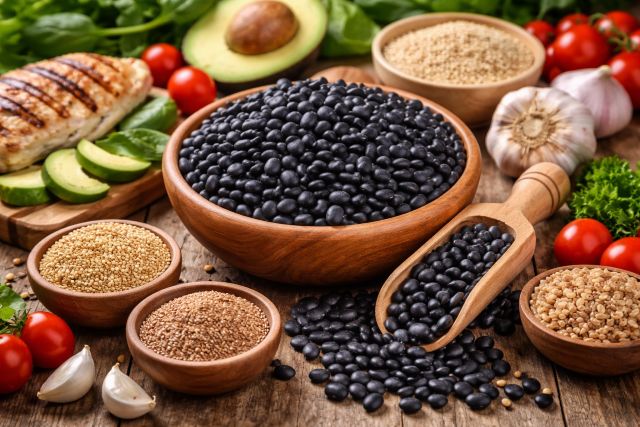

If you’ve ever wondered why black turtle beans show up so often in “healthy meal” recipes, it’s not hype. They’re one of the most nutrient-dense pantry staples you can buy: high in plant protein, packed with fiber, and loaded with key minerals that support energy, heart health, and gut health.
In this guide, you’ll get clear black turtle beans nutrition facts, what those numbers actually mean for your body, and how to use black turtle beans in real life — whether you’re trying to eat more protein, improve digestion, or build filling meals on a budget.
What are black turtle beans?
Black turtle beans are the small, shiny black beans commonly used in Latin American and Caribbean cooking (often called frijoles negros). Nutritionally, they’re a legume—meaning they bring a rare combination of protein + fiber + complex carbs that keeps meals satisfying and steady for blood sugar.
If your goal is “eat healthier without overcomplicating it,” black turtle beans are one of the simplest upgrades you can make.
Black turtle beans nutrition facts (1 cup cooked)
Here’s the nutrition profile for 1 cup cooked black turtle beans (about 172 g):
Calories: 227
Protein: 15.2 g
Total carbs: 40.8 g
Dietary fiber: 15 g
Fat: 0.93 g
Potassium: 610.6 mg
Iron: 3.6 mg
Magnesium: 120.4 mg
Folate: 256.3 mcg DFE
These values come from USDA FoodData Central data as presented by MyFoodData.
Quick takeaway: one cup gives you about 15 g protein + 15 g fiber—that’s why black turtle beans are so filling.
Why the protein in black turtle beans matters
The 15.2 grams of protein per cooked cup is a big deal for a plant food. It can help with:
Feeling full (and staying full)
Protein triggers satiety signals. When you combine protein with fiber (like black turtle beans naturally do), meals tend to keep you satisfied longer than refined carbs.
Supporting muscle maintenance
If you lift weights, walk a lot, or you’re trying to lose fat without losing muscle, protein intake matters. Black turtle beans won’t replace all protein sources, but they make it easier to hit daily targets—especially in plant-forward diets.
“Complete protein” question: do black turtle beans have all amino acids?
Like most legumes, black turtle beans are lower in methionine compared with animal proteins. That doesn’t mean they’re “incomplete” in a practical sense—just pair them with grains (rice, corn tortillas, whole wheat) across the day and you’ll cover the full spectrum easily.
Real-life example: the classic “beans + rice” combo is popular for a reason—it’s affordable, filling, and nutritionally complementary.
The fiber in black turtle beans is the real headline
A single cup has 15 grams of dietary fiber. For context, the FDA Daily Value for fiber is 28 g/day on a 2,000-calorie diet. That means one cup of black turtle beans can deliver more than half of a typical daily target.
What fiber actually does (beyond “helps you poop”)
Fiber supports several systems at once:
Digestive regularity and gut comfort (especially when you increase gradually)
Blood sugar stability by slowing digestion and carbohydrate absorption
Heart health: soluble fiber can help lower LDL cholesterol by reducing absorption in the gut
Harvard Health also notes many adults fall short of recommended fiber intake, and a common guideline is ~14 g fiber per 1,000 calories (about 28–34 g/day for many people).
Featured-snippet style definition
Black turtle beans are high-fiber legumes. One cooked cup provides 15 g fiber—over half of the FDA’s 28 g Daily Value—supporting fullness, digestion, and heart health.
Calories and carbs: are black turtle beans “high carb”?
Black turtle beans do contain carbs—about 40.8 g per cooked cup—but the type matters. A large portion is fiber (15 g), leaving fewer digestible carbs than it first appears. That’s why beans often perform well in diets aimed at blood sugar control and weight management.
If you’re counting macros, it’s also helpful to think in meals, not isolated numbers:
Example meal scenario:
½ cup black turtle beans in a bowl (about half the numbers above)
paired with vegetables + avocado + lean protein (or tofu)
This often lands as a filling, balanced meal without a blood sugar “crash.”
Micronutrients: the “hidden” benefits inside black turtle beans
Black turtle beans aren’t just protein and fiber—they’re also a mineral and B-vitamin package.
Folate (B9)
One cup provides 256 mcg DFE folate (64% DV). Folate is essential for DNA synthesis and red blood cell formation—important in pregnancy, growth, and general energy metabolism.
Magnesium
At ~120 mg per cup, black turtle beans contribute meaningfully to magnesium intake. Magnesium plays roles in muscle function, nerve signaling, and glucose metabolism.
Iron
Black turtle beans provide 3.6 mg iron per cup. If you eat mostly plant-based, iron strategy matters. Pair beans with vitamin C foods (citrus, bell peppers, tomatoes) to support absorption.
Potassium
With ~611 mg potassium per cup, they support electrolyte balance and heart function.
Antioxidants in black turtle beans: what the research suggests
The dark color of black turtle beans comes from plant compounds such as anthocyanins (also found in berries). Cleveland Clinic highlights that black beans contain antioxidants including anthocyanins and quercetin, which are linked to overall health and cellular protection.
You don’t need to treat antioxidants like magic. A practical view is: black turtle beans help you eat more plant diversity, and that’s consistently associated with better long-term health patterns.
Health benefits backed by credible sources
Heart health and cholesterol support
The American Heart Association encourages beans and legumes as part of a heart-healthy eating pattern, noting that swapping plant proteins for red meat can help lower blood cholesterol, and that beans’ fiber helps with satiety.
Research reviews also support the idea that bean-inclusive diets can improve risk markers like LDL cholesterol.
Better metabolic health (blood sugar, weight support)
Because black turtle beans combine fiber + protein and are minimally processed when cooked from dried or canned, they often fit well into eating patterns focused on stable energy and fullness—especially compared with refined grains.
Dried vs canned black turtle beans: which is healthier?
Both can be healthy. The bigger differences are sodium and convenience.
| Option | Pros | Watch-outs |
|---|---|---|
| Dried black turtle beans | Cheapest per serving, you control texture and sodium | Requires soaking/cooking time |
| Canned black turtle beans | Fast, consistent, great for weeknights | Some brands are high sodium—rinse to reduce |
If you go canned, rinsing can meaningfully cut sodium for many foods. And if you cook from dried, you can batch-cook and freeze portions for “canned-level” convenience.
How much black turtle beans should you eat?
A realistic “sweet spot” for most people is ½ to 1 cup cooked in a meal a few times per week. That range gives you a meaningful fiber/protein boost without overwhelming your digestion if you’re not used to legumes.
If you’re new to beans, start smaller:
Begin with ¼–½ cup, then increase over 1–2 weeks.
Drink enough water (fiber works best with hydration).
Choose well-cooked beans for better comfort.
Common issues: gas and bloating (and how to reduce it)
If black turtle beans make you gassy, it doesn’t mean they “don’t agree with you.” It often means your gut is adapting to more fermentable fiber.
Try these practical fixes:
Increase portions gradually (don’t jump from zero beans to a huge bowl)
Rinse canned beans very well
Cook dried beans thoroughly; consider soaking and discarding soak water
Pair beans with familiar foods (rice, soups, stews) rather than eating them alone
Most people notice improved tolerance over time as gut microbes adjust.
Best ways to eat black turtle beans (simple, high-impact ideas)
You don’t need complicated recipes to benefit from black turtle beans. Here are easy patterns that work in real kitchens:
Add ½ cup to salads for a protein + fiber upgrade
Stir into soups and chili to make them heartier
Use in taco bowls with salsa, lettuce, and a protein
Mash into a bean spread with olive oil, lime, garlic, and cumin
Blend into black bean brownies if you like experimenting (yes, it can work)
Actionable tip: If you want the benefits with minimal effort, keep two staples stocked: canned black turtle beans + frozen vegetables. That combo builds a meal fast.
FAQ: black turtle beans nutrition
Are black turtle beans high in protein?
Yes. One cup cooked black turtle beans has about 15.2 g of protein, making them one of the more protein-dense plant staples.
Are black turtle beans high in fiber?
Very high. One cup provides 15 g fiber, which is over half of the FDA’s 28 g Daily Value for adults on a 2,000-calorie diet.
How many calories are in black turtle beans?
About 227 calories per cooked cup (172 g), with most calories coming from carbs and protein, and very little fat.
Are black turtle beans good for heart health?
They can be. The American Heart Association supports beans and legumes in heart-healthy eating patterns, noting benefits from fiber and swapping plant proteins for red meat.
Are canned black turtle beans as healthy as dried?
Usually yes, especially if you rinse canned beans to reduce sodium. Dried beans give you more control, but canned is a great convenience option.
Conclusion: are black turtle beans healthy?
Black turtle beans are one of the best “everyday superfoods” because they deliver a rare combo of protein, fiber, and minerals at a low cost. One cooked cup provides 15.2 g protein and 15 g fiber, plus nutrients like folate, magnesium, iron, and potassium. With the FDA fiber Daily Value set at 28 g/day, black turtle beans can help you close the fiber gap quickly.
If you want a simple next step, start with ½ cup a few times per week — in salads, soups, or bowls — and build up gradually. Your gut (and your meal routine) will thank you.















Leave a comment