
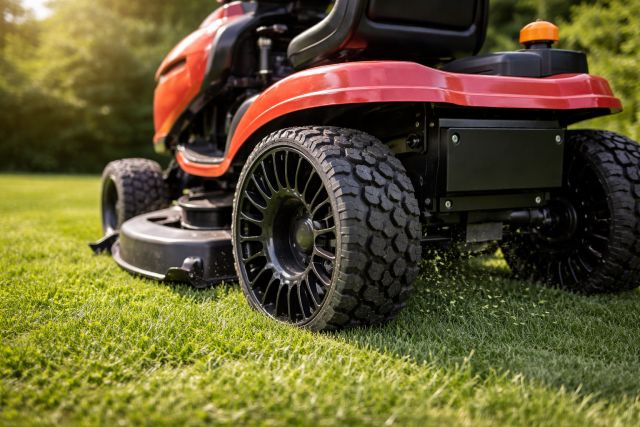

If you’re tired of dealing with flat tires, uneven cuts, and constant maintenance, upgrading to airless mower tires could completely transform your lawn care experience. These innovative tires are designed to eliminate punctures, reduce downtime, and provide consistent performance across all types of terrain.
In the first few uses alone, many homeowners and professionals notice smoother mowing, improved traction, and significantly less hassle. Whether you’re maintaining a small backyard or managing large commercial landscapes, switching to airless technology is a practical and cost-effective upgrade.
What Are Airless Mower Tires?
Airless mower tires, sometimes called flat-free or solid mower tires, are designed without the need for air pressure. Instead of being filled with air like traditional pneumatic tires, they are constructed using solid rubber or advanced polyurethane materials that maintain their shape and performance under stress.
Unlike standard tires that rely on internal air pressure, these tires use engineered structures or dense materials to absorb shocks and support weight. This eliminates the risk of punctures caused by sharp objects like nails, thorns, or debris commonly found in lawns.
According to research by the U.S. Consumer Product Safety Commission, thousands of lawn mower injuries and maintenance issues are linked to equipment failure or improper upkeep, including tire problems. By removing one of the most failure-prone components, airless tires significantly improve reliability.
Why Upgrade to Airless Mower Tires?
Say Goodbye to Flat Tires Forever
One of the biggest advantages of airless mower tires is their puncture-proof design. Traditional tires can lose air pressure over time or get damaged unexpectedly, often at the worst possible moment. Airless tires completely eliminate this issue, ensuring uninterrupted mowing.
For homeowners, this means fewer delays. For professionals, it translates to higher productivity and reduced operational costs.
Reduced Maintenance and Long-Term Savings
Maintaining pneumatic tires involves checking air pressure, patching leaks, and sometimes replacing tubes. Over time, these small tasks add up in both time and money.
Airless tires require virtually no maintenance. Once installed, they can last for years without needing attention. According to industry estimates from organizations like the Outdoor Power Equipment Institute (OPEI), reducing maintenance can cut equipment downtime by up to 30%.
Improved Durability on Rough Terrain
If your lawn includes uneven ground, gravel, or hidden debris, standard tires can struggle. Airless mower tires are built to withstand tough environments without losing performance.
Their solid construction ensures consistent traction and stability, even on slopes or bumpy surfaces. This makes them ideal for both residential users with challenging yards and commercial landscapers handling diverse terrains.
How Airless Mower Tires Improve Performance
Consistent Cutting Quality
Uneven tire pressure in traditional tires can lead to inconsistent mowing heights. This results in patchy grass and an unprofessional finish.
Airless tires maintain a consistent shape, ensuring that your mower deck stays level. This leads to cleaner, more even cuts every time.
Enhanced Stability and Safety
Safety is a major concern when operating lawn equipment. Uneven or deflated tires can cause instability, especially on inclines.
Airless tires provide a firm, stable base that improves control and reduces the risk of tipping. This is particularly important for zero-turn mowers and riding lawn mowers.
Better Weight Distribution
Because airless tires don’t compress unevenly, they distribute the mower’s weight more evenly across the surface. This reduces soil compaction and helps protect your lawn from damage.
The result is healthier grass and a more professional-looking landscape.
Types of Airless Mower Tires
Airless mower tires come in several variations depending on their construction and intended use.
Solid rubber tires are the most common option for residential users. They are affordable, durable, and easy to install.
Polyurethane foam-filled tires offer a balance between comfort and durability. These are often used in commercial settings where performance is critical.
Advanced honeycomb or structured tires feature internal patterns that provide shock absorption similar to pneumatic tires. These are typically found in premium models.
Each type has its own advantages, but all share the core benefit of being flat-free and low maintenance.
Installation: Is It Easy to Upgrade?
Upgrading to airless mower tires is generally straightforward, but the process can vary depending on your mower type.
For push mowers, many airless tires come as direct replacements and can be installed with basic tools.
Riding mowers and zero-turn models may require more effort, including removing existing wheels and ensuring compatibility with axle sizes.
If you’re unsure, consulting your mower’s manual or a professional technician can help ensure a proper fit.
Common Questions About Airless Mower Tires
Are airless mower tires as comfortable as pneumatic tires?
Airless tires can feel slightly firmer because they lack air cushioning. However, modern designs with flexible materials or internal structures help absorb shocks effectively, making them comfortable enough for most users.
Do airless tires affect mower speed or efficiency?
In most cases, airless mower tires do not negatively impact speed. In fact, their consistent performance can improve efficiency by reducing interruptions caused by flats or pressure issues.
Are they worth the investment?
Yes. While the upfront cost may be higher than traditional tires, the long-term savings on maintenance and replacements make airless tires a smart investment.
Real-World Scenario: A Landscaping Business Upgrade
Consider a small landscaping company managing multiple properties daily. Frequent tire punctures can lead to delays, missed appointments, and unhappy clients.
After switching to airless mower tires, many businesses report fewer interruptions and improved workflow. According to a case study published by Turf Magazine, companies that upgraded to flat-free tires saw a noticeable increase in productivity and reduced maintenance costs.
This example highlights how a simple upgrade can have a significant impact on overall efficiency.
Tips for Choosing the Right Airless Mower Tires
When selecting airless mower tires, it’s important to consider compatibility, material quality, and intended use.
Make sure the tire size matches your mower’s specifications. Choosing high-quality materials ensures better durability and performance.
If you frequently mow uneven or rough terrain, consider advanced designs with shock-absorbing features.
The Future of Lawn Care Technology
Airless tire technology is not just limited to lawn mowers. It is being adopted in industries like construction, agriculture, and even automotive design.
Major companies like Michelin have developed airless tire prototypes for vehicles, indicating a growing trend toward maintenance-free mobility solutions.
As technology continues to evolve, we can expect even more advanced versions of airless mower tires with improved comfort and efficiency.
Conclusion
Upgrading to airless mower tires is one of the smartest decisions you can make for your lawn care routine. They eliminate the frustration of flat tires, reduce maintenance, and provide consistent performance across all types of terrain.
Whether you’re a homeowner looking for convenience or a professional seeking efficiency, airless tires offer a reliable, long-term solution. With their durability, safety benefits, and cost savings, they are quickly becoming the preferred choice for modern lawn maintenance.













Leave a comment