
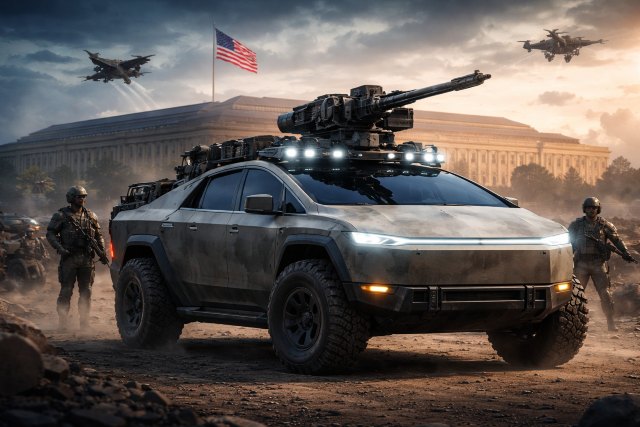

The idea of Pentagon Big Tech Tesla Cybertruck collaboration is no longer just speculative — it reflects a broader shift toward integrating cutting-edge commercial technology into defense systems. Within the first few years of its unveiling, Tesla’s Cybertruck has sparked interest not only among consumers but also among defense analysts and military strategists. Its unique design, durability claims, and electric architecture align with emerging Pentagon priorities focused on sustainability, autonomy, and advanced mobility.
As global defense strategies evolve, the intersection of Big Tech and military innovation is becoming increasingly important. The Cybertruck represents a potential case study in how civilian technology can influence the future battlefield.
Why the Pentagon Is Looking at Big Tech for Military Innovation
The Pentagon has increasingly partnered with major technology companies to accelerate innovation. Organizations like the U.S. Department of Defense have recognized that Silicon Valley often moves faster than traditional defense contractors.
Programs such as the Defense Innovation Unit (DIU) highlight this shift. According to the official DIU website, the Pentagon actively collaborates with commercial firms to adopt emerging technologies like artificial intelligence, autonomous systems, and advanced materials.
Tesla, as a leader in electric vehicles and battery innovation, naturally fits into this ecosystem. The Cybertruck, in particular, presents features that align with modern defense needs.
What Makes the Tesla Cybertruck Military-Relevant
The Pentagon Big Tech Tesla Cybertruck concept gains traction because of several core features that distinguish it from conventional vehicles.
First, its stainless steel exoskeleton is marketed as highly durable. Tesla claims it offers resistance to dents and corrosion, which could be advantageous in harsh environments. While not officially military-grade armor, its structural strength has drawn comparisons to light tactical vehicles.
Second, the Cybertruck’s electric powertrain introduces silent mobility. Unlike traditional combustion engines, electric vehicles produce minimal noise, which could be beneficial in reconnaissance missions or stealth operations.
Third, Tesla’s battery technology enables long-range capabilities. With advancements in energy density, electric military vehicles could reduce reliance on fuel supply chains, which are often vulnerable in conflict zones.
Pentagon Big Tech Tesla Cybertruck in Defense Strategy
The phrase Pentagon Big Tech Tesla Cybertruck is increasingly discussed in defense circles as part of a broader modernization strategy. The U.S. military has already begun exploring electric and hybrid vehicles.
According to a report by the U.S. Army Climate Strategy, the Army aims to transition to fully electric non-tactical vehicles by 2035 and tactical vehicles by 2050. This indicates a clear long-term interest in electrification.
In this context, vehicles like the Cybertruck could serve as experimental platforms. Even if not directly adopted, the underlying technologies — battery systems, software integration, and autonomous capabilities — could influence future military designs.
The Role of Big Tech in Modern Warfare
Big Tech companies are reshaping warfare through innovation. Tesla, while not traditionally a defense contractor, contributes to this transformation through advancements in software, AI, and energy systems.
Modern warfare increasingly relies on data, automation, and connectivity. Tesla’s expertise in over-the-air updates, autonomous driving algorithms, and sensor integration could theoretically enhance military vehicle performance.
Companies like Palantir, Amazon, and Microsoft have already secured defense contracts. Tesla’s involvement, whether direct or indirect, would represent another step in blending commercial innovation with national security priorities.
Could the Cybertruck Be Used in Military Operations?
The practical application of a Cybertruck in military operations raises several questions. While Tesla has not announced any official defense contracts for the Cybertruck, analysts have explored potential use cases.
One possible scenario involves logistics and base operations. Electric trucks could be used for transporting supplies within controlled environments, reducing fuel costs and emissions.
Another scenario involves rapid deployment in urban settings. The Cybertruck’s compact yet robust design could make it suitable for urban mobility where traditional armored vehicles are less efficient.
However, challenges remain. Military vehicles require specialized armor, communication systems, and reliability under extreme conditions. The Cybertruck would need significant modifications to meet these standards.
Advantages of Electric Military Vehicles
The interest in the Pentagon Big Tech Tesla Cybertruck is part of a larger trend toward electrification in defense.
Electric vehicles offer several strategic advantages. They reduce dependency on fuel logistics, which are often targeted in conflicts. According to the U.S. Department of Defense, fuel convoys have historically been among the most vulnerable assets in war zones.
Electric systems also enable integration with renewable energy sources. Forward operating bases could use solar or other energy systems to recharge vehicles, increasing operational independence.
Additionally, electric vehicles support quieter operations. Reduced noise and thermal signatures can enhance stealth capabilities.
Challenges and Limitations
Despite its potential, the Cybertruck — and electric military vehicles in general — faces significant challenges.
Battery limitations remain a concern. Extreme temperatures, whether hot or cold, can affect battery performance. Military operations often occur in environments where reliability is critical.
Charging infrastructure is another issue. Unlike fuel, which can be transported and stored relatively easily, electric charging requires specialized equipment.
Cybersecurity is also a growing concern. As vehicles become more software-driven, they become potential targets for hacking. Tesla’s advanced software systems would need robust security measures to meet military standards.
Case Study: Civilian Tech Influencing Military Design
The Pentagon Big Tech Tesla Cybertruck discussion mirrors previous instances where civilian technology influenced military innovation.
For example, GPS technology was initially developed for military use but later became a cornerstone of civilian navigation. Today, the reverse is happening. Commercial drones, originally consumer products, are now widely used in military operations.
Tesla’s innovations in battery technology and autonomous systems could follow a similar trajectory. Even if the Cybertruck itself is not deployed, its underlying technologies could shape future military vehicles.
Future of Autonomous Military Vehicles
Tesla’s advancements in autonomous driving are particularly relevant. The future battlefield is expected to include autonomous or semi-autonomous vehicles.
According to research from RAND Corporation, autonomous systems could improve efficiency and reduce risk to human soldiers. Tesla’s Full Self-Driving (FSD) technology, while still evolving, demonstrates the potential of AI-driven mobility.
In a military context, autonomous vehicles could be used for supply transport, reconnaissance, or even evacuation missions. The integration of such systems would require rigorous testing and ethical considerations.
Environmental Impact and Sustainability
The Pentagon has increasingly emphasized sustainability. Climate change is considered a national security issue, and reducing emissions is part of long-term defense planning.
Electric vehicles like the Cybertruck align with these goals. They produce zero tailpipe emissions and can be powered by renewable energy sources.
The U.S. Army Climate Strategy highlights the importance of reducing greenhouse gas emissions. Transitioning to electric vehicles is a key component of this effort.
Frequently Asked Questions
Is the Tesla Cybertruck currently used by the Pentagon?
No, there is no official confirmation that the Cybertruck is being used by the Pentagon. However, its technology aligns with military interests in electrification and innovation.
Why is the Pentagon interested in Big Tech companies?
Big Tech companies innovate rapidly and develop advanced technologies such as AI, cloud computing, and autonomous systems, which are critical for modern defense strategies.
Could electric vehicles replace military trucks?
Electric vehicles are likely to complement rather than fully replace traditional military trucks in the near term due to infrastructure and performance challenges.
What makes the Cybertruck unique for defense applications?
Its durable exoskeleton, electric powertrain, and advanced software systems make it a potential candidate for experimental military applications.
Conclusion: The Future of Pentagon Big Tech Tesla Cybertruck
The concept of Pentagon Big Tech Tesla Cybertruck represents more than just a futuristic idea — it reflects a fundamental shift in how military innovation is evolving. As the Pentagon increasingly collaborates with commercial technology companies, vehicles like the Cybertruck highlight the potential of integrating cutting-edge civilian advancements into defense systems.
While challenges remain, including battery limitations and infrastructure needs, the direction is clear. Electrification, autonomy, and software-driven systems will define the next generation of military vehicles.
Whether or not the Cybertruck itself becomes a part of military operations, its influence is undeniable. It symbolizes a new era where Big Tech and defense intersect, shaping the future of warfare and global security.














Leave a comment