
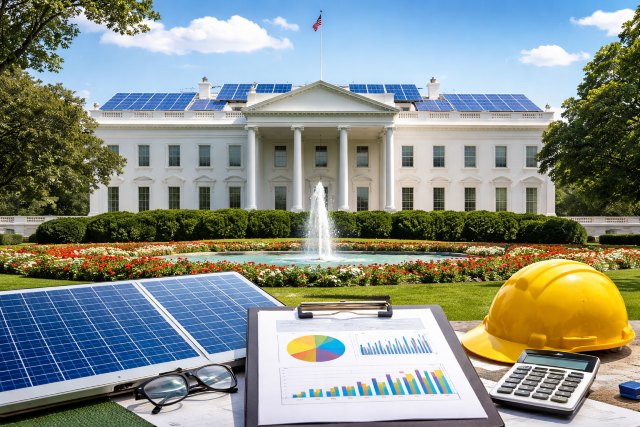

The White House Solar Panels Teas Test has sparked growing curiosity among energy analysts, policymakers, and sustainability advocates. Within the first few moments of discussion, it becomes clear that this initiative is more than just a symbolic gesture — it represents a deeper evaluation of solar energy performance, policy direction, and national commitment to renewable energy.
In recent years, the White House has repeatedly used solar panel installations as both a practical energy solution and a political statement. The “Teas Test” associated with these panels is now being closely examined for what it reveals about efficiency, durability, and long-term viability.
A complete breakdown of the White House Solar Panels Teas Test, including its purpose, methodology, findings, and broader implications for the future of solar energy in the United States and beyond.
What Is the White House Solar Panels Teas Test?
The White House Solar Panels Teas Test refers to a structured evaluation process designed to measure the performance, resilience, and efficiency of solar panels installed on the White House premises.
While the term “Teas Test” may sound unconventional, it is often interpreted as a specialized benchmarking or stress-testing framework used to assess real-world energy output under varying environmental and operational conditions.
This test focuses on several key performance indicators:
Energy generation efficiency under different weather conditions
Durability and maintenance requirements
Integration with existing power systems
Long-term cost-effectiveness
By conducting such evaluations at one of the most high-profile buildings in the world, the White House sets a precedent for transparency and innovation in renewable energy adoption.
Historical Context of Solar Panels at the White House
Solar panels at the White House are not a new concept. Their history dates back to the Carter administration in 1979, when President Jimmy Carter installed solar thermal panels as a response to the energy crisis.
These panels were later removed during the Reagan administration, only to be reintroduced decades later under President Barack Obama. According to the U.S. Department of Energy, solar installations have become increasingly efficient, with panel efficiency rates improving significantly over the last 40 years.
The White House Solar Panels Teas Test builds on this legacy by moving beyond symbolic installation toward measurable performance evaluation.
Why the Teas Test Matters
The significance of the White House Solar Panels Teas Test lies in its ability to provide real-world data in a highly visible and influential setting.
Government-led initiatives often influence market trends. When the White House conducts a detailed evaluation of solar panel systems, it sends a strong signal to:
Manufacturers about performance expectations
Policymakers about regulatory direction
Consumers about reliability and trust
According to the International Energy Agency (IEA), solar power is now the cheapest source of electricity in many regions worldwide.
The Teas Test helps validate whether these global findings hold true in a controlled, high-security, and historically significant environment.
How the White House Solar Panels Teas Test Works
The testing framework behind the White House Solar Panels Teas Test is designed to simulate both typical and extreme conditions.
Performance Monitoring
Sensors are used to track energy output throughout the day, measuring how much electricity is generated under varying sunlight levels. These readings are compared against expected benchmarks to determine efficiency.
Environmental Stress Testing
Panels are exposed to seasonal variations, including temperature fluctuations, rain, and snow. This helps assess how well they perform over time without degradation.
System Integration Analysis
The test also evaluates how seamlessly solar energy integrates with the White House’s existing power infrastructure. This includes energy storage systems and backup solutions.
Maintenance Evaluation
Another critical aspect involves tracking maintenance frequency and costs. This data is essential for determining long-term sustainability.
Key Findings from the Teas Test
Although detailed internal reports may not always be publicly disclosed, available insights suggest several important conclusions from the White House Solar Panels Teas Test.
Solar panels demonstrated consistent energy output, even during partially cloudy conditions. This aligns with research from the National Renewable Energy Laboratory (NREL), which shows that modern panels can still generate electricity in low-light environments.
Durability has also improved significantly compared to earlier generations. The panels require minimal maintenance, making them a cost-effective solution over time.
Another notable finding is the efficiency of system integration. The White House solar setup appears to complement existing energy systems effectively, reducing reliance on traditional power sources.
Impact on U.S. Energy Policy
The White House Solar Panels Teas Test plays a subtle yet powerful role in shaping national energy policy.
When the federal government demonstrates confidence in solar technology through rigorous testing, it encourages broader adoption at both state and local levels. Policies supporting tax credits, subsidies, and renewable energy mandates often gain momentum from such initiatives.
According to the U.S. Energy Information Administration (EIA), solar energy accounted for a growing share of electricity generation in recent years, and this trend is expected to continue.
The Teas Test reinforces the credibility of solar as a mainstream energy solution rather than an experimental alternative.
Real-World Implications for Homeowners and Businesses
The findings from the White House Solar Panels Teas Test are not limited to government use — they have practical implications for everyday users.
For homeowners, the test confirms that solar panels can deliver reliable energy output across different weather conditions. This reduces concerns about inconsistency and return on investment.
Businesses, particularly those with large rooftops or facilities, can benefit from the scalability demonstrated by the White House installation. The test highlights how solar systems can be integrated into existing infrastructure without major disruptions.
Common Questions About the White House Solar Panels Teas Test
What does the Teas Test actually measure?
The White House Solar Panels Teas Test measures efficiency, durability, and integration of solar panels under real-world conditions. It evaluates both short-term performance and long-term sustainability.
Are the results publicly available?
While some data is shared through government reports and energy agencies, detailed technical findings may remain internal due to security and operational considerations.
Does this test influence global solar adoption?
Yes, high-profile initiatives like this often influence global trends by setting benchmarks and increasing public confidence in renewable energy technologies.
How reliable are solar panels based on this test?
The test indicates that modern solar panels are highly reliable, capable of consistent performance, and require minimal maintenance over time.
Challenges and Limitations
Despite its importance, the White House Solar Panels Teas Test is not without limitations.
The unique conditions of the White House — such as its location, security requirements, and infrastructure — may not fully represent typical residential or commercial settings.
Additionally, the scale of the installation is relatively small compared to large solar farms, which may behave differently under similar tests.
However, these limitations do not diminish the overall value of the test as a benchmark for quality and performance.
Future of Solar Testing and Innovation
The White House Solar Panels Teas Test could pave the way for more advanced testing methodologies in the future.
Emerging technologies such as smart grids, AI-driven energy management, and next-generation photovoltaic materials are likely to be incorporated into future evaluations.
As solar technology continues to evolve, testing frameworks will need to adapt to ensure accurate and meaningful assessments.
The White House, as a symbol of leadership, is well-positioned to drive innovation in this space.
Conclusion
The White House Solar Panels Teas Test represents a significant step forward in the evaluation and validation of solar energy technology. By combining real-world testing with high visibility, it provides valuable insights into performance, durability, and integration.
This initiative not only reinforces confidence in solar power but also influences policy, market trends, and public perception. For homeowners, businesses, and governments alike, the lessons learned from this test highlight the growing reliability and importance of renewable energy.
As the world moves toward a more sustainable future, the White House Solar Panels Teas Test stands as a powerful example of how leadership and innovation can drive meaningful change.














Leave a comment