
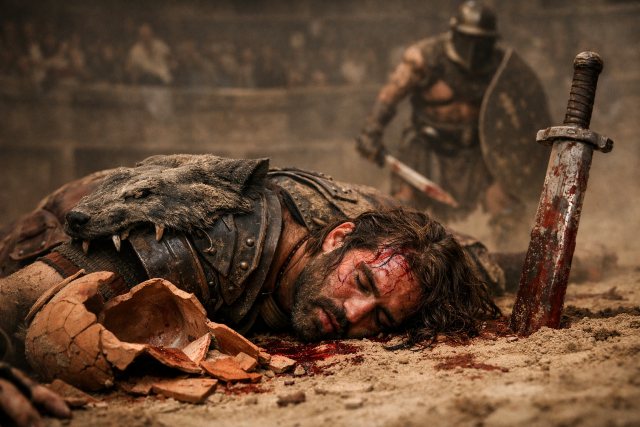

The phrase “Reville Lupus Was Slain by Clay” has sparked intense debate, curiosity, and speculation among historians, researchers, and online communities. While the exact details remain unclear, the mysterious narrative surrounding the incident has continued to capture public attention.
Many people searching for information about Reville Lupus Was Slain by Clay want to understand what really happened, who the individuals were, and why the story became so controversial. Was it a historical event, a symbolic phrase, or a misunderstood record?
Explores the background, theories, historical context, and possible explanations behind the enigmatic statement. By examining available evidence and expert interpretations, we aim to uncover the shocking truth behind the mysterious incident.
Understanding the Phrase “Reville Lupus Was Slain by Clay”
Before diving into theories, it’s important to understand the phrase itself.
At first glance, “Reville Lupus Was Slain by Clay” appears to describe a violent event in which a person named Reville Lupus was killed by someone or something named Clay. However, historical analysis suggests the phrase could have multiple interpretations.
Possible meanings include:
A literal historical incident involving individuals named Reville Lupus and Clay
A symbolic or coded message in historical texts
A mistranslation or corruption of older records
A fictional narrative that later spread online
Language experts often analyze unusual historical phrases to determine whether they originated from archival records, oral traditions, or literary works.
According to research methodologies outlined by the Library of Congress and historical linguistics institutions, contextual evidence is critical when evaluating ambiguous statements.
Historical Context Surrounding the Incident
To understand whether Reville Lupus Was Slain by Clay describes a real event, historians examine the social and historical context of the period in which the phrase may have originated.
During earlier centuries, records were often:
Poorly translated
Written in Latin or regional dialects
Altered through oral storytelling
The name “Lupus” itself is historically significant. In Latin, lupus means wolf, and it has appeared in medieval surnames and symbolic references across Europe.
Meanwhile, “Clay” could represent:
A surname
A geographical location
A symbolic reference to earth or burial
This ambiguity has led scholars to propose multiple theories regarding the mysterious statement.
The Main Theories Behind “Reville Lupus Was Slain by Clay”
Researchers have proposed several explanations for the phrase. While no single theory has been proven definitively, examining these perspectives helps illuminate the mystery.
1. The Historical Conflict Theory
One interpretation suggests that Reville Lupus was a historical figure involved in a political or personal conflict.
Under this theory, Clay may have been:
A rival family name
A military opponent
An assassin hired during a dispute
Historical archives frequently document violent conflicts between influential individuals. For example, medieval chronicles recorded thousands of feuds and assassinations among nobles.
Researchers studying similar cases often rely on regional archives and genealogical databases such as:
However, no confirmed record yet identifies a verified figure named Reville Lupus in widely recognized historical documents.
2. The Linguistic Misinterpretation Theory
Another popular explanation is that the phrase resulted from translation errors.
In historical texts, copying and translation errors were extremely common. A name or phrase written in Latin or Old French could easily be altered over time.
For example:
“Lupus” might originally have been a title or nickname
“Clay” may have referred to soil, land, or burial
In that case, the phrase might actually mean something closer to:
“Reville Lupus was buried in clay.”
Such reinterpretations often occur when historians reexamine ancient manuscripts.
Research on textual corruption in historical documents is discussed extensively by institutions such as The British Library.
3. The Symbolic or Mythological Interpretation
Some scholars argue that Reville Lupus Was Slain by Clay could represent a symbolic narrative rather than a literal event.
In mythology and folklore:
Wolves often symbolize strength or danger
Clay symbolizes creation or mortality
In many cultural traditions, clay represents humanity itself, referencing the idea that humans were formed from earth.
In that symbolic framework, the phrase might represent a metaphor such as:
Power defeated by human ingenuity
Nature overcome by civilization
Mythological storytelling
Symbolic language is extremely common in medieval literature and allegorical writings.
4. The Modern Internet Mystery Theory
In recent years, Reville Lupus Was Slain by Clay has circulated across blogs, forums, and speculative discussions online.
Some researchers believe the phrase may actually originate from:
A fictional narrative
An alternate history story
A creative writing project
A misunderstood quote from literature
Internet culture has created many modern mysteries where phrases become viral without clear origins.
Examples include viral historical myths that were later debunked by historians.
Investigating Evidence and Sources
When analyzing mysterious claims like Reville Lupus Was Slain by Clay, researchers rely on evidence-based methods.
These methods include examining:
Historical manuscripts
Genealogical records
Linguistic analysis
Archaeological context
Professional historians emphasize verifying information through primary sources, which are documents created during the time period in question.
The Smithsonian Institution provides guidance on evaluating historical claims and evidence.
So far, there is no widely accepted primary source confirming the exact event described by the phrase.
This lack of evidence fuels the ongoing debate.
Why the Mystery Continues to Fascinate Researchers
The intrigue surrounding Reville Lupus Was Slain by Clay highlights a broader human fascination with unsolved mysteries.
Several factors contribute to the enduring interest:
Short historical fragments can spark curiosity because they leave room for interpretation.
Ambiguous language invites speculation and storytelling.
Online communities amplify mysterious phrases and theories.
In many cases, such mysteries remain unsolved simply because the original context has been lost.
Yet the search for answers continues.
Common Questions About “Reville Lupus Was Slain by Clay”
What does “Reville Lupus Was Slain by Clay” mean?
The phrase likely describes a mysterious or symbolic event involving a figure named Reville Lupus. However, historians have not confirmed whether it represents a real historical incident or a symbolic expression.
Was Reville Lupus a real historical person?
At present, there is no widely verified historical record identifying a person named Reville Lupus. The name may originate from translation changes or literary sources.
Who or what is Clay in the phrase?
“Clay” could refer to a person, surname, geographical location, or symbolic reference to earth or burial.
Is the incident documented in historical records?
No definitive archival record currently confirms the event described by the phrase.
How Researchers Approach Unsolved Historical Mysteries
When scholars investigate ambiguous historical claims, they often follow several investigative strategies.
They analyze linguistic clues within the phrase.
They compare similar expressions from historical literature.
They search archives for related names or events.
They examine cultural symbolism that may explain the wording.
These techniques allow historians to separate documented facts from speculation.
Lessons from Historical Misinterpretations
The mystery of Reville Lupus Was Slain by Clay demonstrates how easily information can be misunderstood over time.
Throughout history, numerous phrases and stories have been misinterpreted due to translation errors, missing records, or cultural misunderstandings.
For example:
Some medieval legends were later discovered to be symbolic allegories rather than literal events.
Certain historical quotes were incorrectly attributed to famous figures.
Such cases highlight the importance of critical thinking and source verification when evaluating historical claims.
The Ongoing Search for the Truth
Despite the uncertainty, the phrase Reville Lupus Was Slain by Clay continues to inspire discussion among researchers, writers, and historians.
Future discoveries could potentially shed light on its origin. For example:
Newly digitized manuscripts
Archaeological discoveries
Previously untranslated texts
Advancements in digital archives are making historical documents more accessible than ever before.
Institutions such as Europeana and the Digital Public Library of America are helping researchers uncover forgotten records.
Conclusion: The Enigma of Reville Lupus Was Slain by Clay
The phrase Reville Lupus Was Slain by Clay remains one of those fascinating historical mysteries that blur the line between fact, folklore, and interpretation.
While some believe it refers to a real historical event, others argue it may be the result of translation errors, symbolic storytelling, or even modern mythmaking.
Until new evidence emerges, the truth behind Reville Lupus Was Slain by Clay will likely remain uncertain. Yet this very uncertainty keeps the story alive, encouraging researchers and curious readers to continue exploring history’s hidden corners.














Leave a comment