
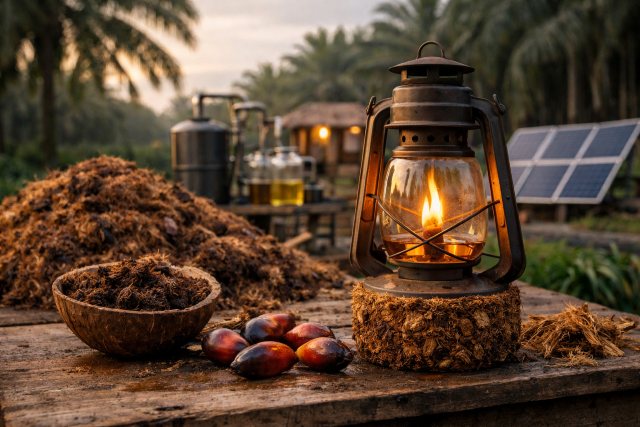

The Oil Palm Lamp Project Existing is an innovative sustainability initiative that transforms palm oil waste into eco-friendly lighting solutions. As the palm oil industry continues to expand globally, millions of tons of waste materials — such as palm kernel shells, empty fruit bunches, and palm oil residues — are produced every year. Instead of letting this waste pollute the environment, the project explores how it can be converted into sustainable lighting fuel and renewable energy sources.
This approach not only reduces environmental pollution but also creates affordable lighting options for rural communities where electricity access is limited. By combining waste management, renewable energy, and sustainable design, the Oil Palm Lamp Project Existing demonstrates how agricultural by-products can be turned into practical solutions for modern energy challenges.
Understanding the Oil Palm Lamp Project Existing
The Oil Palm Lamp Project Existing focuses on converting waste from palm oil production into lamp fuel or energy sources that can power lighting devices. Palm oil plantations generate large amounts of organic waste during harvesting and processing.
Instead of burning or discarding this waste, researchers and environmental innovators have developed methods to process palm oil residues into biofuel, biomass briquettes, and oil-based lamp fuel.
According to the Food and Agriculture Organization (FAO), palm oil production generates millions of tons of biomass waste annually, which can potentially be used for renewable energy applications.
This project is built on the idea of a circular economy, where waste materials are reused to create valuable products rather than contributing to environmental damage.
The Environmental Problem: Palm Oil Waste
Palm oil is one of the most widely produced vegetable oils in the world. Countries like Indonesia and Malaysia account for nearly 85% of global palm oil production.
However, this massive production creates significant environmental challenges:
Large quantities of palm biomass waste
Methane emissions from palm oil mill effluent (POME)
Open burning of agricultural residues
Water and soil contamination
Research from the World Wildlife Fund (WWF) highlights that improper waste disposal in palm oil production contributes to greenhouse gas emissions and environmental degradation.
The Oil Palm Lamp Project Existing offers a practical solution by transforming waste into cleaner energy alternatives.
How the Oil Palm Lamp Project Existing Works
The project uses different types of palm oil by-products to produce lamp fuel or biomass energy.
1. Palm Oil Residue Processing
Palm oil processing leaves behind several by-products:
Palm kernel shells
Palm oil mill effluent (POME)
Empty fruit bunches
Waste palm oil
These materials are processed into biofuel or biomass briquettes that can power lamps.
2. Converting Waste Oil into Lamp Fuel
In some implementations of the Oil Palm Lamp Project Existing, leftover palm oil or degraded oil is purified and used as lamp fuel. The oil burns similarly to traditional kerosene but produces fewer pollutants when refined properly.
3. Biomass Briquettes for Lamp Heating Systems
Palm kernel shells and fiber waste can be compressed into biomass briquettes. These briquettes are burned in specialized lamps or stoves to generate light and heat.
According to the International Renewable Energy Agency (IRENA), biomass energy from agricultural waste can significantly reduce fossil fuel dependence in rural communities.
Benefits of the Oil Palm Lamp Project Existing
Sustainable Waste Management
One of the biggest benefits of the Oil Palm Lamp Project Existing is reducing agricultural waste. Instead of dumping or burning palm residues, the project converts them into useful energy resources.
This helps reduce pollution and encourages circular economy practices in agriculture.
Affordable Lighting for Rural Communities
In many developing regions, households rely on kerosene lamps for lighting. Kerosene is expensive and emits harmful smoke.
Palm oil waste-based lamps provide a cheaper and cleaner alternative for off-grid communities.
Lower Carbon Emissions
Because palm waste is renewable biomass, using it as fuel reduces reliance on fossil fuels. This contributes to lower carbon emissions and supports climate change mitigation efforts.
The Intergovernmental Panel on Climate Change (IPCC) recognizes biomass energy as a key strategy for reducing greenhouse gas emissions when managed sustainably.
Supporting Local Economies
The project also creates economic opportunities by:
Generating jobs in biomass processing
Supporting small-scale energy businesses
Encouraging sustainable agricultural practices
Technologies Used in Palm Waste Lighting
Different technologies are used in the Oil Palm Lamp Project Existing to convert waste into light.
Biofuel Lamps
These lamps use processed palm oil as fuel. The oil is purified and burned using specially designed wicks.
Biofuel lamps are simple, low-cost, and easy to maintain.
Biomass Gasification Systems
More advanced versions of the project use biomass gasifiers that convert palm residues into combustible gases. These gases can power generators that produce electricity for lighting.
Palm Oil Biodiesel
Another approach involves converting waste palm oil into biodiesel, which can power generators or hybrid lighting systems.
According to the U.S. Department of Energy, biodiesel from vegetable oils can significantly reduce lifecycle greenhouse gas emissions compared to petroleum diesel.
Real-World Examples of Palm Waste Energy Projects
Several initiatives worldwide demonstrate the potential of projects similar to the Oil Palm Lamp Project Existing.
Malaysia Biomass Energy Projects
Malaysia has implemented numerous programs to convert palm oil waste into biomass energy. Some palm oil mills generate electricity using palm kernel shells and fiber.
Indonesia Renewable Energy Initiatives
Indonesia has explored using palm oil mill effluent biogas to generate electricity for rural areas.
Community-Based Biofuel Lighting
In some rural communities, small-scale biofuel lamps powered by vegetable oils — including palm oil — have been introduced as alternatives to kerosene lamps.
These examples highlight the potential for scaling the Oil Palm Lamp Project Existing across different regions.
Challenges Facing the Oil Palm Lamp Project Existing
Despite its potential, the project faces several challenges.
Technology Accessibility
Advanced biomass processing technologies can be expensive for small communities.
Sustainability Concerns
Palm oil production has been linked to deforestation and biodiversity loss. Sustainable certification and responsible farming practices are essential.
Organizations like the Roundtable on Sustainable Palm Oil (RSPO) promote environmentally responsible palm oil production.
https://www.rspo.org
Infrastructure Limitations
Many rural regions lack the infrastructure needed to process palm waste efficiently.
Overcoming these barriers requires collaboration between governments, researchers, and local communities.
The Future of Palm Waste Energy and Lighting
The future of the Oil Palm Lamp Project Existing looks promising as global interest in renewable energy continues to grow.
Innovations in biofuel refining, biomass gasification, and sustainable agriculture are making it easier to convert palm waste into energy.
Researchers are also exploring hybrid systems where palm waste fuels solar-powered microgrids, combining renewable technologies for greater efficiency.
According to the International Energy Agency (IEA), biomass energy could play a significant role in achieving global carbon neutrality goals by 2050.
Practical Tips for Implementing a Palm Waste Lamp Project
Communities interested in starting projects similar to the Oil Palm Lamp Project Existing can follow several practical steps.
Start by identifying available palm oil waste resources in the area. Understanding the type and quantity of waste helps determine the most suitable energy conversion technology.
Next, collaborate with local researchers, NGOs, or renewable energy organizations that specialize in biomass energy systems.
Pilot projects can begin with small-scale biofuel lamps before expanding into larger biomass energy systems.
Training programs for local technicians are also essential to ensure proper maintenance and long-term sustainability.
Frequently Asked Questions (FAQ)
What is the Oil Palm Lamp Project Existing?
The Oil Palm Lamp Project Existing is a sustainability initiative that converts palm oil production waste into lighting fuel or biomass energy for lamps.
Can palm oil waste really produce energy?
Yes. Palm oil waste contains organic materials that can be converted into biofuel, biomass briquettes, or biogas, all of which can generate energy.
Is palm oil lamp fuel environmentally friendly?
When produced from waste materials rather than new palm oil production, palm-based biofuel can reduce pollution and fossil fuel use.
Where can palm waste lighting projects be implemented?
These projects are most effective in regions with large palm oil industries, such as Southeast Asia, Africa, and parts of South America.
Conclusion: The Impact of the Oil Palm Lamp Project Existing
The Oil Palm Lamp Project Existing represents a powerful example of how innovation can transform agricultural waste into valuable energy resources. By converting palm oil residues into lighting fuel and biomass energy, the project addresses two major challenges at once — waste management and energy access.
Beyond environmental benefits, this initiative can support rural development, reduce reliance on fossil fuels, and promote sustainable agricultural practices. As renewable energy technologies continue to evolve, projects like the Oil Palm Lamp Project Existing could play a vital role in building a cleaner, more sustainable future.














Leave a comment