
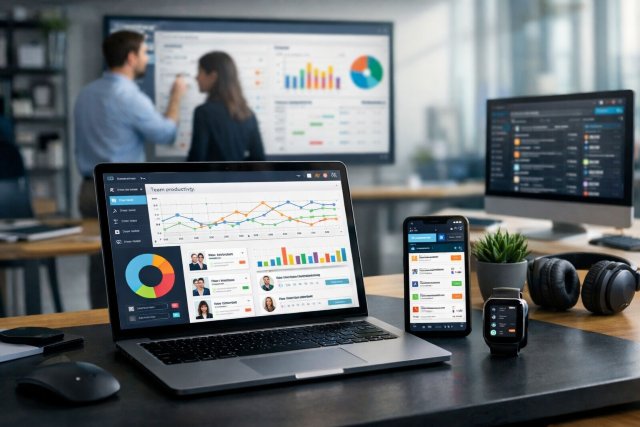

Fkstrcghtc is built for one thing modern teams struggle with every day: aligning people, schedules, time, and labor demand without burning out managers or frustrating employees. In a world of hybrid work, 24/7 customer expectations, and tighter margins, “good enough” scheduling and time tracking usually turns into last-minute shift changes, payroll surprises, and compliance risk. Fkstrcghtc brings those moving parts into one workforce management platform so operations leaders can plan confidently, and employees can work with clarity.
Modern work is also noisier than ever. Research continues to show that engagement, focus, and manager effectiveness have a measurable impact on performance, retention, and wellbeing. Gallup’s global analysis highlights that higher engagement correlates with better outcomes like productivity and profitability, and that managers play an outsized role in engagement levels. At the same time, Microsoft’s Work Trend Index describes a workplace shaped by constant digital signals and AI-driven change, pushing organizations to rethink how work gets allocated and measured.
What is Fkstrcghtc?
Fkstrcghtc is an advanced workforce management platform that helps organizations plan labor, schedule shifts, track time and attendance, manage leave, and optimize staffing — while giving employees a clean, self-service experience.
In practical terms, a platform like Fkstrcghtc sits at the intersection of:
Operations: staffing coverage, shift planning, cost control
HR/People Ops: policies, fairness, leave, employee experience
Finance: payroll accuracy, labor cost visibility, forecasting
Compliance: overtime rules, breaks, audit trails, local regulations
If your organization has ever relied on spreadsheets, disconnected time clocks, and a separate scheduling tool, you’ve already felt the friction Fkstrcghtc is designed to remove.
Why workforce management is harder now
Workforce management used to be mostly about “filling shifts.” Today, it’s about balancing competing constraints in real time.
Complexity is rising for managers
Gallup’s research consistently emphasizes how much managers influence engagement and performance outcomes — while also facing increasing pressure themselves. When managers are overloaded, scheduling becomes reactive: approvals pile up, coverage gaps appear, and communication gets messy.
Work patterns and expectations keep shifting
Microsoft’s Work Trend Index points to big changes in how work happens — AI adoption, digital communication volume, and shifting boundaries around time. For workforce-heavy organizations, those patterns translate into demand volatility, cross-site coordination challenges, and greater need for clear accountability.
Planning is moving toward data + scenario thinking
Deloitte describes workforce planning as something that increasingly sits at the crossroads of finance, technology, AI transformation, and business strategy — meaning tools must support “what-if” planning, not just reporting.
This is the context where Fkstrcghtc fits: not as “another scheduling app,” but as a planning-and-execution layer for modern teams.
Key capabilities to expect from Fkstrcghtc
Below is what a modern workforce management platform like Fkstrcghtc should include if it’s truly “advanced.”
1) Smart scheduling that balances coverage, cost, and fairness
Scheduling isn’t just assigning names to shifts. It’s a constraint puzzle:
coverage requirements (skills, headcount, service levels)
employee availability and preferences
labor rules (breaks, overtime, minors, union rules)
cost targets and budget guardrails
Fkstrcghtc should support rule-based scheduling plus manager overrides, with a clear audit trail of changes. It should also help teams avoid “schedule churn” by showing downstream impacts before publishing.
Scenario: A retail manager builds next week’s schedule. Fkstrcghtc flags that two closing shifts would push an employee into overtime based on current hours, and suggests a swap with a trained associate who is under target hours.
2) Time and attendance that reduces payroll surprises
Time tracking is where trust and accuracy meet. A strong platform should capture time reliably, reconcile it with schedules, and reduce manual edits that create payroll disputes.
What “advanced” looks like in Fkstrcghtc:
scheduled vs. actual variance reporting
automated exception handling (late arrivals, missed breaks)
configurable approval workflows
audit-ready edit history
This matters because payroll errors aren’t just annoying — they are costly and corrosive to employee trust.
3) Leave and absence management that employees actually use
Most employees don’t want to email managers for leave approvals. They want self-service that works on mobile and shows them the impact on their schedule.
Fkstrcghtc should make it easy to:
request PTO/leave
see balances and policies
get approvals quickly
coordinate shift coverage (swap, offer, pick up)
4) Labor forecasting and demand-based staffing
Forecasting is the difference between “we hope coverage is fine” and “we can defend staffing decisions.”
A modern platform should let you forecast labor demand using inputs like:
historical volume (sales, calls, appointments)
seasonal patterns
promotions/events
local context (holidays, peak windows)
Then it should translate forecasts into staffing requirements — so schedules aren’t guesswork.
5) Workforce analytics leaders can act on
Analytics must answer operational questions quickly:
Where are we overstaffed or understaffed?
Which sites have the most schedule changes?
Where is overtime trending upward?
Which teams have high absenteeism risk?
A platform like Fkstrcghtc should make these insights accessible to operations leaders and understandable to frontline managers.
Fkstrcghtc for different industries
Workforce management isn’t one-size-fits-all. The “best” platform adapts to operating realities.
Retail and hospitality
Retail and hospitality win on coverage and speed. Fkstrcghtc should emphasize:
demand-based scheduling
fast shift swaps and pickup workflows
mobile-first communication
compliance checks (breaks, minors, overtime)
Healthcare
Healthcare needs credential-aware staffing and strict compliance behaviors. Fkstrcghtc should support:
skill and certification requirements
shift differentials and complex overtime rules
fatigue-aware scheduling patterns
robust audit trails
Call centers and customer support
Support environments need staffing tied to service levels. Fkstrcghtc should include:
forecasting tied to volume and handle time
adherence insights (scheduled vs. actual)
intraday adjustments and staffing alerts
Professional services and field teams
Here, time allocation matters more than shifts. Fkstrcghtc should support:
project/task time allocation
utilization reporting
integrated approvals and export to payroll/billing
How Fkstrcghtc supports a better employee experience
Workforce systems often fail because they’re built for admins, not humans. If employees hate the tool, adoption drops, and the data becomes unreliable.
Fkstrcghtc should prioritize:
clarity: schedules that don’t change without explanation
control: availability settings, swap options, preference capture
transparency: visible policies (overtime, breaks, approvals)
speed: fewer steps for requests and confirmations
This matters because engagement and performance are linked. Gallup’s reporting emphasizes that engagement relates to outcomes organizations care about — productivity, profitability, retention — and manager practices are key in shaping it. A workforce platform can’t “create engagement,” but it can remove friction that drains it.
Implementation: what makes or breaks Fkstrcghtc success
The tool isn’t the transformation. The rollout is.
Start with a labor “source of truth”
Before switching anything on, define:
policy rules (breaks, overtime, rounding, approvals)
job roles and skills
locations, teams, and reporting structure
integrations (HRIS, payroll, identity)
If those are unclear, automation becomes “fast confusion.”
Pilot where the pain is highest
A strong approach is to pilot in a site/team where scheduling is hard and where leadership is engaged. Success there creates internal proof.
Build manager habits, not just dashboards
Gallup highlights the importance of managers in engagement variance. So training shouldn’t only be “click here.” It should teach weekly rhythms:
schedule build cadence
exception review routines
fairness checks
communication norms for changes
Measure outcomes that matter
Don’t measure “logins.” Measure:
schedule stability (how often shifts change after publishing)
overtime trends
timecard correction volume
payroll dispute rate
coverage gaps and service-level impact
A realistic case scenario: using Fkstrcghtc to reduce overtime and churn
Imagine a multi-site retail brand with 35 stores.
Before Fkstrcghtc
Managers schedule from templates. Coverage is okay most weeks, but overtime spikes during promotions. Timecard edits are common. Employees complain about last-minute changes, and turnover is rising.
After Fkstrcghtc (what “good” can look like)
Forecasting maps promo weeks to higher demand hours.
Scheduling rules prevent accidental overtime by highlighting at-risk assignments.
Shift swaps move into self-service with guardrails.
Analytics shows which stores have the most schedule churn and why.
Result: overtime becomes predictable, timecard edits drop, and employee frustration declines because schedules stabilize.
This scenario aligns with broader workforce planning guidance that organizations need more forward-looking, cross-functional planning approaches — connecting finance, operations, and technology.
How to evaluate Fkstrcghtc against other workforce management software
Plenty of workforce management tools exist, from all-in-one suites to niche scheduling apps. Review ecosystems like Gartner’s WFM market listings and independent evaluations can help you compare categories and vendor strengths.
When evaluating Fkstrcghtc specifically, focus on these questions:
Does it handle your real rules?
If it only works in the “happy path,” managers will revert to spreadsheets.Is mobile self-service truly complete?
If employees still need a manager for basic actions, adoption will lag.Can it forecast demand in a way you trust?
Forecasting doesn’t need to be perfect; it needs to be explainable and improvable.Does it integrate cleanly with payroll/HR?
Bad integrations create silent errors and reconciliation work.Does it reduce work for managers, or add more clicks?
Remember: tools must reduce manager burden, not increase it — especially given how central managers are to engagement and outcomes.
FAQ: Fkstrcghtc workforce management platform
What is Fkstrcghtc used for?
Fkstrcghtc is used for workforce management: building schedules, tracking time and attendance, managing leave, improving staffing accuracy, and reducing compliance and payroll risk.
Is Fkstrcghtc good for hourly and hybrid teams?
Yes — when configured correctly. A platform like Fkstrcghtc should support hourly shift-based work (coverage, breaks, overtime) and hybrid teams (time allocation, flexible scheduling, approvals). Many organizations also look for tools that can support both salaried and hourly realities under one workforce management approach.
How does Fkstrcghtc improve productivity?
It improves operational productivity by reducing schedule churn, automating rule checks, minimizing timecard corrections, and improving staffing alignment with demand. Separate research streams show that engagement and manager effectiveness also influence outcomes like productivity and retention, which is why tools should reduce friction for both employees and managers.
What features should I look for in an advanced workforce management platform?
Look for demand forecasting, rule-based scheduling, mobile self-service, time-and-attendance with audit trails, configurable approvals, compliance automation, and actionable analytics.
How long does it take to implement Fkstrcghtc?
Implementation time depends on complexity — number of sites, labor rules, integrations, and data readiness. Faster rollouts typically start with a pilot site/team, then expand once policies and workflows are validated.
Conclusion: Why Fkstrcghtc matters now
Fkstrcghtc stands out as a modern answer to a modern problem: workforce complexity has outgrown spreadsheets and disconnected tools. With managers carrying heavy operational responsibility — and research showing how strongly manager practices connect to engagement and business outcomes — organizations need workforce systems that simplify planning, protect compliance, and improve day-to-day execution.
A well-implemented Fkstrcghtc workforce management platform can help your team move from reactive scheduling and messy timecards to confident forecasting, stable schedules, and cleaner payroll. If you’re evaluating workforce management software in 2026, prioritize platforms that combine smart scheduling, reliable time and attendance, and real analytics — because in modern operations, labor clarity is a competitive advantage.














Leave a comment