
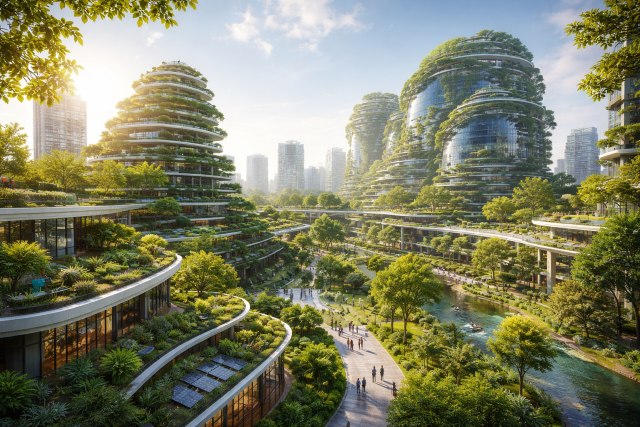

HDBUB4 is quickly becoming a useful way to talk about what “good” looks like in sustainable architecture and urban design — especially when projects must balance low carbon, high comfort, and real-world budgets. In simple terms, HDBUB4 is a practical framework for designing buildings and neighborhoods that perform well across energy, materials, water, mobility, and long-term resilience.
That matters because the built environment is a major climate lever. Global assessments consistently show buildings and construction account for a large share of emissions, and progress still isn’t fast enough.
You’ll learn what HDBUB4 means (in plain language), how it translates into design decisions, what metrics to track, and how to apply it — from single buildings to district-scale urban planning.
What is HDBUB4?
HDBUB4 is an integrated design approach that treats sustainability like a system, not a checklist. Instead of asking, “Did we add solar panels?” it asks, “Did we reduce energy demand first, cut embodied carbon, improve the public realm, and design for future climate conditions — without sacrificing usability?”
A helpful way to think about HDBUB4 is as a “performance-first” model:
High-performance buildings that reduce operational energy (heating, cooling, lighting) through passive design, efficient systems, and smart controls.
Low-carbon materials that reduce embodied emissions (the carbon “spent” in making, transporting, and assembling a building).
Urban design that reduces car dependence and improves health, access, and equity through walkability, transit, and mixed-use planning.
Resilience by design so buildings and neighborhoods can handle heatwaves, flooding, and shocks without huge retrofits.
If you’re new to the topic, HDBUB4 can be a bridge between architecture (form + function) and urban design (systems + people), using measurable targets to guide decisions.
Why HDBUB4 matters now
1) Buildings are a climate priority
The built environment’s emissions footprint is significant and widely recognized by global institutions. UNEP has highlighted that the sector accounts for a large proportion of global emissions and that rapid urbanization is adding enormous new floor area in a short time.
2) Embodied carbon is no longer optional
Even if a building runs on clean electricity, the materials and construction still carry emissions. World Green Building Council explains that a meaningful portion of building-related emissions comes from materials and construction (embodied carbon), not just operations.
3) Cities need “whole-system” design
Research groups focusing on sustainable building and urban futures increasingly emphasize building-to-district approaches: control systems, energy networks, and data-informed urban management.
HDBUB4’s big promise is not a new gadget — it’s a disciplined method: set measurable targets early, design the demand down, and coordinate building + neighborhood decisions so they reinforce each other.
HDBUB4 principles in sustainable architecture
Below are the core pillars most teams apply when using HDBUB4 as a sustainability framework. Think of these as the “rules of the road” for climate-smart design.
Passive-first energy design (reduce demand before adding tech)
A common failure mode in green building is jumping straight to equipment (PV, heat pumps, smart sensors) without first reducing demand. HDBUB4 flips that.
It prioritizes building form, orientation, shading, insulation, airtightness, and natural ventilation strategies. That makes mechanical systems smaller, cheaper, and easier to decarbonize later.
Real-world insight: In hot climates, external shading and high-performance glazing often provide better comfort gains per dollar than oversizing cooling equipment. That also reduces peak loads, which helps city grids under stress during heatwaves.
Electrification and renewable readiness
With clean power expanding globally (at different rates by region), electrification is a practical pathway for many building types.
HDBUB4 encourages:
All-electric HVAC where feasible (efficient heat pumps, variable refrigerant flow, etc.)
On-site generation where it makes sense
Demand flexibility (pre-cooling, thermal storage, automated load shifting) to reduce peak demand
This aligns with the growing emphasis on building-scale sensing and control integration for energy management.
Low-carbon materials and embodied-carbon accountability
HDBUB4 treats embodied carbon as a design constraint, not an afterthought. It pushes teams to compare structural systems, façade assemblies, and interior finishes using lifecycle thinking.
The WorldGBC framing — splitting operational and embodied emissions — helps teams communicate clearly with clients and contractors about where carbon actually comes from.
Common HDBUB4 material moves:
Optimize structure (use less material through smarter spans/grids)
Prefer lower-carbon concrete mixes where codes allow
Increase circularity: reuse components, design for disassembly
Select finishes for durability and low replacement cycles
Water efficiency + urban water resilience
Sustainable architecture isn’t just energy. HDBUB4 also considers:
Low-flow fixtures and leak monitoring
Rainwater harvesting and non-potable reuse where permitted
Landscape design that reduces irrigation demand
Floodable public realm strategies for stormwater management
In many cities, water and heat risk are converging — so the “green” building that ignores water resilience can still be a fragile asset.
HDBUB4 in urban design: from buildings to neighborhoods
A building can be efficient and still sit in a car-dependent, heat-trapping neighborhood. HDBUB4 pushes sustainability beyond the property line.
Walkability, transit access, and mixed-use density
Urban form can reduce emissions by reducing trips and enabling mode shift. Sustainable urban design guidance increasingly compiles cross-disciplinary best practices (planning, ecology, architecture) to make that happen.
HDBUB4 planning tends to favor:
Mixed-use zoning around transit nodes
Short blocks and continuous sidewalks
“15-minute city” access to daily needs (tailored to local context)
Safe cycling networks and micro-mobility integration
Heat mitigation and microclimate design
Cities are getting hotter, and heat is often deadlier than storms because it’s persistent and wide-area.
HDBUB4 encourages:
Tree canopy targets (where water budgets allow)
Shaded streets and cool materials
Courtyards and breezeways to promote airflow
District-level thermal strategies (shared cooling loops, thermal storage)
District energy and cooperative energy management
Some of the biggest wins come when buildings cooperate instead of acting alone — shared energy systems, coordinated load management, and storage strategies.
This is increasingly reflected in research efforts that scale from building controls to cooperative urban-scale energy management.
HDBUB4 metrics that make sustainability measurable
HDBUB4 works best when it’s tied to clear targets. Here’s a simple table of common metrics teams track.
| HDBUB4 Focus Area | Practical Metric | Why It Matters |
|---|---|---|
| Operational energy | EUI (Energy Use Intensity) | Tracks real efficiency; lower EUI reduces bills and emissions |
| Carbon (operational) | kgCO₂e/m²/year (or annual tCO₂e) | Connects energy to climate impact |
| Carbon (embodied) | kgCO₂e/m² upfront | Makes material choices measurable |
| Thermal comfort | Overheating hours / comfort bands | Protects health and usability |
| Water | L/person/day or m³/year | Reduces utility stress and cost |
| Mobility | Mode share, VMT reduction | Cuts emissions at city scale |
| Resilience | Climate hazard performance | Protects long-term asset value |
For carbon and sector-wide progress context, UNEP’s Buildings and Construction Global Status reporting provides useful benchmarks and policy framing.
A practical HDBUB4 workflow you can apply on real projects
Step 1: Start with a carbon and comfort brief (not just a design brief)
Before concept design, define:
Target EUI range
Target embodied carbon intensity
Comfort criteria (especially for heat)
Water limits
Mobility outcomes (if urban scale)
This prevents “value engineering” from deleting sustainability later because it was never locked into project success criteria.
Step 2: Do early-stage massing and envelope testing
HDBUB4 treats massing as a performance tool. Early modeling — daylight, solar gain, ventilation potential — often reveals that small geometry changes save years of operating cost.
Step 3: Align structure + façade + MEP together
Embodied carbon and operational energy trade off against each other. A super-insulated envelope might reduce operational energy but increase embodied emissions if materials are carbon-heavy or short-lived.
HDBUB4’s sweet spot is optimizing the full lifecycle, not just one side.
Step 4: Specify for verification
Design intent can collapse during procurement unless you specify:
Airtightness testing requirements
Commissioning scope
Material disclosure (EPDs where available)
Substitution rules (what can/can’t be swapped)
Step 5: Measure performance post-occupancy
HDBUB4 isn’t complete at handover. It expects:
Monitoring and tuning
Comfort surveys
Maintenance plans that preserve performance over time
Case scenario: How HDBUB4 changes decisions in a mid-rise mixed-use project
Imagine a 10-story mixed-use building in a hot, growing city.
A “standard” approach might focus on glass-heavy façades for aesthetics, then compensate with larger cooling systems. That often increases peak demand, raises operating costs, and creates comfort issues near the façade.
Under HDBUB4, the team might:
Reduce glazing ratio and add external shading
Improve airtightness and insulation to stabilize indoor temps
Use high-efficiency electric HVAC and plan for grid decarbonization
Choose lower-carbon structural strategies and concrete mixes (where feasible)
Add street-level shading and integrate pedestrian-first access to nearby transit
The result is typically a building that is cheaper to operate, more comfortable, and easier to keep compliant as energy codes tighten — exactly the direction UNEP and global coalitions are pushing.
Actionable tips: Getting started with HDBUB4 (even if you’re not an expert)
Pick 3 non-negotiables (e.g., target EUI, embodied carbon cap, overheating limit). Put them in the contract language early.
Avoid “green gadget syndrome.” Reduce demand first. Tech should be the multiplier, not the crutch.
Ask for material transparency. Even basic product disclosures can prevent high-carbon substitutions late in the process.
Design the mobility experience, not just the parking count. If the building is hard to access without a car, you’re baking emissions into daily life.
Plan for climate conditions in 2035–2050, not just today. Heat and water stress are already shifting design assumptions in many regions.
FAQs about HDBUB4
What does HDBUB4 stand for?
In practice, HDBUB4 is best treated as a framework name rather than a universally standardized acronym. What matters is the method: measurable sustainability targets across energy, carbon, comfort, and urban outcomes.
Is HDBUB4 a certification like LEED or BREEAM?
Not necessarily. HDBUB4 is better described as a design and decision framework that can be used alongside certifications. It helps teams choose what to do and how to prioritize before selecting which badge to pursue.
How does HDBUB4 reduce carbon emissions?
It tackles carbon from two directions:
Operational carbon by reducing energy demand and enabling electrification
Embodied carbon by optimizing materials and construction choices
This aligns with leading sector narratives that separate operational and embodied impacts.
Does HDBUB4 apply to city planning or only buildings?
Both. HDBUB4 is especially useful when building performance and neighborhood design must work together — mobility, heat mitigation, district energy, and public realm quality.
What’s the fastest way to start using HDBUB4 on a project?
Set a short list of measurable targets early (energy, embodied carbon, comfort), and use them to guide concept design trade-offs. Then verify performance through commissioning and post-occupancy monitoring.
Conclusion: Why HDBUB4 is a practical path to better buildings and better cities
HDBUB4 isn’t about chasing trends—it’s about building a repeatable, measurable approach to sustainability that survives real-world constraints. With global reporting emphasizing how urgent built-environment decarbonization is, frameworks like HDBUB4 give teams a way to act decisively: reduce energy demand, cut embodied carbon, design healthier neighborhoods, and plan for the climate realities ahead.
If you want a future-proof strategy for sustainable architecture and urban design, HDBUB4 provides a clear direction: design for performance, verify results, and make sustainability a system—so cities become more livable, resilient, and low-carbon over the long term.












Leave a comment