
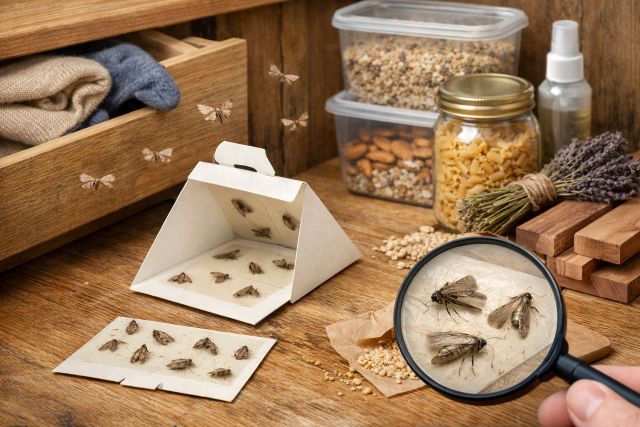

If you’ve ever opened a sweater box and found tiny holes (or spotted a small tan moth fluttering near your closet), you’ve probably wondered whether moth traps are actually worth buying—or if they’re just another “looks helpful” product that doesn’t solve the real problem.
Here’s the honest truth: moth traps can be absolutely worth it, but only when you use the right trap for the right moth, and you treat them as monitoring + pressure reduction, not a magic “wipe out the infestation overnight” solution. Extension and IPM resources are very clear that pheromone traps are useful tools—especially for detection and monitoring—but traps alone typically won’t control an active infestation, because they primarily attract male moths.
In this guide, you’ll learn what moth traps really do, what results to expect, how to avoid common mistakes, and what to buy depending on whether you’re dealing with pantry moths or clothes moths.
Quick answer: Are moth traps worth it?
Yes—moth traps are worth it when you want to:
Confirm you actually have moths (and which type)
Find hotspots (where activity is concentrated)
Reduce mating pressure by catching male moths
Track progress after cleaning, freezing, or heat-treating items
But moth traps are not worth it if you plan to use them as your only tactic during a full-blown clothes-moth problem in stored textiles. Multiple authoritative guidance sources emphasize traps are effective for detection/monitoring, and because lures attract only males, they won’t fully control an infestation by themselves.
What moth traps actually do (and what they don’t)
Most consumer moth traps are a combination of:
a species-specific pheromone lure (mimics a female’s scent), and
a sticky surface that captures moths that fly in.
That pheromone concept is well established in pest management: pheromones are chemicals insects use to communicate, and synthetic versions are used in traps and mating disruption strategies.
What moth traps do well
They help you detect and measure moth activity.
That’s why museums/heritage conservation guidance often recommends pheromone traps for detection and locating sources.
They help you identify the “where.”
If one closet trap is loaded and another is empty, you’ve just learned where to focus cleaning and inspection.
They can reduce reproduction pressure.
Catching males can reduce successful mating in small, contained spaces. (Just don’t expect this alone to end an established infestation.)
What moth traps don’t do
They usually don’t catch larvae—the stage that causes damage.
Clothes moth damage comes from larvae feeding on natural fibers, not from the adult moths flying around.
They don’t work if you buy the wrong type.
Pantry moth pheromones and clothes moth pheromones are not interchangeable.
They won’t “solve” clothes moths without cleaning + treatment.
University guidance notes sprays often have limited use because moths are hidden in materials; successful control typically relies on locating sources and using an integrated approach where traps are just one part.
Clothes moths vs pantry moths: why this matters
Before you buy anything, you need the right target.
Clothes moth traps (closets, wool, carpets, stored textiles)
These are designed for webbing clothes moth and casemaking clothes moth, common fabric pests. Traps exist for both, but each species has its own pheromone, so choosing correctly matters.
Typical signs you need clothes moth traps:
Holes in wool, cashmere, silk, fur, feathers, felt, or rugs
Larval cases (little “rice grain” tubes) or silky webbing near fabric
Damage concentrated in dark, undisturbed areas
Pantry moth traps (kitchen, dry goods, pet food)
Pantry moth traps target stored-product moths like Indian meal moth (common in grains, flour, nuts, pet food). If moths are appearing near food storage, pantry traps are the right tool.
Typical signs you need pantry moth traps:
Webbing clumps in corners of food packaging
Moths near cabinets/ceilings in the kitchen
Larvae crawling up walls (they often wander to pupate)
Honest results: what you should expect week by week
People get disappointed with moth traps because they expect immediate “no moths ever again.” Here’s a more realistic timeline.
Days 1–3: you might catch nothing (and that can still be useful)
No catch doesn’t always mean no moths—placement and airflow matter. But “no catch” in multiple locations can support that your issue may be something else (like carpet beetles causing fabric damage).
Week 1: the trap often answers the biggest question — do I have moths?
If you catch moths quickly, that confirms active adult males are present. UC IPM notes pheromone traps are available for clothes moths and explains their pheromone-attraction basis.
Week 2–4: traps become a “progress tracker”
If you’re cleaning correctly and treating infested items, the trap catch should trend downward over time. This is exactly how traps are used in integrated pest management: as monitoring tools.
After 4–8 weeks: “low catch” is good — but don’t declare victory too early
Clothes moth development can be extended indoors depending on conditions, so staying vigilant matters.
Where to place moth traps for the best results
Placement is the difference between “these work” and “these did nothing.”
Best placement for clothes moth traps
Put traps where moths actually travel:
Inside closets near natural-fiber clothing, but not buried under clothes
Near baseboards, under beds, and along carpet edges if you suspect rugs
In storage rooms with wool blankets, seasonal coats, or fabric bins
Avoid placing them right next to open windows/doors where outdoor moths might wander in and confuse the results.
Best placement for pantry moth traps
Inside pantry cabinets (upper corners are often good)
Near pet food storage
In areas where you’ve seen moths hovering (kitchen ceiling corners are common travel zones)
Pro tip: If you’re catching a lot in one cabinet, that’s your cue to inspect everything in that cabinet first.
Common mistakes that make moth traps “fail”
Mistake 1: Buying the wrong trap type
Pantry moth traps won’t solve clothes moths, and vice versa. It sounds obvious, but it’s the #1 reason people conclude moth traps are a scam.
Mistake 2: Treating traps as the only solution
Heritage/museum-style guidance is blunt: pheromone traps can be very effective for detection, but because lures attract only males, traps won’t control an infestation on their own.
Mistake 3: Not addressing the source
For clothes moths, the “source” is often:
a wool rug under furniture
a rarely used closet corner
a box of thrifted sweaters
a pet bed with natural fibers
For pantry moths, the source is usually one overlooked package (bird seed, nuts, flour, cereal, pet treats).
Mistake 4: Expecting one trap to cover the whole house
Traps work best as zone tools. If you have multiple rooms, you need multiple placements—especially during the detection phase.
What to buy: the best moth traps for each situation
You don’t need the “most expensive” option. You need the right pheromone + a decent sticky trap design.
If you need clothes moth traps
Look for these features:
Species targeting (webbing clothes moth and/or casemaking clothes moth)
Refill lures or clearly stated lure life
A trap design that can sit flat on a shelf or hang without touching fabric
University of Kentucky guidance specifically notes pheromone traps are available for monitoring clothes moths, and emphasizes the importance of knowing which moth you have because each type has its own pheromone.
What I’d buy for most homes:
A clothes moth pheromone trap kit marketed for webbing/casemaking clothes moths, plus extra sticky inserts or refills if you’re monitoring long-term.
Who should buy “monitoring-grade” traps:
If you’ve had repeat issues, consider buying traps from pest-control supply outlets rather than “generic moth trap” listings, because they’re more likely to be properly labeled as monitoring tools and species-specific.
If you need pantry moth traps
Look for:
Labeling for Indian meal moth / pantry moth
Food-safe placement instructions (most are non-toxic, but always follow label directions)
Multi-pack value (pantries often need more than one trap)
What I’d buy for most kitchens:
A multi-pack pantry moth pheromone sticky trap so you can place 2–4 traps across the pantry, pet food area, and a nearby cabinet.
Are moth traps safe around kids and pets?
Generally, pheromone traps are considered low-risk because they’re not spraying insecticide into the air. The main “hazard” is the sticky adhesive, which can be messy if touched. Keep traps out of reach, place them high in closets/cabinets, and wash hands if contact happens.
For higher-stakes environments (nurseries, people with chemical sensitivities), monitoring-focused IPM guidance tends to favor traps and non-chemical tactics as part of a broader plan.
The real winning strategy: moth traps + a simple integrated plan
If you want traps to feel “worth it,” pair them with actions that remove the life stage doing the damage.
For clothes moths (closets, carpets, wool)
Confirm with moth traps and identify hotspots.
Inspect natural fibers (wool, cashmere, silk, rugs, felt items).
Treat suspect items (common approaches include dry cleaning, freezing, or heat—use methods appropriate for the fabric).
Deep clean: vacuum edges, baseboards, under furniture; discard vacuum contents immediately.
Store smart: airtight bins/garment bags for vulnerable items.
Why this works: traps tell you where adults are present, but the cleaning and treatment eliminate larvae and eggs where they’re hiding — something sprays often struggle with when pests are within materials.
For pantry moths (food storage)
Place pantry moth traps to map activity.
Purge the source: inspect all dry goods, pet food, bird seed, snacks.
Clean cracks and corners (vacuum and wipe shelves).
Repackage staples into sealed containers.
Keep traps up for a few weeks to confirm the cycle is broken.
Featured-snippet friendly: “How to know if moth traps are working”
Moth traps are working if you see one or more of these outcomes:
You catch moths in the first 1–2 weeks, confirming the pest type and location
Trap catches drop over time after you clean and treat the source
You stop seeing new damage (for clothes moths) or stop seeing webbing/larvae (for pantry moths)
Monitoring traps are designed to show trends, not just “a yes/no.”
FAQs about moth traps
Do moth traps attract more moths into my house?
In normal home use, traps are designed to attract moths already present in the area you place them. The pheromone plume is localized. The bigger risk is misplacement near open windows/doors where you might catch occasional outdoor moths and confuse your results.
Will moth traps kill eggs and larvae?
No. Most traps target adult males using pheromones, while the damaging stage for clothes moths is the larva.
How many moth traps do I need?
For detection, start with:
Closets: 1 trap per closet (especially where natural fibers are stored)
Pantry: 2–4 traps depending on pantry size and adjacent cabinets
Then concentrate additional traps where catches are highest.
Why am I catching moths but still seeing damage?
Because clothes moth larvae may still be feeding in hidden areas. Traps help you monitor adults, but you still need to locate and treat the source material.
Conclusion: Are moth traps worth it?
Yes — moth traps are worth it when you use them for what they’re best at: finding the problem, measuring it, and helping reduce ongoing breeding pressure. Authoritative IPM and conservation guidance supports pheromone traps as effective tools for detection and monitoring, while also warning that traps mainly attract male moths and usually won’t control an infestation alone.
If you want the best results, buy species-specific moth traps, place them strategically, and pair them with the steps that actually remove eggs and larvae — cleaning, treatment of infested items, and better storage. Do that, and moth traps stop feeling like a gimmick and start feeling like a smart, low-mess way to take control.









Leave a comment