
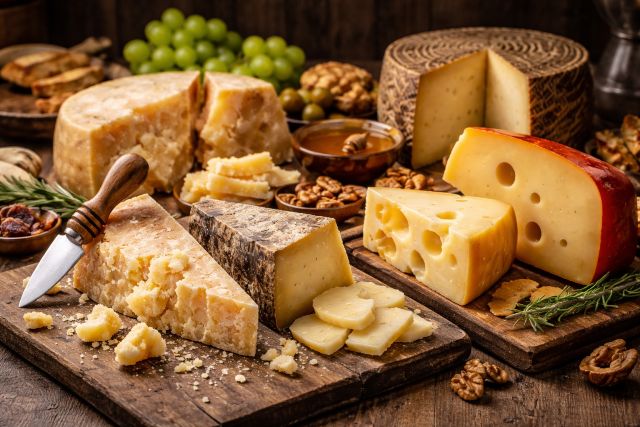

If you love hard cheese, you already know the thrill: that first salty, nutty hit of Parmigiano-Reggiano over pasta, the snap of an aged cheddar shard, the caramel notes in a well-aged Gouda. Hard cheeses punch above their weight — big flavor, long shelf life, and endless ways to cook (or snack) with them.
This guide breaks down what makes hard cheese “hard,” which varieties deserve a spot in your fridge, and exactly how to use each one — whether you’re building a cheese board, upgrading weeknight dinners, or chasing that perfect umami finish.
What counts as hard cheese?
In everyday terms, hard cheese is firm, low-moisture cheese that’s typically aged long enough to concentrate flavor and create that dense, sliceable (or crumbly) texture. In U.S. standards of identity, many classic hard cheeses are defined partly by moisture limits—cheddar, for example, is defined with not more than 39% moisture. Many aged Italian-style cheeses go even drier, which is why they grate so easily and keep so well.
Hard cheeses often develop:
Concentrated flavor (aging reduces water and deepens savory notes)
Crystalline crunch (often from tyrosine crystals in well-aged cheeses)
Better grating and shaving performance than softer styles
Longer storage life compared with high-moisture cheeses
If you’re shopping and want a quick shortcut: the drier and more aged it is, the more “hard cheese energy” you’re getting.
Why hard cheese tastes so intense
Aging is the magic trick. Over time, moisture drops, salt and fat feel more pronounced, and proteins break into smaller compounds that read as umami and “brothy” savoriness. That’s why the same cheese style can taste totally different at different ages (especially in Parmesan-style cheeses). Even mainstream food education around Parmigiano-Reggiano highlights how age strongly changes texture and flavor, from milky and gentle to brittle, nutty, and deeply savory as it matures.
Hard cheese varieties every fan should try
Below are top hard cheese picks, what they taste like, and the best real-world ways to use them.
1) Parmigiano-Reggiano (and true Parmesan-style cheeses)
Flavor: nutty, salty, savory; older wheels get drier, more crystalline, and more intense.
Best uses: finishing, grating, broths, and “rind magic.”
Parmigiano-Reggiano is a protected PDO product with strict specifications maintained by its consortium. In the kitchen, it’s less an ingredient and more a seasoning tool: it adds depth like stock concentrate.
Try it like this:
Finish hot pasta with a snowfall of finely grated cheese (microplane = maximum aroma).
Shave over salads with lemony dressing for a salty pop.
Simmer the rind in minestrone, tomato sauce, or bean stew. You’ll get a subtle, rounded savoriness that tastes like you worked harder than you did.
2) Aged Cheddar
Flavor: sharp, tangy, sometimes nutty; older cheddars can crumble and carry little crunchy crystals.
Best uses: sandwiches, sauces, soups, snacking.
Cheddar is one of the easiest hard cheeses to use daily because it melts reliably and still brings personality. U.S. standards describe cheddar’s defining properties and moisture limits, which helps explain its firm body and melt behavior.
Try it like this:
Grilled cheese upgrade: blend medium cheddar for melt + aged cheddar for bite.
Mac and cheese: mix cheddar with a small amount of Parmesan-style cheese for depth.
Soup topper: grate over chili or potato soup right before serving.
3) Aged Gouda
Flavor: young is buttery; aged becomes caramel-like, toasted, and crystalline.
Best uses: cheese boards, snacking, shaved over roasted vegetables.
Aged Gouda is the gateway hard cheese for people who think they “don’t like sharp cheese.” It’s sweet-leaning, not sour, and it pairs ridiculously well with roasted flavors.
Try it like this:
Roasted carrots + shaved aged Gouda = instant restaurant energy.
Board pairing: apples or pears, toasted nuts, and something tangy (mustard or pickles).
Burger topper: use thinner slices and cover to trap steam—aged Gouda can melt, but it needs a little help.
4) Pecorino Romano
Flavor: salty, punchy, sheepy; sharper than most cow-milk hard cheeses.
Best uses: Roman pastas, roasted potatoes, Caesar-style salads.
If Parmigiano-Reggiano is the elegant one, Pecorino Romano is the loud friend who makes everything more fun. It’s the classic choice for cacio e pepe and carbonara-style flavor profiles.
Try it like this:
Cacio e pepe technique: finely grate, then emulsify with starchy pasta water.
Popcorn seasoning: ultra-fine grate + black pepper.
Roasted potatoes: toss hot potatoes with a little oil, Pecorino, and herbs.
5) Manchego (curado/viejo styles)
Flavor: nutty, slightly sweet, sheep-milk richness; firmer as it ages.
Best uses: tapas boards, sandwiches, shaved over greens.
Manchego’s aged versions land in the “firm and sliceable” zone that hard cheese lovers crave. It’s a board superstar because it tastes complex even without cooking.
Try it like this:
Tapas plate: Manchego + quince paste + Marcona almonds.
Sandwich move: swap cheddar for Manchego with turkey or roasted veg.
Salad topper: shave it—don’t cube it—for better melt-on-the-tongue.
6) Gruyère (and similar Alpine-style hard cheeses)
Flavor: nutty, slightly sweet, savory; melts smoothly.
Best uses: gratins, fondue blends, French onion soup.
Gruyère is one of the best “melt hard cheeses,” which sounds like a contradiction until you try it. It gives you stretch and silk without tasting bland.
Try it like this:
French onion soup: Gruyère on toasted bread, broiled until blistered.
Potato gratin: layer thin potatoes and add Gruyère for a nutty backbone.
Fondue hack: blend with a small portion of a sharper hard cheese for punch.
7) Comté
Flavor: fruity-nutty, buttery, complex; often more nuanced than you expect.
Best uses: snacking, gratins, omelets.
Comté sits in that sweet spot: elegant enough for a cheese course, practical enough for daily cooking. It’s also an excellent “convert” cheese for guests.
Try it like this:
Omelet filling: Comté + herbs = creamy and fragrant.
Snack plate: walnuts, grapes, and a touch of honey.
Baked dish: combine with a more assertive hard cheese to build layers.
8) Asiago (aged)
Flavor: nutty and savory; aged is firm and grate-friendly.
Best uses: grating, salad topper, crunchy crouton-like bites.
In U.S. standards, aged Asiago styles (like “old” Asiago) are defined with lower moisture and longer curing times — exactly the traits hard cheese fans want.
Try it like this:
Asiago crisps: bake little mounds until golden and lacy.
Salads: grate over Caesar-style greens when you want something different from Parmesan.
Bread upgrade: fold finely grated Asiago into biscuit or savory scone dough.
How to use hard cheese like a pro
Hard cheese isn’t just “put it on top.” Here are the most useful techniques (and when to use them).
Grate vs. shave vs. crumble
Microplane-fine grating: best for finishing hot foods—aroma blooms immediately.
Shaving: best for salads, roasted vegetables, and boards—bigger bites, more texture.
Crumbles/shards: best for snacking and adding bursts of salt to soups and greens.
If you’re chasing maximum flavor with minimal cheese, go fine-grated. More surface area = more perceived taste.
Build umami without making food “cheesy”
Want depth without turning dinner into a cheese bomb? Hard cheese is your friend.
Add 1–2 tablespoons of finely grated hard cheese into a pot of soup at the end.
Stir a small handful into risotto right before serving for body and savoriness.
Use a rind simmer to season tomato sauce or beans, then remove it like a bay leaf.
Make hard cheese melt better
Some hard cheeses melt differently depending on age and moisture. If yours is clumping or breaking:
Grate it smaller (fine shreds melt more evenly).
Lower the heat (hard cheese hates high heat shock).
Use starchy water (pasta water helps emulsify cheese into a sauce).
For iconic hard-cheese sauces (think cacio e pepe), technique matters more than ingredients.
Buying and storing hard cheese
What to buy
Whenever possible, buy hard cheese as a wedge rather than pre-shredded. You’ll get better flavor and texture, and it typically lasts longer.
Look for:
A firm, even color (not oily or sweaty)
A fresh, clean aroma (nutty, milky, savory—never ammonia-like)
A label that matches what you want (age statements are meaningful for many hard cheeses)
Storage rules that actually work
Hard cheese is forgiving, but it still benefits from smart storage. Food safety guidance for cheese in retail settings focuses on proper production and storage practices, and science-based handling is emphasized by dairy research institutions.
At home:
Wrap in cheese paper or parchment + a loose outer wrap. (You want it protected, not suffocated.)
Store in the warmer part of the fridge (often a drawer), away from strong-smelling foods.
If you see a small spot of mold on a hard cheese wedge, it’s commonly handled by trimming generously around it (hard cheese doesn’t let mold penetrate as deeply as soft cheese). If it smells off, feels slimy, or it’s pre-grated with mold, toss it.
Nutrition and safety: what’s true (and what’s hype)
Hard cheeses are nutrient-dense and easy to overdo — both can be true.
Protein and calcium perks
Hard cheeses are often highlighted as strong sources of calcium and protein, with Parmesan-style cheeses frequently ranking high per ounce in popular dietitian summaries. For exact numbers by brand and style, USDA FoodData Central is the official reference database used widely for nutrition analysis.
Food safety reality: why moisture matters
When it comes to Listeria risk, public health guidance notes that soft cheeses (high moisture) are more likely to be contaminated than hard cheeses. That doesn’t mean hard cheese is “risk-free,” but it does explain why firmer, lower-moisture cheeses are generally considered safer than high-moisture styles.
FAQ: hard cheese questions people actually ask
What is hard cheese?
Hard cheese is a firm, low-moisture cheese — typically aged — known for concentrated flavor and a dense texture that’s easy to grate, shave, or slice. Moisture limits are part of the formal definition for several classic hard cheeses (like cheddar).
What are the best hard cheese types for cooking?
For everyday cooking: aged cheddar (melting + flavor), Gruyère/Alpine styles (smooth melt), and Parmesan-style cheeses (finishing and umami).
Can you freeze hard cheese?
You can, but texture may become more crumbly. If you freeze, do it for cooking use (soups, sauces, baking) rather than slicing for a board.
Why does my hard cheese have crunchy bits?
Those crunchy bits are often protein crystals that form during aging. They’re a sign of maturity and concentrated flavor, especially common in well-aged hard cheese styles.
Quick “featured snippet” list: top hard cheeses and best uses
Parmigiano-Reggiano: finishing, rinds in soup, grating
Aged cheddar: mac and cheese, sandwiches, soups
Aged Gouda: boards, roasted vegetables, burgers
Pecorino Romano: Roman pastas, potatoes, bold seasoning
Manchego (aged): tapas boards, sandwiches, salads
Gruyère: gratins, French onion soup, fondue blends
Comté: omelets, snacking, baked dishes
Asiago (aged): grating, crisps, baking
Conclusion: make hard cheese your kitchen “secret weapon”
The best part about being a hard cheese fan is that you’re never far from a flavor upgrade. A small grating can lift a whole pot of soup. A few shards can turn a plain salad into something craveable. And once you start using rinds, blending ages, and matching cheeses to the right job, you’ll waste less and taste more.
If you want a next step, build a “core four” hard cheese rotation — one Parmesan-style, one aged cheddar, one melt-friendly Alpine cheese, and one wildcard (like aged Gouda or Pecorino). Your fridge will feel like a tiny, delicious pantry of shortcuts.















Leave a comment