
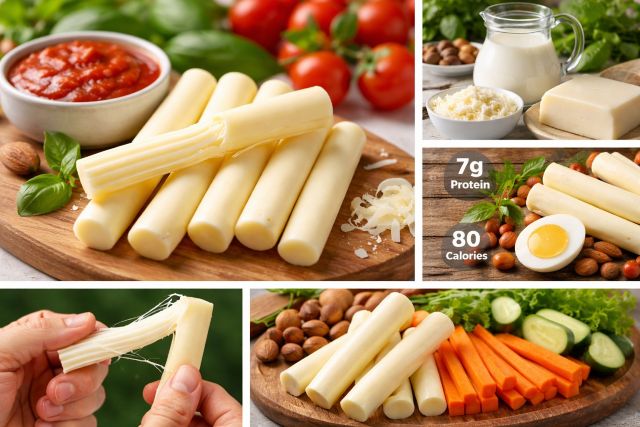

String cheese is one of those foods almost everyone has eaten, yet very few people truly understand. Found in school lunches, gym bags, office fridges, and late-night snack rotations, string cheese has built a reputation as a convenient, protein-rich snack. Still, questions keep popping up. Is string cheese actually healthy? Is it overly processed? Does peeling it instead of biting make any difference at all?
This in-depth guide explains everything you need to know about string cheese, from its ingredients and nutrition profile to common myths and evidence-based health insights. Whether you eat string cheese daily or are just curious about what you’re really pulling apart, this article clears the confusion.
What Is String Cheese?
String cheese is a form of mozzarella or mozzarella-style cheese that has been heated and stretched during production. This stretching process aligns the milk proteins in a way that allows the cheese to pull apart into thin strands, giving string cheese its name and signature texture.
Most string cheese sold today is made from low-moisture mozzarella or part-skim mozzarella. These types are ideal because they maintain structure, peel cleanly, and hold up well in individual packaging. Fresh mozzarella, by contrast, contains too much moisture to form strings and is meant to be sliced rather than peeled.
From a regulatory standpoint, mozzarella and low-moisture mozzarella are defined under U.S. food standards, which outline acceptable ingredients and production methods. This means properly labeled string cheese must meet specific criteria to be called cheese at all. According to the U.S. Code of Federal Regulations, mozzarella is a standardized dairy product made using milk, cultures, salt, and enzymes, not artificial fillers or substitutes.
String Cheese Ingredients Explained
One of the biggest misconceptions about string cheese is that it contains a long list of artificial ingredients. In reality, most high-quality string cheese contains very few components.
The foundation of string cheese is milk, typically cow’s milk. Cultures are added to ferment the milk and develop flavor. Enzymes help coagulate the milk into curds, while salt enhances taste and helps preserve freshness. Some brands include calcium chloride to improve texture consistency, especially when using pasteurized milk. Others may apply natamycin to the surface to prevent mold growth, which does not affect the cheese itself.
If you want the cleanest option, checking the ingredient label is key. When you see only milk, cultures, salt, and enzymes, you are looking at a traditional cheese product rather than a heavily processed food.
How String Cheese Is Made
The reason string cheese pulls apart so neatly comes down to a traditional cheesemaking technique known as pasta filata, which means “spun paste.” After the milk curds form, they are heated and mechanically stretched. This process aligns the casein proteins into long, parallel strands.
Once stretched, the cheese is shaped into sticks, cooled, and packaged. Cooling locks the protein structure in place, preserving the stringy texture. When you peel string cheese, you are simply separating those aligned protein fibers.
Biting straight into string cheese cuts across the protein structure, while peeling follows it. The difference is mechanical, not nutritional.
String Cheese Nutrition Facts
From a nutritional perspective, string cheese is often praised for its balance of protein, fat, and calories. A standard one-ounce stick of string cheese typically contains around 80 to 90 calories. Protein content usually falls between six and seven grams, making it relatively high in protein for its size. Fat content averages about six grams, depending on whether the cheese is made from whole milk or part-skim milk. Carbohydrates are minimal, often zero to one gram per serving.
According to USDA-referenced nutrition data, mozzarella string cheese provides a concentrated source of protein and calcium with very little sugar.
Calcium is another important benefit. Many string cheese products provide a noticeable percentage of the daily recommended calcium intake, supporting bone health, muscle function, and nerve signaling.
Is String Cheese Healthy?
Whether string cheese is healthy depends largely on how it fits into your overall diet and goals. For many people, it works extremely well as a convenient, portion-controlled snack.
If weight management is a priority, string cheese can help curb hunger thanks to its protein and fat combination. Protein promotes satiety, while fat slows digestion, helping you feel full longer. Because string cheese is individually wrapped, it naturally limits portion sizes, which can be helpful for mindful eating.
For people focused on muscle maintenance or recovery, string cheese provides quick, digestible protein. While it is not enough to serve as a complete post-workout meal, it can bridge the gap between meals when paired with carbohydrates such as fruit or whole grains.
String cheese also fits well into low-carbohydrate or ketogenic eating patterns due to its minimal carb content. The main consideration in these cases is sodium intake, as some brands contain more salt than others.
Common Myths About String Cheese
One persistent myth is that string cheese is not real cheese. This confusion often comes from mixing it up with processed cheese products. Real string cheese is made using traditional cheesemaking ingredients and techniques. As long as it is labeled as mozzarella or part-skim mozzarella and has a simple ingredient list, it qualifies as real cheese under food regulations.
Another common myth is that string cheese is high in sugar or carbohydrates. In reality, most string cheese contains virtually no sugar and very few carbs. The lactose content is naturally low because much of it is removed during cheesemaking.
Some people believe peeling string cheese makes it healthier. While peeling may slow down eating and increase mindfulness, it does not change the nutritional content. The calories, protein, and fat remain exactly the same.
There is also a belief that string cheese is bad for adults and only suitable for kids. This idea has more to do with marketing than nutrition. String cheese is simply a portioned dairy snack and can be enjoyed by people of any age.
String Cheese and Satiety
One reason string cheese is so effective as a snack is its impact on satiety. Protein has been shown to increase feelings of fullness and reduce overall calorie intake later in the day. Fat further enhances this effect by slowing gastric emptying.
Eating string cheese as a standalone snack can help prevent energy crashes, especially compared to refined carbohydrate snacks. When paired with fiber-rich foods, such as fruit or vegetables, its hunger-reducing effect becomes even stronger.
Choosing the Best String Cheese
Not all string cheese is the same. Some varieties are made with whole milk, while others use part-skim milk. Whole milk string cheese tends to be creamier and slightly higher in calories and fat. Part-skim options are lower in calories while still offering a similar protein content.
Flavor variations, such as cheddar-style or pepper-infused string cheese, can be enjoyable but may contain added coloring or flavoring ingredients. Reading labels helps ensure you are choosing a product that aligns with your preferences and dietary needs.
Organic and grass-fed options may appeal to consumers focused on sourcing and farming practices, though nutritionally they are similar to conventional options.
String Cheese Storage and Safety
Proper storage matters for both quality and safety. String cheese should be kept refrigerated and consumed by the expiration date on the package. While it may survive short periods at room temperature, especially when sealed, prolonged exposure to heat increases the risk of spoilage.
Once opened, string cheese should be eaten promptly. If the surface becomes slimy or develops an off smell, it should be discarded.
Frequently Asked Questions About String Cheese
Many people wonder whether string cheese is good for kids. In moderation, it can be a nutrient-dense snack that provides protein and calcium for growing bodies. However, balancing it with fruits, vegetables, and whole foods is important.
Another common question is whether string cheese causes weight gain. Like any food, excessive consumption can contribute to excess calories, but when eaten mindfully, string cheese is unlikely to cause weight gain on its own.
Some ask if lactose-intolerant individuals can eat string cheese. Because mozzarella is relatively low in lactose, many people with mild lactose intolerance tolerate it well, though individual responses vary.
Final Thoughts on String Cheese
String cheese is far more than a nostalgic lunchbox snack. It is a real cheese made with simple ingredients, offering a practical balance of protein, fat, and calcium. When eaten as part of a balanced diet, string cheese can support satiety, convenience, and nutritional consistency.
The key is choosing quality options, paying attention to portions, and understanding that no single food determines health. Whether you peel it slowly or bite straight in, string cheese remains a reliable, evidence-backed snack that earns its place in modern diets.















Leave a comment