
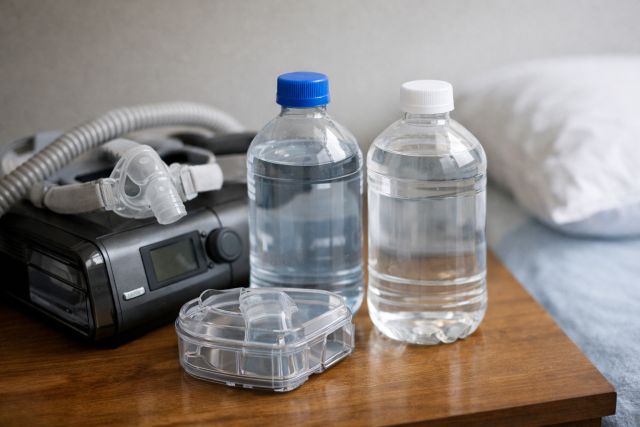

Travel is one of the few situations where sterile water becomes part of the conversation. When distilled water is unavailable, some users consider sterile water because it feels “safer” than local tap water. In reality, sterile water is typically designed for medical use such as wound care or inhalation therapy and is not specifically formulated for repeated humidifier use.
Sterile water can still contain minerals unless it is clearly labeled as sterile distilled water. That means you may still encounter mineral buildup in your CPAP humidifier chamber. Additionally, sterile water is often packaged in smaller, single-use containers, making it less convenient and more expensive for nightly CPAP therapy.
Sleep medicine professionals generally agree that if distilled water is unavailable during travel, using bottled water temporarily is acceptable as long as the humidifier chamber is cleaned thoroughly once you return home. The Sleep Foundation notes that short-term use of alternatives is unlikely to cause harm, but consistent use of distilled water remains the best practice.
Does Using Sterile Water Reduce Infection Risk?
This is one of the most common questions around sterile water for CPAP, and the answer may surprise you. Using sterile water does not eliminate infection risk if cleaning habits are poor. Once water is poured into the humidifier chamber and exposed to air, it is no longer sterile.
The Centers for Disease Control and Prevention emphasize that water-containing devices can become breeding grounds for germs when water is left standing or when devices are not cleaned properly. This risk exists regardless of whether the original water was sterile or distilled. In practice, consistent cleaning, frequent water replacement, and proper drying are far more effective at reducing risk than choosing sterile water over distilled water.
Manufacturer Recommendations on CPAP Water Use
Most CPAP manufacturers are very clear about their water recommendations. ResMed, one of the largest CPAP manufacturers in the world, explicitly recommends distilled water for use in CPAP humidifiers. Their guidance focuses on preventing mineral buildup and maintaining device longevity rather than achieving sterility.
Philips and other manufacturers offer similar guidance in their user manuals, emphasizing distilled water and routine cleaning as the foundation of safe and effective humidification.
Ignoring manufacturer recommendations can sometimes void warranties or lead to unnecessary wear on the humidifier tub, especially in regions with hard water.
Common CPAP Water Myths That Cause Confusion
One persistent myth is that sterile water is “safer” for your lungs than distilled water. In reality, CPAP humidifiers do not aerosolize water droplets directly into your lungs. Instead, they humidify airflow by adding moisture as vapor, which significantly reduces the risk of waterborne particles reaching the airway.
Another misconception is that distilled water is sterile. While freshly distilled water is very clean, it is not packaged or maintained in sterile conditions like medical-grade sterile water. However, for CPAP use, sterility is not the primary concern—mineral content and cleanliness are.
These misunderstandings often lead users to overthink water choices while underestimating the importance of daily habits.
How Often Should You Change CPAP Water?
Regardless of whether you use distilled or sterile water, best practice is to change the water daily or as frequently as practical. Letting water sit for multiple days increases the chance of microbial growth, especially in warm environments.
The EPA recommends emptying humidifiers daily and allowing them to dry to reduce the risk of bacteria and mold growth. This guidance applies directly to CPAP humidifiers as well.
Regular water changes combined with weekly cleaning using mild soap or vinegar-based solutions dramatically reduce risks and improve overall CPAP hygiene.
Frequently Asked Questions About Sterile Water for CPAP
Can I use sterile water every night in my CPAP?
You can, but it offers no clear benefit over distilled water for routine CPAP use and may increase cost without improving safety.
Is distilled water safer than tap water for CPAP?
Yes. Distilled water reduces mineral buildup and simplifies cleaning, which indirectly supports better hygiene.
What if I accidentally used tap water once?
Occasional tap water use is unlikely to cause harm. Simply rinse and clean the chamber before returning to distilled water.
Does sterile water prevent mold in CPAP machines?
No. Mold prevention depends on cleaning frequency, drying practices, and replacing water regularly — not on whether the water was sterile.
Final Verdict: Sterile Water for CPAP vs Distilled Water
For the vast majority of CPAP users, sterile water is not necessary. Distilled water is more than enough when combined with consistent cleaning and daily water changes. The real key to safe and effective CPAP humidification is reducing mineral buildup, preventing stagnant water, and following manufacturer care instructions.
Sterile water for CPAP may sound like a safer option, but in everyday use, it offers little advantage over distilled water and does not replace proper maintenance. If you focus on cleanliness, fresh water, and routine care, distilled water remains the most practical, cost-effective, and widely recommended choice.









Leave a comment