
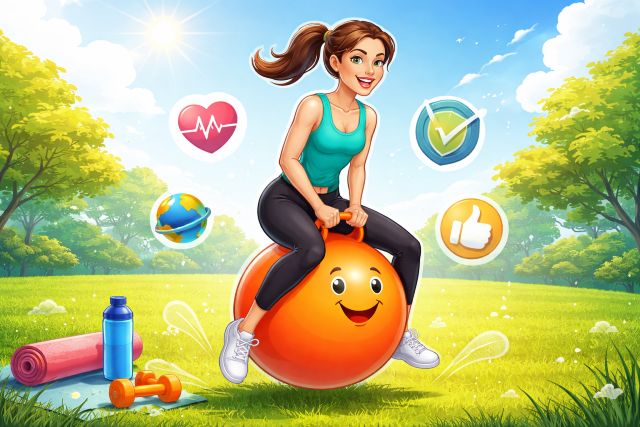

A space hopper may look like a simple toy, but it delivers far more than quick entertainment. From improving balance and coordination to encouraging active play in a screen-heavy world, the space hopper has earned its place as a movement tool for kids and even adults. Known by other names such as hopper ball, hopping ball, or inflatable bouncy ball with a handle, the space hopper combines fun with functional physical benefits.
This guide explores everything you need to know about a space hopper, including how it works, its health benefits, essential safety tips, and the best real-world ways to use it at home, outdoors, or in structured environments. Whether you are a parent, teacher, or simply curious, this article will help you make informed and safe choices.
What is a space hopper?
A space hopper is an inflatable ball designed to be sat on and bounced while holding a built-in handle or handles. Unlike a standard exercise ball, the handle allows users to stabilize their upper body while hopping forward. This design makes the space hopper accessible to children and beginners while still challenging balance and coordination.
The original space hopper became popular in the late 1960s and has remained relevant due to its simplicity and versatility. Modern versions are available in many sizes, materials, and designs, making them suitable for toddlers, older children, and even adults.
Space hopper benefits for physical development
The biggest strength of a space hopper is that it turns physical activity into play. Children rarely see it as exercise, yet their bodies receive multiple fitness benefits through repeated bouncing and controlled movement.
Balance and coordination improvement
Using a space hopper requires constant micro-adjustments to stay upright and move forward. Each bounce challenges balance, timing, and body awareness. Over time, this helps children develop better coordination, which can carry over into sports, playground activities, and everyday movement.
Research into play-based physical activity consistently shows that dynamic balance activities improve motor skills in children. Because a space hopper creates an unstable surface, it naturally promotes these adaptations without structured drills.
Core strength without boredom
To remain upright on a space hopper, the abdominal and lower back muscles must stay engaged. The hips and glutes also work continuously to stabilize the body during bouncing. This makes the space hopper a valuable tool for building functional core strength without traditional exercises that many children resist.
Pediatric therapy resources often highlight unstable surface play as a method for improving postural control and trunk stability. The space hopper fits neatly into this category. According to pediatric exercise guidance from therapy-focused sources, activities involving seated balance on balls encourage core engagement and postural endurance. Source: Your Therapy Source, pediatric core strengthening research.
Cardiovascular activity in short bursts
Repeated hopping raises heart rate quickly, especially during enthusiastic play. This makes a space hopper useful for short activity breaks that contribute to daily movement goals. Even five to ten minutes of hopping can add meaningful physical activity, particularly for children who are otherwise sedentary.
Short bursts of moderate-to-vigorous movement are supported by physical activity guidelines as a practical way to improve cardiovascular health in children. The playful nature of a space hopper makes this easier to sustain.
Bone health and impact loading
Jumping and hopping are weight-bearing movements that stimulate bone development. Studies reviewing school-based and play-based weight-bearing activities show positive effects on bone mineral density and content in children and adolescents. Source: ScienceDirect, weight-bearing exercise review.
While a space hopper is not a medical intervention, it encourages repeated impact loading through hopping, which is the same basic mechanism behind bone-strengthening activity.
Is a space hopper safe?
A space hopper is generally safe when used correctly, but most injuries occur due to improper surfaces, incorrect sizing, or lack of supervision. Toy safety reports show that hundreds of thousands of toy-related injuries are treated in emergency departments each year, with the majority involving children under 14. Source: U.S. Consumer Product Safety Commission injury estimates.
This does not mean space hoppers are inherently dangerous. It means that environment, setup, and rules matter.
Space hopper safety tips you should follow
Choosing the correct size is the single most important safety factor. When seated on a space hopper, the user’s feet should rest flat on the ground with knees bent comfortably. If the ball is too large, control is reduced. If it is too small, balance becomes awkward and unstable.
The surface also plays a major role. Soft ground such as grass, carpet, or foam mats significantly reduces injury risk. Hard or slippery floors increase the chance of falls and collisions.
The play area should always be clear of furniture, sharp corners, cords, and stairs. Most accidents happen not from bouncing itself, but from hitting obstacles at speed.
Supervision is especially important for younger children. Toddlers can move faster than expected on a space hopper and may not have the reflexes to stop safely.
Proper inflation matters as well. An underinflated space hopper wobbles excessively, while an overinflated one becomes too stiff and bouncy. A firm but slightly compressible feel is ideal.
Finally, always choose products that comply with toy safety standards. In the United States, ASTM F963 is the mandatory toy safety standard enforced by the Consumer Product Safety Commission. Source: CPSC toy safety guidelines.
Best uses for a space hopper
Indoor use
A space hopper can be a great indoor activity tool when outdoor play is limited. It works well for short movement breaks between homework sessions or as a controlled alternative to running indoors. Carpeted rooms or foam play mats help reduce noise and slipping.
Indoor use should always involve a defined play zone to avoid collisions with furniture or walls.
Outdoor play
Outdoor environments allow a space hopper to shine. Grass provides a forgiving surface, and open space reduces collision risk. Backyards and parks are ideal for free hopping, simple races, and creative movement games.
When used outdoors, it is important to keep play away from slopes, driveways, and hard pavement.
School and group settings
In schools and after-school programs, a space hopper can motivate children who are less interested in traditional sports. It works well in physical education stations, structured movement games, or short activity breaks between lessons.
Because group environments increase collision risk, clear rules, defined movement directions, and supervision are essential. Structured turns help keep play safe and enjoyable.
Therapy-style and skill development play
Although not a replacement for professional therapy, space hopper play can support balance, coordination, and trunk control in a playful way. Many therapists use ball-based activities for similar purposes, particularly to encourage active sitting and postural engagement. Source: Your Therapy Source, pediatric movement activities.
Parents should consult professionals if a child has medical or developmental concerns.
How to choose the right space hopper
Material quality matters more than appearance. Thicker, durable PVC resists punctures and maintains shape better over time. The handle should feel secure and be firmly attached to the ball.
Size should always be selected based on the user’s height rather than age alone. Manufacturer size charts are helpful, but observing seated foot contact with the ground is the best test.
Design also plays a role. Some space hoppers feature textured surfaces for grip, while others include animal shapes that appeal to younger children. These design elements do not affect performance but can influence engagement.
Common space hopper questions answered
A space hopper is best suited for children aged three and up, depending on size and supervision. Adult-sized models are available and can support light fitness use, though they are primarily designed for play rather than serious exercise.
Using a space hopper daily is generally fine if sessions are short and the surface is safe. Overuse on hard flooring should be avoided.
A space hopper is not the same as an exercise ball. The handle changes how balance is managed and makes hopping possible, which is why the movements and benefits differ.
Conclusion: why a space hopper is still worth it
A space hopper remains popular because it delivers what many modern toys do not: real movement, real laughter, and real physical benefits. When used on the right surface, at the right size, and with basic safety awareness, it supports balance, coordination, core strength, and active play.
Whether used indoors for quick movement breaks or outdoors for energetic fun, the space hopper proves that simple designs can still make a powerful impact. If your goal is to encourage movement without forcing structured exercise, a space hopper is one of the most effective and enjoyable tools you can choose.











Leave a comment