
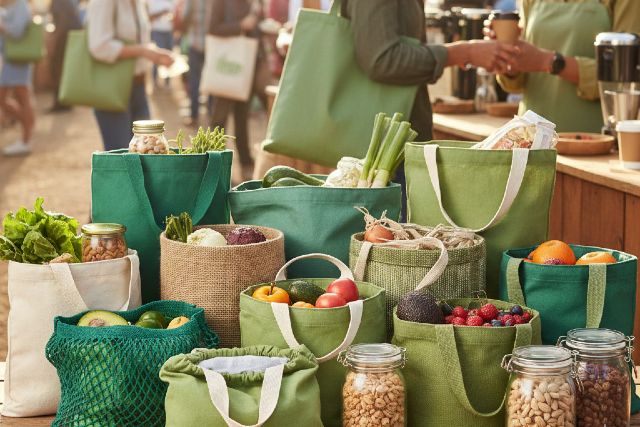

If you’ve seen more people carrying a green bag into grocery stores, cafés, and markets, it’s not just a vibe shift. It’s a practical response to a real issue: single-use packaging is everywhere, and plastic waste becomes pollution when it’s not properly managed.
A green bag is simply a reusable carry bag meant to replace disposable plastic or paper bags. Many are made to last for months or years, using materials like woven polypropylene, recycled PET, canvas cotton, or natural fibers. The reason this “eco trend” is taking off is that it’s one of the few sustainability habits that feels immediately useful in daily life, not like a sacrifice.
This article breaks down what a green bag really is, why it’s trending now, what the research says about reusable bags, and how to choose (and actually use) the right one so it delivers real environmental benefits.
What Is a Green Bag?
A green bag is a reusable shopping or everyday carry bag designed to reduce reliance on single-use bags. The “green” part refers to the intention: reuse a durable bag repeatedly so you create less waste over time.
Some green bags emphasize recycled content, others emphasize durability, and others focus on low-impact natural materials. In practice, all of these only matter if the bag gets used consistently. A green bag sitting in a drawer is just extra consumption. A green bag that’s in your hand three times a week is a meaningful behavior change.
Why the Green Bag Trend Is Exploding Right Now
You can trace the popularity of the green bag to three forces happening at the same time: awareness, policy pressure, and convenience.
First, plastic pollution is no longer a distant problem. When plastic waste is mismanaged, it becomes an environmental pollutant rather than a contained waste stream. That reality has pushed more people toward “reduce and reuse” habits that prevent waste from being created in the first place.
Second, institutions are leaning hard into reuse systems. UNEP’s recent work on plastic pollution highlights scaling reuse and refill approaches as part of reducing plastic pollution at the source. When policies and retail environments make reuse feel normal, personal habits follow.
Third, it’s genuinely easier than many other eco upgrades. A green bag doesn’t require new appliances, complicated routines, or expensive swaps. It’s one decision that “pays you back” in convenience every time you use it.
The Honest Question: Is a Green Bag Actually Better for the Environment?
Yes, it can be. But it’s only “better” if you reuse it enough.
This is where life cycle assessment (LCA) matters. LCA looks at a product’s impacts across its full life cycle, from raw material extraction to manufacturing, transportation, use, and end-of-life. A reusable bag usually has a bigger footprint upfront than a single-use bag, because it uses more material and energy to produce. The benefit appears when that footprint is spread across many shopping trips.
A major study commissioned by the Danish Environmental Protection Agency explains this tradeoff clearly: multiple-use carrier bags need to be reused a certain number of times to compensate for their manufacturing impacts.
In the Danish assessment, conventional cotton bags needed to be reused at least 52 times to outperform the reference single-use LDPE bag on climate change impact, and the “all indicators” break-even could be much higher depending on the impact category considered. The same report also found very different reuse thresholds across materials, reinforcing a key message: the number of times you use a bag directly influences its environmental impact per shopping trip.
What “Reuse Enough” Looks Like in Real Life
If you want a simple mindset, treat your green bag like a personal item, not a shopping accessory.
When a bag becomes part of your default “leave the house” kit, you rack up uses quickly. If you shop weekly, 52 uses happens in about a year. If you shop several times a week, it happens in months. That’s why the best green bag is rarely the most “eco-looking” one. It’s the one you will actually keep with you.
The Life Cycle Initiative’s synthesis of LCA evidence also emphasizes that doubling the use of a bag roughly halves the impact per shopping round, because production impacts are shared across more trips.
How to Choose the Right Green Bag for Your Routine
A lot of people overthink materials and underthink behavior. Materials matter, but your habits matter more.
If your main goal is groceries, choose a bag that holds its shape, handles weight comfortably, and survives repeated loading and unloading. If your main goal is “I forget bags,” choose a bag that folds small and lives permanently in your everyday carry, like a backpack or purse.
A good green bag should feel like an upgrade from disposable bags in three ways: it should carry more comfortably, hold more reliably, and last long enough to justify owning it.
Green bag materials explained in plain English
Woven polypropylene bags are popular because they’re sturdy and light, and they can survive frequent grocery trips. Recycled PET bags are similar in practicality, and they appeal to people who like the idea of using recycled plastic as a feedstock. Cotton canvas totes can be extremely durable and washable, but they come with higher production impacts, so they’re best for people who will use them a lot over a long period.
Natural fiber options like jute can be strong and stylish, but they’re often bulkier and less foldable. Paper “reusable” bags can work as occasional backups, but many don’t last long in humid conditions or under heavy loads, which reduces real-world reusability.
If you want the most practical rule, pick the bag that matches your life: frequent grocery shoppers benefit from durable structure, while forgetful shoppers benefit from portability and convenience.
The most overlooked feature is strap comfort
People abandon reusable bags when they’re uncomfortable. Wide straps help distribute weight on your shoulder. Longer straps help if you carry on your shoulder often, while shorter handles can be easier for hand-carrying heavier loads.
If your green bag hurts to carry, you’ll “accidentally” go back to single-use bags. Comfort is sustainability.
How to Make a Green Bag a Habit (So It Delivers Real Impact)
Most people don’t fail because they dislike reusable bags. They fail because the bag is in the wrong place when they need it.
Put your green bag where your life already happens. If you drive, keep at least one bag permanently in the car. If you walk, keep one folded in your everyday backpack. If you commute, keep one in your work bag. The goal is to make it harder to leave without the bag than to remember to bring it.
There’s also a psychological trick that works surprisingly well: decide your bag’s “home.” When you come back from shopping, immediately return it to its home spot. The fewer decisions you make, the more likely the habit sticks.
Hygiene and Maintenance: The Part People Avoid (But Shouldn’t)
A green bag lasts longer and stays more usable when it’s clean.
If you carry groceries, spills happen. If you put produce inside, moisture happens. Washing or wiping your bag prevents odors, staining, and the slow “I don’t feel like using this” drop-off that ends with the bag being replaced prematurely.
Cotton and canvas options are often machine washable. Many synthetic bags can be wiped with mild soap and water and air-dried. Maintenance isn’t just about cleanliness. It’s about extending lifespan, which is the whole sustainability value of a reusable item.
Greenwashing Watch: When “Eco Bags” Aren’t Really Eco
Not every product marketed as eco-friendly is a smart buy. Some brands sell thin “reusable” bags that tear quickly, which effectively turns them into disposable products with a bigger manufacturing footprint.
Another common trap is overbuying. If you buy ten tote bags and use two, you’ve increased consumption without increasing reuse. The most sustainable bag is often the one you already own, as long as it’s durable enough to keep using.
This is why UNEP and LCA-focused guidance often stresses evaluating impacts across the full life cycle, rather than relying on a single claim like “biodegradable” or “natural.”
Real-World Scenario: How a Household Quietly Eliminates Hundreds of Single-Use Bags
Picture a household that shops multiple times a week. A quick top-up run, a midweek grocery trip, and a weekend restock. In many places, that adds up to a steady flow of single-use bags entering the home, piling up under the sink, then going to the bin.
Now imagine a simple system: one green bag always lives in the car trunk, another lives by the front door, and a foldable one lives in a daily backpack. Nothing else changes. They shop the same way, buy the same things, and forget the bag far less often because it’s always nearby.
This is why the green bag trend sticks. It doesn’t rely on constant motivation. It relies on placement and routine.
FAQ: Green Bag Questions People Ask Most
What is a green bag?
A green bag is a reusable carry bag designed to replace single-use shopping bags. The goal is to reuse it many times so the environmental impacts of production are spread across many trips rather than one.
Are green bags better than plastic bags?
They can be, but only when reused enough. LCAs show that reuse count is a key driver of whether a reusable bag has lower impacts per trip than a single-use bag.
How many times should I reuse a green bag?
It depends on the material. In the Danish EPA LCA, a conventional cotton bag needed at least 52 reuses to beat the reference LDPE bag on climate change impact, while some “all indicators” thresholds were much higher depending on the category considered.
What material is best for a green bag?
The best material is the one you will reuse consistently. For frequent grocery trips, durability and comfort matter most. For forgetful shoppers, a foldable bag that stays with you tends to outperform a “perfect” bag you leave at home. Evidence syntheses also stress that use frequency is a major driver of per-trip impact.
How do I clean a reusable green bag?
Follow the manufacturer’s care instructions. Many cotton bags can be machine washed. Many synthetic bags can be wiped with soap and water and air-dried. Keeping the bag clean helps it last longer, which is what makes reuse environmentally meaningful.
Conclusion: Why the Green Bag Trend Is Worth It
The green bag isn’t popular because it’s trendy. It’s popular because it’s one of the rare eco habits that makes life easier while reducing waste. The key is not buying the “most sustainable-looking” bag. The key is choosing a bag you’ll reuse relentlessly, because reuse is what converts a reusable product into a real environmental win.
If you want this trend to actually work for you, keep the number of bags you own low, keep the ones you own easy to reach, and keep using them until they’ve truly earned their place in your routine. That’s how a green bag stops being a purchase and starts being a long-term habit that reduces single-use waste in the real world.














Leave a comment