
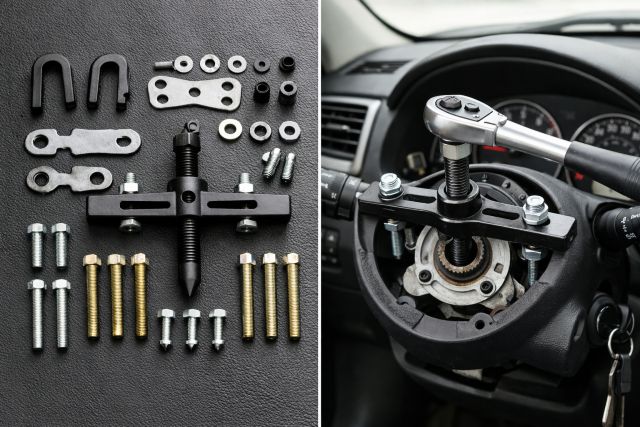

Removing a steering wheel can feel intimidating, especially on modern vehicles packed with airbags, electronics, and sensitive steering components. This is exactly where a steering wheel puller becomes essential. Instead of prying, yanking, or hammering, a steering wheel puller applies controlled, even pressure that safely separates the wheel from the steering shaft. When used correctly, it protects the steering column, avoids damage to threads, and prevents costly airbag or clockspring issues.
This article walks you through a practical, real-world fitment checklist that works for almost any car. Whether you are a DIY enthusiast or a professional technician, understanding proper steering wheel puller fitment will save time, reduce frustration, and help you complete the job safely.
What a steering wheel puller does and why fitment matters
A steering wheel is mounted onto a splined or tapered steering shaft and secured with a large center nut or bolt. Over time, corrosion, heat cycles, and constant steering input cause the wheel to bind tightly to the shaft. A steering wheel puller is designed to apply straight-line force that breaks this bond evenly, preventing side loading that can damage bearings or deform the column.
Fitment matters because steering wheels are not universal. The threaded holes in the steering wheel hub vary by manufacturer, vehicle age, and whether the wheel is factory or aftermarket. Using the wrong thread size or bolt length can strip the hub or crack the wheel, turning a simple removal into an expensive repair. According to major tool manufacturers, most general-purpose puller kits cover common domestic and import applications by including several bolt sizes and a forcing screw designed to protect the shaft.
Identifying puller compatibility before removal
Before installing a steering wheel puller, the first thing to check is whether the steering wheel hub has threaded puller holes. Most modern factory wheels include two or sometimes three threaded holes hidden behind the airbag module or trim cover. These holes are designed specifically for a steering wheel puller and are your primary mounting points.
If no threaded holes are visible, the wheel may require a manufacturer-specific adapter or may already be loose enough to remove once the center fastener is loosened. Some aftermarket steering wheels and quick-release hubs follow different removal procedures, so forcing a universal puller onto a non-compatible hub is a mistake worth avoiding.
Matching the correct steering wheel puller bolt thread
Matching the correct bolt thread is the most important step in steering wheel puller fitment. Most puller kits include commonly used thread sizes such as M8 x 1.25 and popular SAE sizes like 5/16-inch and 3/8-inch threads. These sizes cover a wide range of vehicles from domestic sedans to imported compact cars.
The correct bolt should thread smoothly into the hub by hand for several full turns without resistance. If the bolt tightens immediately or feels gritty, the thread pitch is likely wrong. Forcing it can permanently damage the hub threads. Thread identification charts published by fastener standards organizations confirm that metric and SAE threads can appear similar but are not interchangeable, which is why careful matching is critical.
Ensuring proper bolt length and thread engagement
Even when the correct thread diameter and pitch are selected, bolt length must still be verified. A bolt that is too short may only engage a few threads, increasing the risk of stripping under load. A bolt that is too long can bottom out inside the hub and crack the steering wheel casting.
A properly fitted steering wheel puller bolt should engage several full turns before contacting the puller bar. Most quality puller kits include multiple bolt lengths to accommodate different hub depths. Starting with a shorter bolt and increasing length as needed is the safest approach.
Protecting the steering shaft during puller use
Before applying force, the steering wheel center nut or bolt should be loosened but left threaded onto the shaft. This provides a flat surface for the puller’s forcing screw to press against and prevents sudden release when the wheel breaks free. Many steering wheel pullers include a swivel-tip forcing screw specifically designed to protect the shaft end from damage.
Technicians commonly leave the center nut threaded a few turns so that when the wheel pops free, it stops safely instead of striking the technician or damaging interior trim. This small step is a professional habit that greatly improves safety.
Airbag and SRS considerations for modern vehicles
On vehicles equipped with airbags, steering wheel removal is also a supplemental restraint system service procedure. Industry safety guidance consistently emphasizes disabling the airbag system and disconnecting the battery before working near airbag components. This step reduces the risk of accidental deployment and prevents fault codes from being stored during removal.
Airbags are powerful safety devices. According to the National Highway Traffic Safety Administration, frontal airbags saved more than 50,000 lives between 1987 and 2017, including thousands in a single recent year. That same force makes careful handling essential during repairs. Proper disconnection and storage of the airbag module face-up in a secure area is considered best practice.
Applying force evenly for clean removal
Once the puller is mounted and aligned, force should be applied gradually. The forcing screw should be turned in small increments while ensuring the puller bar remains square to the hub. Even pressure prevents the puller from cocking sideways and damaging threads.
If resistance increases suddenly or the puller begins to flex, stopping to reassess is critical. Often, repositioning the puller or verifying bolt engagement solves the issue. Excessive force is rarely the solution and often leads to broken components.
Differences by vehicle type and steering wheel design
Late-model vehicles with airbags tend to have tighter tolerances and more delicate components behind the wheel. These vehicles benefit the most from using a steering wheel puller designed for SRS applications. Older vehicles without airbags are mechanically simpler but may require more patience due to corrosion and age-related binding.
Aftermarket steering wheels and hub adapters vary widely in design. Some include standard puller holes, while others rely on brand-specific removal tools. In these cases, identifying the hub manufacturer before attempting removal is essential to avoid damage.
Common steering wheel puller problems and solutions
When a steering wheel refuses to come off, the issue is often incorrect bolt thread selection or uneven puller alignment. Slipping bolts usually indicate mismatched threads, while shaft damage typically results from removing the center nut entirely before applying force.
Airbag warning lights after reassembly often point to a disturbed clockspring or improperly connected SRS connector. These issues typically require a scan tool capable of reading airbag codes, not just a standard OBD reader.
Frequently asked questions about steering wheel pullers
A steering wheel puller is a tool that removes a steering wheel by applying straight, even pressure off the steering shaft using threaded hub holes and a central forcing screw. This controlled method reduces the risk of damage compared to pulling by hand.
While some steering wheels may come off without a puller, many are press-fit tightly. Using a steering wheel puller is the safest and most reliable method, especially on vehicles with airbags and electronic steering components.
Most steering wheel puller kits include common metric and SAE bolt sizes to cover a wide range of vehicles. These typically include M8 x 1.25 and popular 5/16-inch and 3/8-inch sizes.
Disconnecting the battery is a critical first step when working around airbags, but exact procedures vary by vehicle. Following manufacturer service information ensures the system is fully disabled before removal.
Conclusion
A steering wheel puller is one of those tools that proves its value the moment resistance appears. By following a proper fitment checklist that includes identifying hub threads, confirming bolt length, protecting the steering shaft, and respecting airbag safety procedures, you can remove a steering wheel cleanly on almost any car. Taking the time to match fitment correctly prevents stripped threads, damaged columns, and unnecessary SRS faults. When used properly, a steering wheel puller turns a potentially risky job into a controlled, professional-grade repair.













Leave a comment