
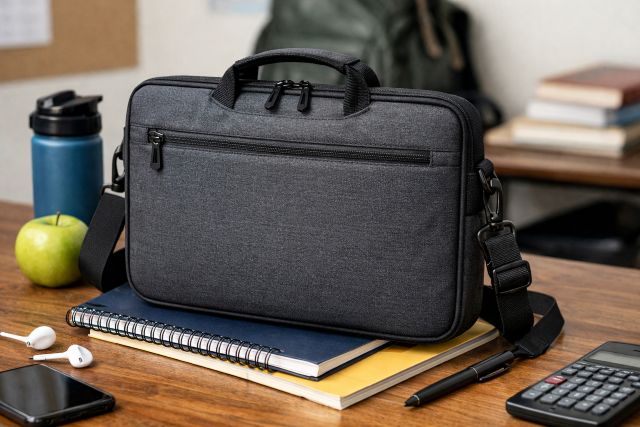

College life is basically a daily obstacle course for your tech. Your laptop gets pulled out in lectures, carried across campus, stuffed into backpacks with chargers and notebooks, and sometimes exposed to rain or accidental spills. That’s why choosing the right laptop case isn’t just about style. For students, it’s about getting protection that stays light, handles real-world bumps, and doesn’t cost an unreasonable amount.
Students also depend on laptops more than ever. UC Davis’ Winter 2025 student survey reports laptop ownership is near-universal among respondents, reinforcing what most campuses already feel like: almost everyone is carrying a computer daily. When your laptop is your class hub, research station, and assignment machine, a smart case is one of the easiest ways to reduce risk without changing your routine.
This guide walks you through how to choose the best laptop case for students with a focus on three priorities: lightweight comfort, tough protection, and affordability. You’ll also learn the differences between sleeves and structured cases, how to size correctly, what materials matter, and which features actually make a difference when life gets hectic.
What “Best” Means in a Student Laptop Case
The “best” laptop case for students usually isn’t the fanciest. It’s the one you’ll actually keep using every day because it fits how you move around campus.
A lightweight case matters because you’re carrying it constantly. Even small weight adds up between classes, labs, and library sessions. A tough case matters because laptops rarely get damaged during “normal” use; they get damaged during the rushed moments. Think bag tipping off a chair, backpack dropping onto a hard floor, or someone bumping your seat while your laptop is inside your bag. Affordable matters because student budgets are real, and the point of a case is to prevent expensive problems—not become one.
If you want a simple mental model, the best student-friendly laptop case is the one that protects corners and edges, resists water and abrasion, and still slides in and out of your backpack without feeling bulky.
Laptop Case vs Laptop Sleeve for Students
Many students search “best laptop case” when what they actually need is a sleeve. The difference is mostly about structure and how you carry your laptop.
A laptop sleeve is usually lighter, slimmer, and designed to slide inside a backpack. If you already carry a backpack with decent padding, a sleeve gives you an extra protective layer while keeping your setup simple. A structured laptop case tends to add shape and sometimes a more rigid shell, which can help more when you carry the laptop by itself or you commute in crowded transport where bags get squeezed.
For most students, the sleeve-plus-backpack combo is the sweet spot: it’s light enough for daily use and protective enough for typical campus hazards. A structured case becomes more valuable if you often carry your laptop in your hands, move between internships and campus without a backpack, or take public transportation where impacts are more common.
How to Choose the Right Laptop Case Size
Sizing is where a lot of “good” cases fail. Many products are labeled by screen size, but two laptops with the same screen size can have very different physical dimensions.
The most reliable approach is to check your laptop’s width, height, and thickness, then compare them to the case’s internal dimensions. If the listing only tells you the “fits 13-inch laptops” line, treat that as marketing, not a measurement. A case that is too tight puts pressure on corners and edges, and zipper tension over time can become a real problem. A case that is too loose lets the laptop slide around, which reduces protection during a drop.
If you use a thin snap-on shell or keyboard cover, account for that thickness. And if you prefer carrying a charger in the same case pocket, don’t choose a case that fits “exactly.” Tight cases plus bulky accessories often create pressure points right where you don’t want them.
Laptop Case Features That Matter for Student Life
The features that matter most are the ones that prevent the most common types of damage. Scratches are annoying, but drops and pressure are what usually lead to expensive issues.
Corner and edge protection is crucial because laptops rarely land flat. A fall often sends the corner into the floor first, and that’s where screens, frames, and internal mounts can take a hit. Look for cases that clearly mention reinforced corners or thicker impact zones at the edges.
Shock-absorbing padding matters more than simple thickness. Good padding compresses and rebounds; it acts like a buffer. If a case feels soft but collapses completely when pressed, it may not do much when your bag hits the ground.
Water resistance is another student essential. Even if you’re careful, weather and crowded spaces create risk. A case doesn’t have to be fully waterproof to be useful; a water-resistant outer fabric and decent zipper design can buy time and prevent minor exposure from turning into major trouble. When you consider how manufacturers frame repair and service options, accidental damage can be costly or complicated depending on coverage. Apple’s Mac repair and service page, for example, emphasizes different service options and costs depending on coverage type. The practical takeaway for students is simple: preventing damage is usually cheaper than dealing with it.
Zipper quality is the quiet deal-breaker. Cheap zippers fail at the seams, snag, or split under pressure. On a student schedule, that’s not just inconvenient—it can mean carrying your laptop unprotected for days.
Finally, an inner lining that’s smooth and soft reduces micro-scratches and keeps your laptop looking better over time. That’s useful if you plan to resell your device later or just want it to stay clean-looking through the semester.
Lightweight Doesn’t Have to Mean Flimsy
Many students want the lightest possible laptop case because campus life already involves books, chargers, water bottles, and everything else. The key is choosing a case that uses protection efficiently.
A good lightweight laptop case focuses padding where it matters most: on the front and back panels, and especially around corners. It avoids unnecessary bulky compartments that tempt you to overstuff. If your day is mostly lecture halls and library work, a slim padded sleeve that slides into your backpack is often the best balance of comfort and protection.
Here’s a real campus scenario that shows why: imagine you’re moving between classes every hour and pulling your laptop out repeatedly to take notes. A bulky hard case slows you down and makes the laptop harder to pack quickly. A slim, well-designed sleeve gives you fast access, less weight, and still meaningful impact protection.
Affordable Laptop Case Buying Strategy
“Affordable” should mean you’re getting reliable protection for the money, not the lowest possible price.
In practice, a smart student budget is one where you’re paying for padding quality, stitching strength, and zipper durability rather than a logo. If you’re trying to keep costs down, look closely at the construction details. Are the seams reinforced? Is the zipper track smooth and sturdy? Does the case mention water-resistant fabric or coating? Those details usually matter more than aesthetics.
Also, think about the cost of replacement cycles. A very cheap case that tears in three months isn’t really affordable if you end up buying two more during the academic year. Spending slightly more once can cost less overall.
Materials Guide: What Holds Up to Student Use
Material choice affects weight, durability, and water resistance. The best laptop case material depends on how you carry your laptop and where you use it.
Neoprene is common because it’s light and flexible, and many sleeves use it. It can be a great budget-friendly option, but water behavior depends on treatment and design. Some neoprene sleeves handle light moisture well, while others can soak and hold water.
Nylon and polyester are popular in student-friendly cases because they resist abrasion and often come with water-resistant coatings. These materials can survive daily rubbing against books, chargers, and bag interiors better than many softer fabrics.
Semi-rigid EVA-style shells are excellent when you want strong impact protection without extreme weight. These can be especially helpful if you commute daily or your bag experiences pressure in crowded transport. The tradeoff is bulk and slightly less flexibility on fit.
Canvas often looks great and can be durable, but it may be heavier and can absorb water unless treated. If you love the look, prioritize versions that explicitly mention water-resistant coating.
Commuting, Travel, and Fast Laptop Access
Students travel more than they think: weekends home, internships, conferences, study trips, and flights. Laptop cases that work well in travel situations reduce stress.
If you fly, TSA guidance explicitly says to remove laptops from your bag and place them in a separate bin for X-ray screening, with TSA PreCheck travelers having different rules. In practical terms, this favors laptop cases and sleeves that allow quick removal without wrestling the device out of a too-tight fit. A zipper that opens wide and a snug-but-not-tight interior can make security checks smoother.
Even outside airports, fast access matters on campus. If you’re in a lecture hall, you don’t want to fight with your case while your professor is already moving through slides. The best laptop case for students is the one that supports your workflow, not the one that forces you to slow down.
Choosing the Right Laptop Case Based on Your Student Routine
If you want a clear way to decide, base your choice on how you carry your laptop most days.
If your laptop lives inside a backpack, a padded sleeve is often ideal. You get scratch protection, impact buffering, and easy packability. If your backpack is minimally padded, upgrading your case protection becomes more important, and a thicker sleeve or a structured case can compensate.
If you often carry your laptop on its own, or you walk short distances between dorm and class without a bag, a handle-style sleeve or structured case becomes more useful. It’s not just about convenience; it’s also about reducing the chance of dropping the laptop while juggling other items.
If you commute by bus or train, pressure protection matters. Bags get squeezed, corners get hit, and laptops can take side impacts. In that situation, a semi-rigid case design can be worth the extra bulk.
If you’re in labs, workshops, fieldwork, or busy shared spaces, water resistance and abrasion resistance jump in priority. A case that shrugs off scuffs and light moisture is often the smarter long-term choice.
FAQ: Best Laptop Case for Students
What is the best laptop case for students?
The best laptop case for students is one that fits your laptop’s exact dimensions, adds corner and edge protection, and stays lightweight enough for daily carrying. For most students who use backpacks, a padded sleeve with reinforced corners and a water-resistant exterior is the best blend of comfort, protection, and affordability.
Is a laptop sleeve enough for college?
A laptop sleeve is enough for many college students when it’s paired with a decent backpack. It adds scratch protection and impact buffering for daily movement around campus. If you commute in crowded transport or frequently carry your laptop without a backpack, you may want a more structured laptop case for extra protection.
Should I choose a hard case or a soft case?
Soft cases and sleeves are lighter and easier to pack, which makes them ideal for most student routines. Hard or semi-rigid cases can protect better against side impacts and pressure, which can be useful for commuters. The best choice depends on whether your laptop is mostly inside a backpack or often carried on its own.
How much should a student spend on a laptop case?
A student should spend enough to get reliable padding and a durable zipper, because these are the parts that determine whether the case protects or fails. The most affordable choice long-term is usually a case that lasts the whole academic year, not the cheapest one that needs replacing after a few months.
Do laptop cases protect against water damage?
Some laptop cases reduce water risk by using water-resistant fabric and better zipper design, but very few are truly waterproof. The goal is to protect against light rain, splashes, and minor spills long enough for you to wipe things down and move the laptop to safety.
Conclusion: The Best Laptop Case Is the One You’ll Use Every Day
The best laptop case for students is lightweight enough to carry without thinking, tough enough to protect corners and edges, and affordable enough to feel like a smart investment. A well-made laptop case also supports your daily workflow by making your laptop easy to access in class, safer in transit, and less vulnerable to the small accidents that happen on busy campuses.
If you want one reliable default choice, go with a slim padded laptop case or sleeve that fits your laptop precisely, includes reinforced corners, and uses a water-resistant outer material. It delivers the “light, tough, and affordable” balance students actually need, and it stays practical from week one through finals.















Leave a comment