
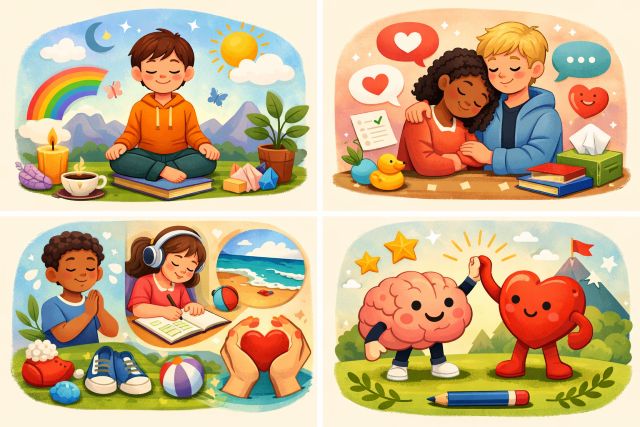

Mental health posters can do more than decorate a wall. In a classroom, they can quietly set the emotional tone, normalize help-seeking, and give students simple words for what they’re feeling. When students see supportive messages about stress, emotions, and coping, they get a steady signal that the room is a safe place to learn, reset, and try again.
In this guide, you’ll learn how to choose mental health posters that feel calming rather than corny, supportive rather than clinical, and truly classroom-ready rather than just “printable.” You’ll also get real-world examples, evidence-backed context, and practical ways to make posters work alongside routines and SEL instruction. If your goal is a classroom that supports learning and well-being at the same time, mental health posters can be a simple, high-impact piece of the environment.
Why mental health posters belong in student spaces
Posters work like micro-reminders. They don’t replace counseling, family support, or school mental health services, but they can reinforce the language and routines that help students regulate. When the same short message is seen at the same moment each day, it starts to act like a cue. Students may not remember a long conversation about coping skills, but they will remember the phrase posted beside the calm corner or the turn-in tray when stress shows up.
Mental health posters also support consistency. Students move between classes, teachers, and expectations. A common set of visuals across a grade level can reduce confusion and help students feel anchored. When every room uses similar words for emotions and coping, students don’t have to decode a different system every hour.
Another benefit is stigma reduction. Many students hesitate to ask for help because they fear judgment or trouble. A poster that calmly explains how to get support can make the “first step” feel normal. Even when students don’t act on it immediately, they begin to understand that help-seeking is part of the culture.
What “classroom-ready” mental health posters really mean
Classroom-ready does not mean flashy. It means the poster fits how classrooms actually function on real days, including the loud days, the tired days, and the days when half the class is anxious about a test.
A classroom-ready poster is readable from across the room, with high contrast and clean spacing. It uses short phrases that students can process quickly, especially when overwhelmed. It is emotionally safe, avoiding shame, blame, or dismissive positivity. It is inclusive in language and imagery, so students from different backgrounds and identities can see themselves as welcomed and respected.
Most importantly, it is actionable. A good mental health poster gives a next step that can happen in the moment, such as breathing, grounding, naming a feeling, or asking for help. “You matter” can be comforting, but “Breathe in for 4, hold for 4, out for 6” is a tool students can use right now.
The mental health posters students respond to most
Calming posters for stress, anxiety, and overwhelm
These posters are most effective when they focus on regulation. Students need a simple cue they can follow without thinking too hard. Breathing prompts, grounding prompts, and “pause” prompts are popular because they are fast and non-judgmental.
A strong example is a breathing poster with a short pattern that students can memorize. Another is a grounding prompt that guides attention to the senses. A third is a reminder that feelings pass and that the next step can be small.
Calming posters work best when the classroom routine supports them. If students are allowed to take a short reset without punishment, the poster becomes a trusted support rather than decoration.
Emotional vocabulary posters that help students name feelings
Many classroom conflicts and shutdowns are really communication problems. When students don’t have words, feelings come out as behavior. Emotional vocabulary posters solve a practical problem by giving students language. They work especially well when they include both basic emotions and more specific variations. The goal is not to label students, but to give them options.
When a student can say “I’m overwhelmed” instead of “I hate this,” you can respond more effectively. When a student can distinguish between “annoyed” and “angry,” you can intervene earlier.
Coping strategy posters that offer small choices
A coping skills poster becomes more powerful when it reads like an invitation rather than an order. Students are more likely to engage when they have agency. Posters that encourage students to pick one strategy can reduce power struggles and help the class stay calm.
The best coping posters include strategies that are realistic in a classroom. If a poster recommends things students cannot do at school, it will feel out of touch. Simple classroom-friendly strategies include breathing, stretching, drinking water, a short walk with permission, a quiet corner, or asking for a break using a pre-taught signal.
Self-compassion and growth mindset posters for “after the mistake”
Many students spiral after errors. They assume a wrong answer means they are not smart, not capable, or not safe. Posters that support self-compassion can be especially helpful near areas where academic stress happens, such as the assignment board, test-taking spaces, or independent work stations.
The most effective self-compassion messages feel real. Students often reject overly cheerful slogans, but they respond to respectful, grounded language. A poster that reframes mistakes as information can reduce shame. A poster that uses the word “yet” can encourage persistence without pretending the work is easy.
Help-seeking posters that make support clear
Help-seeking posters are classroom-ready when they are specific and calm. Students should be able to understand exactly what to do if they need support. In a school setting, this often means clear pathways like asking the teacher privately, requesting a counselor pass, or using a class check-in routine.
These posters should never be dramatic or alarming. The goal is to normalize support and reduce fear. Many schools have policies and approved language for crisis-related messaging, so it’s wise to align with counselors and administration.
How to place mental health posters so they actually get used
Placement is not an afterthought. Students do not scan every wall. They notice what is in their path, what is near routines, and what is near the moments that matter.
Belonging and welcome posters work best near the entrance, where the tone is set. A student who feels anxious walking into class may be reassured by a message that says they are safe and wanted there. Help-seeking posters work well near a teacher help area or a posted “how to get help” station. This reduces the awkwardness of asking and makes the process predictable.
Calming posters belong near a calm corner or reset space, where students can use them immediately. Self-compassion posters can go near areas where frustration tends to rise, such as the turn-in tray, the “late work” folder, or the test station. Communication and respect posters work well in group-work zones, where small conflicts can escalate if norms are unclear.
If you remember one idea, let it be this. Put regulation tools where dysregulation actually happens, not where you wish it didn’t.
Design choices that feel calming, not cheesy
Students, especially in middle and high school, can detect forced positivity. The best mental health posters avoid “good vibes only” language because it can unintentionally invalidate real feelings. A calmer approach acknowledges emotions while offering direction.
Specificity helps. “Take one deep breath” is more usable than “Stay calm.” “What’s one thing you can control right now?” feels more respectful than “Don’t worry.”
Visual design matters too. A poster that is visually loud can increase stress. A classroom-ready design uses whitespace, clean typography, and simple icons. High contrast supports readability, and avoiding clutter supports regulation. If you are printing, choose a size large enough to read without squinting. If you’re posting in multiple places, keep style consistent so the classroom looks intentional, not chaotic.
Trauma-informed design emphasizes safety, choice, and predictability. Posters that offer options tend to land better than posters that command compliance. “Choose a coping strategy” is often more effective than “Stop that behavior.”
Mental health posters by grade level
Elementary classrooms
Elementary students benefit from posters that are concrete, visual, and routine-based. They often need a clear “what to do next” because their ability to self-direct under stress is still developing. Short phrases paired with simple visuals can make the message stick.
In an elementary scenario, imagine a student who starts crying during math because the work feels hard. A breathing poster near a calm corner can offer a nonverbal script. If the student has practiced it in calm moments, they can follow the poster without needing a lot of adult attention. That helps you support them while still teaching the group.
Middle school classrooms
Middle school students crave respect and autonomy. Posters work best when they sound like the teacher trusts students to make choices. The tone should be straightforward and not childish. Middle school is also a time when social pressure is intense, so posters that offer private coping options can help students regulate without feeling exposed.
In a middle school scenario, students might feel panicky before presentations. A grounding poster near the speaking area can give a discreet tool. Even students who would never talk about anxiety out loud may still use the poster silently.
High school classrooms
High school students often respond to minimal text and clean design. They want language that feels real and adult. Posters that connect stress to practical steps can be especially helpful during exams, college planning, or heavy project weeks.
A high school scenario might involve exam week. A poster near the entrance that says something like “Overwhelm is a signal. What’s the next right step?” can interrupt spiraling thinking. It doesn’t pretend everything is fine. It just offers direction.
Evidence-backed context: why small supports matter
It’s easy to underestimate small environmental supports because they feel too simple. But consistency is powerful. When students repeatedly see messages that validate emotions and offer coping steps, those messages become familiar. Familiarity can reduce threat response, especially for students who are anxious, stressed, or carrying trauma.
This does not mean every student needs the same approach. It does mean classrooms benefit from supportive norms that reduce shame, increase emotional literacy, and make help-seeking easier.
Making posters effective with routines, not just walls
Posters become effective when they are taught and practiced. If you want students to use a breathing poster, model it during a calm moment. If you want them to use a coping poster, walk the class through two or three strategies and clarify what’s allowed. If you want help-seeking posters to work, teach the process and reassure students they won’t be punished for asking for support.
A practical approach is to reference a poster during transitions. You might say, “Before we start, let’s do the breathing pattern on the wall,” or “If you feel stuck, check the ‘next step’ poster by the board.” Over time, students start using the posters without prompts.
A common mistake is putting up too many posters at once. When every wall is covered, nothing stands out. A calmer classroom typically uses fewer, more intentional visuals.
A simple classroom scenario that shows why this works
Consider a fifth-grade teacher who sets up a reset spot and uses a small set of mental health posters. One poster cues a pause and breathing routine. Another cues a grounding routine. A third cues returning to learning when ready.
The biggest change is not that students suddenly stop feeling upset. The change is that students have a predictable path through the feeling. When a student gets overwhelmed, they know what to do. They don’t need a long lecture. They follow the routine, and the teacher can keep the class moving while still supporting the student’s nervous system.
That’s what “classroom-ready” really looks like. It’s not inspirational. It’s functional.
FAQs about mental health posters for students
What are mental health posters?
Mental health posters are classroom or school visuals that promote emotional awareness, coping strategies, self-compassion, and help-seeking. They do this through short, supportive messages and simple, repeatable tools.
Do mental health posters actually help students?
They can help as part of a supportive classroom environment. Posters reinforce language and routines that students can use when stressed, especially when teachers model them and connect them to SEL instruction. Given the scale of adolescent mental health needs, small and consistent supports can contribute to a more supportive culture.
Where should I put mental health posters in a classroom?
Put them where students will need them in the moment. Place welcoming and belonging messages near the entrance, calming tools near a calm corner or reset spot, help-seeking guidance near a teacher help area, and self-compassion messages near high-stress academic zones like turn-in areas or test spaces.
What should a calming poster say?
A calming poster should offer a simple, actionable step that can be done quickly. Breathing prompts and grounding prompts work well because students can use them without needing extra materials or attention.
Are mental health posters appropriate for all ages?
Yes, when they are designed for the students’ developmental level. Elementary students usually need visual cues and very concrete steps. Middle school students respond better to autonomy and respectful language. High school students tend to prefer minimal design and practical, realistic phrasing.
Conclusion: building a calmer classroom with mental health posters
Mental health posters are a small tool with a surprisingly big impact when they’re chosen intentionally and taught as part of classroom routines. They make emotional support visible. They give students language for feelings. They normalize coping and help-seeking. They can also reduce stress in everyday moments by offering quick, practical next steps.
Given that adolescent mental health challenges are common worldwide and that many students report significant distress, it’s worth designing classrooms that support nervous system regulation alongside academics.
















Leave a comment