
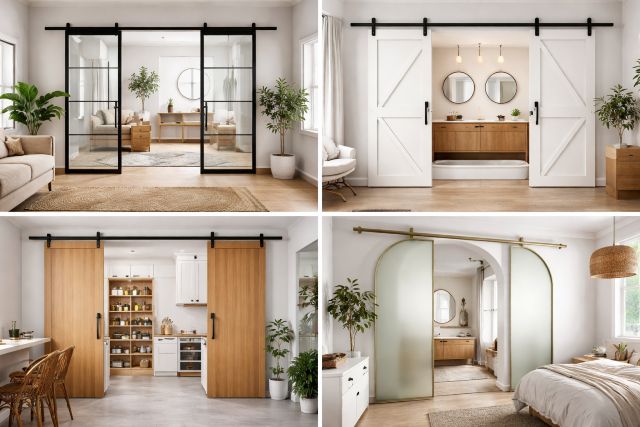

A sliding door kit is one of the quickest ways to make a room feel intentionally designed without taking on a full remodel. In many homes, the door is a surprisingly “loud” design element: it’s large, used every day, and often sits in a prime sightline. When the hardware looks clunky or the movement feels rough, the whole space can read older than it really is.
The good news is that modernizing doesn’t require fancy carpentry or a designer budget. With the right sliding door kit upgrades, you can get smoother motion, quieter operation, and a clean, contemporary look in a single weekend. The key is knowing which parts matter most and which “cheap fixes” actually make the door feel worse over time.
What a sliding door kit is and what an “upgrade” really means
A sliding door kit is the hardware system that allows a door panel to glide horizontally. Most kits include the track, rollers or hangers, stops, a floor guide, and the fasteners needed to mount everything. Some kits come with a door slab, but many expect you to supply the door separately.
When people talk about upgrading a sliding door kit, they’re usually trying to improve two things at once: how it looks and how it feels. The look is obvious from across the room, because the track and hardware are right at eye level. The feel is just as important, because you notice it every time you open or close the door. A modern door is quiet, stable, and smooth, not rattly or stiff.
If your current setup feels noisy, wobbly, or visually themed in a way you’ve outgrown, upgrading the kit hardware often delivers a bigger impact than replacing the door slab itself.
Why a sliding door kit upgrade modernizes a room so quickly
Modern rooms tend to share a few characteristics: clean lines, fewer visual interruptions, calmer sound, and purposeful details. Doors influence all four.
A swinging door requires “swing space,” which can create awkward furniture layouts and cluttered traffic patterns. A sliding door eliminates that, which instantly makes a room feel more flexible and “planned.” Designers also talk about the broader move toward spaces that can be opened or closed depending on the moment, rather than permanently open layouts, which makes sliding doors especially practical for offices, dens, and hybrid rooms.
Then there’s the sensory factor. A soft, controlled glide reads as high quality the same way a well-made drawer does. If you want a room to feel modern without changing its architecture, this is one of the most direct ways to get there.
Sliding door kit upgrades that deliver the biggest modern payoff
Upgrade 1: Choose a slimmer, cleaner track profile
If your current track is bulky, highly decorative, or overly “industrial,” switching to a slimmer track design can instantly update the whole wall. Modern hardware tends to look simpler and more intentional. Straight lines, minimal ornamentation, and a consistent finish do most of the work.
A sleek track matters because it sits above the opening like a visible “header.” When it’s clean and proportional, it blends into the architecture. When it’s oversized, it becomes the feature, even if you didn’t mean for it to.
Upgrade 2: Add soft-close so the door feels premium
Soft-close is one of the most noticeable upgrades you can make because it changes the daily experience immediately. Instead of the door bumping the stop or slamming when someone moves too quickly, soft-close dampers guide it into position.
This isn’t just about comfort. It reduces wear on the track stops, protects trim and wall surfaces, and lowers noise — especially useful in smaller homes, apartments, and open-plan spaces. If you work from home, you’ll appreciate how much “modern” is really code for “quiet and controlled.”
Upgrade 3: Replace noisy rollers with smoother, quieter rollers
If a sliding door rattles or grinds, it will never feel modern, no matter how stylish the hardware finish is. Roller quality is the heart of the system. Upgrading to better rollers can make a basic kit feel dramatically more expensive.
Look for roller designs that emphasize durability and smooth operation, such as ball-bearing mechanisms. While specific requirements vary across product categories, industry standards and testing frameworks for door hardware often focus on durability and performance over cycles, which is exactly what you want in a frequently used door.
This is also the upgrade that tends to “fix” doors that feel misaligned. Better rollers track more consistently and reduce lateral wobble.
Upgrade 4: Match the finish to the room, not the trend
A sliding door kit looks modern when it looks intentional. One of the easiest ways to accidentally make a door look dated is mixing metals randomly. You don’t need everything to match, but you do want it to feel deliberate.
If your space leans warm, brushed brass or bronze can feel current. If your space leans crisp and monochrome, matte black or brushed nickel often looks sharper. The trick is repeating the finish elsewhere in the room so the door hardware feels like part of the design language rather than a standalone statement.
Upgrade 5: Swap bulky pulls for low-profile or flush handles
Handles can quietly sabotage a modern look. Many doors that could look contemporary end up reading farmhouse simply because the pulls are oversized, rustic, or overly ornate.
Modern interiors typically favor flush pulls, minimal bar pulls, or subtle finger pulls depending on the door style. The best choice is the one that stays comfortable in the hand while staying visually quiet.
Upgrade 6: Install a better floor guide for stability
A floor guide is a small part with a big effect. If the bottom guide is flimsy or poorly positioned, the door can sway, scrape, or feel unstable. That instability is one of the fastest ways to make the whole project feel “DIY,” even if the track looks great.
A better guide improves alignment and reduces wobble, which makes the door feel more like a built-in architectural element. It also protects the door edge and helps maintain smooth travel over time.
Upgrade 7: Use proper backing so the install looks clean and stays safe
A track must be anchored securely. If the mounting points don’t line up with studs, a properly installed backer board that spans studs is often the right solution. This is where many sliding door installs fail over time: the door seems fine at first, then loosens, sags, or shifts after repeated use.
A modern-looking install is also a correct install. When the track is level, the spacing is consistent, and the mounting surface is solid, the door glides better and the hardware sits flatter, which reads cleaner visually.
Cost reality: what “affordable” usually looks like
Hardware pricing varies widely, but credible cost guides put basic track-and-hardware kits in a broad budget-to-midrange spectrum. Fixr, for example, cites a hardware kit cost range of roughly $42 to $447 depending on quality and length, with custom hardware costing much more.
If you’re also hiring installation help, your all-in cost changes significantly. HomeAdvisor reports an average installed cost and a typical homeowner spending range for barn-style sliding door installs, influenced by labor, door type, and site conditions.
The practical takeaway is that you can modernize the feel and appearance without buying the most expensive system, as long as you prioritize the parts that control motion and stability. A modest kit with upgraded rollers or soft-close can look and feel better than a pricey kit installed with weak backing and a wobbly guide.
Picking the right door slab for a modern result
Even though this guide focuses on the sliding door kit, the door slab still matters. A very light, hollow door can look fine but feel cheap because it transmits sound and tends to vibrate more. If your goal is a calmer, more modern home, choosing a heavier, better-built slab can improve the “quiet” factor noticeably.
If budget is tight, upgrading the kit first is still a smart move. Many homeowners do it in phases: hardware and motion upgrades now, door slab upgrade later if sound or sturdiness becomes the bigger issue.
Where a sliding door kit works best, and where it can disappoint
Sliding doors are excellent in places where saving swing space immediately improves how the room functions. Closets, pantries, laundry rooms, and home offices are common wins because you gain usable floor area and a cleaner traffic path.
Bathrooms and primary bedrooms require more thought. Sliding doors often provide less privacy than a hinged door because they don’t seal the same way, and sound can pass through more easily. This is a frequent critique in both designer commentary and homeowner regret discussions, especially around barn-door-style applications in bathrooms.
If you still want the sliding look in a privacy-sensitive space, you can often get a better outcome with systems designed for tighter closures, or by choosing a door style and installation approach that reduces gaps.
Interior versus exterior: don’t assume the same performance
Most sliding door kit upgrades discussed here apply to interior doors. Exterior sliding doors are a different category because air leakage and weather sealing matter much more.
The U.S. Department of Energy notes that it’s impossible to stop all air leakage around weatherstripping on sliding glass doors and still keep them operable, and that swinging doors generally offer a tighter seal than sliding types. If you’re shopping for exterior doors, you’ll also want standardized performance information. ENERGY STAR explains that NFRC labels provide energy performance ratings and are present on certified products.
That doesn’t mean exterior sliders are “bad.” It means you should shop them differently, using ratings and real performance data rather than assuming the door type alone guarantees efficiency.
Common questions people ask before buying a sliding door kit
What size sliding door kit do I need?
Most kits are sized based on the door opening and the door slab width. You’ll want enough track length for the door to slide fully clear of the opening, plus adequate wall space beside the opening. The safest approach is to follow the manufacturer’s sizing guidance for your kit and measure your available wall run before you buy.
Can I install a sliding door kit over existing trim?
Often yes, but trim thickness changes the spacing required so the door doesn’t rub. Many installs require spacers or standoffs to clear casing. If the trim is thick or the wall isn’t perfectly flat, proper backing can also help create a cleaner mounting plane and a more modern finished look.
Are pricier kits actually worth it?
They can be, particularly if you care about noise, smoothness over time, and durability under heavier doors. A door that feels refined is usually the result of better rollers, stronger mounting, and controlled stopping or soft-close hardware, not just a higher price tag.
Are barn-style sliding doors still in style?
They can be, especially when the design is simplified and used in the right location. Designers often say barn doors aren’t going away, but they can date a space when they’re overly rustic or used where privacy is critical.
Real-world scenario: a fast modern upgrade for a home office
Picture a small home office where a hinged door swings into the room and constantly collides with a chair. Replacing it with a sliding setup solves the layout problem instantly. The modernization happens when you pick a minimal track profile, upgrade to smoother rollers, and add soft-close so the door closes quietly during calls.
The result is more usable space, calmer acoustics, and a door that feels like part of the architecture. It’s the kind of change that makes a room feel “new” even if nothing else changes.
Conclusion: modernize any room with the right sliding door kit upgrades
A sliding door kit upgrade is one of the fastest ways to modernize a room because it changes function, appearance, and daily feel all at once. If you want the biggest impact for the least money, prioritize smoother motion and stability first. Quiet rollers, a solid floor guide, and soft-close create the “premium” experience that reads modern instantly. Then refine the visuals with a slim track profile and minimalist pulls that match the rest of the room.











Leave a comment