
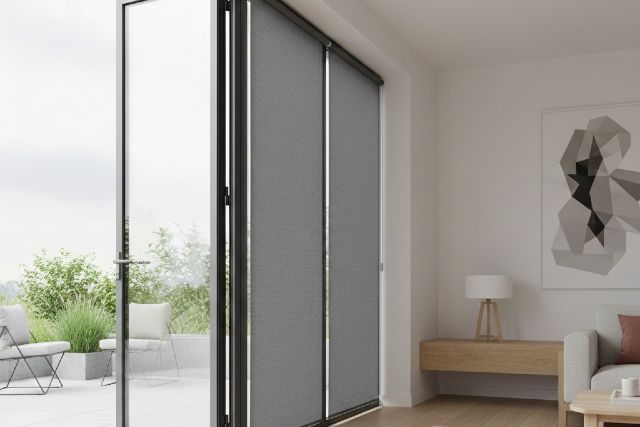

Patio doors are the “statement piece” of a modern home: wide glass, strong sightlines, and that airy indoor-outdoor feel. But all that glass can also mean glare on screens, uncomfortable heat in summer, chilly drafts in winter, and a total lack of privacy after dark. That’s exactly why bifold blinds have become the go-to solution for bifold patio doors. They keep the architecture looking crisp and minimal while giving you practical control over light, privacy, and comfort.
In this article, you’ll learn what makes bifold patio doors different from regular windows, which blind styles look the most modern, how to choose the right fabric for your room, and how to measure so everything looks perfectly aligned across multiple panels.
Why Bifold Patio Doors Need a Specialized Blind Setup
Bifold doors don’t behave like a single window. They fold, stack, and swing through a travel path that can clash with bulky coverings. They also tend to span a wide opening with multiple glazed panels, which makes “one blind fits all” solutions look messy fast.
The main challenge is clearance. Anything that protrudes too far can interfere with the doors folding back smoothly. The second challenge is consistency. When you have four, five, or six glass panels in a row, even small differences in blind height or fabric alignment become obvious. The third challenge is comfort. A big wall of glass can create noticeable temperature swings, and that’s often what motivates homeowners to finally invest in better window coverings rather than living with glare and drafts.
That’s why bifold blinds are less about a single product and more about choosing a system that matches how the doors move and how you use the room day to day.
What Are Bifold Blinds?
In plain terms, bifold blinds are blinds or shades chosen and installed specifically for bifold patio doors. They usually fall into two approaches.
One approach is a single blind covering the whole opening, mounted above the doors. This is common with roller blinds and some cellular shades, especially when the goal is a clean, uninterrupted look.
The other approach is fitting blinds to individual door panels, so the blinds move with each leaf. This can look extremely tidy when it’s measured and installed correctly, because each panel stays visually consistent as the doors open and close.
The “clean, modern look everyone wants” comes from slim hardware, minimal fabric bulk, and consistent lines across the full run of doors.
Best Bifold Blinds for Patio Doors
Roller Blinds for Bifold Patio Doors
If your priority is a sharp, modern finish, roller blinds are one of the strongest options. When raised, they virtually disappear into the headrail. When lowered, they create one smooth plane of fabric that looks contemporary and intentional.
Roller fabrics also offer useful performance options. Light-filtering fabrics soften sunlight without making the room feel gloomy. Sunscreen fabrics can cut glare while preserving a view in daylight, which is a big deal for patio doors facing gardens or terraces. Room-darkening fabrics are ideal if the patio doors are in a media space or bedroom.
Roller blinds are also a popular match for motorization because the mechanism is compact and the movement is straightforward. For wide patio openings, motorized roller systems can keep things looking clean without cords hanging down the middle of your view.
Cellular (Honeycomb) Shades for Comfort and Efficiency
If your patio doors feel cold in winter or overly hot in summer, cellular shades are the “comfort-first” modern option that still looks neat. Their honeycomb structure traps air, which boosts insulation at the glass.
The U.S. Department of Energy specifically highlights insulated cellular shades as a strong choice for significant energy savings and comfort. It also notes that tightly installed cellular shades can reduce heat loss through windows by 40% or more in heating season, translating to about 10% heating energy savings.
Oak Ridge National Laboratory has also tested cellular shades in a real home setup and reported up to 24% heating energy savings in the room with cellular shades compared to the comparison case. These aren’t just “nice to have” numbers; on large glazed patio doors, you can often feel the difference in the way the room holds temperature.
From a style perspective, modern cellular shades can look very minimal, especially in neutral colors with a slim stack. If you want a clean finish without the “flat sheet” look of a roller, cellular shades give you a soft architectural texture that still feels contemporary.
Pleated Shades for a Softer Modern Look
Pleated shades sit between roller and cellular shades in both look and feel. They fold into a neat stack when raised, and they give you a lightweight, airy appearance when lowered. They’re a good choice when you want the room to feel softer without moving into heavy curtains or drapes.
Pleated options can work well on bifold door setups where you want consistent coverage across multiple panels, particularly in bright spaces where glare is an occasional issue rather than an everyday battle.
Vertical Blinds for Large Spans, Updated for Today
Vertical blinds can be extremely practical for wide openings, and modern versions look far better than the dated plastic styles many people remember. Fabric vanes and cleaner headrails can complement modern bifold doors, especially when the opening is very wide and you need flexible light control.
They can also work nicely when you want to control light direction, not just block it. Being able to angle the vanes can reduce glare while still letting daylight in.
The key is styling. If you choose vertical blinds for bifold patio doors, the fabric and the headrail finish should match the modern aesthetic of your frames and flooring.
How to Choose Bifold Blinds That Look Modern, Not “Added Later”
Choosing the best bifold blinds comes down to matching the blind style to your daily habits. A blind that looks beautiful but gets in the way of the door movement will become annoying quickly, and anything annoying gets used less. And when blinds aren’t used properly, you lose the comfort and performance benefits.
Consider How You Use the Doors
If you frequently fold the doors fully open, you want a solution that stays out of the stacking path. This usually points toward slim-profile systems, careful mounting, and fabrics that don’t billow or protrude.
If you rarely fold the doors fully and mostly use one “daily traffic” panel, you can prioritize coverage, privacy, and insulation without worrying as much about clearance.
Decide Your Main Priority: View, Privacy, Glare, or Insulation
If you want daytime views with privacy, sunscreen roller fabrics or light-filtering cellular shades are popular because they reduce harsh light while maintaining a bright interior.
If privacy at night is your main concern, room-darkening rollers or thicker cellular fabrics can provide a stronger barrier, especially for patio doors facing neighboring homes.
If glare is the issue, performance roller fabrics are often the most direct solution because they can be selected specifically for solar control and screen glare reduction.
If comfort and energy efficiency are the big motivation, cellular shades are widely supported by research and government guidance as a high-performing interior attachment.
Cordless or Motorized Looks More Modern and Improves Safety
A modern patio door setup looks best without cords hanging in the middle of the glass. Beyond looks, child safety is a serious consideration. The U.S. Consumer Product Safety Commission strongly encourages cordless window coverings, noting that cords can pose a strangulation hazard and that the safest option around young children is to go cordless.
The industry’s safety standard has also been updated to push the market toward cordless or inaccessible cord designs. WCMA notes that the ANSI/WCMA A100.1-2022 standard took effect June 1, 2024. This matters when you’re shopping, because many newer products are designed around these requirements, and cordless options are increasingly the norm rather than the upgrade.
Where to Mount Bifold Blinds for the Cleanest Look
For bifold patio doors, mounting position is as important as blind style. The placement affects clearance, visual symmetry, and how much light leaks around the edges.
Inside Mount for a Built-In Finish
An inside mount can look extremely clean because the blind sits within the frame or recess. It’s a great fit when you have enough depth and the doors’ handles and folding path won’t collide with the blind.
Inside mounts often look “architectural,” especially with roller blinds, because the blind feels like part of the building rather than an added layer.
Outside Mount for Maximum Coverage and Better Light Blocking
An outside mount can be the better choice when you want stronger privacy, better blackout performance, or when there isn’t enough recess depth for an inside mount.
Outside mounts can still look modern if the headrail is minimal and aligned properly. Many homeowners also use a fascia or valance to keep the top edge looking crisp.
Panel-Mounted Systems for Door-by-Door Control
If you want each panel to have its own blind, panel mounting can be the answer. It keeps everything aligned with the door leaf and allows you to operate coverage panel by panel.
This can be especially useful when only one side gets strong sun at certain times of day, or when you use one traffic panel regularly and want the others mostly untouched.
Measuring Bifold Blinds for Patio Doors So They Look Perfect
Measuring is where the modern look is won or lost. The goal isn’t just “it fits,” it’s “it looks aligned across every panel.”
Measuring for One Blind Across the Whole Opening
If you’re installing a single roller blind or shade across the entire width, you’ll measure the overall opening width and height, then decide on inside versus outside mount.
The biggest practical point is clearance. You need to ensure the blind doesn’t conflict with door handles and doesn’t sit in the path of the doors folding.
Measuring for Individual Door Panels
If you’re fitting blinds to each panel, measure each panel carefully rather than assuming they’re identical. Small variations happen, especially in older homes or where frames have settled slightly.
The detail people miss is hem alignment. Even a small mismatch becomes obvious when the doors are side-by-side. If the goal is a clean, modern wall of glass, you want the bottoms of all blinds to line up when lowered.
If you want extra reassurance, measurement guides from major retailers can help you follow a consistent process, which reduces the risk of ordering the wrong size.
Energy Performance and Comfort: Why Bifold Blinds Can Make a Real Difference
Patio doors are beautiful, but they can be a weak spot in a home’s thermal performance. Even high-quality glazing still behaves differently from an insulated wall.
Cellular shades are one of the most researched interior options for improving performance. DOE guidance points to meaningful heating-season improvements when cellular shades are tightly installed. ORNL’s field testing supports the idea that cellular shades can reduce heating energy use in realistic conditions.
There’s another factor that matters just as much as the product: how you use it. The biggest gains come when you actively manage your blinds based on sun and temperature. Opening them during sunny winter periods can let in solar warmth, and closing them during hot summer afternoons can reduce overheating and glare. Even the best blinds can’t help much if they’re always left halfway down out of habit.
For many homes, the payoff isn’t only the energy bill. It’s comfort. When the area near the patio doors stops feeling “too hot” or “too cold,” the room becomes easier to use, and furniture placement becomes more flexible.
Real-World Scenarios: Picking the Right Bifold Blinds for Your Space
A south- or west-facing patio door in a living room often needs glare control first. In that case, a sunscreen roller fabric can keep the space bright while reducing harsh sunlight. It’s one of the cleanest-looking solutions and works well with motorization.
A kitchen-dining space with bifold doors that open daily usually benefits from a system that stays out of the way. Roller blinds mounted cleanly above the opening can look built-in and avoid interfering with the folding path.
A colder-climate family room with large bifold glazing often benefits most from cellular shades. The insulation effect is noticeable near the doors, and the look can still be modern if you choose a simple fabric and slim profile. DOE and ORNL sources support their performance potential in heating season.
A ground-floor patio door facing a street or neighbors often needs privacy that doesn’t make the room feel closed in. Light-filtering cellular shades or performance roller fabrics can provide daytime privacy while keeping the space bright.
FAQ: Bifold Blinds for Patio Doors
What are bifold blinds for patio doors?
Bifold blinds are blinds or shades selected and installed to work with bifold patio doors, either covering the whole opening from above or fitting to individual door panels for a clean, aligned look.
Which bifold blinds look the most modern?
Roller blinds usually look the most modern because they create a smooth fabric surface and disappear neatly when raised. Cellular shades can also look modern in neutral fabrics with a slim profile.
Do bifold blinds help with energy efficiency?
Yes, especially insulating options like cellular shades. DOE notes tightly installed cellular shades can reduce window heat loss in heating season and provide measurable heating energy savings. ORNL testing has reported up to 24% heating energy savings in a room using cellular shades under the tested conditions.
Are cordless bifold blinds safer?
Yes. The U.S. CPSC advises that cordless window coverings are the safest option around young children and encourages consumers to choose cordless designs.
Should I use one blind or separate blinds for each panel?
One blind across the opening can look ultra-clean and is common with rollers. Separate blinds per panel give flexible control and can move with the doors, but they require more precise measuring to keep all panels aligned.
Conclusion: The Clean, Modern Finish That Makes Patio Doors Feel Complete
If you want your patio doors to look like they belong in a design magazine but still function for real life, bifold blinds are one of the smartest upgrades you can make. Roller blinds deliver the sharpest minimalist style, while cellular shades add comfort and insulation with research-backed performance benefits. Choosing cordless or motorized options keeps the look sleek and aligns with widely recommended safety guidance.
With the right style, the right mounting choice, and careful measuring, bifold blinds give you the modern look everyone wants while making your bright, glass-filled space easier to live in every day.












Leave a comment