
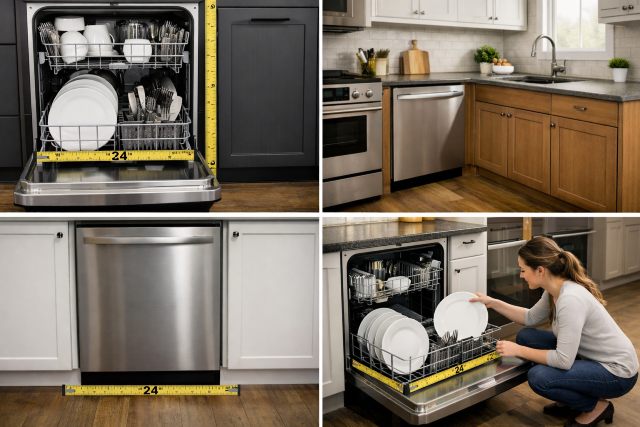

The standard dishwasher size for most homes is about 24 inches wide, 34 to 35 inches high, and roughly 24 inches deep. This size is widely used because it matches typical cabinet openings and standard kitchen counter height, making it the easiest option for replacement or new installations in most kitchens. Many brands design around this size because it has become the most common built-in dishwasher footprint in residential homes.
If you’re shopping for a dishwasher and your kitchen was built with common cabinetry, a 24-inch built-in model is usually the correct starting point. But the details still matter because small changes in flooring, countertop thickness, and cabinet framing can affect whether a dishwasher fits smoothly.
Why Standard Dishwasher Size Matters More Than Most People Think
Most people begin dishwasher shopping by comparing brand reputation, wash cycles, drying performance, and noise level. Those details matter, but the most immediate problem buyers face is fit. A dishwasher that is even slightly too tall or too deep can turn into a costly installation issue, especially if the kitchen’s cabinet cutout is tight or the flooring height has changed since the last dishwasher was installed.
The standard dishwasher size exists because it makes kitchens more modular. Builders and cabinet makers have relied on this sizing convention for decades, allowing homeowners to replace dishwashers without ripping out cabinets. However, kitchens are not always perfectly standardized in practice, which is why measurements are still essential before purchasing.
Standard Dishwasher Dimensions vs the Cabinet Opening
One of the most common mistakes shoppers make is assuming the dishwasher’s listed dimensions are the same as the opening it installs into. In reality, the cabinet cutout is typically designed to be slightly larger than the dishwasher body, allowing it to slide in, level properly, and connect to plumbing and electrical lines.
A typical dishwasher cutout is about 24 inches wide, 34 inches high, and about 24 inches deep. That space is meant to hold a dishwasher that is slightly smaller than those measurements, often in the range of 23.5 to 23.75 inches wide, depending on the model and manufacturer.
This is why two dishwashers can both be labeled “24-inch dishwashers” but still differ slightly in actual body width, which is why checking the manufacturer’s spec sheet is always smart.
Standard Dishwasher Width: Why 24 Inches Is the Norm
The standard dishwasher width is about 24 inches because it aligns with standard base cabinet increments. In most kitchens, cabinet units are arranged in modular widths, and 24 inches is one of the most common measurements for base cabinet openings. That makes the dishwasher sit neatly beside sink bases, drawers, and storage cabinets.
For most homes, a standard 24-inch built-in dishwasher is the default choice because it maximizes capacity without requiring extra space. If your kitchen has a normal cabinet layout and enough room beside the sink, a 24-inch model is almost always the correct fit.
Standard Dishwasher Height: The Measurement That Causes the Most Trouble
Dishwasher height usually falls between 34 and 35 inches, but height is also the measurement most likely to cause installation problems. Even if your kitchen was originally designed for standard sizes, the opening can shrink over time due to flooring changes or countertop modifications.
If a previous dishwasher was installed before tile or hardwood flooring was added, the new dishwasher might not fit under the countertop even if the width is correct. This is one of the most common reasons homeowners discover they can’t pull out their old dishwasher easily, or struggle to slide the new one into place.
If your opening is shorter than expected, you may need an ADA-height dishwasher or a model designed for slightly lower countertops.
Standard Dishwasher Depth: Why Some Models Stick Out
Dishwasher depth is typically around 24 inches, but this measurement can be deceptive because it depends heavily on door design and handle style. A dishwasher with a thick door or large bar handle may extend beyond the cabinet line, even if its listed depth looks standard.
This matters because a dishwasher that sticks out too far can interfere with adjacent drawers, block walkways when open, or look misaligned with cabinetry. If you care about a flush, built-in look, check the spec sheet for both body depth and depth with door open, and also consider whether the model is designed for flush installation.
Compact Dishwasher Size: What Fits Smaller Kitchens
Not every home can fit the standard dishwasher size. Smaller kitchens, apartments, and older homes sometimes have narrower cabinet openings, which is where compact dishwashers become the better option.
Compact built-in dishwashers are usually about 18 inches wide, with height often ranging between 32 and 34 inches, and depth similar to standard models. These dishwashers are commonly marketed as 18-inch dishwashers and are designed for kitchens where space is limited, but automatic dishwashing is still desired.
In real-life use, an 18-inch dishwasher can be ideal for one to two people, smaller families, or anyone who runs the dishwasher less frequently. It offers convenience without forcing a major kitchen remodel.
ADA Dishwasher Size: What to Know for Accessible Kitchens
ADA dishwashers are designed for kitchens with lower countertop heights or accessibility-focused layouts. These models are shorter than standard dishwashers so they can fit under counters that are below the usual 34 to 36-inch standard.
Many ADA dishwashers are around 32.25 inches tall and often come in 18-inch widths, though some manufacturers offer ADA-height models in other configurations. A real example is Summit’s ADA dishwasher models that are specifically sized to meet accessible installation requirements.
If your kitchen countertop is lower than normal, or you’re renovating to improve accessibility for long-term use, ADA-size dishwashers can help you maintain functionality without custom cabinetry changes.
Dishwasher Capacity: Do Standard Dishwashers Always Hold the Same Amount?
Even though the external standard dishwasher size is fairly consistent, the interior capacity can vary significantly. Most full-size dishwashers hold about 12 to 16 place settings, but some models fit more because they use smarter rack layouts, thinner walls, or a third rack design.
A dishwasher may be standard on the outside but very different on the inside. One might accommodate tall glasses and large pots more easily, while another may offer more space for cutlery and utensils due to a third rack. That’s why shoppers should compare interior layout photos and not rely solely on “place setting” numbers.
Water and Energy Use: How Efficient Are Standard Dishwashers?
Modern dishwashers have become significantly more efficient. The average standard dishwasher uses around 4.2 gallons of water per cycle, while compact models use closer to 3.5 gallons. ENERGY STAR-certified models tend to be more efficient and often reduce both water and electricity consumption compared to older machines.
This matters because many people still believe washing by hand saves water. In reality, older habits like leaving water running or filling a sink multiple times can use more water than an efficient dishwasher cycle. If you want to reduce utility bills long-term, choosing an ENERGY STAR dishwasher is one of the most practical upgrades you can make.
Installation Problems That Happen Even in “Standard” Openings
Even when the cutout appears to match the standard dishwasher size, installation can still be complicated. Flooring changes are one of the biggest issues. A dishwasher might have been installed before new flooring was laid down, and when it’s time to replace it, the opening height becomes too short to remove the old unit easily.
Another common issue is plumbing placement. If drain hoses, electrical lines, or water supply pipes are poorly positioned behind the dishwasher, they can prevent it from sliding fully into place. In kitchens with face-frame cabinets, the frame itself can reduce usable opening width, forcing trimming or special mounting brackets.
If you’re replacing a dishwasher in an older kitchen, measuring is only the first step. You also want to confirm what’s happening behind the unit before you buy.
How to Tell If Your Kitchen Fits a Standard Dishwasher Size
Most kitchens are designed to accept a 24-inch dishwasher, but you should confirm three measurements before purchasing. Your opening should be approximately 24 inches wide, at least 34 inches tall, and deep enough for the dishwasher to sit comfortably without forcing the door to protrude awkwardly.
You also want to consider clearance, because dishwashers need room for leveling legs, hose connections, and safe operation. If your opening meets standard ranges, your choice options are extremely broad. If it doesn’t, compact and ADA units can still give you strong performance with a better fit.
FAQ: Standard Dishwasher Size Explained
What is the standard dishwasher size?
The standard dishwasher size is typically about 24 inches wide, 34 to 35 inches high, and around 24 inches deep. This sizing is designed to fit most kitchen cabinet openings.
What size opening do you need for a standard dishwasher?
Most kitchens need an opening roughly 24 inches wide, 34 inches high, and about 24 inches deep, though exact requirements vary slightly by manufacturer.
Are all dishwashers 24 inches wide?
No. While 24 inches is standard, compact built-in dishwashers are often 18 inches wide, and portable dishwashers vary depending on design.
What is an ADA dishwasher size?
ADA dishwashers are usually shorter, often around 32.25 inches high, to fit under lower countertops used in accessible kitchen designs.
Which dishwasher is best for a small kitchen?
For small kitchens, an 18-inch compact dishwasher is often the best choice because it fits narrower cabinet spaces while still offering reliable cleaning.
Conclusion: Choosing the Right Standard Dishwasher Size
The standard dishwasher size is about 24 inches wide, 34 to 35 inches tall, and roughly 24 inches deep, making it the most common fit for residential kitchens.
But even standard kitchens can have small differences that affect fit. Flooring upgrades, countertop thickness, cabinet framing, and plumbing placement can all impact installation. That’s why measuring your opening and checking manufacturer specs is the smartest move before buying.
If your kitchen matches standard dimensions, you’ll have the widest range of options in design, features, and pricing. If your space is smaller, compact 18-inch models and ADA-height dishwashers provide excellent alternatives without forcing major renovations. When you choose the right size from the start, everything else becomes easier—from installation to performance to long-term satisfaction.











Leave a comment