
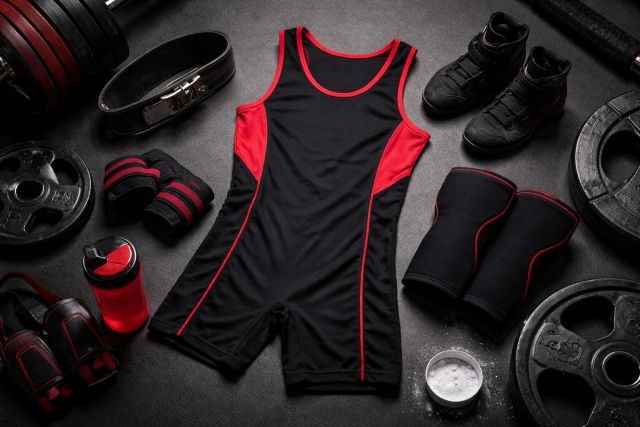

If you’re shopping for a powerlifting singlet, you’re probably close to competing (or you’re tired of borrowing a teammate’s “mystery size” suit five minutes before weigh-ins). Either way, the right singlet isn’t just about looking the part — it’s about passing equipment check, feeling confident under the bar, and avoiding the kind of wardrobe distraction that ruins focus on your attempts.
A powerlifting singlet is a tight, one-piece garment typically required in many federations for competition lifting. It’s designed to be form-fitting without giving you meaningful mechanical assistance (unlike supportive squat suits in equipped divisions). What matters most: it must meet your federation’s rules, fit correctly, and stay comfortable for a long day of squats, bench, and deadlifts.
1) Federation rules come first (the fastest way to buy the “wrong” singlet)
Before you fall in love with a design or price, confirm which federation you’ll compete in and what that federation allows. “Powerlifting rules” aren’t universal. IPF-style tested meets, USAPL meets, and WPC/USPA-style meets can differ on equipment rules and approved lists.
For example, the IPF maintains and publishes its technical rules and updates (with effective dates) on its official rules page. USAPL also publishes a rulebook as a downloadable PDF with detailed equipment sections. WPC has its own rulebook and updates as well.
Meet-day reality: lifters most often fail gear check because they assumed “a singlet is a singlet.” Sometimes the issue is the model, sometimes the material/thickness, sometimes branding/approval, and sometimes it’s as simple as a non-compliant cut or seam.
Actionable tip: As soon as you register, look up the federation’s current rulebook and any “approved equipment list” pages for singlets — then shop. Rulebooks change.
2) “Approved” lists can matter more than the rulebook text
Many drug-tested federations use an “approved equipment list” approach (brands/models must appear on the list). Even if a singlet seems to match the general description, it can still be rejected if it isn’t on the approved list.
A common example is the split where different US federations maintain different approval lists (and affiliation changes have happened). Some outlets track these changes, but your safest source is always the federation’s own current materials and approved lists.
Actionable tip: If the federation uses an approved list, don’t buy “close enough.” Buy exactly an approved brand/model.
3) Know the difference between raw vs equipped (and why it changes what you should buy)
A powerlifting singlet in raw divisions is primarily about compliance and comfort—snug, flexible, and not restrictive in the bottom position of the squat or at deadlift setup.
In equipped lifting, “supportive suits” are a different category and can provide substantial assistance. Those are not the same thing as a typical raw singlet—and often have stricter rules and sizing considerations.
Actionable tip: If you’re a first-time competitor lifting raw, you almost always want a standard, flexible singlet that’s easy to get into, easy to move in, and easy to pass at equipment check.
4) Fit is everything: tight enough for standards, not so tight it changes your technique
A singlet should be snug — no bunching, no loose fabric flapping during squats, and no gapping that makes judges/equipment check question it. But there’s a point where “tight” becomes a performance problem.
Too tight can:
pull your shoulders forward and mess with bench setup,
restrict hip flexion at the bottom of the squat,
ride up aggressively during deadlifts (distracting and uncomfortable),
make breathing/bracing feel worse.
Too loose can:
fail the “form-fitting” expectation,
shift and wrinkle under your belt,
create awkward fabric folds at the hips in the squat.
Real-world scenario: A lifter buys a size down to look “more serious,” then can’t hit depth comfortably because the suit locks the hips early. Their warmups feel off, so they keep changing stance to compensate. On the platform, depth becomes inconsistent.
Actionable tip: Buy for competition movement, not for photos. If you’re between sizes, choose based on your federation’s guidance and your squat hip position (wide-stance squatters often prefer a bit more hip room).
5) Torso length matters as much as bodyweight (maybe more)
Most sizing charts revolve around weight, but two lifters at the same bodyweight can have totally different torso lengths. If your torso is long, a “correct weight” singlet can still feel like it’s trying to turn you into a human accordion. If your torso is short, straps can sit awkwardly and the suit can bunch.
Actionable tip: If the brand provides height/torso guidance, use it. If not, look for lifter reviews that mention “long torso / short torso” fit. When in doubt, prioritize a model known for adjustable or forgiving straps.
6) Fabric and stretch: what feels great in warmups can feel awful after 6 hours
Competitions are long. You’ll wear the singlet through check-in, warmups, attempts, and sometimes medal photos. Fabric that feels “fine” for a 20-minute gym session can become itchy, overheated, or restrictive in a venue.
Also, singlets vary in compression and elasticity. Compression garments have been studied for performance and recovery, but evidence is mixed and effects are often small—more about comfort, perception, and recovery than instant PR magic. One meta-analysis found small restorative effects on strength and power after fatigue (effect sizes were modest). A broader sports medicine review also notes varied evidence and methodological differences across studies.
Practical takeaway: Choose fabric that stays comfortable under sweat and repeated movement. If a suit is aggressively compressive, test it in a full mock meet session — not just a quick top single.
7) Strap design and chest coverage can impact bench setup (and confidence)
This is especially important for bench press:
Straps that dig into the traps/shoulders can make scapular retraction harder.
A low-cut front can feel insecure (and you don’t want to think about that during commands).
Some lifters prefer wider straps for stability; others prefer thinner straps to reduce shoulder restriction.
Actionable tip: Practice your full bench setup — arch, scapula position, breath/bracing, and paused reps — while wearing the singlet. If your setup feels different, don’t ignore it.
8) Seams, stitching, and “rub points” show up at the worst time
The most common complaint with cheaper or poorly-fitted singlets isn’t “it looks bad.” It’s:
thigh seams that rub during deadlifts,
inner-groin stitching that irritates during squat walkouts,
straps that chafe your armpits after repeated movement.
Actionable tip: Do a full session with competition-like volume in the singlet at least once (squat + bench + deadlift). If you get hotspots, address them early (better fit, different model, or small protective measures allowed by your federation).
9) Color, logos, and “team rules” can be surprisingly strict
Some meets are relaxed. Others are strict about:
excessive logos,
non-approved branding,
design features that resemble supportive suits,
federation-specific uniform standards.
This is why it’s worth reading the federation’s current documentation and updates rather than relying on hearsay.
Actionable tip: If you’re representing a team or club, check if they require a certain color. Otherwise, pick a color you won’t hate seeing in every meet photo for the next two years.
10) Plan for meet-day logistics: bathrooms, weigh-ins, and backups
A singlet is one piece. That’s great… until you’re at a meet venue bathroom line.
Meet-day reality checklist:
Can you get it on/off without a struggle when you’re sweaty?
Can you use the restroom without needing a teammate as a spotter?
Do you have a backup option if a seam pops or you fail check?
Actionable tip: If it’s your first meet, choose a singlet that is easy to manage and forgiving. Save the ultra-tight “second skin” experience for when you’ve done a couple competitions and know what you like.
Common questions (FAQ-style for featured snippets)
What is a powerlifting singlet?
A powerlifting singlet is a tight, one-piece competition garment worn in many federations to standardize attire and allow judges to clearly see hip and knee position during lifts. Requirements vary by federation, so always confirm your meet’s rules.
Do I need an approved singlet?
If your federation uses an approved equipment list, yes — your singlet may need to be a specific approved brand/model to pass equipment check. Always verify with the federation’s current rulebook and approval materials.
Can I wear a wrestling singlet instead?
Sometimes, but not always. Wrestling singlets can differ in material, cut, thickness, and branding—and many federations care about approval lists or specific specifications. Don’t assume. Check your federation’s rulebook and approved list first.
Should I size down for “more support”?
In raw lifting, sizing down usually creates restriction and discomfort more than useful performance benefit. The right size should be snug but should not change your squat depth, deadlift start position, or bench setup.
Conclusion: buy the right powerlifting singlet once
Buying a powerlifting singlet is less about fashion and more about showing up prepared. Start with your federation’s current rules and approval lists, then choose a suit that fits your torso and hips, stays comfortable for a long meet, and doesn’t interfere with your squat, bench setup, or deadlift start position. Use at least one full mock session to test comfort and movement, and you’ll walk into equipment check confident — free to focus on what matters: making your attempts.
If you tell me which federation you’re competing in (and whether it’s raw or equipped), I can recommend the exact features to prioritize and a short list of “safe pick” styles to reduce the chance of failing equipment check.











Leave a comment