
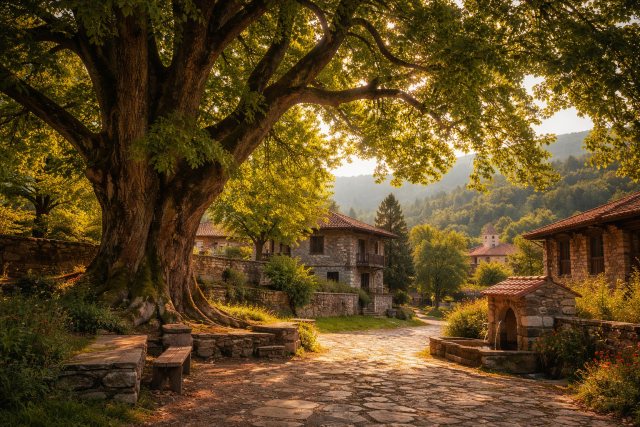

If you’ve ever zoomed in on a map of northwestern Bulgaria and spotted Ракитовица, you might have wondered: What’s the story behind this small place — and why does its name sound so poetic? In the first moments, Ракитовица feels like many quiet Balkan villages: modest streets, big skies, and a rhythm shaped by seasons more than schedules. But look closer and you’ll find something richer — a name rooted in nature, a region shaped by major historical turns, and a modern reality where community resilience matters as much as heritage.
One important note before we dive in: “Ракитовица” can sometimes be confused online with unrelated terms (even plant/health content). In this article, Ракитовица refers to the place-name tradition and the village story in Bulgaria’s northwest, anchored in the broader context of the Vidin area and municipalities like Dimovo.
Where is Ракитовица (and what kind of place is it)?
Ракитовица is best understood as part of Bulgaria’s northwestern rural mosaic — an area of small settlements, agricultural land, and deep historical layers. Administratively, villages in this zone connect to municipal structures such as Dimovo Municipality in Vidin Province, a region defined by its Danubian geography, border proximity, and long-running demographic change.
This matters because “local history” here isn’t just a village timeline. It’s a story shaped by:
-
borderland economics (Danube corridor, Romania nearby),
-
changing empires and state borders,
-
and the post-1990 demographic and economic shift that hit rural northwest Bulgaria especially hard.
The meaning behind the name Ракитовица: a toponym born from willow country
In Slavic and Bulgarian place naming, nature is often the first “historian.” Ракитовица is widely connected to the word “ракита” — a Bulgarian term for willow (often associated with basket willow, Salix viminalis).
Why would willows matter enough to name a settlement?
Because in traditional village economies, willows aren’t just trees. They’re infrastructure:
-
Willows thrive near water — streams, wet meadows, river edges.
-
Willow branches have long been used for weaving (baskets, fencing, farm utilities).
-
Willow-lined areas often indicate arable, workable land nearby.
So, Ракитовица likely signals a landscape: a place by water, where willows grow well, and where a community once organized daily life around what that land could provide.
Ракитовица in the bigger historical map of Northwestern Bulgaria
Even when a village’s own archival footprint is small, the region’s “big history” leaves fingerprints everywhere.
Ottoman-era patterns: villages, land, and routes
Northwestern Bulgaria sat within the long Ottoman period, where settlement life revolved around land, taxation systems, and local trade routes linking Danubian markets. Over centuries, communities in Vidin’s sphere adapted — sometimes growing, sometimes shrinking, sometimes moving slightly as agriculture, security, or water access shifted.
1878 and the modern Bulgarian state
The late 19th century reshaped everyday life across the region as Bulgaria emerged as a modern state. Municipal centers developed, road networks evolved, and administrative systems became more standardized. Villages like Ракитовица (and its neighbors) increasingly lived inside “official” frameworks — census counts, registries, and municipal planning that still define governance today.
The socialist period: collectivization and village work
In the 20th century, rural Bulgaria experienced large-scale change through collectivized agriculture and centralized planning. For many villages, this brought stable employment locally — cooperatives, state farms, and regionally linked production. It also reshaped traditions: some crafts faded, others standardized, and village life became tied to broader industrial-agricultural systems.
After 1990: the demographic turning point
If you want to understand the “surprising facts” of Ракитовица, you can’t ignore what happened after the socialist period ended: rural northwest Bulgaria became one of Europe’s most intense depopulation zones.
Eurostat has highlighted Vidin as among the fastest-depopulating rural regions in Europe in the 2015–2020 period.
And Bulgarian demographic analyses consistently point to long-term decline driven by low birth rates, aging, and emigration — trends that hit villages first and hardest.
This is why today’s Ракитовица story often includes a paradox: the cultural landscape can feel timeless, while the population reality is changing fast.
Surprising facts about Ракитовица (and villages like it)
Because detailed village-by-village narratives aren’t always compiled in one place, the best “facts” often come from combining language, geography, and regional statistics.
1) The name is an environmental clue, not just a label
As discussed, Ракитовица points to willow ecology — often water nearby. That means the name itself can guide you to what mattered most when the settlement identity formed: usable land and dependable water.
2) The region’s depopulation rate is notable even by EU standards
Vidin’s rural depopulation has been singled out by Eurostat comparisons across Europe’s predominantly rural regions.
This helps explain why many villages preserve older housing stock and street layouts: when growth slows or reverses, the built environment changes more slowly than in booming areas.
3) Administrative data is updated regularly — modern “history in numbers”
Bulgaria’s civil registration authority (GRAO) publishes recurring tables of address-registered population. These datasets are a quiet but powerful way to track how villages change year to year.
If you’re researching family roots or local development, these sources can be more revealing than a travel blog.
Local culture: what tends to endure in places like Ракитовица
Even as demographics shift, rural Bulgarian cultural life often preserves certain anchors:
Seasonal food traditions
Home gardens, preserved foods, and seasonal cooking aren’t nostalgia — they’re practical, and they remain part of identity. In villages, you’ll still see traditions around peppers, tomatoes, fruit preserves, and winter preparations.
Community memory as “oral archive”
In small settlements, history often lives in conversations: who moved where, which families were known for which crafts, what the old school used to be, how the road used to flood, when the cooperative closed. Oral history becomes the local museum.
The landscape as heritage
For many visitors, the most immediate “cultural” experience is the landscape itself — fields, tree lines, riverside vegetation, and the Danubian plain feel that defines Vidin’s wider area.
Visiting Ракитовица: what to do (and how to do it respectfully)
If you’re visiting as a traveler, genealogist, or photographer, the best experiences usually come from small, thoughtful choices.
A practical mini-itinerary (easy, low-impact)
-
Arrive mid-morning and walk the village slowly: notice water channels, tree species, and older house styles.
-
Stop at a local shop if one is open; small purchases matter in small places.
-
Drive outward to nearby municipal centers for context (administration, churches, markets), then return before dusk.
Real-world tips that locals appreciate
-
Ask before photographing people or private yards.
-
If you’re tracing ancestry, bring printed surnames and dates — older residents often respond better to tangible prompts than phone screens.
-
Don’t assume “abandoned” means “empty.” Many houses are used seasonally by families who live elsewhere.
Common questions about Ракитовица (FAQ)
What is Ракитовица known for?
Ракитовица is most associated with its nature-rooted place name and its setting within Bulgaria’s depopulating but culturally rich northwest, where village life preserves older rhythms and landscapes.
What does the name Ракитовица mean?
The name is linked to “ракита” — Bulgarian for willow (often basket willow), suggesting a settlement connected to water and willow growth.
Why are villages in Vidin region shrinking?
Multiple factors drive decline: emigration of working-age people, low birth rates, aging, and reduced local employment — patterns documented in broader demographic analyses and EU rural statistics.
Where can I find official population data for places like Ракитовица?
Bulgaria’s GRAO tables and the National Statistical Institute’s registries are core official sources for settlement and population tracking.
Conclusion: Why Ракитовица matters more than its size suggests
Ракитовица is the kind of place that teaches you how history really works: not only through monuments, but through names, landscapes, and the daily choices of people who stayed, left, returned, and remembered. Its willow-rooted identity points to an older relationship between community and nature, while the wider Vidin region’s demographic reality shows how modern economics can reshape rural life at European scale.
If you’re writing about Bulgaria’s northwest, tracing family roots, or searching for “quiet history” that you can still feel under your feet, Рakитовица deserves a closer look. And if you visit, go gently: small villages hold big stories, but they don’t always advertise them loudly.














Leave a comment